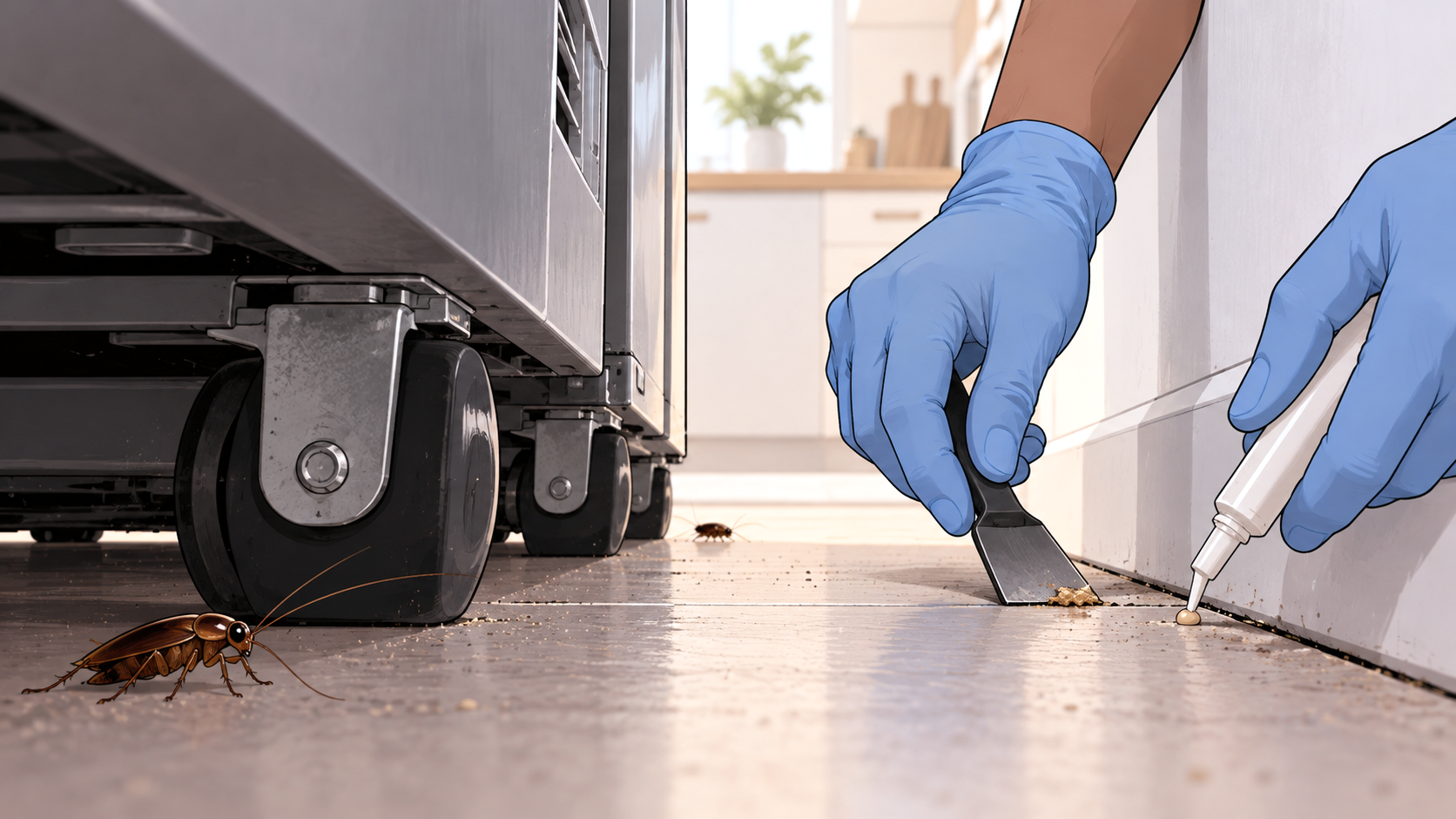
Cockroach gel bait is most effective when insects encounter it along routes they already use. A small deposit inside an active cabinet joint can receive more attention than a large amount left on an exposed floor. Placement also determines whether the bait remains attractive, becomes contaminated, or creates unnecessary contact with people and pets.
Place cockroach gel bait in small, label-directed amounts near confirmed cockroach activity, particularly in protected cracks, cabinet joints, plumbing gaps, and accessible spaces beside appliances. Inspect the deposits regularly and replenish them when they have been consumed, contaminated, or deteriorated. There is no universal replacement schedule: the product label and condition of the gel determine when fresh bait is needed.
The following guidance concerns the practical application and maintenance of gel bait, not choosing between different active ingredients or formulations.
Where to Place Cockroach Gel Bait in Each Room
Cockroaches generally prefer traveling close to sheltered edges, so gel should be positioned near the openings they use rather than spread across the surrounding surfaces. The University of California’s cockroach management guidance recommends placing baits close to known harborages and areas of activity.
Suitable locations depend on the product’s label and whether the application can remain inaccessible to children and pets.
| Location | Potential gel placement |
|---|---|
| Kitchen cabinets | Protected rear joints, hinges, and inaccessible gaps beneath fixed cabinets |
| Beneath the sink | Dry, sheltered cabinet crevices near plumbing openings |
| Refrigerator and stove | Accessible structural gaps beside or behind appliances, away from hot components |
| Bathroom | Protected openings near vanity plumbing and cabinet joints |
| Laundry area | Dry structural gaps adjacent to utility connections |
| Bedroom or closet | Inaccessible furniture-adjacent crevices where cockroach activity is confirmed |
| Basement or utility room | Labeled structural cracks and protected wall-floor junctions |
These are potential locations, not instructions to treat every gap. A cockroach population concentrated around the kitchen sink may have little reason to encounter gel deposited inside a bedroom closet.
The daytime hiding locations of cockroaches are useful when deciding which concealed areas deserve attention. However, baits must remain accessible to foraging insects rather than being pushed so deeply into structural cavities that cockroaches cannot reach them.
Do not apply gel inside electrical outlets, energized equipment, or appliance mechanisms. Where cockroaches occupy electronics, internal pesticide applications introduce additional equipment and electrical hazards.
How Much Gel Bait Should You Apply?
More gel is not automatically better. Many labels favor numerous small deposits over a few large blobs because separate placements increase the opportunities for cockroaches to encounter fresh bait.
For example, the EPA-approved Alpine Cockroach Gel Bait label specifies deposits approximately 3–6 millimeters across, containing 0.25–0.5 grams of gel. It recommends approximately 10 spots per 100 square feet for light to moderate infestations and 20 spots for heavier activity.
Those quantities apply to that formulation and must not be treated as universal instructions. Other products specify application rates by linear distance or use different deposit sizes. The EPA-approved Invict Gold label, for instance, provides its own spot-size and application-rate instructions.
Before dispensing gel, read the label for the specific product in hand. Check the permitted locations, maximum amounts, treatment intervals, and restrictions involving food, pets, or children.
Applying an entire syringe to one cabinet does not guarantee better control. Excess product may remain uneaten, collect dust, or create a larger area of potential exposure.
Should Gel Go Inside Cracks or on Exposed Surfaces?
For products labeled for crack-and-crevice application, protected openings are generally preferable to exposed surfaces. The applicator tip allows small amounts to be deposited where the gel is less likely to be touched, washed away, or contaminated.
The EPA’s pesticide safety recommendations favor targeted treatments and keeping baits inaccessible to children and pets.
Avoid placing gel on kitchen countertops, exposed cabinet shelves used for dishes, food-preparation surfaces, or anywhere it could transfer onto utensils. Some products allow particular applications in food-handling establishments, but those labels impose additional restrictions on where bait may be deposited.
A crack running along a countertop is not automatically an acceptable placement. The Alpine gel label specifically prohibits applications to food-preparation surfaces and locations where routine cleaning could transfer bait onto food.
If gel accidentally reaches an exposed food-contact surface, remove it and clean the surface according to the label.
The same caution applies to upholstered furniture and sleeping areas. Even where cockroaches are active in a bedroom, pesticide deposits should not be placed on bedding, mattresses, or surfaces subject to prolonged skin contact.
How Often Should You Check and Replace Cockroach Gel Bait?
Inspect gel after the first few days in heavily affected locations, then continue checking periodically according to the product instructions and observed activity. Some applications may require frequent replenishment because cockroaches consume the deposits quickly. Others may remain usable much longer.
Replace bait when there is a clear reason:
- Consumed: Most or all of the deposit has disappeared while cockroach activity continues.
- Dried or hardened: The gel has deteriorated enough that its attractiveness is questionable.
- Contaminated: Dust, grease, cleaning chemicals, or pesticide spray has contacted the bait.
- Washed away or displaced: Cleaning or moisture has removed the original deposit.
The Syngenta guidance for Advion Cockroach Gel Bait specifically identifies contamination by dirt, gasoline, nicotine, and repellent insecticides as possible reasons for reduced performance. The manufacturer recommends inspecting bait condition and ensuring that the formulation remains close to cockroach activity.
An existing deposit does not necessarily need replacement merely because a calendar interval has passed. Conversely, a newly applied deposit may need attention quickly if it has been consumed or damaged.
Some formulations advertise long periods of residual effectiveness. For example, Maxforce FC Magnum is marketed as remaining effective for extended periods under suitable conditions. Such claims do not mean every exposed deposit remains attractive indefinitely, regardless of dust, temperature, or moisture.
What Happens When Cockroach Gel Dries Out?
Fresh gel contains moisture and food ingredients intended to encourage feeding. Over time, evaporation can change its texture, producing a firmer or crusted deposit. The rate depends on the formulation, humidity, temperature, and location.
A dry surface does not automatically mean the active insecticide has chemically disappeared. However, a deposit may become less attractive or more difficult for cockroaches to consume even while the active ingredient remains present.
The EPA’s pesticide applicator guidance recognizes pastes and gels as formulations whose performance depends on strategic placement and maintaining usable bait.
Avoid applying gel directly to hot pipes, stove components, oven surfaces, or other locations exceeding the manufacturer’s temperature restrictions. Excess heat may cause some formulations to liquefy, dry prematurely, or move away from the intended placement.
Similarly, a leaking sink cabinet can expose gel to moisture and cleaning residue. Correct the moisture problem and choose a protected, permitted application point rather than continually replacing bait in an unsuitable location.
Should You Remove Old Gel Before Adding Fresh Bait?
When an old deposit is visibly dirty, hardened, or no longer suitable for use, remove it according to the product label before applying fresh gel nearby.
The purpose is to avoid accumulating unnecessary pesticide and to provide insects with an uncontaminated food source. Leaving several layers of old gel beside a fresh deposit offers no established advantage.
Some products specify particular removal instructions. The Alpine Cockroach Gel Bait label directs users to remove unwanted placements with a paper towel and dispose of the material in the rubbish.
Do not scrape gel into food-storage areas, wash pesticide residues into drains, or handle deposits with bare fingers. Follow the product’s disposal and cleaning directions, including any requirements for protective equipment.
If a deposit remains in good condition and the label allows continued use, unnecessary removal can interrupt treatment without improving its effectiveness.
Keep Cleaning Products and Insecticide Sprays Away From Gel
One avoidable application error is treating the same crack with gel bait and a repellent insecticide spray.
Repellent residues can make an otherwise attractive food deposit less acceptable to cockroaches. Household cleaners, aerosol products, grease, and accumulated dust can also contaminate the bait.
The EPA-approved Alpine label specifically warns against applying gel to areas recently treated with repellent insecticides or spraying such products over bait placements.
Complete ordinary cleaning before dispensing gel whenever possible. Afterward, avoid wiping away or contaminating the protected deposits during routine housekeeping.
Certain professional treatment programs combine compatible nonrepellent insecticides with bait, but those combinations depend on the specific product labels. Do not assume that two pesticides can be applied together merely because both are registered for cockroaches.
Where gel bait and spray are being considered for the same infestation, compatibility and exposure restrictions should influence the treatment choice before either product is applied.
How to Tell Whether the Placement Is Working
Gel consumption can demonstrate that insects have encountered the bait, but it does not establish that the population has been eliminated. Likewise, untouched bait may indicate poor placement, limited activity, or reduced attractiveness rather than insecticide resistance.
Use sticky cockroach monitors near the treated areas and compare captures over successive inspections. The University of California’s integrated pest management guidance recommends monitoring to identify active locations and evaluate control.
If one cabinet continues producing captures while nearby bait remains untouched, the gel may be too far from the insects’ normal route. Reassess the placement against the product’s instructions instead of automatically dispensing more.
Continued catches after treatment also need to be interpreted over time. The evidence that cockroaches have actually disappeared depends on sustained reductions and an absence of fresh activity, not simply on how much gel has been eaten.
Persistent nonconsumption despite confirmed nearby activity warrants a broader evaluation of bait acceptance, competing food, contamination, and product suitability. Replacing gel repeatedly without establishing why it remains untouched may waste product and increase unnecessary pesticide deposits.