A house can remain quiet for days after cockroach treatment, even when a few insects are still alive. Cockroaches spend much of their time concealed, and a small surviving population may produce no obvious sightings. Conversely, old droppings and empty egg cases can remain long after the insects responsible have disappeared.
The strongest evidence that cockroaches are gone is a sustained period with no live sightings, no captures in correctly positioned sticky traps, and no new signs of activity. Several consecutive weeks of consistent monitoring provide substantially more confidence than a few quiet nights, although no inspection can guarantee that every cockroach has been eliminated.
Judging the outcome requires comparing evidence collected over time rather than relying on a single observation.
What Your Sticky Traps Reveal About the Infestation
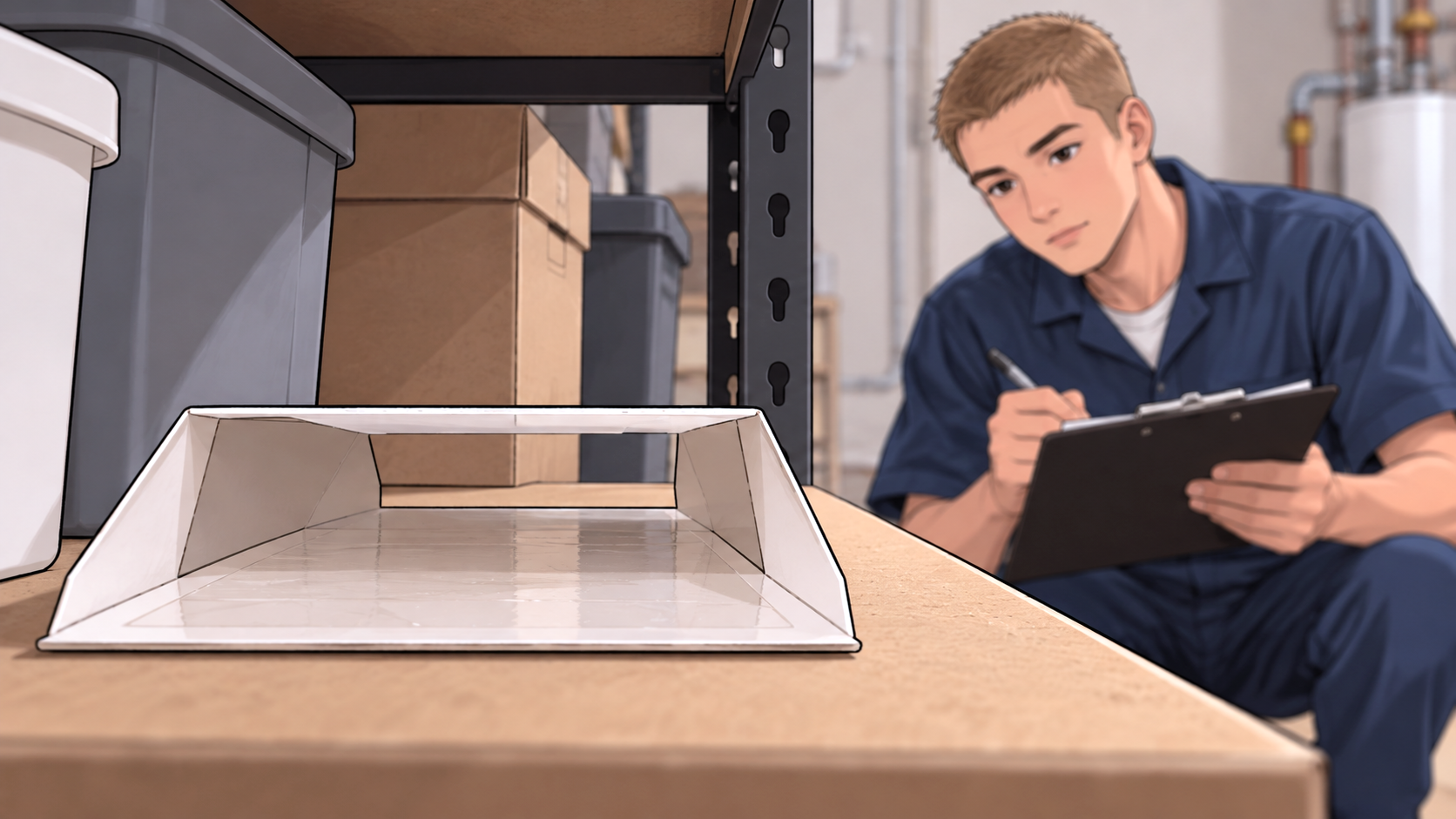
Sticky monitoring traps provide the most useful starting point because they collect evidence while nobody is watching. A cockroach may avoid appearing in front of people but still cross a monitored route while searching for resources.
Keep monitors in the locations where activity was previously concentrated, particularly along cabinet edges, behind accessible appliances, and near plumbing openings. Number each trap, record its location, and note the inspection date. The University of Florida’s assessment-based cockroach management guidance recommends mapping and numbering monitors so changes in insect populations can be evaluated consistently.
The number caught matters more than whether a trap contains any insects at all. A decline from 20 cockroaches per monitoring period to two indicates substantial progress, but those two captures still establish that live cockroaches remain. Zero captures across several properly positioned monitors provide stronger evidence of elimination, especially when the same locations previously produced regular catches.
Avoid changing trap positions unnecessarily while comparing results. Moving a monitor from a heavily used cockroach route to an inactive corner could produce an apparent improvement without any actual population decline. Replace traps that become dusty, wet, full, or otherwise ineffective.
The Cornell Integrated Pest Management program recommends sticky monitoring to assess pest activity, identify reproductive stages, and evaluate treatment effectiveness.
How Long Should You Go Without Seeing a Cockroach?
There is no universally established number of cockroach-free days that proves an infestation has ended. A reasonable household approach is to monitor consistently for several weeks after the last confirmed activity, extending the observation period when the original infestation was extensive.
The EPA’s cockroach management guidance for schools recommends fresh monitoring traps approximately one week after treatment to assess changes, followed by continued monitoring to detect surviving or newly introduced populations.
The appropriate observation period depends partly on which species was present. German cockroaches can reproduce continuously in favorable indoor conditions, whereas some outdoor-associated species enter houses intermittently without maintaining an indoor population.
A week without sightings is encouraging but insufficient to establish elimination. Several weeks without either sightings or trap captures increase confidence, provided monitors cover the previously affected locations and remain functional.
Continue checking longer when the infestation involved multiple rooms, extensive concealed activity, or uncertain treatment coverage. A previously severe infestation requires stronger evidence than a single isolated introduction.
Check for New Droppings Rather Than Old Stains
Cockroach droppings can remain attached to cabinet corners, walls, drawer runners, and other surfaces after treatment. Their continued presence does not necessarily indicate that insects are still active.
Where accessible surfaces have been cleaned, newly appearing deposits become more informative. For example, dark specks accumulating again along a previously cleaned cabinet seam suggest that cockroaches may still be using that location.
The Virginia Tech guidance on cockroaches in living spaces identifies fecal deposits, cast skins, egg cases, and live insects as useful signs when assessing cockroach activity.
However, appearance alone cannot reliably determine the age of every deposit. The size and appearance of cockroach droppings vary by species, and stains absorbed into porous materials may remain visible after cleaning.
An old, unchanged stain is weaker evidence of continued activity than fresh deposits appearing alongside new captures.
Pay Attention to Nymphs and Egg Cases
Finding a newly hatched cockroach after several quiet days establishes that at least one live insect remains, even if it is too small to be noticed during ordinary household activity.
Different developmental stages provide useful context. Adult captures without nymphs may reflect a small remaining population or an introduction, while repeated captures of young cockroaches raise concern about ongoing reproduction.
Cockroaches develop from eggs through several nymphal stages before becoming adults. The University of California’s cockroach management guidance explains how species identification and developmental stages help interpret indoor populations.
Previously deposited egg cases also complicate monitoring. Their contents may hatch after some exposed cockroaches have been eliminated. The time cockroach eggs require to hatch varies with species and conditions, so a few days without visible adults cannot rule out later emergence.
An empty egg case, however, is not necessarily evidence of recent hatching. The appearance and handling of cockroach egg cases must be considered alongside their location and any fresh insect activity. Old cases can remain undisturbed for long periods.
What Different Monitoring Results Actually Mean
Not every observation carries the same evidential weight.
| Observation | What it tells you |
|---|---|
| No sightings for several nights | Encouraging, but hidden activity remains possible |
| Zero captures in several correctly placed traps over successive checks | Stronger evidence that activity has ended |
| Captures decline but remain above zero | The population has decreased, not disappeared |
| New nymphs appear | Live immature cockroaches remain |
| Fresh droppings appear on cleaned surfaces | Possible continuing activity that warrants investigation |
| Old stains and empty egg cases remain unchanged | Evidence of past presence, not necessarily current infestation |
| One large outdoor species appears near an entrance | May represent a new introduction rather than survival of the original infestation |
The EPA’s integrated pest management principles emphasize evaluating pest populations through monitoring and identification rather than using an isolated sighting to determine the need for further action.
Species identification helps prevent misleading conclusions. A German cockroach caught inside a previously infested kitchen carries different implications from an outdoor wood cockroach found near an open window. The differences among household and outdoor cockroach species influence how repeated observations should be interpreted.
Can Cockroaches Still Be Present if Every Trap Is Empty?
Yes. An empty trap shows that no insect was captured during the period in which that particular trap was effective. It does not prove that no insects exist elsewhere.
Placement errors are a common limitation. Cockroaches can remain active inside concealed areas without crossing an exposed monitoring surface. A trap positioned several feet from their regular route may catch nothing despite nearby activity.
Environmental conditions can also change movement patterns. If cockroaches have adequate resources close to their shelter, they may travel less frequently across monitored areas.
The EPA’s cockroach monitoring manual recommends relocating traps that repeatedly catch few insects when other evidence suggests activity elsewhere. This can help determine whether zero captures reflect successful control or ineffective placement.
A more convincing assessment combines traps with careful observation of previously affected surfaces. Neither method is as informative alone as it is alongside the other.
When Can You Consider the Infestation Eliminated?
A practical standard for reasonable confidence is several consecutive weeks without live cockroach sightings, with zero captures across appropriately located traps and no fresh evidence in areas that previously showed activity.
For an extensive infestation, maintaining this record over a longer period is prudent. The precise duration should reflect the species, initial severity, property conditions, and any guidance provided by the pest-management professional.
In apartment buildings, a cleared unit may also remain vulnerable to activity originating elsewhere. The EPA’s guidance for multifamily housing managers emphasizes continued monitoring and coordination because pest activity can involve multiple parts of a building.
There is also a difference between eliminating live cockroaches and removing everything they leave behind. Research summarized in the Virginia Tech cockroach guidance notes that cockroach allergens can persist after an infestation has been eliminated. Finding residual allergen contamination therefore cannot, by itself, establish that cockroaches remain alive.
Once monitoring consistently supports elimination, inspection frequency can be reduced without abandoning observation altogether. The most defensible conclusion is that no continuing cockroach activity has been detected under adequate monitoring, rather than claiming an absolute guarantee that another cockroach can never appear.
6 thoughts on “How to Tell If Cockroaches Are Gone”