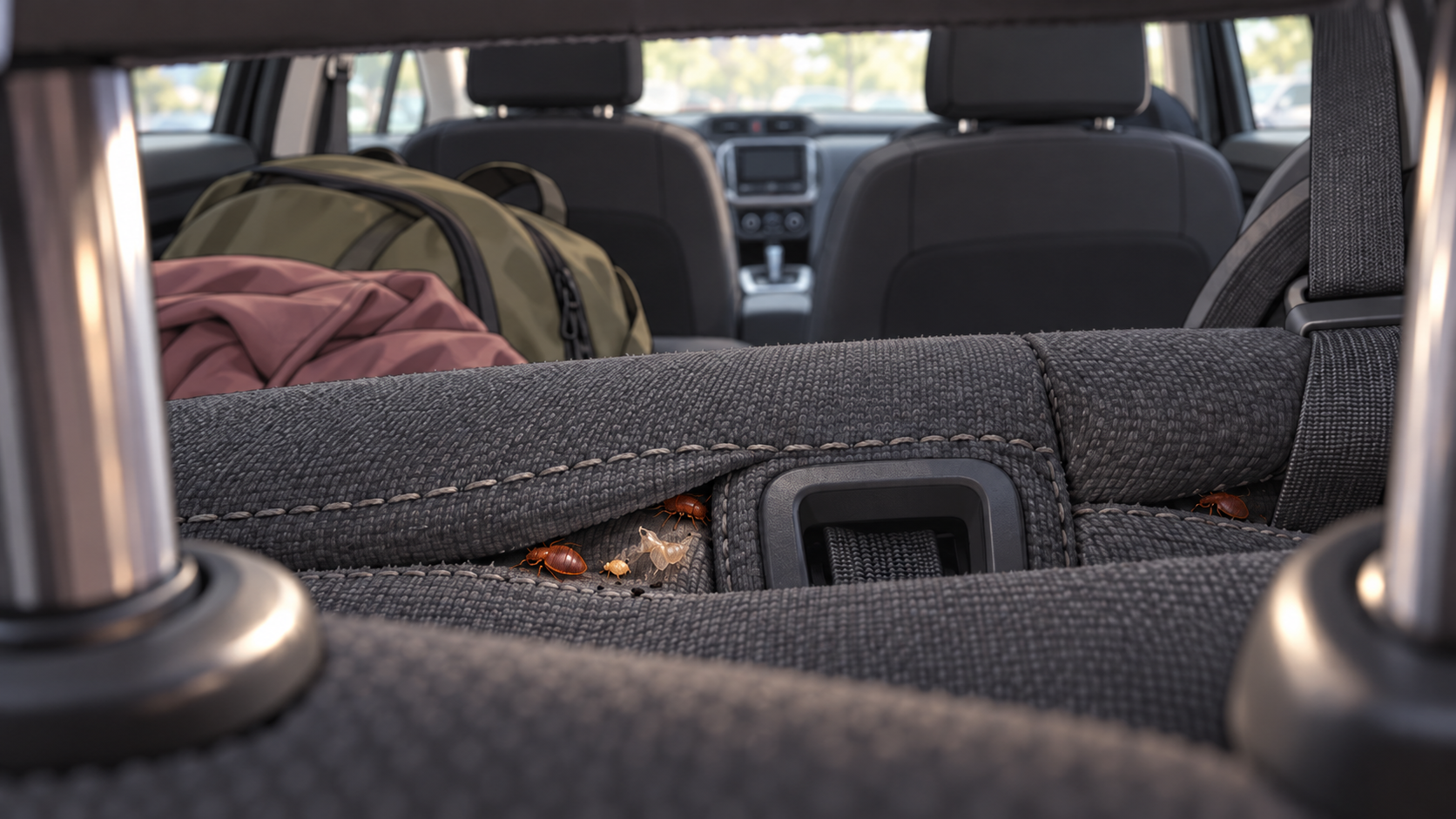
Bed bugs can end up in a car and survive there. They are most likely to be introduced when an infested item, such as luggage, clothing, a bag, bedding, or furniture, is placed inside the vehicle. A car isn’t where bed bugs normally establish themselves when a regularly occupied home is available, but vehicle infestations can occur. Researchers have even evaluated professional fumigation specifically for bed bugs in personal vehicles.
How Do Bed Bugs Get Into a Car?
Bed bugs are excellent hitchhikers. The EPA explains that they move between locations on furniture, bedding, luggage, boxes, and clothing.
The same process can introduce them into a vehicle.
A suitcase brought home after staying somewhere with bed bugs could contain a hidden bug. Clothing, backpacks, blankets, upholstered furniture, and other belongings can do the same. A bed bug may then leave the object and hide somewhere inside the vehicle.
Bed bugs don’t need to be attracted specifically to cars for this to happen. The vehicle simply becomes another location reached by an infested item.
Where Can Bed Bugs Hide in a Car?
A vehicle contains many narrow, protected spaces suitable for a temporary harborage.
Possible locations include seams and folds in upholstered seats, gaps around seat hardware, underneath seats, carpeting, and other cracks and crevices. Inspection should concentrate on protected areas rather than the exposed middle of a seat or floor.
Finding an unexplained insect in a vehicle doesn’t automatically mean it is a bed bug. Confirm the identification before beginning treatment because many small insects can be mistaken for them.
Can Bed Bugs Survive in a Car Without Feeding?
Leaving a car unused for a few days or weeks isn’t a reliable treatment.
The EPA notes that bed bugs can survive for several months to a year without feeding, although actual survival varies considerably with temperature, life stage, feeding history, and other conditions.
A vehicle also isn’t necessarily isolated from hosts. Bed bugs present in a regularly used car may have opportunities to feed when people spend time inside it.
For those reasons, waiting for them to starve isn’t a dependable control method.
Will a Hot Car Kill Bed Bugs?
A parked vehicle can become extremely hot in sunlight, but high air or dashboard temperatures don’t prove that every bed bug hidden inside has reached a lethal temperature for long enough.
Heat must penetrate the actual harborage.
The EPA says black plastic bags containing infested items may work when placed inside a hot, closed car in the sun, but explicitly notes that success depends on climate and other factors. It doesn’t recommend simply parking an infested vehicle in sunlight as a reliable whole-car treatment.
Research on solar heating illustrates the problem. In one experiment involving mattresses wrapped in black plastic and left in the sun, exposed surfaces reached 85°C (185°F), while protected portions remained dramatically cooler.
A scorching seat surface therefore doesn’t establish that bed bugs deep inside seat components or other protected areas have been killed.
How Should You Deal With Bed Bugs in a Car?
Start with a careful inspection. Pay particular attention to seat seams and folds, gaps around and beneath seats, carpeting, and belongings routinely stored inside the vehicle.
Remove unnecessary clutter and inspect removable belongings before transferring them into your home. Items that can safely tolerate dryer heat can be treated separately. The EPA recommends a household dryer on high heat for 30 minutes for suitable clothing and bedding, which kills bed bugs and eggs.
Vacuuming can also remove accessible bed bugs. Concentrate on seams, crevices, carpeting, and other areas where insects could hide. Afterward, seal and dispose of the vacuum contents appropriately rather than carrying potentially live bed bugs into the house.
Don’t automatically put seat covers, floor mats, shoes, or other vehicle components in a washer or dryer. Follow their care instructions because heat, tumbling, or water can damage materials that aren’t designed for machine laundering.
Be Careful With Pesticides Inside a Vehicle
Don’t assume that a pesticide labeled for indoor bed bug treatment can also be sprayed throughout a car.
Pesticide labels specify where and how a product may be applied. Upholstery, enclosed passenger compartments, electronics, plastics, and surfaces that people frequently touch make improvised vehicle pesticide treatment particularly inappropriate.
Use a pesticide in a vehicle only when its label permits the intended application and follow all restrictions.
For a confirmed vehicle infestation that persists after appropriate nonchemical measures, professional treatment may be warranted. A 2021 field study successfully evaluated sulfuryl fluoride fumigation against bed bugs in personal vehicles, demonstrating that professional vehicle-specific treatment is possible.
The appropriate treatment still depends on the vehicle and the pest management professional’s available methods.
Are Rideshares and Taxis More Likely to Have Bed Bugs?
There isn’t good evidence establishing a specific bed bug infestation rate for rideshares or taxis.
Vehicles carrying many passengers and belongings have repeated opportunities for hitchhiking bed bugs to be introduced, so the pathway is plausible. That shouldn’t be turned into a claim that rideshare vehicles commonly have bed bugs or are demonstrably more likely to be infested without data showing that difference.
People whose work repeatedly takes them into potentially infested homes may have a clearer occupational exposure. Virginia Tech recommends that home healthcare workers keep vehicles uncluttered, vacuum regularly, periodically inspect for bed bugs, and keep certain work belongings isolated when appropriate.
Questions About Bed Bugs in Cars
Can bed bugs travel from your car into your house?
Yes. A bed bug hiding in a bag, clothing, or another portable item can be carried from a vehicle into a home. Inspecting potentially exposed belongings before bringing them inside reduces that opportunity.
Will leaving your car unused get rid of bed bugs?
Don’t rely on it. Bed bugs can survive long periods without feeding, and starvation time varies with environmental conditions.
Can you vacuum bed bugs out of a car?
Vacuuming can remove accessible bugs but may miss insects and eggs deep inside protected areas. Dispose of the vacuum contents immediately in a sealed bag after cleaning.
Should you leave an infested car in the sun?
Sunlight can make a vehicle extremely hot, but it isn’t a dependable whole-vehicle treatment because protected areas may remain cooler. Don’t assume the infestation is gone based on the temperature of exposed surfaces.