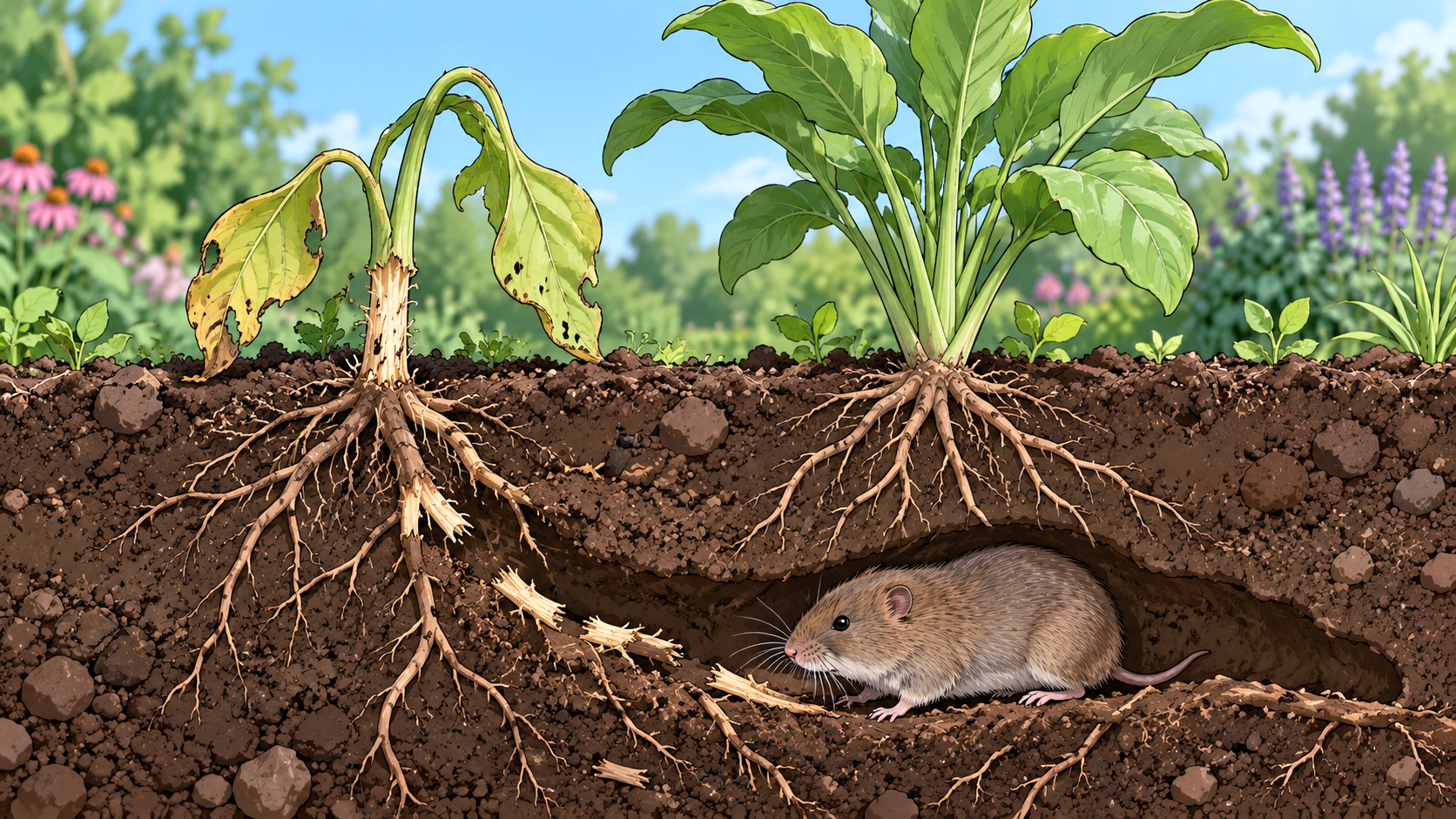
Voles can be bad for your garden when their feeding damages vegetables, bulbs, roots, shrubs, or trees, but their presence alone does not mean your plants are in danger. Small numbers often cause little noticeable harm, while concentrated activity around vulnerable plantings can result in crop losses or permanent damage. The condition of your plants, the severity of the injuries, and whether damage is continuing are more useful measures of a vole problem than the number of animals you happen to see.
A garden containing established ornamental plants, mature trees, and undisturbed vegetation can tolerate occasional vole activity. Newly planted fruit trees, vegetable seedlings, and expensive ornamental bulbs leave much less room for loss. The same animal can therefore be a minor inconvenience in one part of a property and a serious concern in another.
When Voles Become a Garden Problem
A vole becomes a garden pest when its feeding interferes with plant establishment, growth, or survival. The most serious consequences generally involve young woody plants, vulnerable food crops, and plantings that cannot recover from repeated damage. A seedling with its stem severed may be lost entirely, while limited feeding on an established perennial may leave little lasting effect.
Gardens can support low populations of voles without experiencing substantial injury. The Royal Horticultural Society’s guidance on mice and voles recognizes that these animals are normally present in gardens at low numbers and often cause only minor damage. Population increases can change that situation because more animals are feeding within the same area, increasing the likelihood of damage to cultivated plants.
The most useful assessment compares plant loss with the garden’s ability to recover. A few missing leaves from established vegetation do not carry the same consequences as several newly planted shrubs dying. We would give greater attention to repeated losses of valuable plants than to minor feeding in an undisturbed corner of the yard.
Which Garden Plants Are Most at Risk?
Voles consume a variety of plant tissues, so their impact depends heavily on what you grow. Vegetable seedlings are vulnerable because relatively little feeding can destroy a newly established plant. Vole feeding on vegetables and tomato plants can also affect the productivity of a food-growing bed when young plants are repeatedly damaged. Established crops may tolerate limited injury, but repeated losses during planting season can reduce the eventual harvest.
Bulbs, corms, and underground storage organs present another concern. Tulips and crocuses are among the ornamental plants susceptible to rodent feeding. The loss may remain hidden until the expected spring growth fails to appear. Damage to bulbs, roots, and other underground plant parts can be especially expensive when it affects recently installed ornamental beds.
Young trees and shrubs deserve the greatest attention because the consequences can extend beyond one growing season. Bark feeding can interrupt nutrient transport, particularly when the animal removes living tissue around much of the trunk’s circumference. The documented effects of vole damage in orchards show why younger trees are especially susceptible to severe injury and death. Even a single valuable tree can justify concern when vole damage to its bark threatens its survival.
Lawn injury often falls into a different category. Surface pathways exposed after snowmelt may look extensive without causing permanent damage. The Penn State Extension assessment of vole activity identifies these exposed runway systems as frequently temporary lawn problems, unlike potentially serious damage to woody plants. A garden with vole-damaged turf therefore requires a different assessment from one losing newly planted fruit trees.
How Much Vole Damage Is Too Much?
There is no universal number of voles or damaged plants that establishes when intervention is necessary. The decision should reflect the value and vulnerability of the affected planting, the likelihood of further injury, and whether the damage is tolerable.
For example, losing one annual seedling from a densely planted flower bed may have little practical consequence. Losing one newly planted apple tree represents a much greater setback because replacement requires additional expense and growing time. A small amount of damage can therefore justify action when the plant is valuable or difficult to replace.
Repeated injury deserves more concern than an isolated event. If additional seedlings disappear after each planting, or several shrubs develop fresh feeding wounds, the garden is experiencing continuing losses. The University of California’s vole management guidance recognizes that allowing vole populations to decline naturally is an option, but damage around cultivated landscapes can exceed acceptable levels before that decline occurs.
The following framework helps distinguish situations that deserve observation from those requiring a response.
| Garden situation | Severity assessment |
|---|---|
| Occasional vole sightings with healthy plants | Low concern; no control justified by sightings alone |
| Old surface trails with recovering grass | Usually low concern unless fresh damage continues |
| Isolated feeding on established plants | Assess the extent of injury and monitor |
| Repeated destruction of seedlings or food crops | Action justified when losses continue |
| Fresh girdling on young trees or valuable shrubs | High concern; prompt protection warranted |
| Several valuable plants declining with confirmed vole damage | High concern; professional assessment may be appropriate |
This framework assesses plant consequences rather than estimating an animal population from damage alone. A single vole can injure a vulnerable plant, while several animals may occupy surrounding vegetation without causing meaningful losses.
A Damaged Garden Does Not Automatically Mean Voles Are Responsible
Gardeners can waste considerable effort targeting voles when another animal or an unrelated growing problem caused the injury. Rabbits, mice, insects, and other wildlife can damage the same plants, sometimes leaving similar symptoms. Drought, root diseases, and poor planting conditions can also cause wilting or dieback without any animal feeding.
Confirmation becomes particularly important when the proposed response involves trapping or pesticides. The Colorado State University guidance on managing voles identifies several physical signs of vole activity, including runways, burrows, and gnawing injuries. Matching those signs with the damaged planting provides stronger evidence than assuming every underground opening belongs to a vole.
A few signs of voles in the yard may establish that the animals are present without proving they caused a particular injury. Fresh plant damage, associated feeding evidence, and direct observation offer a stronger basis for deciding whether intervention is warranted.
We would also avoid treating the appearance of an old runway as evidence of an expanding infestation. Vole populations fluctuate, and abandoned travel routes can remain visible after activity has declined. A newly damaged plant requires more attention than a patch of flattened grass with no continuing injury.
Should You Leave Voles Alone or Take Action?
Leaving voles undisturbed is reasonable when cultivated plants remain healthy and any feeding damage is minor. These animals occur naturally in vegetated areas, and attempting to remove every individual from a property is neither necessary nor a realistic long-term objective.
Intervention becomes more reasonable when confirmed feeding threatens valuable plantings or causes recurring losses. The appropriate response should be limited to the affected area whenever possible. The Royal Horticultural Society’s approach to wildlife in gardens supports maintaining suitable habitat for wildlife while protecting plants that need it. A garden does not have to be managed uniformly when only one planting is suffering damage.
Physical exclusion and habitat adjustments are generally preferable starting points to indiscriminate killing. These approaches can protect vulnerable plants while reducing risks to children, pets, and other wildlife. The management options for voles in vegetable and ornamental gardens include exclusion, habitat changes, and targeted control. Traps introduce animal-welfare and non-target capture concerns, while rodenticides can harm other animals and are subject to product-label and local legal restrictions.
A garden-specific vole control plan becomes appropriate when there is confirmed ongoing injury rather than an occasional sighting. For gardens where vulnerable plants are repeatedly attacked, waiting for substantial losses before responding can leave little opportunity to prevent permanent injury.
Deciding Whether Your Garden Needs Protection
Examine the plants that would be hardest to replace first. Check young trees and valuable shrubs for injury, compare new seedlings with their condition several days earlier, and identify areas where losses are recurring. Photographs taken from the same position on successive visits can help establish whether damage is progressing.
If the affected plants remain healthy and no new injury appears, continued observation is a reasonable choice. Where fresh feeding threatens valuable vegetation, preventing renewed vole activity around vulnerable plantings deserves attention before additional losses occur.
The goal should be protecting the garden’s productive and valuable plants without treating every vole in the surrounding landscape as a problem.