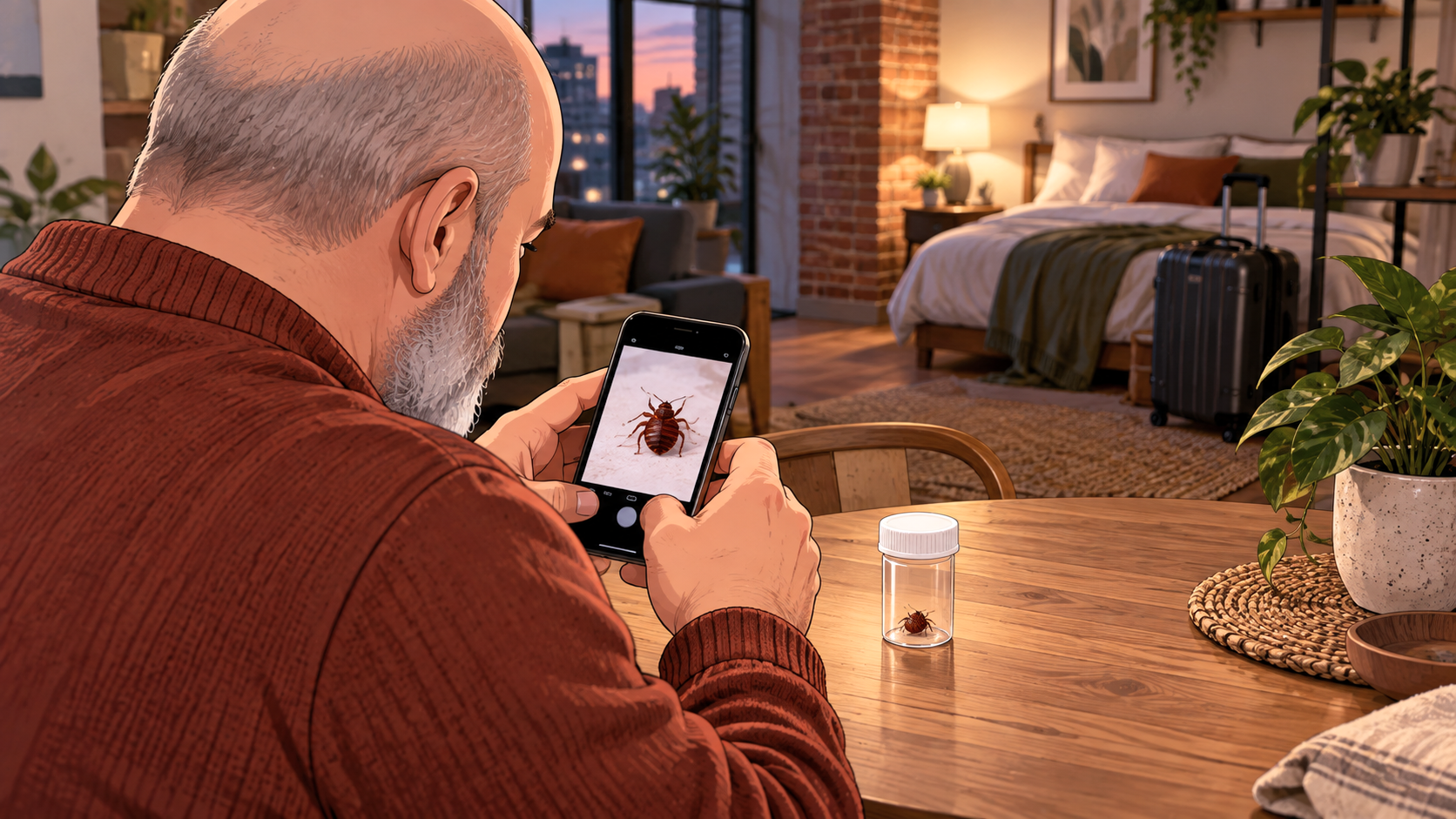
A bed bug can arrive with an online order or shipping package, but the package has to encounter bed bugs somewhere before it reaches you. Bed bugs do not originate in cardboard or parcel warehouses on their own. An insect may crawl into a box, fold, seam, packing material, or product if the shipment spends time in an infested home, workplace, vehicle, storage area, or other location.
The Box Can Carry a Bed Bug Without Being Infested Itself
Bed bugs spread mainly by hitchhiking rather than by flying or jumping. Their flat bodies allow them to enter narrow gaps in belongings, and they can be moved between locations on luggage, furniture, clothing, bedding, boxes, and other objects. Shipping cartons therefore provide a physically possible transport route when they have been exposed to an infested environment. Bed bugs can move between homes on boxes and other belongings, while their ability to hide in extremely small spaces makes folds, flaps, corrugations, and packaging seams plausible temporary refuges.
Cardboard is not a food source. Bed bugs feed on blood, so a package sitting in a warehouse cannot sustain an actively feeding population unless hosts are available nearby. A single hitchhiker, however, does not need to feed during every stage of a delivery journey. Adults can survive prolonged periods between blood meals, which is why bed bugs can remain alive without feeding for extended periods and potentially survive transportation.
Previous Handling Matters More Than Whether the Order Was Bought Online
A factory-sealed product moving through a clean supply chain presents a different risk from merchandise that was previously opened, returned, stored in a residence, or handled in an infested facility. Online purchasing itself does not create the risk. The relevant question is what environments the product and its packaging passed through before reaching your door.
Bed bugs are well adapted to passive movement on belongings. They can hide in seams, folds, furniture, clothing, luggage, and other transported items without being noticed. They can also use workplaces and other non-residential locations as temporary transfer points even when those sites do not contain established sleeping-area infestations. Offices, stores, and similar locations can function as transfer hubs when belongings from an infested home introduce an insect.
Returned merchandise deserves slightly more caution because its storage history may include a private residence. That does not mean returned packages commonly contain bed bugs. It simply creates an additional opportunity for exposure that an unopened item moving directly from manufacturing and distribution may not have had.
Corrugated Cardboard Gives Them Plenty of Places to Hide
The internal channels of corrugated cardboard, folded corners, overlapping flaps, tape seams, and spaces under labels can conceal an insect that is only a few millimeters long. Bed bugs routinely exploit cracks and narrow crevices in other settings, and removing excess cardboard is even part of bed bug treatment preparation because insects can hide in it.
An adult bed bug is roughly comparable in size to an apple seed when unfed, while young nymphs are much smaller and paler. Their small size means a quick glance at the outside of a parcel can miss them. Knowing how large bed bugs are at different life stages helps explain why the folds of a box provide more hiding potential than a smooth exposed surface.
The insects do not need to establish a colony inside the cardboard before delivery. One female or nymph tucked beneath a flap can simply leave the package after it enters a home and search for a more suitable hiding place closer to where people rest.
Eggs Are Possible but Less Likely to Be Noticed
Bed bug eggs are about 1 mm long, pale, and glued to surfaces. A female that spends sufficient time in an exposed package or stored item could theoretically deposit eggs in a protected seam. Bed bug eggs are tiny and easily overlooked, particularly against light-colored packaging or rough cardboard.
An egg therefore creates a different inspection challenge from a moving adult. The appearance of bed bug eggs includes their small size, pale coloration, and tendency to occur in sheltered areas rather than loose like grains of sand.
Finding one insect on the outside of a box does not mean the shipment contains a breeding colony. Conversely, failing to see movement does not prove that every fold and seam is clear.
Packages Left Near an Infested Apartment Door Can Pick Up Hitchhikers
The delivery route is not the only possible exposure point. A parcel left in a hallway, package room, mailroom, apartment entry, or cluttered indoor storage area can encounter bed bugs after delivery if insects are already present in the building.
Bed bugs can move through multi-unit buildings and use common areas or belongings as routes between locations. Their climbing ability also allows them to traverse many common household and structural surfaces, although traction varies considerably with surface texture. Experimental work confirms that bed bugs can climb a wide range of materials used in buildings and belongings.
An insect discovered on a package therefore cannot always be traced confidently to the retailer or shipping carrier. It may have boarded the package at any point from the previous storage location to the final hallway outside your door.
You Do Not Need to Treat Every Delivery Like an Infested Object
Routine online shopping does not justify opening every parcel outdoors in protective clothing or placing all purchases into quarantine. Bed bugs spread readily on belongings, but travel, infested sleeping environments, used furniture, and direct transfer of personal possessions are much more established exposure situations. Bed bugs are especially associated with the movement of luggage, clothing, furniture, and other personal belongings.
A reasonable approach is to notice anything unusual while opening a package. Look more carefully when a box is badly damaged, appears previously opened or returned, came from a secondhand seller, contains used belongings, or has a visible suspicious insect in its folds. If there is no evidence of bed bugs, normal disposal of packaging is sufficient.
Keeping unnecessary shipping cartons out of bedrooms also removes potential hiding places. The broader goal of preventing bed bugs from entering and establishing in a home does not require treating every cardboard box as contaminated.
Open a Suspicious Package Somewhere Easy to Inspect
If you have a specific reason for concern, open the package on a hard, uncluttered, well-lit surface rather than on a bed, sofa, carpet, or pile of clothing. A bathtub, utility area, garage work surface, or hard floor can make a crawling insect easier to notice and contain.
Inspect the box seams, folded flaps, underside of tape edges, corrugated openings, and the seams or crevices of the product itself. Physical evidence is more useful than assuming that every tiny brown insect is a bed bug. Carpet beetles, spider beetles, cockroach nymphs, and several other insects can be confused with them, so bugs that resemble bed bugs should be ruled out before beginning treatment.
If you find a suspected specimen, capture it intact with clear tape or in a sealed container rather than crushing it beyond recognition. Positive identification prevents an unnecessary infestation response to the wrong insect.
Remove the Shipping Box Promptly if You Find a Bed Bug
If a confirmed bed bug is on the cardboard, place the box and loose packaging directly into a sealed plastic bag before moving it through the home. Dispose of the packaging outside when local waste rules permit. Avoid carrying an open infested box from room to room.
Do not shake packing material, move the box into a bedroom for closer inspection, or place suspected contents among clean belongings. Items that may have been exposed should remain contained until they can be inspected or treated appropriately. Infested objects should be sealed before being moved so insects are not distributed elsewhere during cleanup.
A cardboard box is inexpensive and easy to discard. The product inside may need a different decision depending on whether it is washable, heat-tolerant, electronic, upholstered, or otherwise sensitive.
Clothing and Fabric Orders Can Often Be Heat-Treated More Easily
If a suspicious package contains washable clothing, bedding, or other dryer-safe textiles, the dryer provides a useful treatment option. High dryer temperatures can kill bed bugs when the material itself reaches a lethal temperature for sufficient time. Washing alone is less dependable than heat. High-temperature drying is recommended for potentially exposed washable belongings.
Follow the care label rather than automatically applying the hottest cycle to delicate material. The role of a clothes dryer in killing bed bugs depends on adequate heat reaching the contents, not merely warming the outside briefly.
Electronics, books, cosmetics, foods, and heat-sensitive products require different handling. Do not improvise by putting unsuitable merchandise into an oven, microwave, clothes dryer, or freezer.
Spraying the Package With Insecticide Is Usually Unnecessary
A package suspected of carrying a hitchhiker does not need to be soaked in household pesticide. Aerosols may not reach hidden insects or eggs inside folds, and pesticide residues can contaminate the product, packaging, food-contact materials, or surrounding surfaces.
If a confirmed bed bug escapes into the home or multiple signs appear afterward, shift attention to early detection rather than repeatedly spraying delivery boxes. Low-level infestations are easier to manage when found early, and physical signs such as live insects, eggs, shed skins, and fecal spots are more reliable than waiting for bites.
The early signs of bed bugs become particularly relevant during the weeks following a confirmed hitchhiker because a single introduced insect may disappear into a crevice before it is seen again.
One Bed Bug in a Package Does Not Automatically Mean Your Home Is Infested
An infestation requires the insect to survive, find a host, locate shelter, and, for reproduction, involve a fertilized female or a population capable of breeding. Catching and removing a single hitchhiker before it leaves the package may end the incident.
If an insect escapes, inspect sleeping and resting areas rather than treating the entire house preemptively. Mattress seams, box springs, headboards, bed frames, nearby upholstered furniture, and cracks close to sleeping areas deserve the most attention because bed bugs normally establish near hosts.
Continued evidence after an introduction calls for the normal process of getting rid of bed bugs rather than continuing to focus on the delivery box after it has already been removed.
Questions About Bed Bugs in Deliveries
Can Amazon packages have bed bugs?
Any shipment can theoretically acquire a hitchhiking bed bug if it passes through an infested environment. The retailer’s name does not determine the risk; exposure history does.
Can bed bugs live inside cardboard for days?
Yes. Bed bugs do not need to feed every day, and cardboard provides sheltered crevices. A bug hidden in packaging can survive a normal shipping period.
Can bed bugs survive being mailed across the country?
Potentially. Transit time alone is not a dependable control method because bed bugs can survive for long periods without feeding.
Can a bed bug crawl out of a sealed shipping box?
It depends on how completely the package is sealed. Ordinary cardboard boxes often have folds, seams, handle openings, or small gaps large enough for tiny insects to pass through.
Should you leave packages outside overnight to kill bed bugs?
No. Ordinary outdoor temperatures are not a reliable bed bug treatment. Heat and cold control require verified lethal temperatures throughout the infested material for sufficient exposure time.
Are plastic mailer bags safer than cardboard boxes?
A smooth sealed plastic mailer generally provides fewer corrugated hiding spaces than cardboard, but a bed bug could still travel on an item inside or around seams and closures. Packaging material alone does not determine exposure.
Can unopened packages contain bed bugs?
Yes, if a bug entered before the final closure or the packaging has openings it can penetrate. Factory-sealed merchandise with intact internal packaging offers fewer opportunities than an item previously opened or stored in an infested location.
What should you do if you find a bed bug in an online order?
Contain the package, capture the insect for identification, isolate the contents until they can be inspected or appropriately treated, and watch sleeping areas for additional evidence. Finding one confirmed insect warrants attention, but it does not prove that an infestation has already become established.