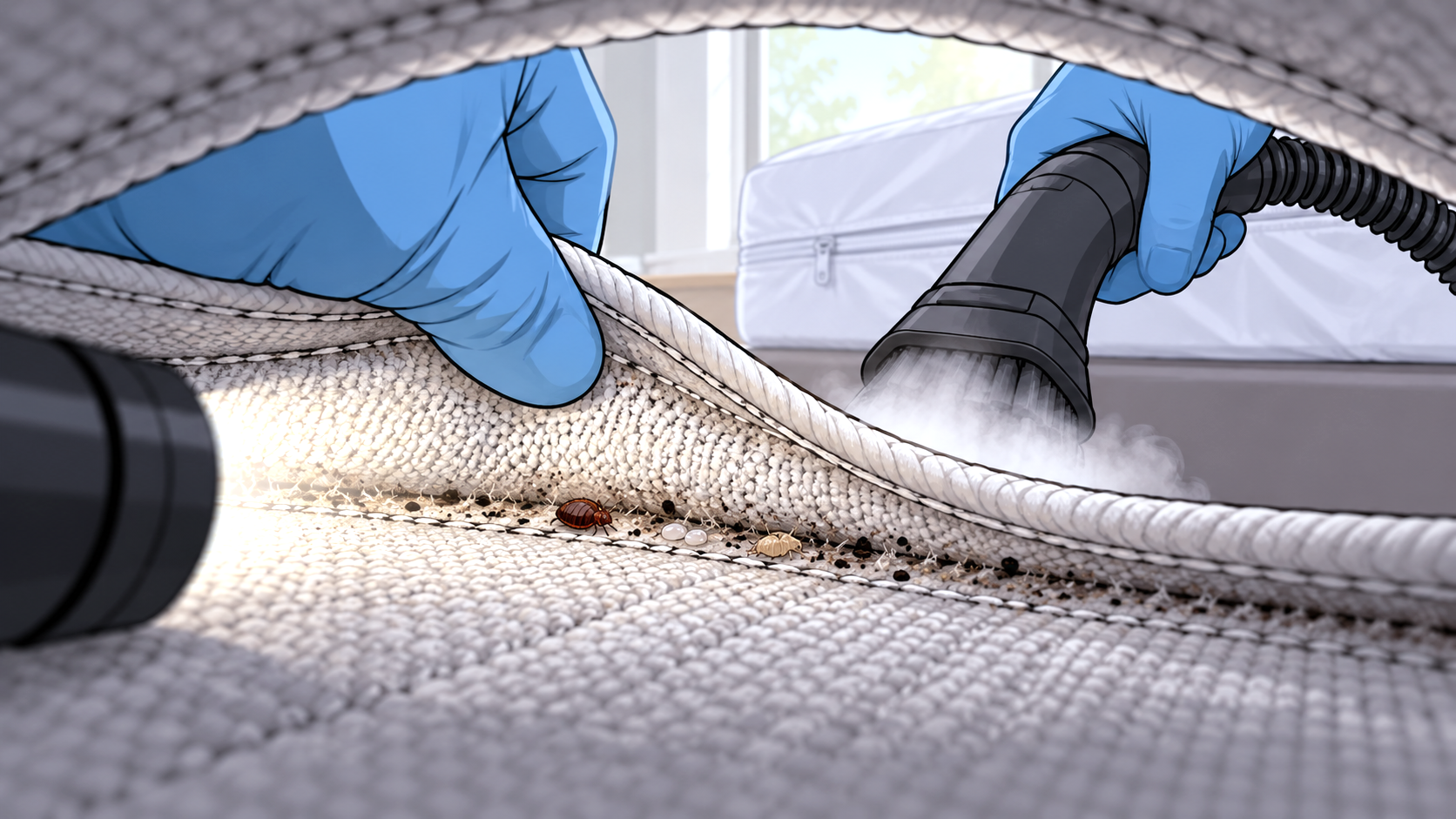
Finding bed bugs in a mattress does not automatically mean the mattress belongs at the curb. In many cases, keeping it is actually the better option.
A bed bug-infested mattress usually does not need to be thrown away if it can be safely treated and enclosed in a bed-bug-proof encasement. Vacuuming can physically remove exposed bugs and eggs, while a properly fitted encasement traps bugs remaining inside and removes many mattress hiding places. The mattress still has to be treated as part of the wider room infestation.
Don’t Throw the Mattress Away Automatically
Throwing away an infested mattress can be expensive without solving the underlying bed bug problem.
Bed bugs may also be hiding in the box spring, bed frame, headboard, baseboards, furniture and other nearby harborages. Replacing the mattress while those bugs remain simply introduces a new bed into the same infested environment.
Instead, furniture that can be safely treated should generally be kept rather than discarded. This is especially useful with mattresses because purpose-built bed bug encasements provide a way to trap bugs already inside while preventing additional bugs from using the mattress itself as a hiding place.
If the infestation extends beyond the mattress, getting rid of bed bugs requires treating the wider infestation, not repeatedly replacing belongings where bugs happen to be found.
Start by Inspecting and Vacuuming the Bed
Before covering the mattress, inspect the entire bed carefully.
Pay particular attention to mattress seams, piping, labels and folds, then work through the box spring, bed frame and headboard. Bed bugs favor narrow protected spaces, so the obvious flat surface of the mattress may reveal far less than its edges and adjoining structures.
Vacuuming can physically remove visible bed bugs and eggs. A crevice attachment helps reach seams and narrow joints where the insects hide. Vacuuming is not a complete treatment. Bugs or eggs hidden too deeply to reach can remain behind.
Dispose of the vacuum contents carefully afterward. If the vacuum uses a disposable bag, seal that bag inside another plastic bag and place it in an outdoor trash container. A bagless vacuum requires careful emptying and cleaning so captured bugs are not released elsewhere.
Encase the Mattress and Box Spring
After the bed has been inspected and the treatment steps appropriate to the infestation have been completed, a bed-bug-proof encasement can remain around the mattress.
A proper encasement surrounds the entire mattress and closes completely. It is not the same thing as a fitted mattress protector with an exposed underside.
The cover serves several purposes at once. Bed bugs already inside become trapped, while bugs outside can no longer enter the mattress to use its seams and folds as harborages. The smooth exterior also makes subsequent inspections considerably easier.
Choose an encasement specifically designed for bed bugs. It needs a zipper that closes completely and material durable enough to resist tearing.
Once installed, inspect it periodically for damage. A hole or failed zipper can defeat the containment the cover is supposed to provide.
The Box Spring May Be Even More Important
Don’t concentrate so heavily on the mattress that the box spring gets ignored.
A traditional box spring contains numerous protected spaces where bed bugs can hide. Its fabric covering, wooden framework, joints and internal voids make inspection more difficult than checking the exposed surfaces of many mattresses.
That is why, if you can afford only one encasement, the box spring should receive priority.
Ideally, both the mattress and box spring are encased when both are present and potentially involved. Covering the mattress while leaving a heavily infested box spring immediately underneath it leaves a major harborage untouched.
Leave the Encasement in Place
Don’t unzip the encasement periodically to see whether the bugs inside have died.
EPA recommends using an encasement strong enough to remain intact for a full year and leaving it in place for that period.
Bed bugs are remarkably capable of surviving long periods without feeding. Opening the cover prematurely can release surviving insects and undo the containment.
You can continue using and sleeping on the properly encased mattress normally. In fact, maintaining the normal sleeping location is generally preferable to moving into another room and potentially encouraging the infestation to spread toward a new sleeping area.
If a pest management professional gives different instructions as part of a specific treatment plan, follow those instructions instead.
An Encasement Does Not Eliminate the Whole Infestation
This is the limitation that matters most.
An encasement deals with bed bugs inside the enclosed mattress or box spring and makes the bed easier to inspect. It does not trap bugs hiding in the bed frame, headboard, nightstand, baseboards, upholstered furniture or elsewhere in the room.
Purdue’s bed bug guidance specifically notes that encasements improve control but do not eliminate an infestation when bed bugs are present elsewhere.
The rest of the treatment may involve laundering and heat-drying appropriate items, vacuuming, steam, monitoring, reducing hiding places and properly selected pesticide treatments where necessary.
An encasement works best as one component of that larger plan, not as a replacement for it.
If the Mattress Really Does Need to Go
Some mattresses are not worth saving.
A badly damaged mattress that cannot hold an encasement securely, an item that cannot be adequately treated, or furniture a pest management professional recommends discarding may reasonably be removed.
If that happens, don’t carry an exposed mattress through the building and leave it intact at the curb.
Wrap or contain it as much as practical while moving it so bugs are not dropped along the route. Then destroy or clearly mark infested furniture before disposal. EPA specifically suggests ripping covers, removing stuffing or marking the item “Bed Bugs” so someone else is not tempted to take it home.
Arrange collection promptly and follow any local disposal requirements.
Discarding a mattress responsibly protects someone else from unknowingly turning your discarded furniture into the beginning of their own infestation.
Questions About Bed Bugs in Mattresses
Can you sleep on a mattress after putting a bed bug encasement on it?
Yes. A properly installed bed-bug-proof encasement is designed to remain on the mattress while the bed continues to be used. Check it periodically for tears or zipper problems without opening it.
Should I encase a brand-new replacement mattress?
An encasement can protect a replacement mattress by eliminating many of its potential hiding places and making future inspections easier. Replacing the old mattress does not eliminate bed bugs elsewhere in the room, so the surrounding infestation still has to be addressed.
Can bed bugs bite through a mattress encasement?
A bed-bug-proof encasement is specifically designed to trap bugs inside and prevent them from escaping to feed. Its effectiveness depends on remaining fully closed, intact and correctly fitted.
What if I find a bed bug on the outside of the encasement?
That suggests the bug came from somewhere outside the enclosed mattress. Inspect the bed frame, box spring if it is not separately encased, headboard and surrounding areas rather than removing the mattress cover.
One thought on “How to Get Rid of Bed Bugs in Your Mattress”