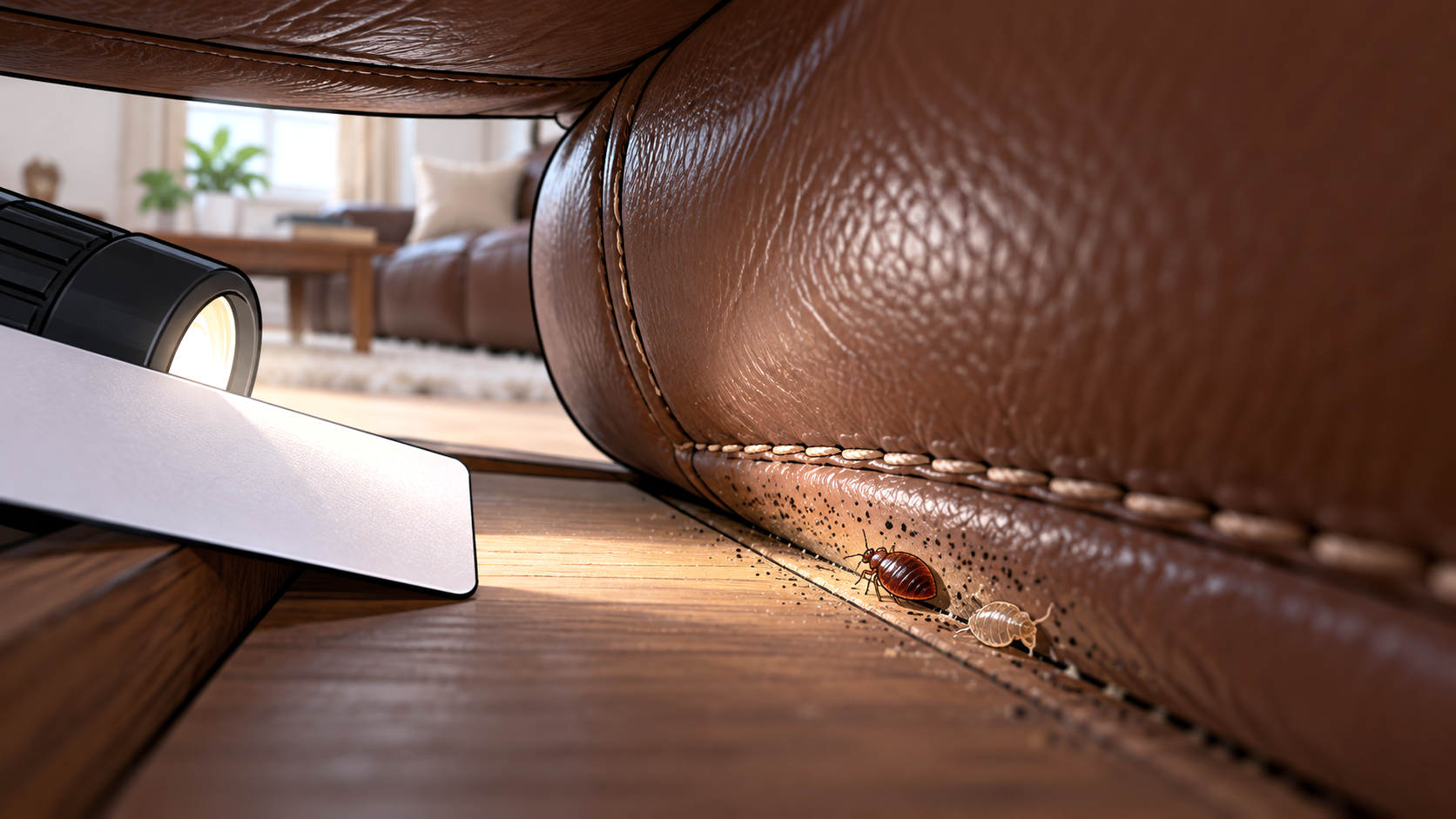
Bed bugs can live in a couch, including leather furniture. They do not need fabric upholstery to survive. What matters is whether the furniture gives them protected cracks, seams, joints, and other hiding places near someone who regularly sits or sleeps there. Couches deserve particular attention because stuffed sofas and chairs are among the most common places to find bed bugs after beds. A couch used for long periods, especially one someone regularly naps or sleeps on, gives bed bugs both hiding places and regular access to a host.
Where Bed Bugs Hide in a Couch
The broad upholstery surface is rarely the most important part of a couch inspection. Bed bugs prefer narrow, protected spaces, which means the construction details deserve most of your attention.
On upholstered furniture, a thorough inspection should concentrate on zippers, fabric seams, skirting, areas beneath cushions, and other crevices. Removable cushions should come off so their seams and decorative edges can be examined separately.
The frame matters just as much. Look inside the couch, around joints and fasteners, beneath the cushions, and around the springs if they are accessible. Then turn the furniture over and inspect the underside rather than assuming a clean-looking seating surface means the couch is clear.
Bed bugs are small enough to use spaces that are easy to miss during a casual inspection. Their habit of occupying cracks and crevices is also why bed bugs can live in wood furniture, even though wood itself is not what they need for survival.
Leather Furniture Can Have Bed Bugs Too
A leather couch does not prevent a bed bug infestation.
Leather may look less hospitable because its exposed surfaces are relatively smooth, but a couch is much more than its upholstery. Stitching, cushion edges, zippers, folds, frame joints, fasteners, and the underside of the furniture still provide protected spaces.
For that reason, we would not clear a leather sofa simply because its visible leather surfaces look clean. Inspection should concentrate on the construction of the furniture, especially the places where separate pieces meet.
The same principle applies to vinyl and other relatively smooth coverings. Bed bugs are capable of moving on furniture and hiding wherever the structure provides a suitable crevice. Upholstery material alone is a poor way to judge whether a piece is safe.
A Couch Can Become the Main Harborage
Bed bugs are strongly associated with beds because people remain relatively still there for hours, but beds are not their only resting-area habitat. Infestations can occur in living rooms as well as bedrooms, and the best places to inspect are the areas where people regularly sleep or rest.
That makes the way a couch is used more informative than whether it is leather or fabric. A rarely used chair in an empty room and a sofa where someone sleeps every night do not present the same conditions.
This also means a living-room infestation should not automatically be treated as something separate from the rest of the home. Bed bugs can be transported on belongings and furniture, so finding them in a couch warrants a broader inspection of the places where people spend extended periods resting.
How to Inspect a Couch for Bed Bugs
Start by removing every cushion that can be removed. Examine the seams, piping, folds, zippers, labels, and the recessed areas where the cushions normally sit.
Next, inspect the exposed frame and any accessible springs or support structures. Pay particular attention to cracks, joints, screw holes, staple lines, and narrow gaps. Turn the couch over and inspect the bottom as well. A proper furniture inspection specifically includes checking beneath the item for bed bugs, droppings, and other evidence.
You’re not looking only for live insects. Eggs, shed skins, and dark fecal spotting can also reveal activity. If you find suspicious evidence but cannot identify it confidently, compare it with the broader signs of a bed bug infestation rather than relying on one stain or mark.
Recliners deserve an especially careful inspection because their construction includes additional joints, moving components, folds, and concealed areas. There is no need to assume a recliner is inherently more likely to become infested than an ordinary couch, but its more complicated structure gives you more places to inspect.
Vacuuming Can Remove Bed Bugs, but It Is Not Complete Treatment
Vacuuming is useful for physically removing accessible bed bugs from upholstered furniture. Concentrate on seams, folds, crevices, cushion edges, and other areas the vacuum can actually reach.
Containment afterward matters. Vacuum bags should be sealed and placed in an outdoor trash container, rather than left indoors where captured bugs could potentially escape.
Vacuuming still should not be treated as proof that a couch is bed bug-free. It removes what the vacuum reaches. Bugs and eggs concealed deeper inside joints, folds, and other inaccessible areas can remain, which is why getting rid of bed bugs in a couch may require more than one control method.
Steam Can Reach Places a Vacuum Cannot
Steam can be useful on furniture because it can penetrate cracks and fabrics that are difficult to treat mechanically. For bed bug treatment, steam must reach at least 130°F and should not be delivered with forceful airflow, since a strong air stream can scatter the insects.
Move methodically across suitable surfaces, seams, folds, and crevices rather than making quick passes. Furniture materials vary, however, and steam can damage some leather finishes, adhesives, fabrics, or internal components. Check the furniture manufacturer’s care instructions before applying heat or moisture to an expensive piece.
Steam is also only one part of control. A couch can contain deep voids and inaccessible structural areas, so treating visible upholstery does not automatically mean every hiding place has reached a lethal temperature.
Be Careful With the Plastic-and-Sun Method
Some guidance for secondhand furniture suggests covering a sofa or chair with clear plastic and leaving it in direct summer sun so trapped heat builds inside. We would not rely on that as the primary treatment for an infested couch.
Heat only works when lethal temperatures reach the insects wherever they are hiding. DIY solar heat treatments depend heavily on climate and other conditions, and a large couch can contain insulated areas that heat much more slowly than its exposed surfaces.
A couch feeling extremely hot on the outside does not prove that its deepest seams, frame cavities, and other harborages became hot enough for long enough. Controlled steam or professional heat treatment gives you far more control over the temperatures actually being delivered.
Used Couches Need Inspection Before They Enter the House
Secondhand couches deserve special caution because bed bugs can hitchhike into a home on used furniture. Inspecting the piece before it crosses the doorway is much easier than dealing with insects after they have had an opportunity to move into the surrounding room.
Do the inspection outside or in another contained area whenever practical. Remove the cushions, examine the seams and frame, inspect underneath, and look for live bugs and their characteristic evidence.
A few days of isolation can give you another opportunity to inspect the furniture, but quarantine by itself is not a treatment. Bed bugs can survive for long periods without feeding, so leaving a couch unused in a garage for several days does not make an infested piece safe.
If you discover bed bugs after the couch is already inside, avoid carrying it through multiple rooms without containment. Moving infested furniture can spread bugs to new parts of the home.
You Usually Don’t Need to Throw the Couch Away
Finding bed bugs in a couch does not automatically mean the furniture has to go.
Furniture that can be treated safely may be worth keeping, particularly when the infestation is accessible and the piece is in otherwise good condition. Discarding infested furniture is unnecessary when it can be safely treated.
If a couch cannot be treated effectively and disposal becomes necessary, do not leave it outside in a condition that encourages someone else to take it home. Clearly mark or damage discarded infested furniture so it cannot simply become another household’s bed bug problem.
Other Questions About Bed Bugs in Couches
Can bed bugs live inside couch cushions?
They can hide along cushion seams, zippers, folds, piping, and other protected areas. Whether they can penetrate deeper into a particular cushion depends on its construction and whether openings give them access.
Can bed bugs move from a couch to a bed?
Yes. Bed bugs can spread through a home and can also be transported on belongings. Finding them in one piece of furniture should therefore prompt inspection of other places where people regularly sleep or rest.
Can you keep sitting on a couch that has bed bugs?
Continuing to use known infested furniture exposes you to further bites and gives the infestation continued access to a host. The better course is to begin an appropriate control plan rather than treating the couch as harmless because the bugs are hidden.
Can bed bugs live in an office chair?
Yes, particularly if the chair contains seams, padding, screw holes, joints, or other protected crevices. The likelihood of an established harborage depends partly on how the chair and surrounding space are used.
One thought on “Can Bed Bugs Live in a Couch or Leather Furniture?”