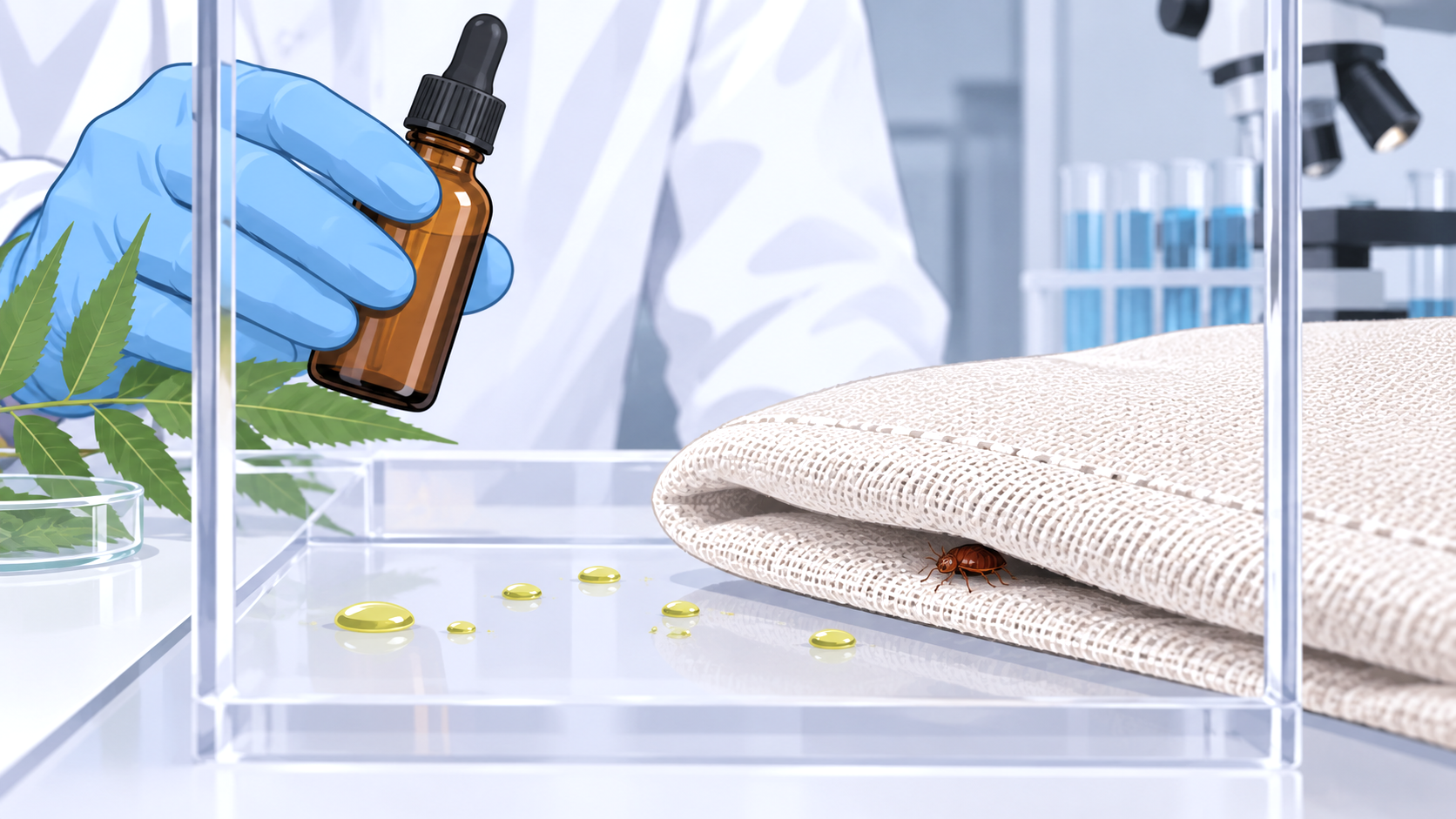
Certain cold pressed neem oil pesticide products can kill bed bugs and prevent their eggs from hatching. EPA efficacy data submitted for registration showed control of adults, nymphs, and eggs when the tested formulations were applied at their approved label rates. That doesn’t mean any bottle of neem oil will work. The evidence applies to pesticide formulations registered and labeled for bed bug control, not cosmetic neem oil, gardening products, or homemade mixtures.
Cold Pressed Neem Oil Is Registered for Bed Bugs
The EPA identifies cold pressed neem oil as the only biochemical pesticide registered for use against bed bugs. Its bed bug pesticide guidance states that performance trials at approved label rates demonstrated control of adults, nymphs, and eggs.
The underlying EPA registration decision provides more detail. In the submitted efficacy trials, treatment residues on surfaces including wood, carpet, mattress swatches, and filter paper killed all tested adults within 24 hours. Directly sprayed adults died within eight hours.
Those results make registered cold pressed neem oil substantially different from an unsupported home remedy.
Cold Pressed Neem Oil Also Works Against Bed Bug Eggs
The egg results are particularly notable.
According to the EPA registration decision, eggs exposed to direct spray, wet treatment residues, or dried residues didn’t hatch under the tested conditions. On treated wood, the residual treatment continued preventing nearly all egg hatch for as long as 19 days.
The EPA data also established different retreatment intervals for the tested formulations. Control of adults and nymphs supported a 14-day interval, while egg control supported a 21-day interval. Those figures describe the products evaluated for registration and shouldn’t be turned into instructions for a different neem product.
Always follow the application rate and retreatment directions on the particular EPA-registered product you’re using.
Not Every Neem Oil Product Is a Bed Bug Pesticide
“Neem oil” describes a broad category of products sold for very different purposes.
The EPA bed bug registration concerns cold pressed neem oil pesticide formulations that have been evaluated and labeled for that use. A current EPA-approved label for one bed bug product, for example, lists cold pressed neem oil at 5.5% as its active ingredient and specifically identifies indoor use against bed bugs and their eggs.
That’s different from neem oil sold as a cosmetic, hair product, skin product, or pesticide labeled only for garden pests.
An EPA registration number alone also isn’t enough. Check that the actual product label lists bed bugs and follow the permitted application sites and directions.
Is Azadirachtin What Kills the Bed Bugs?
It isn’t accurate to describe azadirachtin as the registered active ingredient in the bed bug products discussed above.
Neem contains numerous biologically active compounds, and azadirachtin is a well-known neem-derived insecticidal compound. However, EPA treats azadirachtin and cold pressed neem oil as distinct pesticide active ingredients. The bed bug registration discussed here is for cold pressed neem oil itself.
That distinction matters because the effectiveness demonstrated for a registered cold pressed neem oil formulation shouldn’t be attributed to one constituent without evidence establishing that constituent as responsible for the observed bed bug control.
Does Neem Oil Kill Bed Bugs Immediately?
Not necessarily immediately, but the EPA efficacy trials show that the registered formulations weren’t limited to slow growth-regulating effects.
Direct spray killed all tested adults in less than eight hours, while adults exposed to treated residues died within 24 hours under the registration trials.
That evidence is more relevant to bed bugs than trying to predict performance from azadirachtin research conducted on unrelated insect species.
Actual results in a home still depend on applying the product according to its label and reaching the permitted surfaces where bed bugs are present.
Neem Oil Shouldn’t Be the Only Part of Bed Bug Control
An effective pesticide doesn’t automatically eliminate an entire infestation. Bed bugs hide deeply in furniture, cracks, crevices, and other protected locations where a spray may not reach them.
The EPA recommends an integrated approach combining appropriate pesticides with nonchemical measures rather than depending on one product alone. That can include inspection, laundering and heat treatment of suitable items, vacuuming, encasements, monitoring, and other measures appropriate to the infestation.
The broader process of getting rid of bed bugs therefore matters even when you’re using a pesticide with demonstrated efficacy.
Questions About Neem Oil and Bed Bugs
Can I use ordinary garden neem oil on bed bugs?
Don’t assume so. Use only a pesticide whose label specifically permits bed bug treatment. A neem product intended for plants, cosmetics, or another purpose hasn’t automatically been approved or demonstrated effective for indoor bed bug control.
Does cold pressed neem oil kill bed bug eggs?
Registered cold pressed neem oil formulations demonstrated ovicidal activity in EPA efficacy testing. Eggs exposed to the tested direct sprays and residues failed to hatch under the study conditions.
How often should you apply neem oil for bed bugs?
Follow the label of the specific registered product. Don’t create a treatment schedule from general neem oil information because permitted application rates and retreatment intervals are product-specific.
Can neem oil eliminate a bed bug infestation by itself?
It shouldn’t be treated as a guaranteed standalone solution. Even an effective pesticide must reach the insects or expose them to an effective residue. Combining properly labeled pesticides with other bed bug control methods gives you a more complete approach.
2 thoughts on “Does Neem Oil Kill Bed Bugs?”