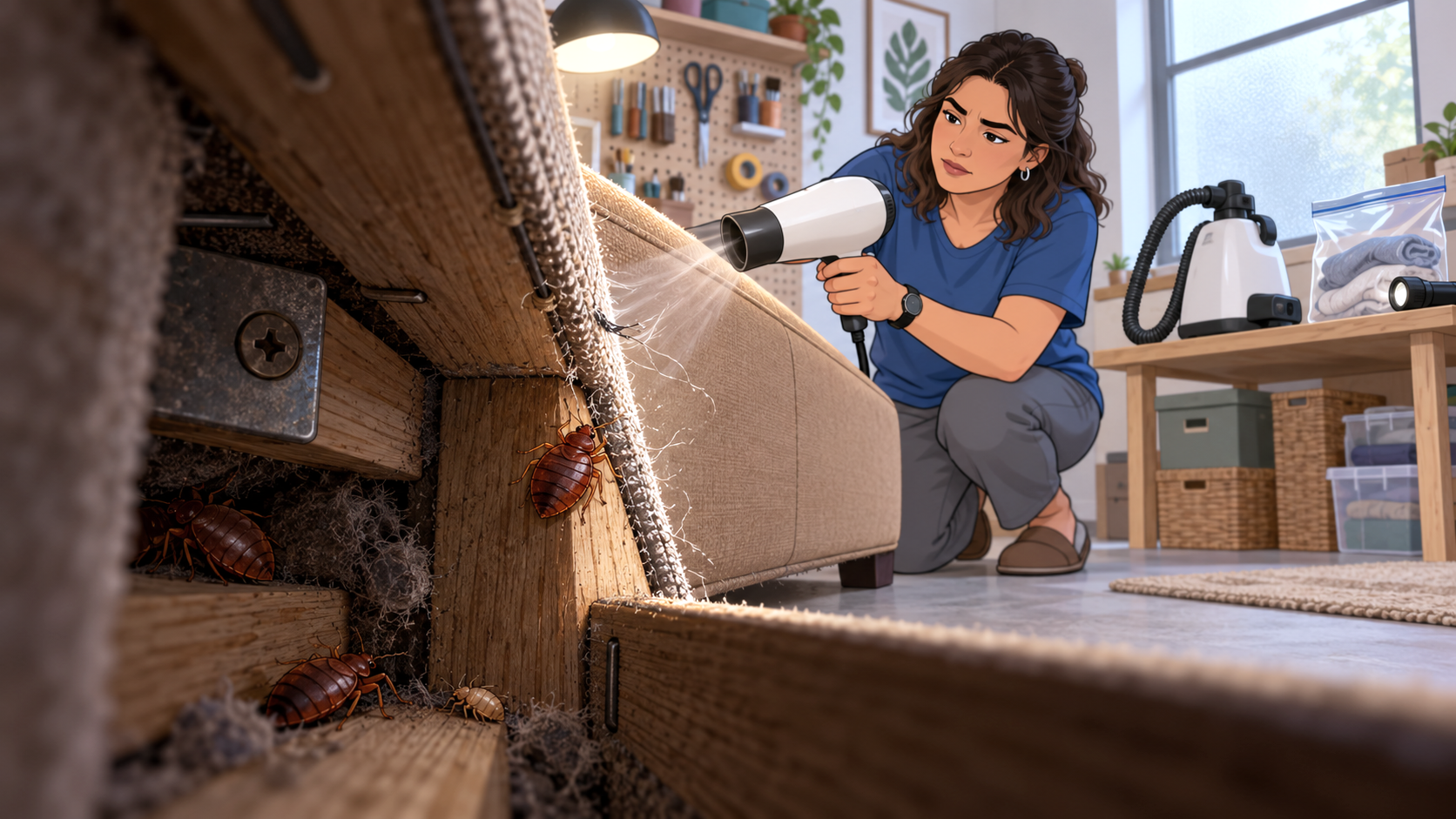
Yes, a hair dryer can kill bed bugs when used as a small, targeted heat treatment. The useful part is its narrow scope. A hair dryer can direct lethal heat into accessible cracks, crevices, seams, luggage, headboards, and some hard items. It cannot reliably heat an entire room or replace a clothes dryer or professional heat treatment.
How to Kill Bed Bugs With a Hair Dryer
There is a surprisingly specific technique for doing this properly. Forced air from a hair dryer can reach temperatures lethal to bed bugs, but guessing whether your dryer feels hot enough isn’t the method.
Set the hair dryer to high heat and preferably low speed. Hold a meat thermometer approximately two inches from the end of the dryer and let it sit there for about one minute. The recommended target for this technique is above 140°F. Hair dryers can run hotter than that, which is exactly why measuring the output matters rather than assuming every model produces the same temperature.
Once you’ve confirmed the temperature, direct the hot air slowly along the cracks and crevices where bed bugs may be hiding. Lift seams and pocket flaps so the air can reach underneath them. Moving slowly matters because the surface and hiding spot need time to heat rather than simply having hot air pass over them.
Watch for bed bugs escaping as you work. The airflow itself can dislodge them before the heat kills them, so any bugs that come out can be vacuumed, crushed, or picked up with a lint roller.
Why 140°F Isn’t the Bed Bug’s Actual Lethal Temperature
The 140°F figure needs some context because it would be easy to read it as the minimum temperature required to kill a bed bug. It isn’t.
Heat kills bed bugs according to both temperature and exposure time. At lower temperatures, they need longer exposure. At higher temperatures, lethal exposure happens much faster. Bed bugs and their eggs can be killed at temperatures considerably below 140°F, with eggs generally requiring more heat or exposure than adults and nymphs.
For the specific hair-dryer method, however, the recommended measured output is above 140°F. That gives the method considerably more heat at the nozzle than the minimum thermal death point. The distinction matters because measuring 140°F in the outgoing air doesn’t mean every hidden surface or crevice instantly reaches 140°F.
That’s also why moving the dryer slowly is part of the technique.
Where a Hair Dryer Actually Makes Sense
This method is much more useful when you stop thinking of a hair dryer as a miniature room heater. Its strength is being able to put hot air into a small place that would otherwise be awkward to treat.
Luggage is a particularly good example. Cracks, seams, pockets, and folds give bed bugs plenty of protected hiding places, yet a suitcase may not be something you can simply tumble through a clothes dryer. Hair dryers can also be used on headboards, plastic furniture, and other hard items where the heat can be directed into accessible hiding spots.
Mattresses aren’t completely excluded either. Hot air can be directed along mattress seams, piping, and folds, although that doesn’t turn a hair dryer into a complete mattress treatment. Bed bugs can occupy areas the airflow doesn’t adequately reach, which is why targeted heat shouldn’t be confused with treating an entire infestation.
For clothing and other items that tolerate tumbling, a household dryer remains the much more practical option. A hot clothes dryer can expose an entire load to lethal temperatures instead of requiring you to chase individual hiding places one at a time.
Use a Bathtub or White Sheet for Movable Items
There’s one part of this technique we wouldn’t skip. A hair dryer doesn’t just produce heat. It also produces enough airflow to blow a bed bug out of the place you’re treating.
For movable items such as luggage or plastic furniture, work in a dry bathtub or over a white sheet. A displaced bed bug is much easier to spot against those surfaces than on carpet, bedding, or clutter.
That changes what would otherwise be an easy mistake. Without a controlled work area, you could successfully flush a bed bug from a suitcase only to lose sight of it somewhere else in the room. The treatment hasn’t helped much if the bug simply escapes into another hiding place.
For the same reason, using a hair dryer outdoors can make sense for suitable movable belongings. Once a bed bug has been blown off outside, it is no longer inside the home.
Don’t Replace the Hair Dryer With a Heat Gun
A heat gun might sound like the better version of the same idea. It isn’t.
The hair-dryer technique specifically calls for a hair dryer and warns never to use a heat gun. Heat guns are designed to produce much higher temperatures for jobs such as stripping paint and working with materials. Bringing that concentrated heat to fabrics, plastics, furniture, or other household belongings creates unnecessary risk of damaging the item or starting a fire.
More heat isn’t automatically better here. The goal is to get a suitable item or hiding place hot enough to kill bed bugs without creating a second problem in the process.
A Hair Dryer Can Also Flush Bed Bugs Out
Killing isn’t the only useful reason to point a hair dryer into a crevice. Hot forced air can also help drive hidden bed bugs into view during an inspection.
That distinction is useful because flushing doesn’t depend on pretending you’ve thoroughly heat-treated every hiding place. Hot air can force bed bugs from cracks and other concealed areas, allowing you to see and remove bugs that were difficult to reach directly. Cornell’s guidance for small appliances similarly describes using a hair dryer to kill or chase bed bugs from hiding places.
We think this is one of the better uses of the method. A hair dryer is inherently directional. Using that limitation to expose a hidden bug makes more sense than expecting the same tool to heat every concealed part of a large object evenly.
If you’re searching rather than treating, our guide to checking a home for bed bugs covers the other places worth inspecting.
Why a Hair Dryer Can’t Heat-Treat a Room
This is where the method stops being useful.
A hair dryer works because you can concentrate heat on a small, accessible area. A room is the opposite problem. Bed bugs can hide inside cracks, furniture, wall voids, and other protected locations where the temperature may remain below lethal levels even while the surrounding air feels extremely hot.
Professional whole-room heat treatment relies on equipment designed to raise and monitor temperatures throughout the treatment area. The difficult part isn’t simply making the room hot. It’s ensuring that lethal temperatures reach the places where bed bugs are actually hiding.
Trying to imitate that by turning up household heat, adding portable heaters, or using other improvised heat sources can create a dangerous situation. Attempting to heat an entire living space yourself isn’t recommended.
A hair dryer is therefore a spot-treatment and inspection tool, not a whole-home bed bug treatment. That’s the line we wouldn’t cross.
When to Put the Hair Dryer Down
The technique makes sense when you have a specific item or accessible hiding place you can work through methodically. Once you’re dealing with bed bugs scattered across a room, multiple pieces of furniture, or several rooms, chasing individual crevices with a hair dryer becomes the wrong scale of treatment.
At that point, the question isn’t whether hot air can kill an individual bed bug. It clearly can. The problem is reaching every bug and egg well enough to eliminate the infestation.
Before choosing a larger heat method, it helps to understand what temperatures actually kill bed bugs. For washable belongings, using a clothes dryer to kill bed bugs gives you a much more controlled way to heat-treat suitable items. For furniture and other surfaces, steam treatment for bed bugs is another targeted heat method with different strengths and limitations.
Other Questions About Killing Bed Bugs With a Hair Dryer
Can a hair dryer kill bed bug eggs?
Yes, provided the eggs themselves receive lethal heat. Bed bug eggs are more heat-tolerant than adults and nymphs, which is one reason simply passing hot air quickly over a surface isn’t enough. The hair-dryer method works best when you move slowly and expose accessible seams and crevices directly.
Can I use a hair dryer on electronics that might have bed bugs?
Potentially, but don’t assume an electronic device can safely tolerate the heat. A hair dryer can be used to push heat into some unplugged appliances, but the device should be unplugged first and its manufacturer guidance checked before exposing it to elevated temperatures. Working outdoors, over a white sheet, or in a bathtub also makes escaping bugs easier to find.
Will a hair dryer kill bed bugs hiding deep inside furniture?
Only if lethal heat actually reaches them. That’s the major limitation of this method. Hot air directed across an outer seam doesn’t prove that a protected hiding place deeper inside the furniture reached the necessary temperature.
Is a hair dryer better than steam for bed bugs?
They aren’t interchangeable. A hair dryer provides dry forced air and works well for certain cracks, crevices, and heat-tolerant belongings. Steam can treat mattresses and furniture when used correctly, but it brings moisture and its own safety limitations. Our guide to using steam against bed bugs covers that method separately.
Can I use the hair dryer without a thermometer?
We wouldn’t rely on that for a treatment intended to kill bed bugs. Hair dryers differ in their actual output, and feeling that the air is “very hot” doesn’t tell you its temperature. The thermometer check is what turns this from guesswork into a measurable heat treatment.
One thought on “Can a Hair Dryer Kill Bed Bugs?”