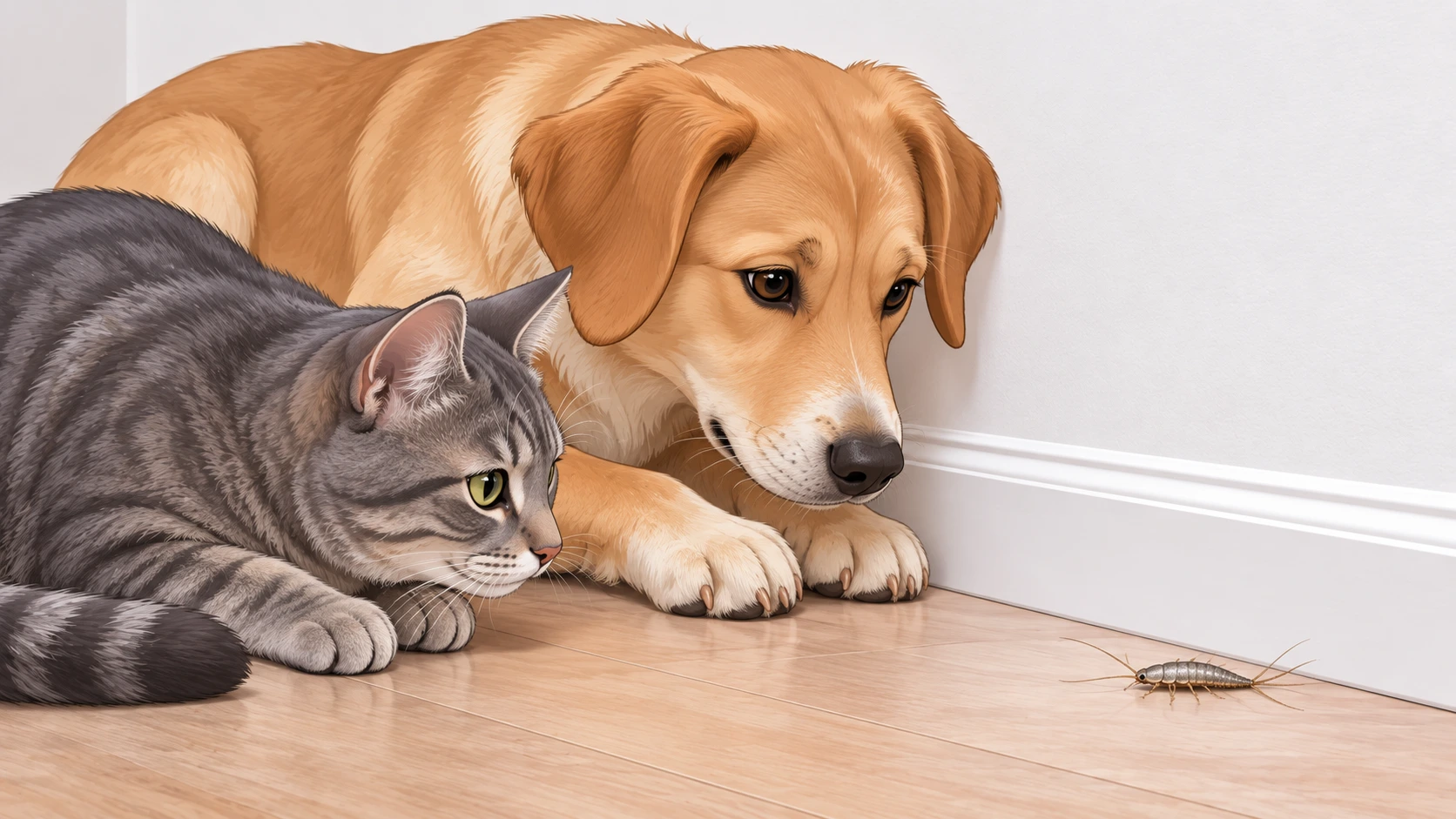
Silverfish are not considered poisonous to cats or dogs, and accidentally swallowing an ordinary silverfish is generally a low-risk encounter. These small insects do not bite or sting pets, and they are not known to attack or feed on animals. The greater concern arises when a silverfish has been exposed to insecticide or when a curious pet gets into pest-control products used around the home.
Cats may chase silverfish across floors, while dogs sometimes sniff, paw at, or swallow insects they discover. An occasional encounter with an untreated silverfish is generally not a reason to panic. However, suspected pesticide exposure deserves veterinary advice because the chemical, amount, and animal’s size can change the risk considerably.
Are Silverfish Poisonous to Cats and Dogs?
Silverfish are not recognized as poisonous insects. Their normal feeding behavior involves consuming starches, paper, adhesives, and other organic materials rather than producing toxins to defend themselves.
A cat or dog that catches an ordinary silverfish is therefore unlikely to experience poisoning from the insect itself. Silverfish also lack the biting and stinging adaptations that would make them an active physical threat to household pets.
The silverfish and pet safety information from Orkin identifies these insects as nonpoisonous when ingested, although preventing pets from eating them remains sensible. There is an important qualification. This assessment concerns an ordinary silverfish without pesticide contamination. An insect that has contacted an insecticide-treated surface presents a different exposure question.
What Happens If Your Dog Eats a Silverfish?
A dog that swallows an ordinary silverfish is generally unlikely to experience a toxic reaction. Silverfish are small insects, and accidental ingestion of an untreated specimen is not ordinarily considered a poisoning emergency.
Dogs investigate household insects using their noses and mouths. Some will chase a silverfish across the floor before swallowing it, while others may eat one they discover beneath furniture.
An occasional encounter is generally low concern. However, no individual pet’s response can be guaranteed from the insect’s identity alone.
Can eating several silverfish make a dog sick?
Eating multiple insects is a different situation from swallowing one accidentally. A large quantity of unfamiliar material may cause digestive upset, particularly in a small dog.
We would also consider whether the insects came from an area treated with pesticide. A dog that repeatedly catches silverfish in the same treated location may have been exposed to something other than the insects themselves.
Contact your veterinarian if your dog develops vomiting, diarrhea, unusual drooling, weakness, or other concerning changes after eating insects. These symptoms are not specific to silverfish ingestion, so the cause should be assessed rather than assumed.
Are Silverfish Dangerous to Cats?
Silverfish are not normally dangerous to cats. Their small size and lack of biting or stinging behavior make an ordinary encounter relatively harmless.
Cats frequently investigate moving insects, particularly those that cross open floors or emerge from sheltered spaces. A silverfish may trigger a short chase, followed by the cat batting at or swallowing it.
An occasional untreated silverfish is not generally expected to cause poisoning. However, a cat’s exposure to insecticide can be substantially more concerning.
What if your cat catches and eats silverfish?
A cat that swallows one ordinary silverfish will generally not need special treatment solely because of that encounter.
Remove any remaining insects and check whether the area has recently been treated with an insecticide. If there is a possibility that the insect contacted pesticide residue, contact your veterinarian for advice.
Cats groom themselves frequently, which can also expose them to substances deposited on their fur or paws. An insecticide-contaminated surface can therefore present a different risk from an untreated insect.
Can silverfish hurt a kitten?
An ordinary silverfish is not known to attack kittens or use them as a food source. Its small size and feeding biology do not make it a predator of household pets.
Kittens may be more likely to investigate and swallow insects because of their curiosity. Prevent repeated access to crawling insects and check for any pesticide treatments in the area.
For a kitten that has swallowed several insects or develops unusual symptoms, contact a veterinarian rather than estimating safety from the number of insects alone.
Can Silverfish Bite Cats or Dogs?
Silverfish do not bite cats or dogs. Their mouthparts are adapted for scraping food materials rather than piercing animal skin.
A silverfish crawling across a dog’s paw or a cat’s fur is not attacking the animal. It is most likely moving across the surface while trying to reach another sheltered location.
This also means that unexplained skin marks on a pet should not automatically be attributed to silverfish. Other insects, skin conditions, irritation, and unrelated medical problems may produce similar observations.
A pet scratching itself after a silverfish encounter does not establish that the insect caused the irritation. The physical appearance of silverfish can help establish whether the insect involved was actually a silverfish.
The Bigger Pet Risk Is Often Insecticide Exposure
The insect itself is generally a much smaller concern than products used to control it.
Cats and dogs can encounter insecticides through several routes. They may lick treated surfaces, walk through residues and groom their paws, inhale airborne products, or swallow bait and other pest-control materials.
An insect that has been sprayed directly or has contacted a treated surface may also carry pesticide residue. A dog eating that insect or a cat batting it around could therefore be exposed to the chemical. The National Pesticide Information Center’s pet-exposure guidance explains that pesticide risks depend on the product’s toxicity, the amount involved, and the route of exposure.
Are silverfish that have been sprayed with insecticide dangerous to pets?
They may present a risk, depending on the active ingredient, formulation, and amount of residue involved.
A silverfish killed by an insecticide should not automatically be treated as equivalent to an untreated insect. Some products can harm animals when swallowed or absorbed through the skin.
Pet Poison Helpline identifies ingestion, skin exposure, and contact with insecticide products as possible routes of poisoning. Its insecticide toxicity information for pets explains why the chemical involved and the animal’s species matter when assessing an exposure.
The risk cannot be determined simply by knowing that the insect was sprayed. The product label and likely exposure are needed.
Can silverfish bait stations poison pets?
Pest-control bait products are designed to contain active ingredients that affect the target insects. A pet may be exposed if it chews a station, accesses spilled bait, or reaches material that was placed where animals can investigate it.
Do not assume that a bait station is harmless because it is enclosed. Its physical construction, placement, and label instructions determine how it should be used around pets.
Keep products inaccessible to animals and use only formulations approved for the intended setting. If a pet chews a bait station or swallows its contents, retain the packaging and contact a veterinarian.
What Symptoms Should You Watch for After a Suspected Exposure?
An ordinary silverfish encounter does not normally call for medical monitoring. Symptoms become more relevant when a pet may have swallowed an insecticide-treated insect or contacted a pest-control product.
Possible signs of insecticide poisoning include:
- Excessive drooling or unusual salivation.
- Vomiting or diarrhea.
- Weakness or unusual lethargy.
- Uncoordinated movement.
- Muscle twitching or tremors.
- Seizures or collapse.
- Difficulty breathing.
These symptoms are not unique to pesticide poisoning. Their appearance does not establish which product or insect was responsible.
The Merck Veterinary Manual’s insecticide-poisoning reference explains how clinical signs vary according to the chemical and exposure. Nervous-system effects can become particularly serious with certain insecticides.
When should you call a veterinarian?
Contact your veterinarian promptly when you know or reasonably suspect that your pet swallowed an insecticide-treated silverfish or accessed a pesticide product.
Do not wait for symptoms to appear after a credible chemical exposure. The veterinarian needs to know which product was involved, how exposure may have occurred, and when it happened.
Difficulty breathing, seizures, collapse, and severe tremors warrant emergency veterinary attention.
Do not induce vomiting or give milk, oil, charcoal, or home remedies unless a veterinary professional specifically directs you to do so.
When contacting the veterinarian, have the following information available:
| Information | Why it matters |
|---|---|
| Product name and active ingredient | Identifies the chemical involved |
| Possible amount swallowed or contacted | Helps determine exposure severity |
| Time of exposure | Helps guide veterinary assessment |
| Observed symptoms | Helps the veterinarian evaluate the situation |
The National Pesticide Information Center’s guidance for pesticide poisoning in pets provides additional information about reporting and assessing suspected pesticide incidents.
How to Keep Cats and Dogs Safe During Silverfish Control
Silverfish control does not require exposing household pets to unnecessary insecticide. Identification and attention to the conditions supporting the insects should come first.
If you have pets, consider the following precautions when dealing with a silverfish problem:
Secure stored pest-control products. Keep sprays, powders, gels, and bait stations inaccessible to animals. Store them in their original containers with their labels intact.
Avoid placing products where pets investigate. Cats may reach shelves and cabinets, while dogs can sniff and lick floors and baseboards. Follow product placement restrictions rather than assuming an area is safe because it is rarely used.
Remove accessible dead insects. Vacuuming or collecting insects from reachable surfaces reduces opportunities for pets to swallow them, particularly after a treatment.
Respect the product’s reentry and application instructions. Do not allow pets back into treated areas until the label permits it. Different products have different requirements.
Consider nonchemical measures where suitable. Removing accessible debris, correcting moisture problems, and reducing sheltered materials can address conditions supporting silverfish without automatically introducing additional chemical exposure.
An integrated natural silverfish-control approach can be useful when you want to reduce insect activity while limiting unnecessary pesticide use.
For established activity, the main silverfish removal approach provides the broader inspection and control framework.
What If Your Pet Keeps Eating Silverfish?
Repeated insect consumption deserves attention even when individual encounters have been uneventful.
A cat or dog that regularly catches silverfish may have access to an area where the insects remain active. The repeated behavior also increases the possibility of encountering insects that have contacted pest-control products.
Record where your pet catches them and whether the insects appear in the same room or around the same storage area. Check whether pesticide products have been used nearby, including treatments applied by a professional.
For persistent silverfish activity, identifying the source and reducing access to the insects is preferable to relying on your pet to stop investigating them.
The signs of an established silverfish infestation can help establish whether the household problem requires further investigation.
What Pet Owners Should Remember About Silverfish
Silverfish are generally harmless to cats and dogs when encountered in their ordinary, untreated form. An occasional accidental ingestion is not normally expected to cause poisoning, and these insects do not bite or sting pets.
Pesticide exposure requires a different response. A silverfish that has contacted insecticide, a pet that licks treated surfaces, or an animal that reaches bait or spray products may face a chemical exposure risk that cannot be judged from the insect’s appearance.
When a suspected exposure occurs, identify the product and contact a veterinarian rather than attempting a home remedy. That response addresses the actual risk without treating every silverfish encounter as a veterinary emergency.