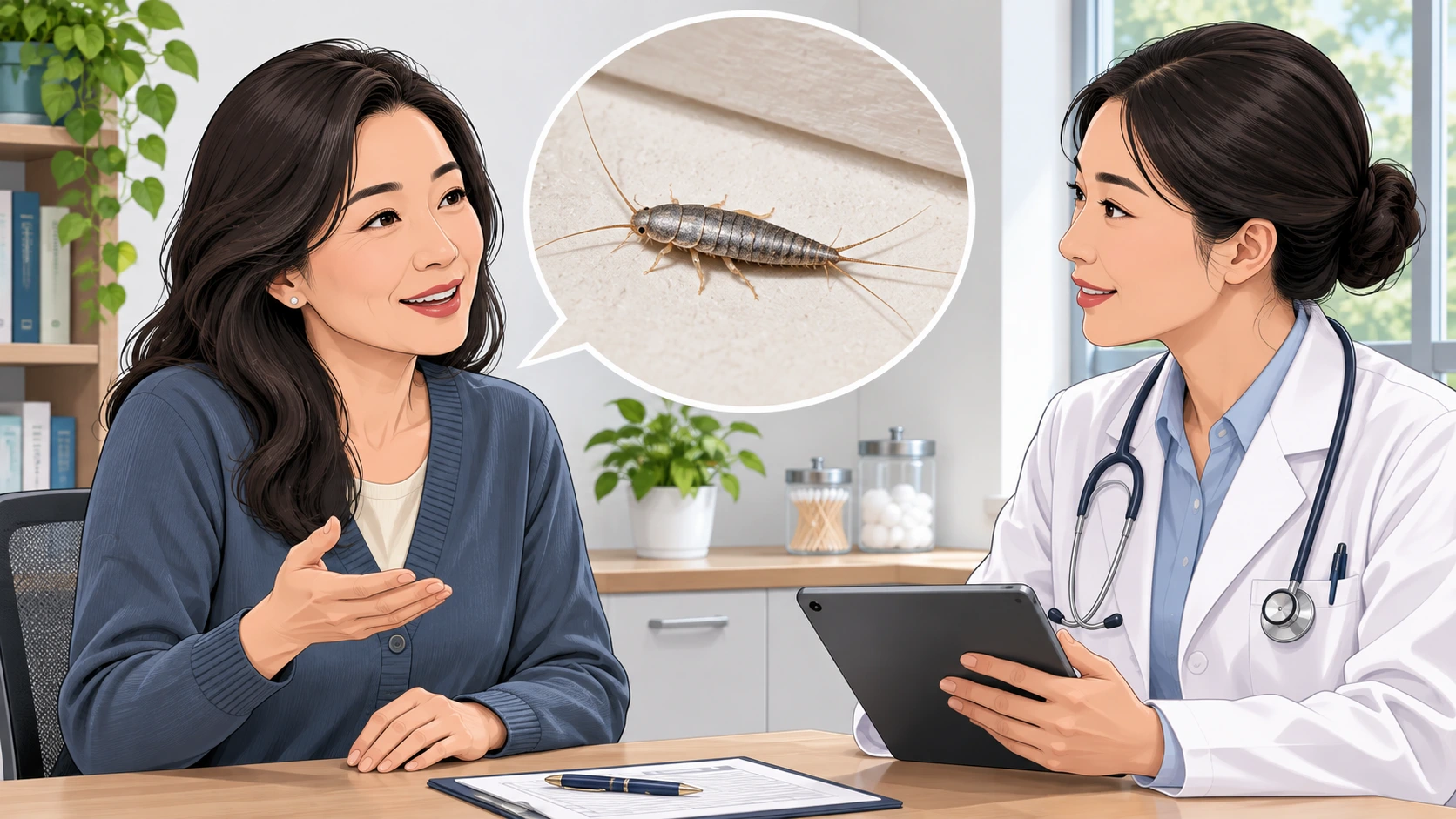
Silverfish can produce proteins that have allergenic properties, and scientific research has identified silverfish-specific immune reactions in people with respiratory allergies. However, evidence that a person has become sensitized to silverfish does not automatically prove that the insect is causing their symptoms. The clinical significance of silverfish allergens is still less established than that of major household allergens such as dust mites and cockroaches.
The common silverfish (Lepisma saccharinum) has been investigated as a potential source of indoor allergens. Researchers have identified an allergenic protein called Lep s 1 and detected silverfish-derived material in household dust. These findings make exposure biologically plausible, particularly through inhaled indoor particles.
The practical question is whether the exposure is actually responsible for someone’s symptoms. A silverfish found in a bedroom or bathroom cannot establish that relationship by itself.
Can Silverfish Actually Cause Allergies?
Silverfish contain proteins capable of triggering immune reactions in laboratory testing. Research has demonstrated that some people with existing respiratory allergies have immunoglobulin E (IgE) antibodies that recognize silverfish proteins.
IgE is an antibody involved in allergic sensitization. When someone becomes sensitized to an allergen, their immune system produces specific IgE antibodies that recognize particular proteins.
In 2002, researchers characterized an extract of Lepisma saccharinum and identified components that reacted with IgE antibodies from people with inhalant allergies. Subsequent work identified a particular silverfish protein, Lep s 1, as an allergen with biological activity.
The original characterization of silverfish allergens established that silverfish contain proteins worth investigating as indoor allergen sources. However, identifying an allergen is only one part of establishing a clinically meaningful allergy. Researchers must also determine whether ordinary environmental exposure produces symptoms in sensitized individuals.
What is Lep s 1?
Lep s 1 is a silverfish protein belonging to the tropomyosin family. Tropomyosins occur in many invertebrates, including insects and mites.
The protein is particularly interesting because tropomyosins can share similar structures across different arthropods. An immune system already sensitized to one source may therefore recognize similar proteins from another source.
A 2005 study successfully characterized recombinant silverfish tropomyosin and demonstrated IgE recognition and histamine release in laboratory experiments.
The research identifying Lep s 1 as a silverfish allergen provides evidence that the protein has allergenic activity rather than merely being an ordinary insect component. This supports the possibility of silverfish-related sensitization, although it does not establish how frequently the protein causes symptoms in ordinary households.
How Might People Be Exposed to Silverfish Allergens?
The main potential exposure route involves inhalation of allergen-containing household dust.
Silverfish live and forage inside buildings, where their bodies, discarded material, and other insect-derived particles can contribute to the indoor environment. Small particles can become mixed with ordinary dust and potentially enter the air when settled material is disturbed.
A 1996 investigation measured silverfish antigens in 53 household dust samples. Researchers detected silverfish material in most of the samples, including homes where occupants were unaware that silverfish were present.
The study of silverfish proteins in household dust demonstrates that exposure can occur without residents regularly seeing the insects. That finding is particularly relevant to concealed indoor activity. Someone may encounter very few live silverfish while still having insect-derived material in household dust.
Does touching a silverfish cause an allergic reaction?
An ordinary encounter with a live silverfish does not establish an allergic reaction. The more relevant research concerns immune recognition of silverfish proteins and potential respiratory exposure.
Some people may worry after discovering an insect on their clothing, furniture, or bedding. Physical contact alone does not establish that allergen exposure has occurred at a level capable of producing symptoms.
The available research on silverfish allergenicity primarily concerns laboratory immune responses and respiratory allergy investigations. It should not be interpreted as proof that ordinary skin contact routinely causes dermatitis.
Can silverfish shed skins contribute to indoor allergen exposure?
Silverfish periodically shed their outer coverings as they grow. Discarded material can remain in sheltered areas and eventually become part of accumulated household debris.
The presence of insect-derived material in household dust provides a reason to consider concealed silverfish activity when evaluating indoor exposure. However, the specific contribution of shed skins relative to other silverfish proteins and body material has not been established as a precise household exposure measure.
Recognizing silverfish cast skins and molting evidence can help identify activity in areas that occupants rarely inspect.
A cast skin is evidence of insect activity, not a measurement of airborne allergen concentration.
What Symptoms Could Be Associated With Silverfish Allergens?
Silverfish allergen research has focused primarily on respiratory sensitization, particularly in people with asthma or allergic rhinitis.
Potential symptoms associated with respiratory allergies include:
- Sneezing and a runny or blocked nose.
- Itchy or irritated nasal passages.
- Watery or itchy eyes.
- Coughing and respiratory irritation.
- Asthma-related symptoms in susceptible individuals.
These symptoms are common to many indoor and outdoor allergens. Their appearance cannot identify silverfish as the source.
For example, someone who experiences morning congestion in a bedroom may be reacting to dust mites, mold, animal allergens, pollen, or another airborne trigger.
Silverfish material may be present in the same environment without being responsible for the symptoms.
Can silverfish trigger asthma?
Researchers have investigated silverfish sensitization in people who already have asthma or allergic rhinitis.
A 2008 study examined 45 children with respiratory allergic symptoms using tests involving silverfish extracts. The researchers identified IgE-binding components in patient samples and demonstrated cross-reactivity with other indoor allergen extracts.
The findings supported the allergenic properties of silverfish, but the researchers concluded that its actual pathogenic role still required confirmation.
The 2008 investigation of silverfish sensitization in children is particularly useful because it separates laboratory evidence from proof that silverfish were causing the children’s respiratory illnesses.
We should therefore avoid describing silverfish as an established common cause of household asthma. The evidence supports further consideration in selected allergy investigations, not a general diagnosis.
Can silverfish cause skin allergies or rashes?
The established research on silverfish allergens does not provide a dependable silverfish-specific skin-reaction pattern.
An itchy patch, raised bump, or unexplained rash cannot be identified as a silverfish allergy from appearance alone. Skin irritation has many possible causes, including contact with cleaning substances, other allergens, and unrelated skin conditions.
Silverfish also do not bite people, so an insect discovered near a red mark does not establish that it caused the mark.
A suspected skin reaction should be assessed according to its actual presentation and exposure history rather than attributed automatically to a household insect.
Can Silverfish Allergy Be Confused With Dust Mite Allergy?
Silverfish and dust mites are separate indoor arthropods, but their allergenic proteins can share similarities.
This creates an important interpretation problem for allergy testing. Someone who already has IgE antibodies against dust mite proteins may also react to certain silverfish proteins because of cross-reactivity.
A 1995 investigation of allergic patients in the Netherlands found that approximately 30% of the house-dust-mite-allergic group had IgE antibodies reactive with silverfish, cockroach, and/or chironomid extracts. The percentage applied to the combined group of insect extracts, not to silverfish alone.
The researchers also demonstrated cross-reactivity between the different extracts. A positive antibody result therefore could not automatically establish exposure to the individual insect being tested.
This finding is documented in the research on cross-reactive antibodies to silverfish and other indoor arthropods.
Why cross-reactivity matters
Cross-reactivity occurs when an antibody recognizes similar proteins from different biological sources.
Tropomyosin is one example. Related versions occur in several arthropod groups, so a person sensitized to one source may show an immune reaction to proteins from another.
This complicates attempts to identify the precise source of an allergy using a single positive laboratory result.
A positive silverfish-related IgE result should therefore be interpreted alongside symptoms, exposure history, other allergy results, and the clinician’s assessment.
Are silverfish allergy tests routinely available?
The clinical availability and usefulness of silverfish-specific testing are less established than testing for major household allergens.
Researchers have developed and characterized silverfish allergen extracts, but the scientific literature has also highlighted limitations involving extract preparation, standardization, and clinical interpretation.
We should not assume that every allergy clinic offers a validated silverfish-specific test or that an isolated positive result will establish the cause of someone’s symptoms.
Clinical testing should be selected and interpreted by an allergy specialist, particularly when cross-reactivity with dust mites or other arthropods is possible.
Does Finding Silverfish in Your House Mean You Have an Allergy?
Finding silverfish does not establish that anyone in the home is allergic to them.
An insect sighting confirms that a silverfish was present. It says nothing by itself about whether an occupant has developed specific IgE antibodies, whether relevant particles became airborne, or whether any symptoms are connected to the insect.
The relationship between indoor presence and exposure is more complicated because researchers have detected silverfish-derived material in dust even where residents did not know the insects were present.
Conversely, a home containing visible silverfish does not automatically create an allergic response in its occupants.
The signs of silverfish activity help establish whether the insects are present and whether activity is continuing. They cannot determine whether a resident has developed an allergy.
Does a larger silverfish infestation mean a greater allergy risk?
More insect material inside a building could increase the opportunity for exposure, but there is no established household silverfish count that predicts allergic symptoms.
The amount of allergen in the air depends on several factors, including how much insect-derived material is present, whether particles become airborne, and how an individual responds to the exposure.
There is no scientifically established conversion between the number of silverfish observed and a person’s probability of developing an allergy.
A visible cluster should therefore not be treated as an allergy-severity measurement.
What Should You Do If You Suspect Silverfish-Related Allergy?
Start by separating the medical question from the pest-identification question.
A person with recurring respiratory symptoms may need an allergy assessment regardless of whether silverfish have been found in the home. A clinician can review symptom timing, possible environmental triggers, medical history, and suitable testing.
Record when symptoms occur and whether they change between different environments. Symptoms that improve away from home may suggest an environmental contribution, but they still do not identify silverfish as the specific trigger.
If silverfish activity has been confirmed, document the affected locations separately. Photographs of insects and their resting areas can help establish whether the property contains a persistent pest problem.
An allergy assessment should not be replaced by a pest inspection, and a pest inspection cannot diagnose sensitization.
When should you seek medical advice?
Arrange medical assessment for recurring sneezing, persistent nasal symptoms, unexplained respiratory irritation, or suspected worsening of asthma.
Seek urgent medical care for severe breathing difficulty or other signs of a serious allergic reaction. Anyone experiencing a severe asthma attack should follow their prescribed emergency action plan and obtain appropriate medical assistance.
Do not attempt to diagnose an allergy by deliberately exposing yourself to silverfish, insect debris, or household dust.
Can Reducing Silverfish Activity Help With Allergen Concerns?
Reducing confirmed silverfish activity can reduce the amount of insect material potentially accumulating in the affected areas. It cannot guarantee that allergic symptoms will disappear, particularly when other indoor allergens are present.
A household may contain dust mites, mold, cockroach material, and other airborne allergens at the same time. Addressing one possible source does not automatically resolve the others.
The environmental conditions that support continued silverfish activity, including suitable moisture and concealed shelter, also deserve attention. Their presence should be evaluated separately from the medical cause of someone’s symptoms.
A measured response is more useful than indiscriminate pesticide application. Identify the insect, investigate recurring activity, and choose appropriate control measures without introducing unnecessary chemical exposure.
What the Research Actually Establishes About Silverfish Allergies
The scientific evidence supports several findings about the common silverfish, Lepisma saccharinum.
Researchers have identified allergenic components in silverfish extracts, characterized the tropomyosin allergen Lep s 1, demonstrated IgE reactivity, and detected silverfish-derived antigens in household dust.
Studies involving people with respiratory allergies have also identified cross-reactivity between silverfish and other indoor arthropod allergens.
What remains less certain is the extent to which ordinary household silverfish exposure independently causes clinical allergic disease.
A positive immune test does not necessarily establish actual exposure or prove that an insect is responsible for symptoms. That distinction should guide both medical assessment and household pest investigations.