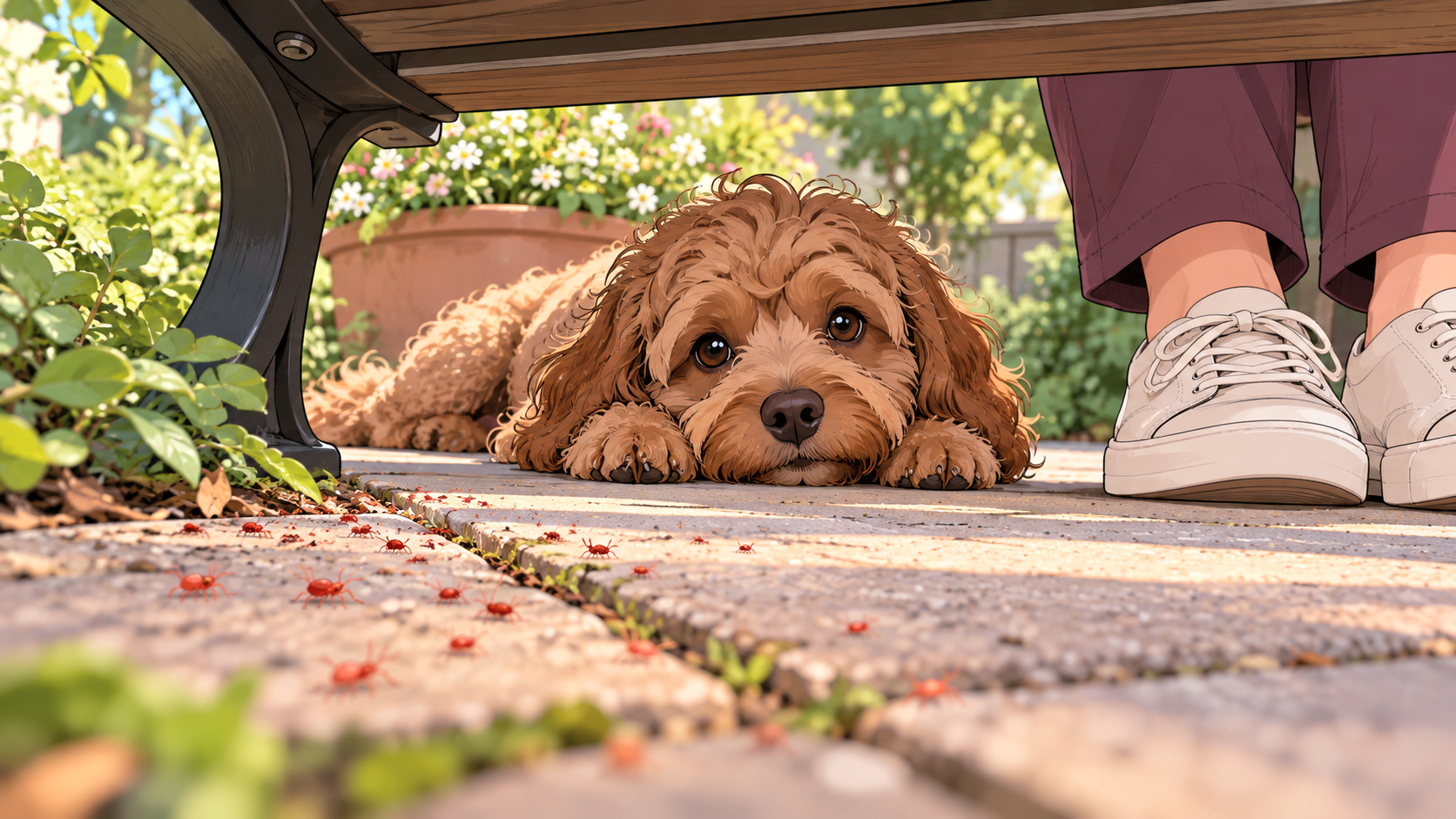
A dog sniffing a patch of tiny red mites or a cat lying beside a mite-covered window can make an infestation feel like a pet problem. Clover mites are not considered harmful to dogs or cats. They do not feed on pets, and multiple pest authorities specifically state that clover mites do not bite pets or harm people or animals. Their natural food comes from plants, not blood, skin, fur, or animal tissue.
They Cannot Establish an Infestation on Your Pet
Clover mites may crawl onto paws, fur, bedding, or pet furniture when large numbers wander indoors, but the animal is only another surface in their path. They cannot reproduce on a dog or cat or remain there as a normal parasite. Clover mites feed exclusively on plant material, and individuals that enter a house eventually die when they cannot reach suitable vegetation. A pet repeatedly encountering them indoors therefore points toward clover mites entering the house rather than an infestation of the animal.
Their appearance can still cause confusion with other mites. Adult clover mites have an exceptionally long first pair of legs, and correctly identified specimens are non-biting to both humans and animals. A pet that is persistently scratching, losing hair, developing crusts, or showing other skin problems should not be assumed to have clover mites merely because tiny mites were found nearby.
Swallowing a Few Clover Mites Is Not a Recognized Poisoning Hazard
A curious pet may lick a mite from its fur or investigate mites crawling near a food bowl. Clover mites themselves are not recognized as poisonous pests, and their harmless relationship with animals does not change simply because one is accidentally swallowed. The conspicuous red material released when a mite is crushed is body pigment rather than blood. There is no established clover mite toxin behind that coloration.
Evidence on pets deliberately consuming large quantities of clover mites is limited, so an unusual ingestion followed by vomiting, excessive drooling, lethargy, breathing difficulty, or another concerning symptom warrants veterinary advice rather than assumptions about the cause. The ordinary toxicity question is much narrower: clover mites are not considered poisonous.
The Treatment Can Present More Risk Than the Mite
Pesticide choice deserves more attention in a pet household than the clover mites themselves. Pets can be exposed when pesticides are misapplied, stored within reach, spilled, or used contrary to label directions. Keep animals away from treated areas for the period specified on the label, protect food and water dishes from contamination, and never apply an insecticide or repellent directly to an animal unless its label specifically permits use on that species. Improper pesticide use can cause unintended exposures in pets, while following label precautions reduces avoidable contact.
Physical removal is often enough for mites that have wandered indoors. Vacuuming avoids crushing them into carpets, pet beds, walls, or upholstery, where their pigment can leave red stains. Preventing additional entry can also reduce the need for repeated pesticide use because sealing routes used by clover mites addresses the invasion without treating the animal. If chemical control is necessary, any insecticide used for clover mites still has to be suitable for the actual treatment site and used exactly as labeled.
Pet Questions About Clover Mites
Should you bathe a dog or cat after finding clover mites on its fur?
A full bath is generally unnecessary for a few mites. Remove or brush them off without crushing them into light-colored fur. If the pet instead contacted a recently applied pesticide, follow the product label and seek veterinary guidance when exposure or symptoms are concerning.
Can clover mites get into pet bedding?
Yes. Wandering mites can crawl across pet beds just as they can appear on furniture, carpets, and other indoor surfaces. Their presence there does not mean they are feeding or reproducing in the bedding.
Should flea or tick medication be used to treat clover mites on a pet?
No pet pesticide should be applied for an unapproved purpose. Products must be used only for the species, pest, dose, and conditions allowed by their labeling, and dog products can be unsafe for cats. A pet carrying a few wandering clover mites does not need to be treated as though it has fleas or ticks.
What if a pet becomes sick after clover mite treatment around the home?
Consider pesticide exposure rather than assuming the mites caused the illness. Keep the product container or label available and contact a veterinarian promptly when symptoms follow a possible pesticide exposure. Pets needing immediate medical attention should receive urgent veterinary care.
One thought on “Are Clover Mites Harmful to Pets?”