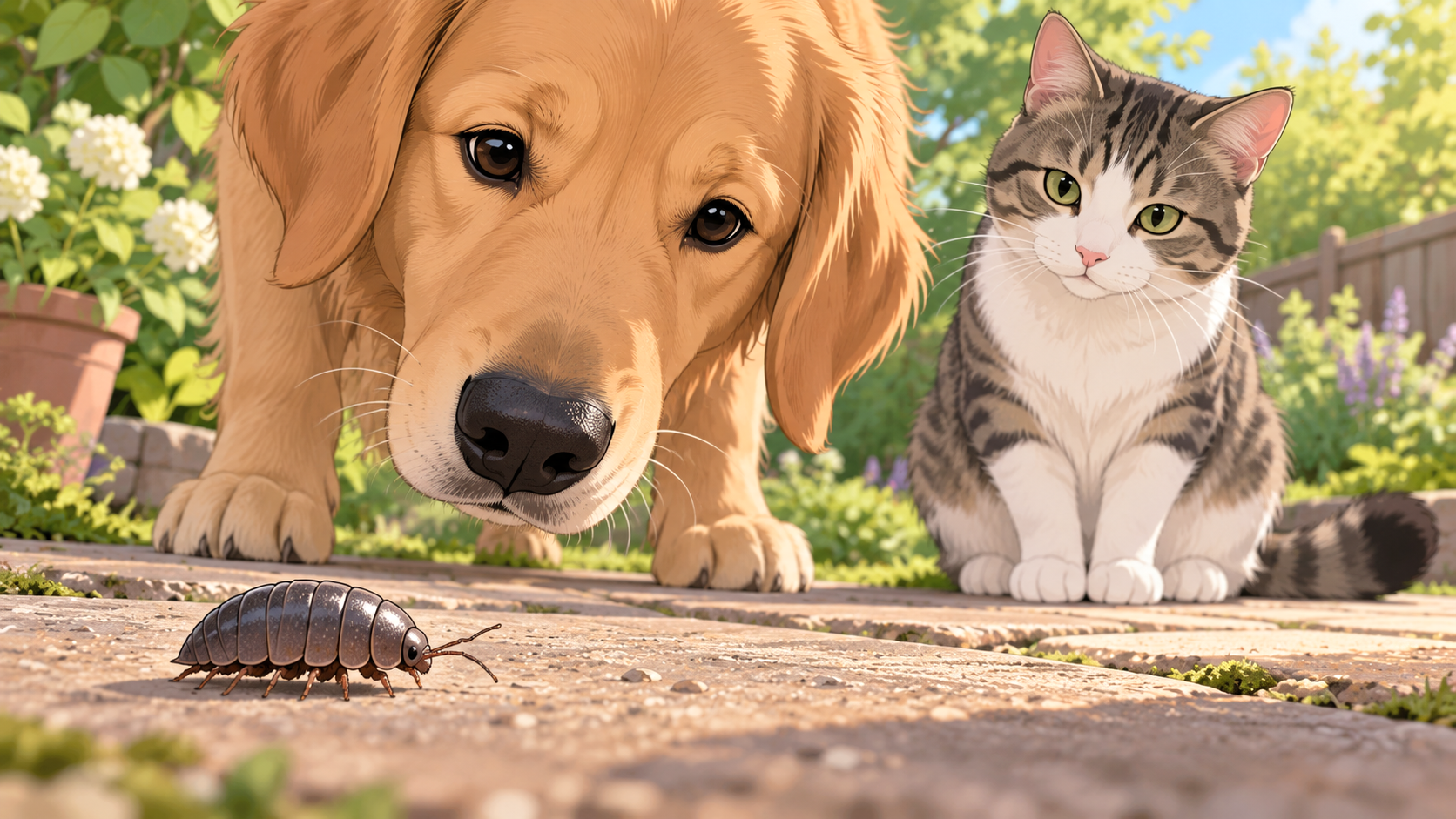
Roly-polies are generally considered harmless to dogs and cats. They do not bite or sting pets, and they are not known as poisonous or venomous animals. If a pet mouths or accidentally swallows one, serious poisoning from the roly-poly itself is not expected. Pesticides used around them can present a separate risk. The distinction becomes important when a dog or cat encounters roly-polies in a treated garden, basement or foundation perimeter. An animal found beside a pest is not necessarily being exposed only to the pest.
Eating One Roly-Poly Is Usually More Unpleasant Than Dangerous
Dogs investigate small moving animals with their mouths, and cats may paw at or eat them while hunting. Pillbugs themselves are described as harmless to people and pets, with no bite or sting that would injure the mouth during ordinary contact. Their defensive response is instead to curl up, which gives roly-polies their familiar ball shape.
There is no established poisoning syndrome in dogs or cats from swallowing an ordinary pillbug. Roly-polies are terrestrial isopod crustaceans, not venomous insects or toxic amphibians. Their usual food consists largely of decaying plant material and other organic matter, and public pest guidance treats them as nuisance organisms rather than a pet-poisoning hazard.
An isolated episode also needs to be distinguished from a pet eating many unfamiliar outdoor objects. Vomiting, diarrhea, excessive drooling or loss of appetite after scavenging can have numerous causes. A roly-poly seen nearby does not prove it caused the symptoms, particularly when the pet also had access to plants, compost, fertilizer, mushrooms, pesticides or other garden materials.
The Roly-Poly May Be Carrying Something From Its Environment
Roly-polies spend their lives against soil, leaf litter, decomposing vegetation and other damp material. Their bodies can therefore carry ordinary environmental dirt and microorganisms, just as other small soil animals can. That possibility is different from the roly-poly being intrinsically poisonous.
Terrestrial isopods can also accumulate metals from contaminated environments. Their ability to concentrate metals has been studied extensively enough that they are used as organisms in terrestrial ecotoxicology, and a recent review describes accumulation of metals including cadmium, copper, lead and zinc. This does not mean a dog eating one backyard pillbug receives a toxic dose. It means the origin of the animal can matter when considering unusual exposures from contaminated industrial soil or another polluted site. A visibly blue roly-poly can be infected with an iridovirus. The striking color can make the animal look dangerous, but the virus responsible for blue pillbugs is described as harmless to pets. A blue individual therefore is not evidence of a contagious pet disease.
Pesticide on or Around a Roly-Poly Can Change the Situation Completely
When a pet becomes ill after investigating an area where roly-polies were being controlled, identify every product applied there before blaming the pillbug. Pets can be exposed to pesticides by licking treated surfaces, walking through residues and grooming their paws, inhaling material during application or directly ingesting granules, baits and liquids. The risk depends on the pesticide, dose and route of exposure.
Some insecticides can cause serious neurological signs. Pyrethrin and pyrethroid poisoning in dogs and cats can produce excessive salivation, vomiting, tremors, weakness, difficulty breathing and seizures, and cats are particularly sensitive to some pyrethroids. A cat trembling after entering a recently treated area therefore needs a very different assessment from a healthy cat that simply swallowed an untreated pillbug.
Baits require similar caution. Products intended for outdoor crawling pests can contain active ingredients unrelated to the biology of roly-polies themselves. Keep pets away from pesticide applications for the period specified on the label, store products where animals cannot reach them, and never assume a treatment is pet-safe because it is sold for garden use.
“Natural” Roly-Poly Treatments Still Need Pet Precautions
Natural origin does not make every pest-control substance appropriate for unrestricted pet exposure. Diatomaceous earth, for example, is not generally considered highly toxic, but dust can irritate the respiratory tract. Pet exposure can be reduced by following the pesticide label and keeping animals away during application. That is relevant when diatomaceous earth is being used against roly-polies in areas where dogs sniff the ground or cats walk and groom afterward.
Neem products also deserve product-specific caution. Reports involving neem oil exposure in cats have included lethargy, excessive salivation, impaired movement, tremors, twitching and convulsions, although the exposures described do not mean every registered neem product presents the same risk. The documented adverse reactions associated with neem oil in cats make label compliance especially important if neem is being considered for roly-polies. Never transfer the safety instructions from one formulation to another merely because both products share an active ingredient or marketing term. Concentration, additional ingredients and application directions can differ.
When a Pet Needs Veterinary Attention
A dog or cat that merely sniffs, paws at or eats a single untreated roly-poly and remains normal generally does not present the same concern as a pet showing clinical signs after a possible chemical exposure. Watch the animal rather than trying to induce vomiting or administering a home remedy without veterinary direction.
Contact a veterinarian or animal poison service promptly if the pet develops repeated vomiting, marked drooling, tremors, seizures, weakness, breathing difficulty, severe lethargy, loss of coordination or another significant change, particularly when pesticides may have been accessible. Bring the product container or label information if a treatment was used. The active ingredient and concentration can be much more useful to the veterinarian than simply reporting that the pet was near roly-polies.
The same approach applies when the amount or substance swallowed is uncertain. If the animal ate pest-control bait, licked a concentrate or chewed a pesticide package, treat that as a chemical-exposure question rather than waiting to see whether the roly-polies living in the treated area disappear.
Pet Questions That Can Change the Assessment
Can a roly-poly get stuck in a dog’s or cat’s mouth?
A roly-poly is small enough that this would be unusual, but any foreign material can potentially become lodged in the mouth or throat. Persistent gagging, pawing at the mouth, choking or breathing difficulty requires prompt veterinary attention regardless of what the pet was chewing.
What if my dog ate several roly-polies from a compost pile?
The location deserves as much attention as the pillbugs. Compost can contain moldy food, spoiled material, mushrooms and other substances that present different risks. Significant symptoms after scavenging in compost warrant veterinary advice rather than assuming the roly-polies were responsible.
Should I remove roly-polies from the yard because I have pets?
Their presence alone is not a pet-safety reason to eliminate them. Roly-polies normally occupy moist outdoor habitat and contribute to decomposition. Intervention makes more sense when they are causing a separate pest problem, not simply because a dog or cat can encounter them.
What if I do not know whether the roly-poly was exposed to pesticide?
Check whether the lawn, garden, foundation or indoor area was recently treated and identify any products that could have been accessible. If your pet develops symptoms or may have contacted a pesticide directly, contact a veterinarian and provide the product information rather than relying on the appearance of the pillbug.