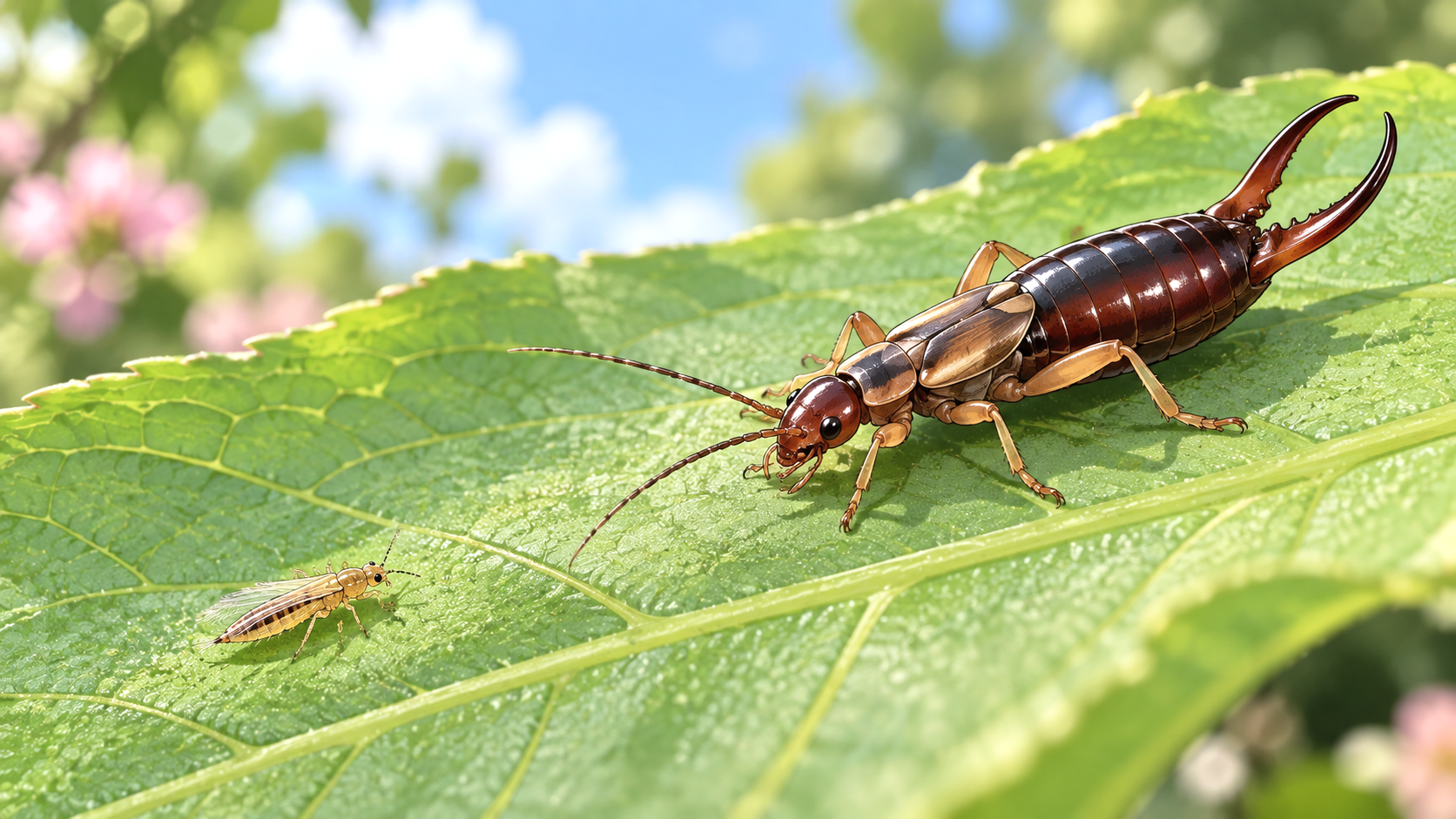
Earwigs and thrips are very different insects, even though both can be found on garden plants. Earwigs are relatively large insects with conspicuous pincers at the rear of their bodies, while thrips are tiny, slender insects with no pincers and, in many adult species, narrow wings fringed with hairs. A European earwig commonly measures about 13–19 millimeters long, whereas most thrips are only about 1–2 millimeters long.
Their feeding damage also differs. Earwigs can chew visible holes and ragged edges in leaves, flowers, and soft fruit. Plant-feeding thrips damage surface cells, commonly leaving silvery streaks, pale flecks, distorted growth, or tiny dark fecal spots. These marks provide useful clues when the insects themselves are difficult to find.
Earwig vs Thrips: The Main Differences
| Feature | Earwig | Thrips |
|---|---|---|
| Insect order | Dermaptera | Thysanoptera |
| Typical size | 13–19 mm for European earwigs | Usually 1–2 mm |
| Body shape | Elongated, relatively robust and flattened | Extremely narrow, often cigar-shaped |
| Rear pincers | Present in typical earwigs | Absent |
| Wings | Short leathery covers; folded hind wings in winged species | Narrow, often fringed with long hairs |
| Antennae | Relatively long and threadlike | Shorter, with distinct segments |
| Plant damage | Chewed holes, ragged edges, damaged buds or fruit | Silvering, stippling, scarring, distorted growth |
| Typical activity | Often feeds at night and hides during daylight | Commonly active on foliage and within flowers |
| Diet | Plant material, insects, and other organic matter | Plant cells, fungi, pollen, or small arthropods, depending on species |
The University of California’s thrips identification guidance describes their small size and distinctive wings. Its European earwig identification information emphasizes the much larger body and prominent abdominal forceps.
Size Is Usually Enough to Separate Them
Imagine examining a flower and noticing a thin, moving speck between two petals. If the insect is barely visible without magnification, thrips are much more plausible than a mature earwig.
Most adult thrips measure less than 2 millimeters, although some species are larger. Their bodies are so narrow that they may resemble miniature dark splinters or moving grains of dust. Young thrips can be pale yellow or nearly translucent, making them even harder to distinguish against light-colored petals.
A European earwig is many times larger, with a clearly recognizable head, thorax, abdomen, and six legs. Even immature earwigs generally become conspicuous well before adulthood.
The Royal Horticultural Society’s account of thrips identifies their extremely small size as a major reason infestations are often noticed through plant symptoms before the insects themselves are detected.
Although different earwig species vary in appearance and size, familiar garden earwigs are substantially larger than most plant-feeding thrips. An unusually small juvenile earwig could initially cause confusion, but its body structure resolves the uncertainty.
Pincers and Fringed Wings Reveal Their Identity
An earwig’s most recognizable feature is its pair of forceps-like appendages, called cerci, extending from the tip of the abdomen. Their shape varies by species and sex. European earwig males generally have more strongly curved pincers than females, but both possess the structures.
Thrips do not have these rear forceps. Their bodies typically taper toward the end without the pronounced paired appendages visible on an earwig.
Wings provide another useful difference when examined under magnification. In many adult thrips, both pairs of wings are long, slender, and bordered with conspicuous hairlike fringes. These structures help explain the scientific name Thysanoptera, meaning fringed wings.
Earwig wings are arranged differently. In the European earwig, short, leathery forewings cover intricately folded hind wings. Despite possessing wings, European earwigs are seldom observed flying.
The North Carolina State University description of Thysanoptera identifies fringed wings as a defining adult feature, while its Dermaptera identification guide describes the distinctive earwig wing arrangement.
Not every thrips specimen has visible wings. Immature thrips are wingless, and some adults of particular species also lack developed wings. Rear pincers and overall body proportions are therefore more useful than wings alone when examining an unknown insect.
Their Feeding Marks Look Different on Leaves and Flowers
Plant damage can be more informative than body color, especially when the insects have already moved away.
Earwigs have chewing mouthparts. When they feed on tender foliage, they can remove sections of tissue, leaving irregular holes, notches along leaf edges, or visibly damaged flower petals. Young seedlings may suffer substantial injury if enough tissue is consumed.
Thrips feed differently. Plant-feeding species puncture or disrupt individual surface cells and consume their contents. The affected tissues can lose their normal color and develop silvery, whitish, or bronze patches. The leaf often remains physically intact at first, rather than developing the open holes characteristic of chewing damage.
The Colorado State University description of thrips injury identifies silvered leaf surfaces, distorted buds, and dark fecal spots as characteristic symptoms. Earwig damage to young fruit, by contrast, can include actual feeding holes or shallow gouges, as documented in UC IPM’s citrus guidelines.
A practical comparison is a young leaf with two different types of marks. Large sections missing from its edges are consistent with a chewing insect such as an earwig. Silvery streaks running across otherwise intact tissue, especially with pinpoint black specks, favor thrips. Neither pattern is exclusively diagnostic, since other insects and plant disorders can produce similar symptoms.
What Are the Tiny Black Dots Around Thrips Damage?
Plant-feeding thrips often deposit small, dark droplets of excrement near feeding sites. After drying, these may appear as black, varnishlike specks on leaves or petals. Their small size means they can easily be overlooked without magnification.
These spots are especially useful when silvery scarring is present. Together, the markings suggest that small surface-feeding insects have been active on the plant.
Earwigs also produce droppings, but the fine combination of silvered tissue and varnishlike specks is particularly associated with thrips. Finding an earwig resting on a leaf bearing those symptoms does not establish that the earwig caused them.
The Royal Horticultural Society’s description of glasshouse thrips notes the pairing of pale mottling and dark excrement spots. The damage associated with actual earwig feeding is better evaluated through missing tissue and direct observation of chewing.
Where on a Plant Should You Look?
Thrips often occupy flowers, developing buds, tender shoots, and the undersides of leaves. Their small size allows them to remain concealed within petals or tightly enclosed new growth. An apparently clean flower may contain several thrips that become visible only when the petals are separated.
Earwigs can also enter flowers, but they are large enough to be much easier to recognize once exposed. They frequently shelter beneath overlapping leaves or inside compact plant structures during daylight.
The University of California’s thrips guidance recommends gently shaking affected foliage or flowers over a light-colored surface to reveal these minute insects. A hand lens can then be used to examine their body shape and wings.
A folded newspaper or similar shelter near a plant may reveal earwigs using it during daylight. Their habit of occupying dark, protected hiding places makes these shelters useful for confirming their presence.
The two methods answer different questions: shaking flowers reveals insects occupying plant tissues, while inspecting nearby shelters can reveal larger insects that have left the foliage.
Can Earwigs Eat Thrips?
Earwigs are opportunistic predators, and some species feed on small arthropods as well as plant material. Thrips are within the size range of potential earwig prey, so predation is biologically plausible when the two encounter one another.
However, this does not establish that earwigs consistently reduce thrips populations or provide dependable biological control against them. Earwig feeding varies with species, available prey, and other food sources.
The University of California’s account of earwig feeding identifies aphids and insect eggs among their prey. Thrips include predatory species as well: some feed on mites, insect eggs, and other thrips rather than consuming plant tissue.
Consequently, neither group should automatically be classified as harmful solely because individuals are present on a plant. Their ecological roles depend on the particular species and what they are doing.
Which Is More Likely to Affect Houseplants?
Thrips are considerably more likely to establish a damaging population on indoor houseplants. Some species can reproduce continuously in greenhouses and heated homes, with several developmental stages occupying leaves, flowers, and nearby growing media.
A houseplant with newly appearing silver patches, distorted young leaves, and tiny moving insects should prompt closer examination for thrips. Their small size allows them to spread between plants unnoticed, especially when newly purchased plants are introduced into an existing collection.
Earwigs found on indoor plants are more often occasional visitors or insects transported with containers and potting materials. They may hide around the pot or beneath leaves, but a single earwig does not suggest the same kind of persistent plant-feeding population.
The Colorado State University guide to houseplant pests identifies thrips as important indoor plant pests and describes their characteristic silvered feeding marks.
An earwig appearing elsewhere inside the house does not establish that it originated from a houseplant, whereas repeated thrips sightings directly on new leaves or flower buds provide stronger evidence of a plant-associated population.
Thrips Can Transmit Plant Viruses; Earwigs Are Not Known for This Role
Certain thrips species are important agricultural pests not only because they feed on plants, but also because they transmit viruses.
Western flower thrips (Frankliniella occidentalis) and several related species can spread orthotospoviruses, including tomato spotted wilt virus and impatiens necrotic spot virus. Infection can cause ringspots, discolored tissues, distortion, and other symptoms that vary by plant species.
The Royal Horticultural Society’s guidance on these plant viruses identifies western flower thrips as an important vector.
Earwigs are not recognized as comparable vectors of these viruses. Their relevance to plant injury is primarily associated with direct feeding rather than transmission of these particular pathogens.
Not every thrips species transmits plant viruses, and not every distorted leaf indicates infection. Nevertheless, confirming whether a suspected insect is an earwig or thrips can materially change how plant symptoms are interpreted.
How to Identify the Insect Without Guessing From Damage
If the insect is visible, start with its size. An adult earwig should be recognizable without a magnifying lens, while most thrips appear as tiny moving lines. A hand lens or a close-up photograph can then reveal the distinguishing structures.
Look first for rear pincers. A clearly developed pair strongly favors an earwig. If the insect is extremely slender, lacks pincers, and has narrow fringed wings, an adult thrips is much more likely. A pale, wingless insect found inside a flower could be an immature thrips, particularly if it is only about a millimeter long.
The insects should also be considered alongside the damage. Chewed openings favor larger chewing pests, whereas surface silvering accompanied by minute black specks favors thrips. When both types of marks occur on the same plant, more than one organism may be responsible.
A careful identification prevents an especially common error: blaming a conspicuous earwig for injuries produced by far smaller insects that are still concealed inside the plant. The presence of an insect is not sufficient evidence of the damage it caused. Body structure and feeding signs should support the same identification before conclusions are drawn.