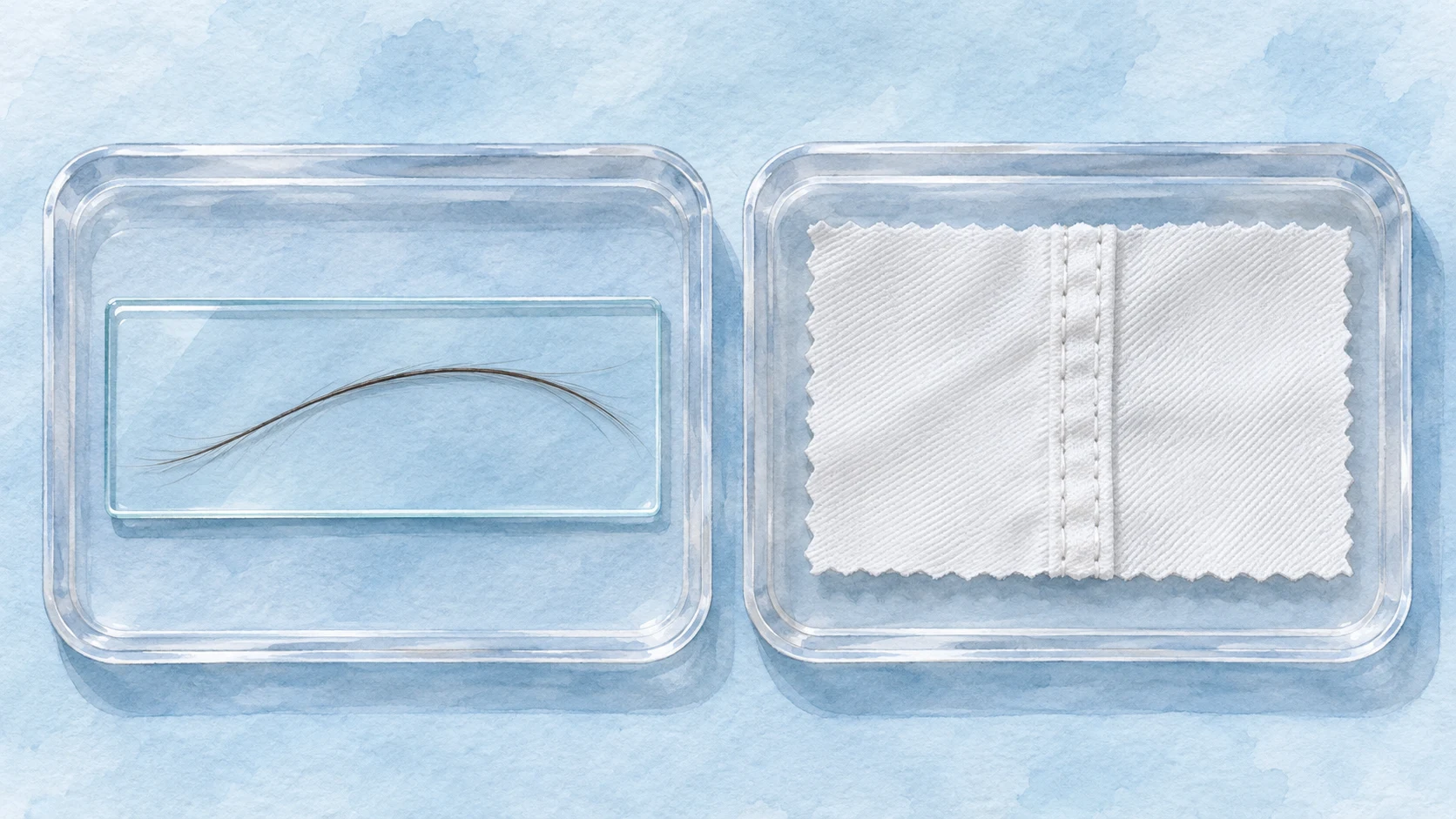
The main difference between head lice and body lice is where they live. Head lice live among human scalp hair and attach their eggs to hair shafts, while body lice primarily live and lay their eggs in clothing, especially along seams. Body lice crawl onto the skin to feed on blood before returning to clothing.
Although these parasites have different living habits, they are closely related and look remarkably similar. Both feed exclusively on human blood, have six legs, and move by crawling rather than jumping or flying. Their most important difference concerns health: head lice are not known to transmit disease, while body lice can spread several serious bacterial infections.
Understanding the biological differences between head and body lice is especially useful because their similar appearance can make an isolated specimen difficult to identify. Where the insects and their eggs are found often provides more useful information than their size or color.
Where Do Head Lice and Body Lice Live?
Head lice spend their lives primarily on the human scalp, moving among hair shafts and remaining close enough to the skin to feed. Their eggs are attached directly to individual hairs, usually near the scalp. Areas behind the ears and around the nape of the neck are common locations.
Body lice have a different relationship with their human hosts. They spend much of their time in clothing, particularly in seams, folds, and other protected areas where fabric remains close to the skin. They leave these hiding places to feed and then return to the clothing.
This difference is fundamental to understanding the two infestations. A head louse is adapted to remaining in scalp hair, whereas a body louse uses clothing as its principal living environment. Body lice may occasionally be seen crawling on the skin, but their presence on the body does not mean they normally reside there continuously.
The clothing-associated habitat of body lice also explains why the insects are sometimes called clothes lice. Clothing provides places for them to shelter and reproduce, while the human body supplies their blood meals.
The distinction is not absolute in every unusual circumstance. Head and body lice are closely related, and their distributions can sometimes overlap. Nevertheless, scalp hair versus clothing remains the most useful general difference.
Do Head Lice and Body Lice Look Different?
Head lice and body lice are so similar in appearance that distinguishing them by sight alone is difficult. Both have elongated, flattened bodies, six legs equipped with gripping claws, and relatively small heads. Their coloration can range from pale grayish or tan to darker shades.
Adult head lice are commonly around 2 to 3 millimeters long. Body lice generally measure approximately 2.3 to 3.6 millimeters, placing them in a broadly overlapping size range.
Body lice may be slightly larger or paler on average, but these tendencies are not dependable identification rules. A large head louse can resemble a smaller body louse, and differences in feeding condition or lighting can change how dark either insect appears.
The documented overlap in head and body lice measurements shows why length alone cannot reliably separate them. Researchers can examine subtle differences in antennae, abdominal structures, and other anatomical features, but those details are generally unavailable during an ordinary visual inspection.
A person who finds a small louse on clothing should therefore avoid assuming its identity solely from its appearance. The insect’s usual habitat and the location of additional lice or eggs are often more informative.
The physical characteristics of head lice are covered separately, including the features that can be recognized without specialized equipment.
Are Head Lice and Body Lice the Same Species?
Head lice and body lice belong to the same closely related group of human parasites. They are commonly classified as two subspecies of Pediculus humanus.
Head lice are known as Pediculus humanus capitis. Body lice are commonly called Pediculus humanus humanus or Pediculus humanus corporis, depending on the taxonomic convention being used.
Their classification reflects their close evolutionary relationship. Genetic research has shown that the two populations are extremely similar, leading some researchers to describe them as different ecological forms, or ecotypes, of the same species.
An ecotype is a population whose characteristics and habits are associated with a particular environment. In this case, scalp hair and clothing provide two different living environments for closely related lice.
Their shared ancestry helps explain why the insects have similar body structures and feeding requirements. However, close genetic similarity does not mean that their usual behavior, transmission patterns, and public-health importance are identical.
Both forms depend on humans for survival. Dogs, cats, and other household pets do not serve as their normal hosts, so finding lice on a person does not mean a pet is responsible for maintaining the infestation.
Where Do Head Lice and Body Lice Lay Their Eggs?
Head lice attach their eggs to individual scalp hairs using a strong adhesive. The eggs remain fixed to the hair shaft, usually close to the skin, where conditions are suitable for development.
Body lice primarily deposit their eggs on clothing fibers, especially along seams and folds. The eggs are secured to fabric rather than routinely attached to scalp hair. Body lice eggs can occasionally be found on body hair, but clothing is their characteristic egg-laying site.
The difference reflects where each parasite spends most of its time. Head lice remain associated with hair, so their eggs are attached there. Body lice occupy clothing, so fabric becomes the principal location for egg deposition.
A small collection of attached eggs on scalp hairs is therefore consistent with head lice, while lice and eggs concentrated in clothing seams are more consistent with body lice.
The structure and attachment of head lice eggs differ in location from the fabric-associated eggs of body lice, even though the eggs themselves are biologically similar.
The location of eggs is often more useful than trying to distinguish the two types of lice through minor anatomical differences.
How Do Head Lice and Body Lice Spread?
Head lice spread mainly through direct head-to-head or hair-to-hair contact. This commonly occurs when people bring their heads close together during play, family activities, or other forms of close contact.
Because head lice live in hair and cannot jump or fly, their usual route to another person involves crawling between hairs that come into contact. Transmission through shared hats, brushes, or other objects is possible but less common.
Body lice are more closely associated with the transfer or sharing of infested clothing and bedding. They can also spread through close contact between people when clothing or fabrics provide opportunities for transfer.
The different transmission patterns of human lice reflect their different habitats. Head lice move between heads, while body lice are frequently transferred through clothing or bedding that contains living insects.
Body lice infestations are particularly associated with situations where people cannot regularly change into clean clothing or wash their belongings. Crowded living conditions and limited access to laundry facilities can make their persistence and spread more likely.
Head lice have no comparable requirement for poor hygiene or limited laundry access. They can infest people with clean hair and occur in households with regular bathing and laundering routines.
The ways head lice spread between people involve a different set of common contact situations from those associated with body lice.
Why Are Body Lice More Strongly Associated With Clothing and Hygiene?
Body lice depend on clothing as a place to shelter and lay eggs. When the same garments are worn continuously without regular laundering or replacement, the insects have more opportunities to remain near their human host.
Regular access to clean clothing interrupts this relationship by reducing the availability of infested fabric. The importance of clothing is therefore biological, not simply a matter of whether someone bathes frequently.
People experiencing homelessness, displacement, extreme poverty, or other circumstances that limit access to laundry and replacement clothing may face increased exposure to body lice. Similar problems can arise in crowded settings where clothing and bedding are shared.
These circumstances should not be treated as evidence of personal negligence. Access to laundry facilities, clean garments, and suitable living conditions is not equally available to everyone.
Head lice operate differently. Their principal habitat is scalp hair, and washing hair frequently does not prevent the insects from being transferred during close head-to-head contact.
The difference explains why head lice can be common among school-age children regardless of household cleanliness, while body lice are more closely associated with prolonged use of infested clothing.
Are Body Lice More Dangerous Than Head Lice?
Body lice present a greater infectious-disease concern because they can transmit serious bacterial pathogens. Head lice can cause itching and skin irritation, but they are not known to transmit disease.
Body lice are established vectors of epidemic typhus, caused by Rickettsia prowazekii; louse-borne relapsing fever, caused by Borrelia recurrentis; and trench fever, associated with Bartonella quintana.
These infections are not inevitable consequences of having body lice. Transmission requires the relevant pathogens to be present, and disease risk varies considerably by geographic location, population, and circumstances.
The diseases associated with body lice are uncommon in the United States, but their potential severity makes body lice a more significant public-health concern than head lice.
Head lice are primarily associated with itching, discomfort, sleep disturbance, and irritation caused by scratching. Scratching can sometimes damage the skin and contribute to secondary bacterial infection, but this is different from the louse transmitting an infectious disease.
Body lice can also cause intense itching, rashes, and skin damage. Repeated scratching may lead to sores or secondary infection, while prolonged infestations can produce more extensive skin changes.
The health effects of head lice infestations should therefore be distinguished from the additional infectious-disease risks associated with body lice.
If body lice are suspected alongside fever, severe headache, rash, or significant illness, prompt medical evaluation is important. The symptoms should not automatically be attributed to lice bites alone.
Head Lice vs. Body Lice: Side-by-Side Comparison
| Feature | Head lice | Body lice |
|---|---|---|
| Principal habitat | Scalp hair | Clothing, particularly seams and folds |
| Where eggs are laid | Attached to scalp hair shafts | Mainly attached to clothing fibers |
| Where they feed | Scalp skin | Skin beneath or near infested clothing |
| Typical adult size | About 2–3 mm | About 2.3–3.6 mm |
| Appearance | Small, flattened, wingless insect | Very similar in appearance |
| Main transmission route | Direct hair-to-hair contact | Infested clothing, bedding, and close contact |
| Relationship to hygiene | Not associated with dirty hair | Strongly associated with limited access to clean clothing and laundry |
| Known disease transmission | No established disease transmission | Can transmit several serious bacterial infections |
| Human host | Humans | Humans |
The comparison illustrates why habitat provides a stronger practical distinction than physical appearance. An insect found among scalp hairs and associated with eggs attached to those hairs fits the usual pattern of head lice. Lice concentrated in garment seams fit the usual pattern of body lice.
Neither location nor appearance should be treated as an infallible identification test, especially when only one insect has been found.
Can Head Lice Live in Clothing Like Body Lice?
A head louse can occasionally end up on clothing, but that does not make clothing its normal habitat. Head lice are adapted to remaining on the scalp, where they can grip hair and feed regularly.
If a head louse becomes detached from a person, it generally cannot survive for long without access to blood. Clothing does not provide a suitable long-term substitute for the scalp.
Body lice, by contrast, are adapted to spending much of their lives in clothing while making repeated trips to the skin for blood meals. Their use of clothing is part of their normal biology rather than an accidental occurrence.
This distinction prevents a common misunderstanding: finding a louse on a shirt does not automatically prove that it is a body louse. A head louse may have been transferred accidentally, particularly when the clothing has been in close contact with the head.
Similarly, finding a body louse temporarily on skin does not mean that it has become a head louse. The two populations are distinguished primarily by their characteristic living habits, not by the surface on which a single insect happens to be observed.
The locations where head lice normally remain on the head help explain why clothing is not their principal living environment.
Can Someone Have Head Lice and Body Lice at the Same Time?
Yes. Because head lice and body lice occupy different primary habitats, a person can potentially experience both infestations at the same time.
One infestation does not biologically prevent the other. Head lice may occupy the scalp while body lice remain in clothing worn by the same person.
However, having lice in scalp hair does not mean body lice must also be present. Likewise, finding body lice in clothing does not establish that the scalp is infested.
The two should be considered separately because their usual habitats, transmission circumstances, and health implications differ. The presence of one type is not sufficient evidence for the other.
This distinction is particularly important when several people share living spaces or clothing. An infestation associated with garments requires a different understanding of exposure than one spreading primarily through close contact between heads.
Why the Difference Matters
Head lice and body lice are closely related parasites, but treating them as interchangeable can lead to misunderstandings about where they live and what health risks they present.
The most useful distinction is the relationship between the insect and its environment. Head lice are associated with scalp hair, including eggs attached to individual hairs. Body lice are associated with clothing, especially seams where they shelter and reproduce.
Their health implications are also different. Head lice are uncomfortable and can cause skin irritation, but they are not established vectors of infectious disease. Body lice can transmit serious bacterial infections, although those infections are not present in every infestation.
Recognizing these differences helps people interpret where lice have been found without relying on minor variations in color, length, or body shape.
Common Questions About Head Lice and Body Lice
Are head lice and body lice the same insect?
They are closely related forms of Pediculus humanus, commonly classified as separate subspecies. They look extremely similar but differ in their usual habitats, egg-laying locations, and public-health importance.
Do body lice live in your hair?
Body lice primarily live in clothing and bedding, particularly along fabric seams. They may occasionally be found on the body or in unusual locations, but scalp hair is the characteristic habitat of head lice.
Can head lice spread disease like body lice?
Head lice are not known to transmit disease. Body lice can transmit pathogens responsible for epidemic typhus, trench fever, and louse-borne relapsing fever.
Are body lice bigger than head lice?
Body lice may be slightly larger on average, but their size ranges overlap considerably. An individual louse cannot reliably be identified as a head louse or body louse based on length alone.
Can clean people get head lice or body lice?
Anyone can get head lice, regardless of hair cleanliness. Body lice are more strongly associated with circumstances that limit regular access to clean clothing and laundry facilities, but an infestation should not be treated as a judgment about an individual’s personal habits.
Do body lice lay eggs on human skin?
Body lice primarily attach their eggs to clothing fibers, especially seams. Eggs may occasionally occur on body hair, but laying eggs directly on skin is not their usual behavior.