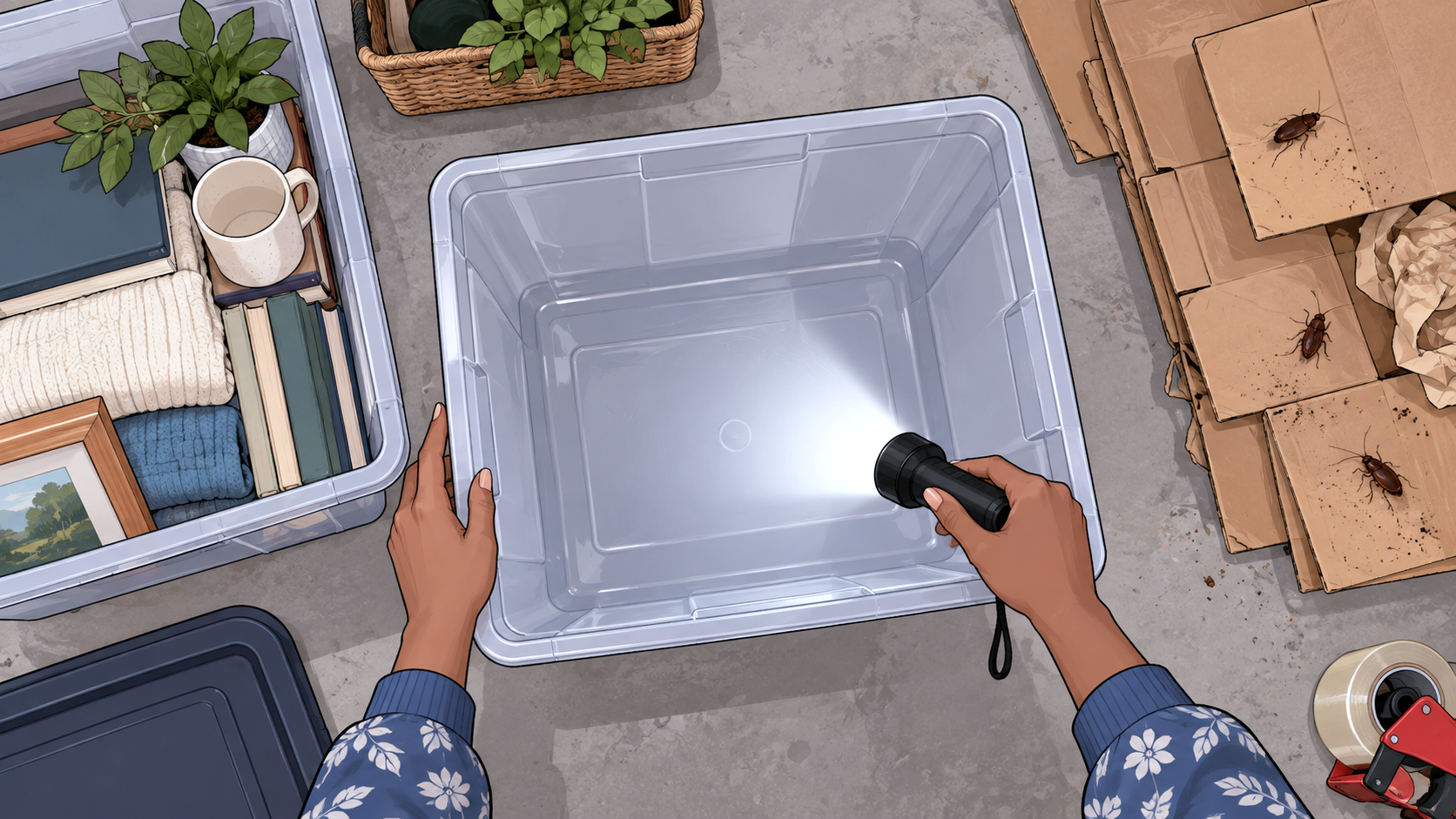
Moving out of a cockroach-infested home creates an opportunity to leave the infestation behind, but packing can accidentally transport the insects into the next property. A cardboard box taken from beneath the kitchen sink, a coffee maker packed without inspection, or furniture containing hidden egg cases can carry cockroaches even when none are visible during loading.
The safest approach is to inspect belongings before packing, use clean sealed containers, isolate suspicious items, and unpack carefully while monitoring for cockroaches afterward. You do not need to throw away everything you own, but objects that offer concealed shelter deserve more attention than belongings that can be thoroughly examined and cleaned.
Start Packing in the Least Affected Rooms
Packing every room simultaneously makes it difficult to distinguish belongings that have already been checked from those that may still contain cockroaches. A more controlled approach begins with areas showing little or no evidence of activity, leaving heavily affected kitchens, bathrooms, and storage spaces until their contents can receive closer inspection.
Before packing, use any existing sightings or monitoring records to identify which rooms need the most attention. The University of California’s cockroach management guidance recommends sticky traps near appliances, cabinets, and wall edges to identify where populations are concentrated. Knowing which areas contain the most activity helps determine how carefully different belongings should be examined.
Establish a clean packing area and separate inspected items from unchecked possessions. After examining an object, place it directly into a new container and close the container rather than leaving it exposed overnight. This prevents inspected belongings from sitting in the same environment where cockroaches may continue moving.
Pay special attention to the narrow spaces cockroaches occupy during the day, because belongings stored against those locations have a greater opportunity to conceal insects. A sealed bag of freshly washed clothing is a different risk from an unexamined box left behind a refrigerator.
Replace Old Cardboard With Clean Plastic Containers
Corrugated cardboard is one of the least desirable packing materials when moving from an infested property. Its folds and internal channels create sheltered spaces, and reused boxes may already contain insects or egg cases.
The University of Minnesota’s cockroach guidance specifically recommends obtaining packing materials from cockroach-free locations, inspecting items before packing, and preventing packed boxes from remaining exposed in infested rooms.
Clean, rigid plastic containers with close-fitting lids are preferable for belongings requiring protection. Their smooth surfaces are easier to inspect, and properly fitted lids reduce opportunities for insects to enter. Check each container before using it, especially if it was previously stored in the affected property.
If cardboard is unavoidable, use new boxes, inspect them before assembly, and tape the seams securely after packing. Do not reuse cartons that contain droppings, egg cases, live insects, or extensive damage. The EPA’s household pest-prevention advice identifies cardboard and paper clutter as potential cockroach shelters and recommends inspecting boxes before bringing them indoors.
Pack completed containers away from infested walls and cabinets whenever possible, and transfer them to a clean holding area promptly. Sealing a box does not eliminate cockroaches already enclosed inside, which makes inspection before closure essential.
Decide Which Belongings Need Extra Attention
Not every possession carries the same likelihood of concealing cockroaches. Smooth, nonporous objects that can be examined on all sides are generally easier to clear than hollow furniture or appliances with inaccessible compartments.
| Belongings | Pre-move precautions |
|---|---|
| Clothing, towels, and bedding | Launder where appropriate, dry completely, and pack immediately into clean sealed containers |
| Plates, cookware, and utensils | Wash, dry, inspect, and seal before moving |
| Books and paperwork | Examine bindings, covers, and stacked paper; replace contaminated storage boxes |
| Furniture | Inspect joints, undersides, drawers, upholstery folds, and hollow sections |
| Small kitchen appliances | Check accessible compartments and external openings; isolate suspicious items |
| Electronics | Inspect externally and contain suspect devices without applying liquids, heat, or insecticides |
| Pantry goods | Retain sound, sealed packages; discard visibly contaminated or exposed food |
| Plants and decorative items | Check pots, saucers, bases, and concealed cavities |
These are practical inspection priorities rather than guarantees that a particular item is free of insects. A cockroach can shelter inside an object without leaving visible evidence on its exterior.
The University of Nebraska–Lincoln’s Cockroach Management Manual recommends thoroughly inspecting belongings before packing, using plastic tubs instead of corrugated cardboard, and unpacking moving boxes outside where practical.
For a heavily affected item that cannot be inspected safely or adequately, consider professional assessment, continued isolation, or replacement. Discarding an entire room of belongings is rarely justified without examining the actual risks.
Pay Particular Attention to Kitchen Appliances
Refrigerators, microwaves, coffee makers, toasters, and similar appliances can contain protected compartments that are difficult to inspect without dismantling equipment. German cockroaches are particularly associated with warm indoor spaces near food and moisture.
Remove accessible crumbs and residue, empty removable trays, and inspect exterior seams and compartments using a flashlight. Unplug appliances before examining them, and follow manufacturer instructions when removing detachable parts. Do not open electrical housings or insert tools into energized equipment.
The University of Florida’s cockroach management guidance identifies appliances and transported household goods as important places to consider when preventing cockroach introductions.
An appliance found with live insects, cockroach droppings, or egg cases deserves more attention than one stored in an unaffected room. Isolate suspicious equipment in an appropriate container rather than placing it among freshly inspected possessions.
Do not spray insecticide into ventilation slots, motors, or electrical components. The EPA’s pesticide safety recommendations require products to be used only according to their labels, and ordinary household cockroach sprays generally should not be treated as appliance-cleaning products.
If an essential appliance contains extensive concealed activity, a pest-management professional can help assess whether it can be treated or whether replacement is more practical.
Furniture, Books, and Storage Items Need Different Checks
Furniture can conceal cockroaches in places that remain undisturbed for months. Remove drawers where this can be done safely, inspect their undersides and runners, and examine the joints of desks, bed frames, wardrobes, and shelving. Upholstered furniture deserves attention around its underside, frame, and fabric folds rather than only the seating surface.
Brown-banded cockroaches are especially relevant because they can occupy relatively dry furniture and elevated locations. The University of California’s identification and management guidance describes their association with furniture, picture frames, and other sheltered indoor objects.
Inspect books individually when they have been stored in affected areas. Pay attention to covers, bindings, and the spaces between tightly packed volumes. Documents can be transferred into clean folders or containers after examination, avoiding the need to transport old cardboard filing boxes.
Look for attached egg cases as well as live insects. Some cockroaches deposit their egg cases in concealed locations, and the places where cockroaches lay eggs differ by species. A sealed moving container could transport an egg case even when no adult insect is present.
Furniture with an inaccessible hollow interior and repeated evidence of cockroach activity may warrant professional evaluation before transport. By contrast, washable furniture with accessible joints can often be retained after careful inspection and cleaning.
Keep Inspected Items Protected During Transport
The moving vehicle creates another opportunity for inspected and unchecked belongings to become mixed together. Load sealed containers without reopening them, and keep items requiring further inspection separate from those already cleared.
Examine the truck or van before loading, particularly if it contains old cardboard, food debris, or other materials left by previous users. Remove unnecessary packing debris and check the accessible floor corners and cargo-space edges. Although a moving vehicle is not automatically infested, its condition should not undermine the precautions taken during packing.
Do not place loose, potentially infested furniture directly against open bags of clean clothing. Wrap or contain suspicious items individually where practical, ensuring that any enclosure does not create an unsafe condition for electrical equipment or trap moisture against delicate materials.
The EPA’s recommendations for preventing pest introductions emphasize inspecting transported materials and limiting the shelter and resources available to insects. For a move, the objective is to preserve the separation between inspected possessions and items that may still contain cockroaches.
Avoid using pesticides inside the moving truck or applying insecticide to packed belongings without explicit label authorization. A poorly directed spray cannot reliably penetrate every concealed compartment and may contaminate items that will later contact skin or food.
Unpack Without Giving Hidden Cockroaches Free Access
Once the belongings reach their destination, resist the temptation to empty every container immediately. Open boxes systematically, preferably on an easy-to-clean surface where escaping insects will be visible.
Check each container’s exterior and interior as it is opened. Transfer its contents to their intended locations only after confirming that no suspicious insects or egg cases are present. Dispose of cardboard promptly rather than accumulating empty cartons in closets or utility rooms.
Prioritize essential clothing, toiletries, and kitchenware, followed by belongings that were packed from lower-risk rooms. Inspect higher-risk furniture and appliances separately before positioning them against walls or connecting them for use.
The University of Minnesota’s moving precautions specifically recommend watching for surviving cockroaches and egg cases after relocation. They also advise examining belongings during packing rather than relying exclusively on inspection at the destination.
Finding an insect while unpacking does not automatically mean the new home has an established infestation. Capture or photograph it, contain the remaining contents of the affected box, and examine nearby belongings before continuing.
The ability of cockroaches to reproduce after introduction makes preventing escaped individuals from establishing themselves more important than determining exactly which container transported the first insect.
Monitor for Cockroaches After the Move
Even a careful relocation cannot guarantee that every insect or egg case was detected. Monitoring provides an opportunity to identify an overlooked introduction before a population becomes well established.
Place sticky cockroach monitors along accessible wall edges near recently unpacked kitchen appliances, storage areas, and furniture that required additional inspection. Keep traps away from children and pets, date them, and check them regularly over the following weeks.
The EPA’s guidance for housing managers recommends monitoring as part of integrated pest management, using observations to identify active areas and evaluate whether additional intervention is necessary.
A single empty monitoring period cannot establish that every cockroach or viable egg case has been eliminated. The time cockroach eggs require to hatch varies with species and environmental conditions, so continue observation beyond the first few days.
Record where any insects are caught and whether they are adults or immature cockroaches. Several nymphs, repeated captures, or fresh droppings appearing around recently unpacked belongings justify a more thorough investigation.
Avoid automatically applying insecticide throughout the new home as a precaution. Targeted action based on actual evidence is preferable to introducing pesticide residues into rooms where cockroach activity has not been established.
When Is Professional Help Worthwhile Before Moving?
Professional pest-management assistance can be valuable when the original property has a substantial infestation, several valuable possessions contain cockroaches, or the move cannot be delayed long enough to assess suspicious items.
A professional may help identify the species, evaluate heavily affected furniture and appliances, and determine whether particular possessions can be treated safely before transportation. Tell the provider that the objective is preventing transfer to another property, not merely reducing sightings in the home being vacated.
The EPA’s integrated pest management principles emphasize identifying pests, monitoring their activity, and selecting controls appropriate to the circumstances. These principles are particularly useful during relocation because treating one building does not necessarily prevent insects already concealed inside packed belongings from being transported.
If the move is imminent, concentrate professional attention on the belongings most likely to conceal a reproductive population. Carefully inspected and securely packed possessions should remain separated from untreated items until loading.