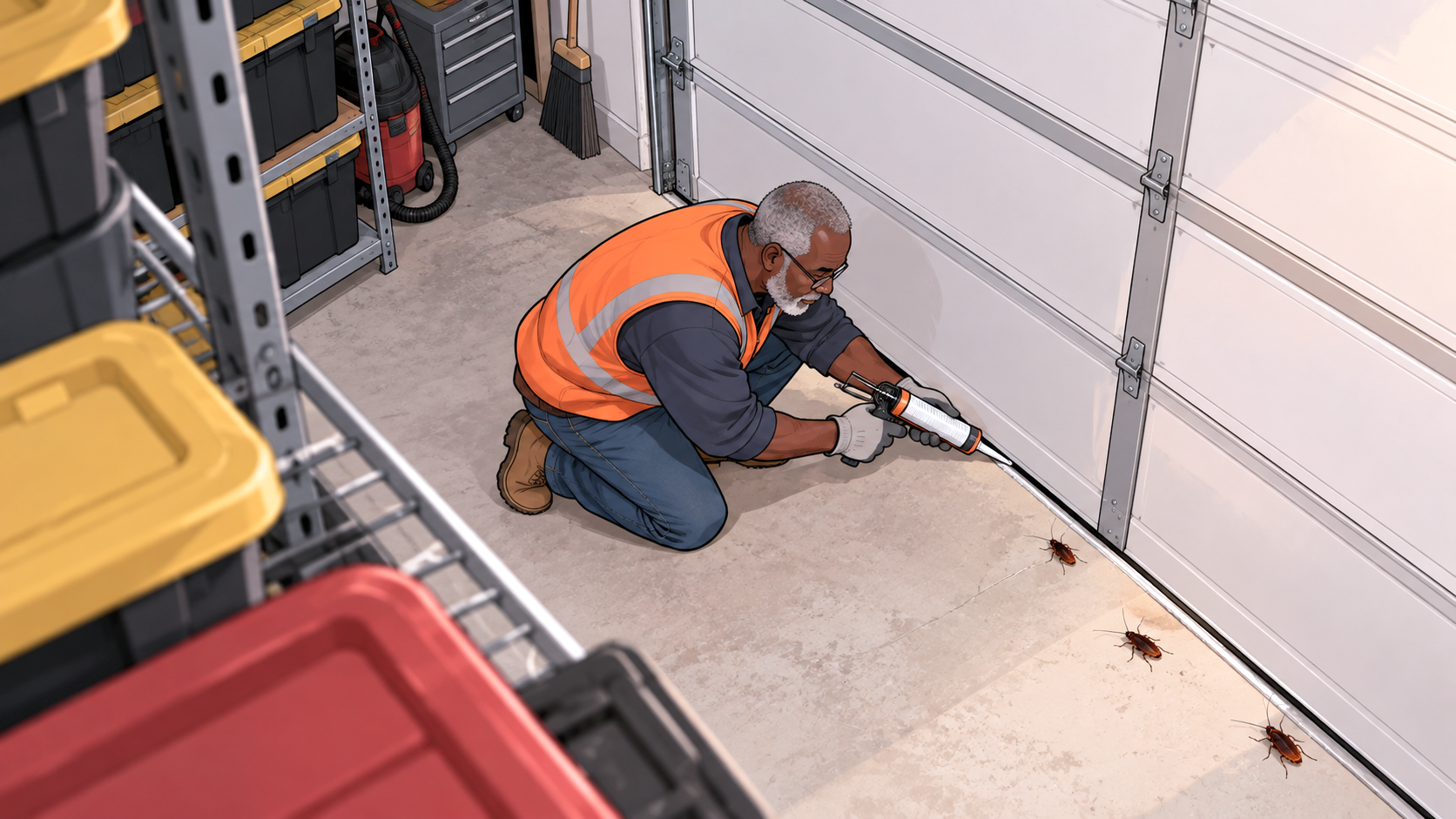
A garage full of cockroaches does not necessarily contain an established indoor infestation. Some species breed outdoors and wander beneath garage doors, while others settle among storage boxes, damp corners, and concealed structural gaps. Treating every insect as though it originated inside the garage can lead to unnecessary pesticide use without correcting the actual source.
To get rid of cockroaches in the garage, identify the species, inspect the door threshold and stored belongings, remove sheltered debris, correct moisture problems, and use targeted bait where monitoring confirms activity. If the insects are entering from outdoors, excluding them may be more effective than treating the garage interior.
Garages also contain vehicles, fuels, tools, and stored chemicals, so pesticide applications require precautions that may not apply in ordinary living rooms.
Determine Whether the Cockroaches Are Living in the Garage or Entering From Outside
The first useful observation is where cockroaches appear. Several large insects near the overhead garage door suggest a different pattern from numerous small cockroaches emerging from a storage cabinet.
American, Oriental, and Turkestan cockroaches frequently occupy outdoor environments but can enter garages through gaps. German cockroaches are more strongly associated with established indoor populations and may arrive inside stored possessions.
The University of California’s cockroach management guidance distinguishes species that normally breed outdoors from German and brown-banded cockroaches, which readily establish themselves inside buildings.
Turkestan cockroaches are particularly relevant in regions where the species occurs. They inhabit pavement cracks, irrigation boxes, drainage structures, and other protected outdoor locations. The University of California’s description of Turkestan cockroaches notes that individuals commonly wander into garages and may die there because typical indoor conditions do not support lasting populations.
A few dead adults near a garage entrance may therefore represent repeated outdoor introductions rather than cockroaches breeding behind the walls. Conversely, multiple nymphs and egg cases among stored belongings warrant investigation for local reproduction.
The differences among cockroach species should guide the response before insecticides are selected.
Check the Garage Door Seal and Threshold
A closed garage door may still leave enough space for cockroaches to enter. Worn bottom seals, gaps at the corners, uneven concrete, and deteriorated weather stripping can create openings beneath or beside the door.
Close the garage door during daylight and inspect its perimeter from inside. Visible light along the bottom or sides may indicate openings that need attention. Examine the rubber bottom seal for cracks, compression damage, or sections that no longer make contact with the floor.
The University of California recommends door sweeps, weather stripping, and sealing exterior openings to prevent outdoor cockroaches from entering buildings.
Repair damaged seals with components designed for the particular garage door. Where the concrete is uneven, an appropriate threshold seal may help, provided it does not interfere with door operation or drainage. Avoid sealing necessary ventilation openings, altering fire-rated assemblies, or obstructing automatic door safety mechanisms.
Check the pedestrian door leading into the house as well. If cockroaches repeatedly enter the garage, an intact interior door seal can reduce the opportunity for them to continue into living areas.
The distance cockroaches travel while exploring connected spaces makes it possible for insects entering through the garage to appear elsewhere, even when their original shelter is outside.
Remove Cardboard and Inspect Stored Belongings
Garages often contain cardboard boxes, unused furniture, newspapers, spare packaging, and other materials that provide numerous narrow hiding spaces. These items can conceal cockroaches even when the concrete floor remains clean.
Start with boxes stored against walls, beneath shelves, or in corners where insects have been observed. Move them into an open, well-lit inspection area and examine the bottoms, folded flaps, and internal seams. Transfer belongings into clean plastic containers with secure lids where practical.
The EPA’s pest-prevention recommendations specifically advise removing piles of cardboard and other clutter because they provide hiding places and interfere with pest management.
Do not overlook seasonal decorations, camping equipment, unused shoes, and furniture awaiting repair. Hollow furniture components and folded fabric can provide shelter, while items stored for months may receive little disturbance.
The daytime hiding preferences of cockroaches explain why insects may remain concealed in these materials even when the garage is frequently opened.
Discard visibly infested cardboard rather than transferring its contents into another old box. Inspect the contents individually before placing them in clean storage. The objective is to reduce concealed spaces without throwing away sound belongings unnecessarily.
Address Moisture Around the Garage Floor
A garage can remain damp because of a leaking water heater, dripping outdoor faucet, condensation, poor drainage, or rainwater entering beneath the door. Some garages also contain floor drains, utility sinks, or plumbing connections that provide moisture.
Inspect dark corners and the bases of storage shelves for water stains, damp cardboard, and persistent wet patches. Repair leaks, improve drainage where necessary, and avoid leaving wet materials stacked against walls.
The University of California’s Turkestan cockroach guidance recommends reducing irrigation and plumbing leaks and correcting moisture conditions near buildings to make surrounding areas less favorable to outdoor cockroaches.
An unused floor drain may require attention if its trap has dried out. Where a functioning trap is present, maintaining its water seal can reduce the movement of sewer gases and some pests through the drain. Do not pour insecticide into drains or attempt to treat public sewer infrastructure.
The water requirements of cockroaches vary with species and conditions, so moisture reduction may make the garage less suitable without immediately eliminating every insect.
Garages that repeatedly flood or develop persistent standing water may need a drainage or building-maintenance assessment rather than more pesticide.
Use Sticky Traps to Find the Most Active Garage Areas
Garages often have multiple possible entry points, so a single trap near the center of the floor offers little information. Place cockroach sticky monitors along the walls near the overhead door, pedestrian entrances, storage shelves, and suspected hiding spaces.
Number the traps and check them over several nights. The University of California’s monitoring recommendations emphasize positioning traps along cockroach movement routes and comparing catches to determine where control measures should be concentrated.
If traps near the garage door catch numerous adult outdoor cockroaches while traps deeper inside remain empty, entry through the door or surrounding structure becomes a stronger possibility. Conversely, repeated captures of nymphs behind a storage cabinet warrant closer investigation of the cabinet and adjacent gaps.
A few dead cockroaches do not necessarily indicate an established garage infestation. The reasons dead cockroaches appear indoors include unsuccessful outdoor introductions as well as insecticide exposure.
Monitoring is also useful after repairs. If catches decline near a newly sealed doorway, the results support the effectiveness of the exclusion work without requiring additional spraying.
Choose Treatment Based on Where the Population Lives
When cockroaches are repeatedly entering from an outdoor population, treating the garage floor is unlikely to resolve the source. Exclusion, moisture reduction, and removal of sheltered debris near the doorway should take priority.
For persistent populations, cockroach baits may be appropriate in locations specifically permitted by the product label. Enclosed bait stations can sometimes be placed along protected garage edges, while products labeled for exterior use may be suitable near confirmed outdoor harborages.
Researchers from the University of California tested outdoor cockroach baiting programs and found that targeted bait treatments could reduce Turkestan cockroach populations. Their work supports treating confirmed outdoor activity rather than repeatedly spraying indoor surfaces.
Keep bait inaccessible to children, pets, and wildlife. Garage floors are frequently washed, swept, or exposed to water, so choose protected placements and respect any label restrictions involving moisture.
Do not apply insecticide directly to stored clothing, furniture, toys, vehicles, or gardening equipment unless the product expressly permits the intended application. If cockroaches occupy an inaccessible object, isolate it for assessment rather than saturating it with chemicals.
The EPA recommends targeted pesticide applications and baits rather than treating entire rooms indiscriminately.
Avoid Foggers and Sprays Around Garage Chemicals
Garages can contain petrol or gasoline, paint thinner, propane cylinders, lawn equipment, battery chargers, and other potential ignition sources. Aerosol pesticides and total-release foggers introduce additional hazards into these environments.
The EPA warns that total-release foggers can cause fires or explosions when flammable propellants encounter ignition sources. Their use also distributes insecticide throughout a space without necessarily reaching cockroaches concealed inside storage or structural gaps.
Do not activate bug bombs in garages containing vehicles, pilot lights, fuel-burning appliances, or other potential ignition sources. Ordinary aerosol sprays also require attention to their specific flammability and ventilation instructions.
Pesticides already stored in the garage should remain in their original labeled containers, away from heat, food, children, and pets. The EPA’s pesticide storage guidance recommends secure storage and separating flammable products from ignition sources.
The potential hazards of cockroach spray exposure remain relevant even when the application occurs outside the main living area. An attached garage is not an appropriate place for unrestricted pesticide use simply because people spend less time there.
When Garage Cockroaches Keep Coming Back
Persistent garage sightings should be interpreted alongside trap catches and the species identified. Repeated arrivals of large outdoor cockroaches near the door suggest that exclusion or nearby environmental conditions still need attention. Small cockroaches of several developmental stages repeatedly captured among storage items may indicate a population occupying the garage or adjoining indoor spaces.
If repairs, sanitation, and appropriately placed baits fail to reduce activity, a licensed pest-management professional can assess the source and determine whether treatment beyond the garage is warranted.
Pay particular attention when cockroaches appear regularly at the door connecting the garage to the house. Document captures on both sides of that doorway rather than assuming activity is confined to one space.
An effective garage program should produce fewer captures over successive inspections, not merely more dead cockroaches after each pesticide application. Correcting access points and removing persistent shelter conditions offers a more durable result than repeatedly treating an exposed concrete floor.