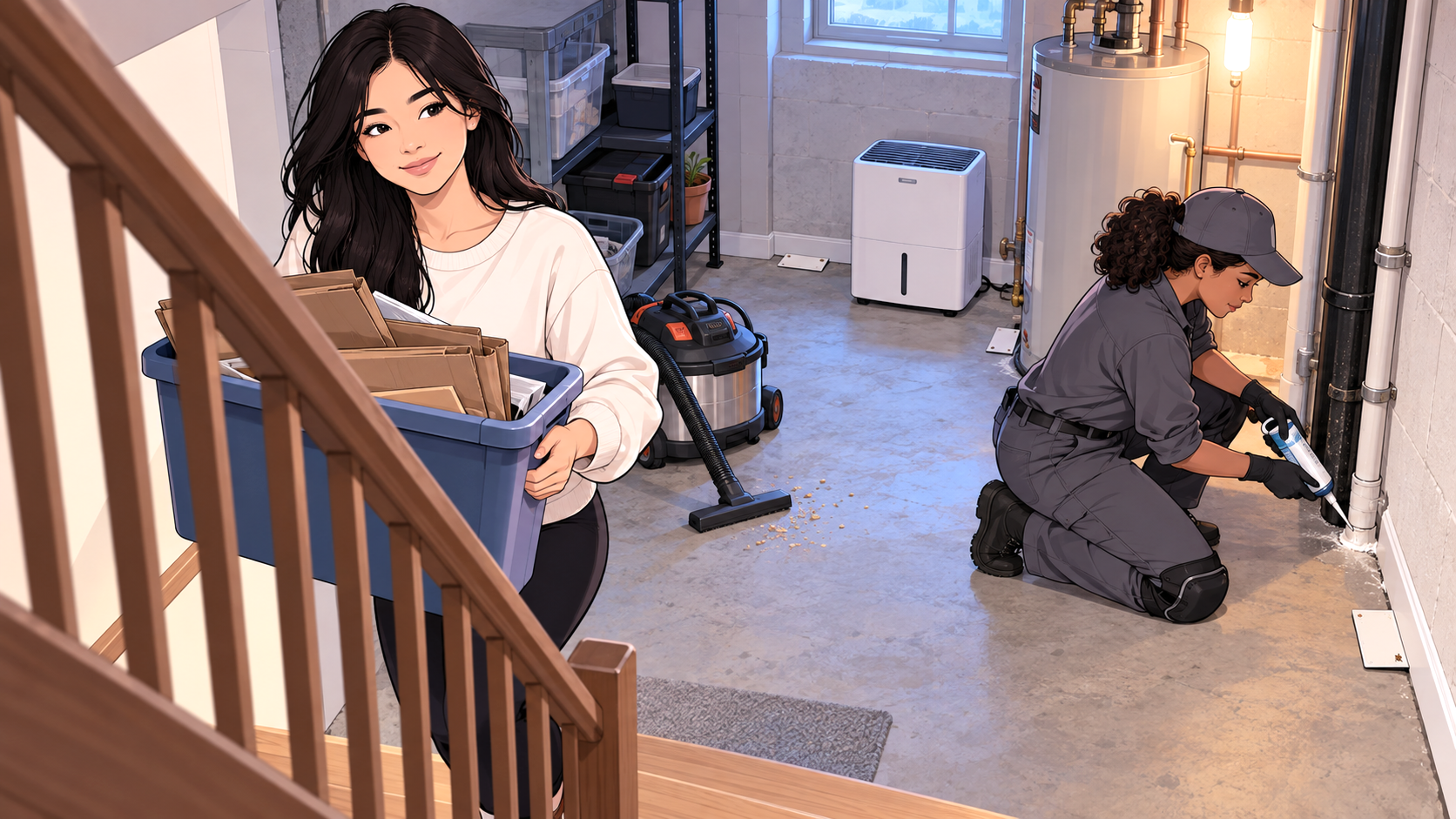
To get rid of firebrats, find where they are concentrated, remove accessible food and water, reduce excessively hot hiding places where practical, seal movement routes, and monitor the remaining population with traps. An occasional firebrat often does not require an insecticide. Established infestations may need a pesticide labeled for firebrats, but chemical treatment works best when the conditions supporting the insects are corrected at the same time.
Firebrats can make this process frustrating because the insect you see may have travelled some distance from where it spends the day. Instead of treating whichever room produces a sighting, work backward from repeated activity to the warm cracks, voids, pipes, appliances, or storage areas supporting the population.
Start by Finding Where the Firebrats Are Hiding
Firebrats are nocturnal, so daytime inspection alone can underestimate how many are present. During the day they gather in protected cracks and crevices, emerging at night to search for food and water.
Start around the warmest parts of the building. Check near furnaces, boilers, ovens, fireplaces, water heaters, hot-water pipes, heating units, warm attics, and other places that remain considerably hotter than the surrounding rooms. Firebrats thrive particularly well above 90°F, with an optimum around 98°F to 102°F.
Do not assume the first place you see one is the source. Firebrats can travel considerable distances while foraging and can move between levels along pipelines and through openings in walls and floors. That makes several monitoring points more useful than one.
Cockroach sticky traps can help locate activity. Put them along edges and in corners near suspected hiding and feeding areas, then compare where captures occur. Small glass jars wrapped with masking tape on the outside can also work as monitors. Firebrats climb the rough exterior, fall inside, and cannot climb the smooth glass to escape.
If you are still unsure whether you have an established population, check for the other signs of a firebrat infestation before moving to more intensive treatment.
Remove the Food That Keeps Them There
Firebrats can survive for months without food, so cleaning will not make an established population disappear overnight. It still matters because an abundance of food makes a building easier for them to occupy.
Vacuum dust, crumbs, dead insects, and debris from edges, cracks, beneath appliances, inside cupboards, around shelving, and other rarely disturbed areas. Health Canada specifically recommends frequent vacuuming and cleaning around appliances, machinery, cupboards, drawers, pantries, and sinks.
Pay attention to stored dry foods as well. Cereals, flour, pasta, pet food, and similar products should be kept in containers with tight-fitting lids. Firebrats also use starches, adhesives, paper products, book bindings, fungi, and other organic material, so old papers, cardboard, books, and fabrics left undisturbed can combine food with shelter.
You do not need to throw away every book or cardboard box in the house. Concentrate on clutter around active areas and protect vulnerable materials rather than stripping rooms indiscriminately. If you want to understand which resources are most relevant, what firebrats eat separates their actual foods from materials they merely hide around.
Reduce Water and Excess Moisture
Firebrats tolerate drier conditions better than common silverfish, which is one reason moisture reduction alone may not eliminate them. They can thrive at relative humidity considerably lower than the levels favored by silverfish.
Water still matters. Repair leaking faucets and pipes, dry persistent damp areas, improve ventilation where needed, and deal with condensation around plumbing. Health Canada recommends insulating pipes with excessive moisture and repairing leaks, while UC IPM includes eliminating water sources as part of effective bristletail management.
This is also why simply putting a dehumidifier somewhere in the house should not be treated as a complete firebrat solution. Correct an actual moisture problem if one exists, but combine that change with food reduction, habitat modification, exclusion, and monitoring.
Make Their Hottest Hiding Places Less Favorable
Temperature deserves special attention with firebrats because it is one of the clearest differences between them and ordinary silverfish.
Firebrats flourish in very warm microhabitats. If repeated trapping points to hot-water pipes, boilers, water heaters, furnaces, or similar areas, determine whether unnecessary heat can be reduced safely. Missouri Extension specifically recommends lowering temperatures around hot-water pipes, water heaters, and boilers and improving air circulation as ways to reduce firebrat populations.
This does not mean switching off essential heating equipment or altering an appliance beyond its safe operating requirements. The useful target is excess environmental heat around the hiding area, not the proper operating temperature of the equipment itself.
The location of recurring activity can tell you a great deal here. If you are wondering why the insects selected a particular part of the building, what causes firebrats to get into a house covers the entry routes and indoor conditions separately.
Seal the Routes They Use Through the Building
Once you have identified the active area, reduce the number of protected routes connecting it to the rest of the house.Patch accessible holes and gaps around pipes and conduits. Seal appropriate cracks around baseboards, door and window frames, cabinets, and other structural openings where firebrats can shelter or move between spaces. These insects have flattened bodies that allow them to disappear into remarkably narrow crevices.
This step is particularly useful in multi-unit buildings because firebrats can move through connected structural spaces. Sealing one visible crack will not necessarily isolate an apartment, but closing practical access points can reduce movement and eliminate some of the sheltered spaces they use.
Exclusion works best after you have investigated where activity is concentrated. Otherwise, sealing a few random gaps may leave the principal harborage untouched.
Vacuum Firebrats and Accessible Harborages
Vacuuming has two jobs in a firebrat treatment. It removes individual insects and accessible egg masses while also taking away crumbs, dead insects, dust, and other potential food.
Use it particularly around edges, beneath movable appliances, shelving, closets, storage spaces, and other locations where monitoring indicates activity. Dispose of the collected material appropriately afterward rather than leaving a full vacuum bag or debris container sitting beside the treated area.
Vacuuming is unlikely to reach insects deep inside wall voids or inaccessible cracks, so it should not be treated as a stand-alone cure for a substantial infestation. It is one component of the larger effort to make the occupied area less supportive.
Keep Monitoring After the First Firebrats Disappear
Do not judge success from a few firebrat-free nights.
Leave monitoring traps in the locations that previously produced activity and check them periodically. If captures steadily decline after cleaning, sealing, moisture correction, and habitat changes, those measures are probably reaching the population.
If captures continue in one particular zone, investigate that area again. Persistent activity can reveal a missed wall void, pipe route, storage area, appliance space, or other harborage.
UC IPM notes that if an otherwise thorough treatment produces no control after about two or three weeks, insects may be coming from untreated areas or secluded harborages. The correct response is therefore not automatically to apply more pesticide everywhere. First reconsider where the population is actually coming from.
When an Insecticide Makes Sense
Light infestations and occasional firebrats may be controlled without an insecticide. UC IPM recommends reserving chemical treatment for larger infestations and emphasizes that insecticides will not perform well if food, water, and suitable hiding places remain available.
If you decide to use a pesticide, use a product whose label specifically permits the intended pest and indoor treatment site. In Canada, Health Canada advises checking for a Pest Control Product registration number and using only products authorized for use in Canada. Always follow the current label because permitted pests, locations, application methods, and safety precautions differ between products.
Treatment should target actual harborages and travel routes rather than being sprayed indiscriminately across rooms. Depending on the registered product, labeled applications may include cracks, crevices, baseboard edges, closets, bookcases, pipe penetrations, or voids where the insects hide.
Never assume that more pesticide means better control. Do not apply a product near food, water, drains, electrical equipment, flames, or other prohibited locations when the label does not permit it. Health Canada also warns against making homemade pesticides and against mixing pesticide products unless the label specifically directs you to do so.
The separate best firebrat killers and traps article covers individual treatment types and products rather than turning this removal guide into a product list.
Do Not Rely on Foggers or Random Spraying
A treatment that fills the open room is poorly matched to an insect that spends much of its time concealed inside cracks and voids.
UC IPM specifically does not recommend foggers for firebrat and silverfish infestations. Targeted treatment of confirmed harborages and movement routes is more rational than releasing pesticide through areas where the insects are not spending most of their time.
Randomly spraying every firebrat you happen to see has a similar limitation. It may kill exposed individuals without changing the hidden population or the conditions supporting it. That is why successful control starts with locating activity and changing the habitat before chemical treatment is considered.
When the Infestation Keeps Coming Back
A recurring infestation usually means something has been missed. Recheck the hottest areas, pipe penetrations, wall and floor openings, storage spaces, food sources, moisture problems, and adjoining areas that could support the insects.
This becomes especially important in apartments and other connected buildings. Firebrats can move along pipes and through structural openings, so activity in your unit may be connected to a harborage elsewhere in the building. A treatment limited to the room where insects are noticed may therefore produce only temporary improvement.
Large or persistent infestations may justify professional inspection, particularly when the source appears to be inside inaccessible voids, around building systems, or beyond the part of the property you can treat. The decision criteria are covered separately in when to call an exterminator for firebrats.
For now, keep the monitoring traps in place. Falling captures tell you more about whether the population is actually declining than simply waiting to see another insect running across the floor.
Questions About Getting Rid of Firebrats
How long does it take to get rid of firebrats?
There is no fixed elimination time because it depends on the size and location of the population and whether its harborages can be reached. Health Canada notes that pesticide treatments may take about 10 to 14 days to show results because hidden insects must emerge and contact the treatment.
Should I throw away books if they have firebrats?
Not automatically. Move and inspect affected materials, clean the surrounding storage area, and address the infestation. Disposal may make sense for heavily damaged or contaminated disposable items, but simply discarding books will not eliminate firebrats living elsewhere in the structure.
Can firebrats come back after treatment?
Yes. Surviving insects in untreated harborages, movement from connected spaces, or continuing access to favorable heat, food, water, and shelter can allow activity to continue or return.
Why am I still seeing firebrats after spraying?
The insects may be emerging from wall voids or other untreated hiding places. Some treatments also depend on firebrats leaving those harborages and contacting treated surfaces, so results are not necessarily immediate.
Can I get rid of firebrats without conventional insecticides?
Nonchemical measures are an important part of any control program and may be enough for light infestations. If you specifically want to avoid conventional pesticide treatments, getting rid of firebrats naturally covers that narrower approach.