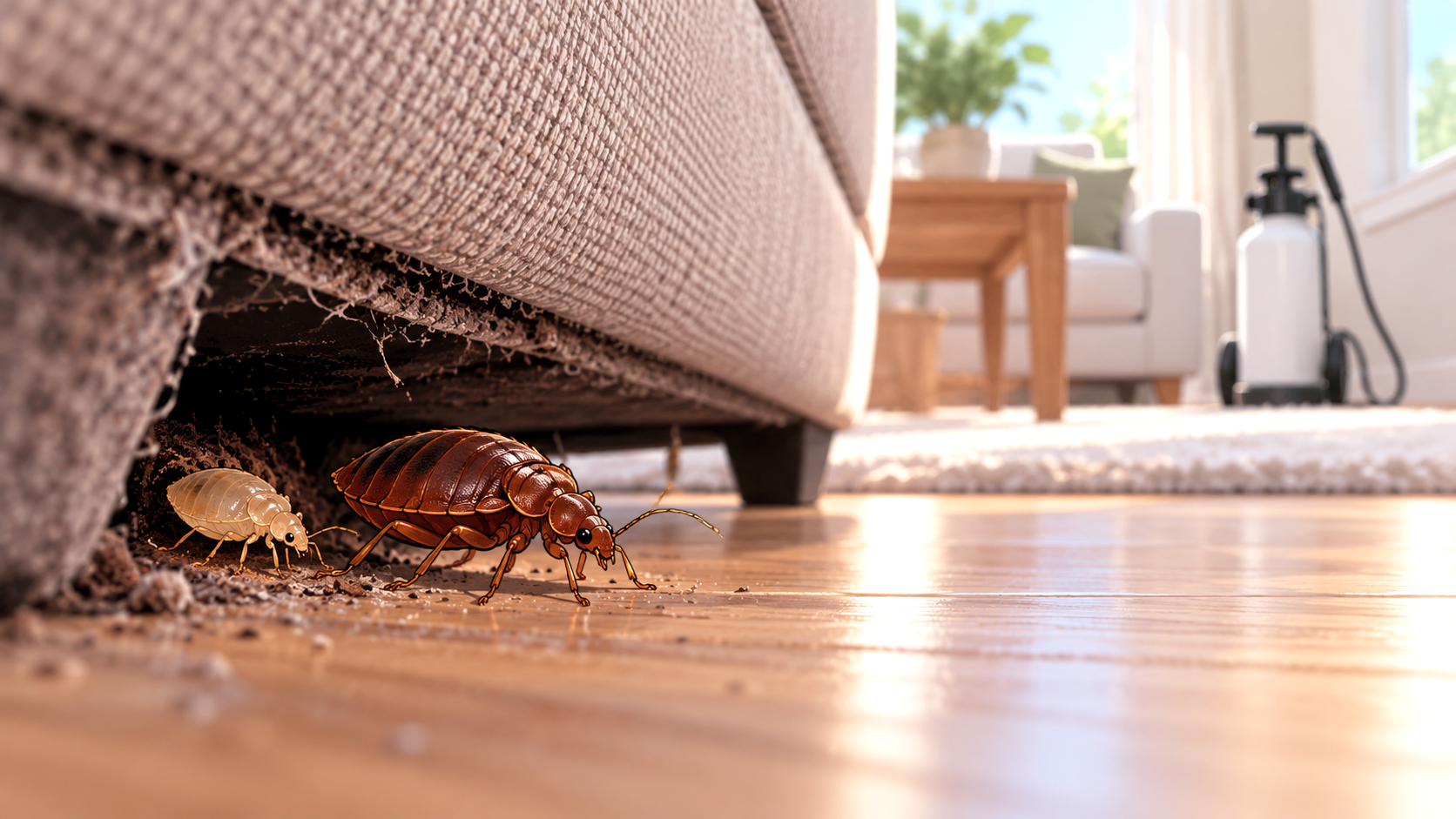
Seeing more bed bugs shortly after treatment does not automatically mean the infestation has become worse. Treatment can disturb hiding places, surviving bugs may encounter treated surfaces while moving, and eggs unaffected by some pesticides may later hatch. However, persistent or increasing activity over time can indicate incomplete treatment, pesticide resistance or a new introduction. What the sightings mean depends heavily on when they occur, what treatment was used and whether the number of live bugs subsequently declines.
Bugs Appearing After Treatment May Have Been There Before It
A treatment changes an environment that bed bugs normally navigate while concealed. Furniture may be moved, mattresses lifted, harborages exposed and cracks treated. Bugs that previously remained deep inside seams or structural gaps can become easier to notice after those spaces have been disturbed.
Chemical exposure can alter behavior as well, although the response depends on the active ingredient and dose. Laboratory experiments found that bed bugs contacting sublethal deltamethrin residues temporarily increased their activity. Other insecticides have produced different effects. Sublethal exposure to a combination of β-cyfluthrin and imidacloprid actually reduced bed bug locomotion. Insecticidal dusts have likewise produced varying levels of avoidance and reduced movement depending on the formulation.
For that reason, a sudden increase in visible bugs cannot universally be described as treatment “driving them out.” Some insects may have been physically disturbed, some may be moving across treated areas, and others may simply be easier to see because furniture and harborages have been opened during treatment. Their normal tendency to spend the day in protected cracks around beds and furniture means even a small change in concealment can noticeably change how many bugs you see.
New Nymphs Can Appear After the Adults Were Treated
Eggs are one of the most important reasons bed bug activity can continue after an initial pesticide application. The effectiveness of insecticides against eggs varies considerably, and some treatments that kill mobile bed bugs do not reliably kill every egg. Federal bed bug guidance specifically identifies failure to repeat treatment after surviving eggs hatch as one reason bed bug control can fail.
Bed bug eggs are also biologically harder to control with some conventional insecticides than mobile stages. Laboratory work examining resistant populations found substantial differences in susceptibility between eggs and first-instar nymphs and demonstrated that resistance can occur even at these early life stages.
A tiny pale nymph appearing after treatment may therefore represent an egg that was already present beforehand rather than evidence that adult bugs suddenly reproduced after the service. Once hatched, however, the nymph still needs blood meals to progress through the five immature stages of the bed bug life cycle. Residual products are intended to expose surviving or newly hatched bugs when they cross treated surfaces, but performance depends on the product, surface, resistance profile and whether the insect actually contacts a sufficient deposit.
Some Treatments Need Time to Produce Their Full Effect
Not every product kills a bed bug immediately after contact. Desiccant dusts work by damaging the insect’s protective outer layer and causing water loss, while other active ingredients can have delayed toxic effects. Federal guidance cautions that some bed bug pesticides require time to kill the population, so live insects shortly after application are not by themselves proof of failure.
Residual treatment also depends on bugs encountering treated areas. Research measuring permethrin uptake from treated mattress liners found that the amount absorbed increased with both exposure time and distance traveled across the treated material. A bug that remains concealed in an untreated void may consequently survive longer than one repeatedly crossing an effective residue.
This is one reason professional control frequently involves more than a single visit. Health Canada lists liquid and aerosol insecticides, dusts, steam, carbon dioxide snow and heat among the tools professionals may combine for bed bug control. The exact follow-up schedule needs to come from the pest-control operator and product labels rather than from a universal number of days.
Where You See the Bugs After Treatment Can Be Informative
A live bed bug in its original bedroom and a sudden series of bugs appearing in previously unaffected rooms are not equivalent observations.
Treatment-related disturbance may temporarily expose bugs near known harborages. Widespread new activity deserves closer attention because bed bugs can move beyond the room where an infestation began. In apartments and other connected housing, insects can also spread between neighboring units, creating a source that treatment of one unit alone may not eliminate.
Avoid carrying untreated belongings from an infested room into supposedly clear rooms in response to post-treatment sightings. Moving bags, bedding, furniture or loose possessions can transport insects independently of any movement caused by the treatment itself.
Changing where you sleep can complicate the picture too. Bed bugs use host cues to locate people when they need a blood meal, so abandoning the bedroom for a couch can create feeding opportunities elsewhere. Follow the pest-control operator’s post-treatment instructions instead of trying to escape the treated room unless the operator or pesticide label requires you to stay out.
Repeated Live Bugs Can Eventually Point to Treatment Failure
A short period of continued activity and a population that remains established are different situations. Concern increases when live bugs continue appearing without a downward trend, multiple developmental stages remain abundant, fresh eggs or fecal evidence accumulate, or monitoring shows continuing activity beyond the expected treatment and follow-up period.
Pesticide resistance is one possible explanation. A systematic review found widespread resistance to pyrethroids among both common and tropical bed bugs, with very high resistance documented in numerous studied populations. More recent North American research has continued to identify genetic resistance mechanisms, and resistance has also been demonstrated against several neonicotinoids. Resistance cannot be diagnosed simply because one bug survives an application, however. Treatment failure can also result from missed harborages, insufficient preparation, incorrect application, untreated adjoining units or reintroduction.
Field treatments illustrate why partial population reduction can be misleading. In one multi-unit housing study, two multi-product regimens reduced measured bed bug populations by 95% and 86% over eight weeks, yet neither regimen completely eliminated all bugs during the study period. The results demonstrate that a major decline in numbers can occur without complete eradication.
Do not respond to continuing sightings by repeatedly adding household pesticides on top of a professional treatment. Excessive or label-inconsistent insecticide use has caused documented human illnesses, and surveillance data identified overapplication and improper pesticide use among major causes of bed bug-related insecticide poisoning. Contact the treating professional with the dates, locations and numbers of bugs seen so the treatment plan can be reassessed.
Track Sightings Instead of Judging Treatment From One Bad Night
Post-treatment monitoring is more useful when it records a trend. Note the date and room for each live bug, whether it was an adult or nymph when identification is possible, and what monitoring device captured it. Photos or saved specimens can also help the pest-control operator verify what was found.
Interceptor cups beneath suitable furniture legs can provide evidence of continuing movement without depending on whether someone happens to see a bug crossing the room. Visual checks can focus on known harborages and signs such as fresh fecal spotting or newly shed bed bug skins.
The expected pattern depends on the treatment used, so the operator’s treatment plan remains important. The broader assessment of whether bed bug treatment has worked should combine sightings, monitoring results, inspections and the required follow-up period rather than treating one post-treatment bug as either automatic failure or automatic success.
Post-Treatment Questions
Is it normal to see dead bed bugs after treatment?
Yes. Dead or dying bugs can become visible after treatment, particularly when insects leave harborages or are exposed during cleaning and follow-up inspection. Their presence confirms that bugs were present but does not establish that every individual has been eliminated.
Should I vacuum live bed bugs I see after treatment?
Follow the pest-control operator’s instructions first because aggressive cleaning can remove some residual products. Where vacuuming is permitted, captured material needs to be contained and discarded carefully so live bugs are not released elsewhere.
Can I clean treated surfaces immediately?
Not unless the product instructions or pest-control operator says to do so. Washing or scrubbing a residual pesticide from a treated surface prematurely can reduce its effectiveness. Post-treatment instructions vary with the control method and products used.
Can bed bugs come back after they were completely eliminated?
Yes. Successful treatment does not provide permanent immunity from another introduction. Luggage, used furniture, belongings and movement from neighboring infested units can introduce bed bugs again after the original population has been eliminated.