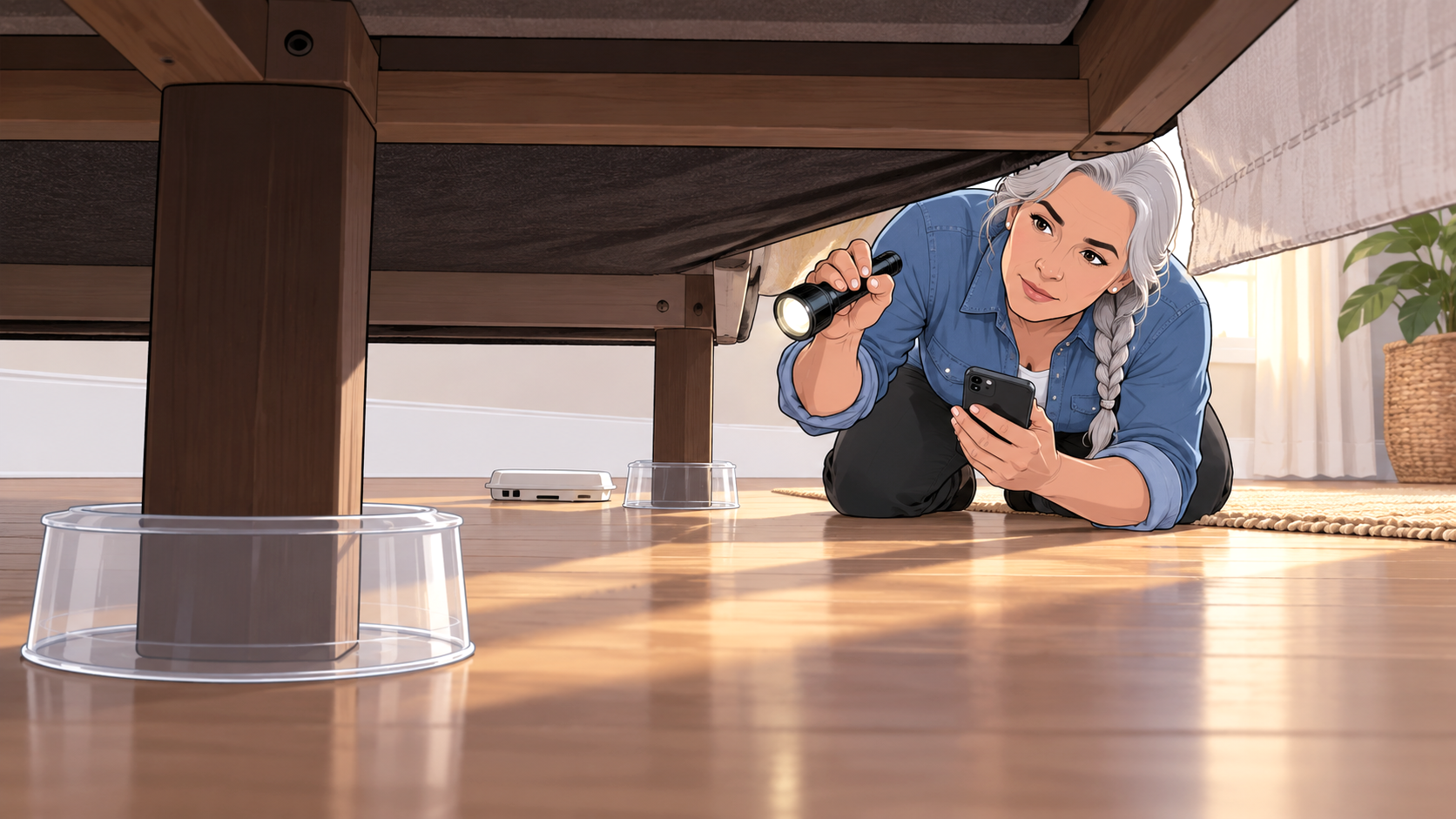
A successful bed bug treatment should lead to a sustained disappearance of live bugs and new infestation evidence, not simply a few bite-free nights. Because eggs can survive some treatments and hidden bugs may emerge later, you need to monitor the home after treatment before deciding the infestation is gone. The strongest signs that bed bug treatment worked are no live bed bugs, no new fecal spots or shed skins, no bugs appearing in monitors, and no other fresh physical evidence during follow-up. Bites alone are a poor test because reactions vary and may appear after the original exposure.
Look for New Evidence, Not Old Evidence
Old bed bug evidence does not disappear when treatment succeeds. Fecal stains can remain on mattresses and furniture, shed skins may still be lodged in cracks, and old blood spots can remain on bedding. What matters is whether new evidence continues to appear.
Inspect the same places where activity was originally found, including mattress seams, the box spring, bed frame, headboard, nearby furniture, baseboards, and cracks around the sleeping area. Fresh live bugs, newly deposited dark fecal spots, additional shed skins, or newly discovered eggs can indicate continuing activity. These are the same physical clues used when checking a home for bed bugs.
Photographing or recording evidence before treatment can make comparison easier. Instead of wondering whether a dark spot was already there, you have a reference for what the infestation looked like before control began.
No Live Bed Bugs Is the Most Important Change
You should gradually stop finding live bed bugs as treatment progresses. This includes adults and the much smaller bed bug nymphs, which can be easier to overlook.
However, finding one live bug shortly after treatment does not automatically mean the entire program failed. Some pesticides take time to work, and eggs unaffected by an initial pesticide application can hatch afterward. This is one reason conventional professional treatment commonly includes follow-up rather than relying on a single visit.
Repeated sightings are more concerning. If live bugs continue appearing in previously treated areas, especially after the scheduled follow-up period, tell the exterminator exactly where and when you found them.
Use Interceptors to Detect Bugs You Don’t See
Visual inspection has an obvious limitation: bed bugs spend much of their time concealed. Monitoring devices can reveal activity that would otherwise remain unnoticed.
Bed bug interceptor cups placed beneath bed legs can capture bugs attempting to move between the bed and the surrounding room. Interceptors are specifically used to evaluate treatment effectiveness as well as detect infestations.
For interceptors to work properly, keep the bed slightly away from walls and make sure sheets, blankets, cords, or other objects do not create an alternative route from the floor to the bed. Check the traps regularly and record anything captured. Other bed bug monitors may also be useful depending on the treatment plan.
Don’t Use Bites as Your Only Test
A sudden stop in bites is encouraging, but it cannot prove eradication. Some people develop obvious reactions to bed bug feeding while others show little or no reaction. A skin mark can also have causes unrelated to bed bugs.
The opposite problem occurs after treatment: noticing another bump and immediately assuming the infestation survived. Skin reactions do not necessarily appear at the exact moment a bite occurs, so a mark noticed after treatment may not tell you when exposure happened.
Physical evidence and monitoring are therefore more reliable than judging treatment entirely by your skin. If you have bite-like marks but no other bed bug evidence, continue monitoring rather than automatically adding more pesticide.
Check at Least Weekly During the Early Follow-Up Period
Regular inspection is particularly important after the initial treatment because remaining eggs or overlooked insects may reveal themselves later. A practical approach is to inspect for evidence at least every seven days during the early monitoring period.
Focus on the locations where bugs were previously found rather than repeatedly dismantling the entire home. Check monitors, mattress and box-spring edges, the bed frame, headboard, nearby furniture, and other known harborages.
Professional follow-up is also important. A thorough inspection around two weeks after treatment is commonly recommended because surviving eggs may hatch after insecticide treatment. If bugs are found, additional control may be necessary.
Treatment Failure Usually Produces Continuing or Returning Evidence
The clearest warning sign is a pattern that refuses to disappear. You may continue capturing bugs in monitors, repeatedly find live insects, discover fresh fecal spotting, or begin finding activity in additional areas.
Several things can cause this. Bed bugs may have been missed in untreated hiding places, eggs may have survived, pesticides may not have reached important harborages, or the treatment may not have been given enough time to work. Insecticide resistance can also contribute to some failures. These are among the documented reasons bed bug treatments sometimes fail.
In apartments, recurring activity can also originate outside the treated unit. Because bed bugs can spread between apartments, neighboring units may need inspection when bugs continue returning despite appropriate treatment.
Heat Treatment Still Needs Follow-Up
A successful professional heat treatment can kill adults, nymphs, and eggs during one treatment when lethal temperatures reach every harboring area. That can produce a much faster drop in activity than a conventional pesticide program.
You should still monitor afterward. Furniture, structural gaps, or dense belongings can create cooler locations during heating, and heat provides no ongoing protection once the home cools. Finding repeated live bugs after heat treatment deserves prompt follow-up with the treatment company.
The same principle applies after bed bug fumigation. A treatment capable of killing all life stages can still be followed by a new introduction later, so continued monitoring helps distinguish eradication from reinfestation.
When Should You Call the Exterminator Back?
Keep every scheduled follow-up appointment even when you think the bugs are gone. The technician should inspect previously active areas, review monitoring results, and determine whether additional treatment is necessary.
Contact the company sooner if you repeatedly find live bed bugs, monitors continue capturing them, fresh evidence appears after initially declining, or activity starts showing up in new rooms. Do not respond by layering random sprays, foggers, or powders over the professional treatment. A failed treatment should be investigated so the reason can be identified and the control strategy adjusted.
Bed bug elimination often requires patience because successful control combines treatment with careful monitoring. The useful question is not whether you saw improvement immediately, but whether physical evidence continues declining until no activity can be detected.
Safety note: Follow your pest-control company’s instructions during the monitoring period. Do not reapply pesticides, clean treated surfaces prematurely, or introduce additional products unless they are permitted by the label and compatible with the professional treatment plan.
Other Questions About Knowing Whether Bed Bugs Are Gone
How soon after treatment should you stop seeing bed bugs?
It depends on the treatment. Heat can produce rapid mortality, while conventional pesticide programs may take longer and require follow-up. Continued sightings should decrease rather than persist indefinitely.
Does finding one bed bug after treatment mean it failed?
Not necessarily, particularly soon after a conventional treatment. Eggs can hatch after the initial service and some products work gradually. Repeated live sightings are more concerning than one isolated observation.
How long should you monitor after bed bug treatment?
Continue monitoring well beyond the treatment day. During the early follow-up period, checking at least every seven days helps detect activity from surviving bugs or newly hatched eggs.
Can you still get bites after successful treatment?
A skin reaction noticed after treatment does not by itself prove that bed bugs remain. Use physical inspection and monitoring alongside any changes in bite-like reactions.
What is the best evidence that treatment worked?
A sustained absence of live bugs and fresh infestation evidence, combined with empty monitoring devices and successful professional follow-up, provides much stronger evidence than any single sign.
5 thoughts on “How to Tell If Your Bed Bug Treatment Actually Worked”