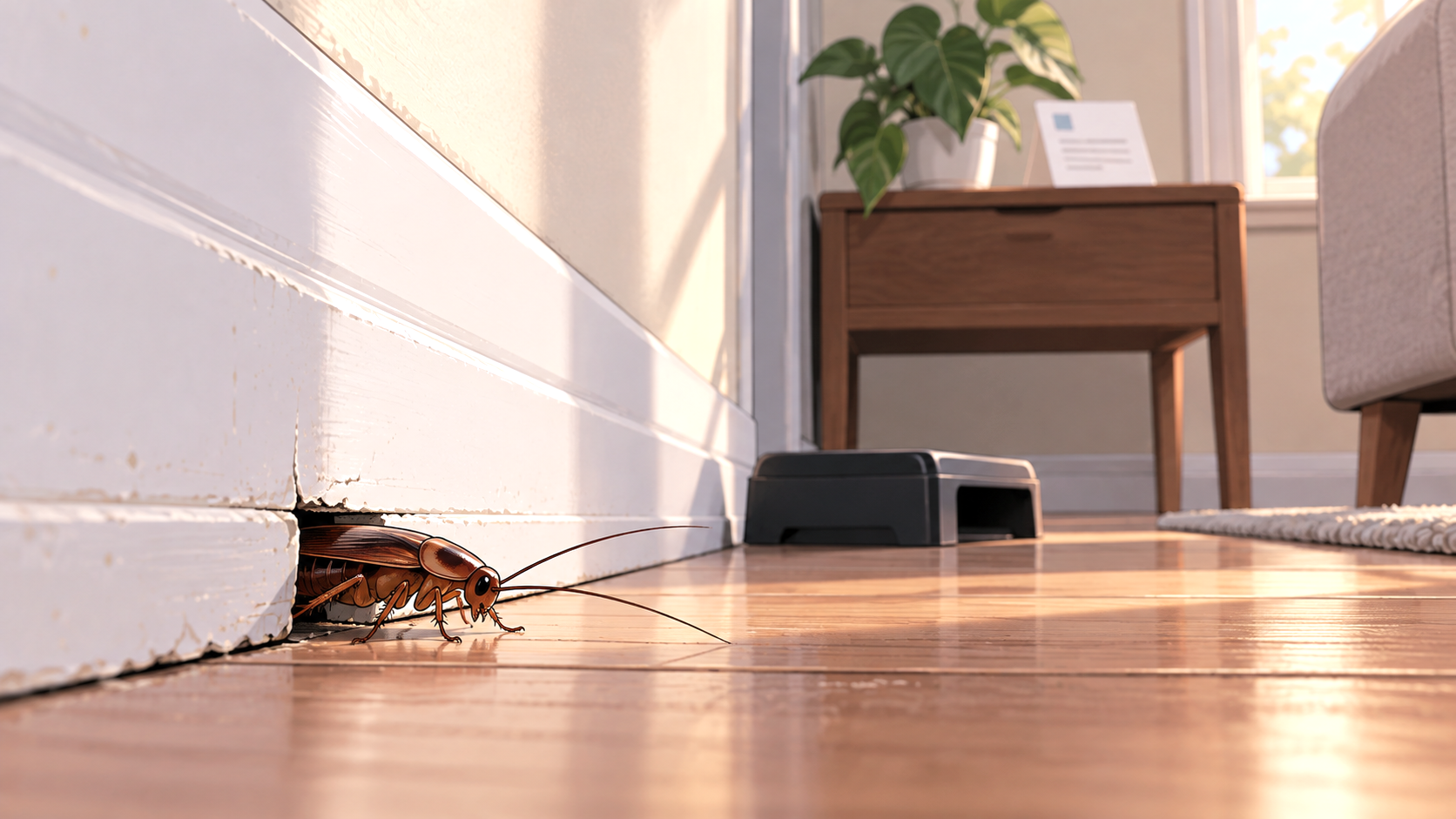
Seeing cockroaches after pest control does not automatically mean the treatment failed. Some cockroaches survive the initial application, bait treatments take time to affect the population, and eggs already present may hatch after the exterminator leaves. Continued sightings can also indicate untreated hiding places, reinfestation from another area, or a treatment that needs adjustment. The most useful evidence is whether activity is declining, remaining unchanged, or spreading.
A cockroach appearing the morning after treatment has a different significance from repeated sightings three weeks later. The treatment method matters just as much. An exterminator who applied gel bait expects cockroaches to find and consume it, whereas a residual spray affects insects that contact treated surfaces. Neither method guarantees immediate exposure of every cockroach in the building.
What Cockroach Sightings Mean at Different Times After Treatment
There is no universal deadline for cockroach extermination. A light infestation receiving well-placed bait may decline quickly, while a widespread population occupying several inaccessible spaces can require further applications. The following periods provide a practical way to interpret observations without assuming that all treatments work on the same schedule.
| Time since treatment | What continued sightings may indicate | Appropriate response |
|---|---|---|
| First 24–48 hours | Cockroaches already active or newly exposed to insecticide | Follow aftercare directions and record sightings |
| Days 3–7 | Delayed bait effects, surviving insects, or untreated hiding places | Compare activity with the period before treatment |
| Weeks 2–3 | Continuing reproduction, newly hatched nymphs, or incomplete population reduction | Check monitoring results and the provider’s follow-up plan |
| Week 4 and beyond | Persistent infestation or renewed introduction, especially if activity has not declined | Request reassessment rather than assuming treatment is complete |
| After a prolonged period without activity | A new introduction or previously undetected survivors | Identify the species and investigate the location of the renewed sightings |
These intervals are observation checkpoints, not guaranteed elimination times. The assessment-based German cockroach management framework uses monitoring results to determine treatment frequency and whether bait needs replenishment. It does not rely on a fixed number of days after which every building must be cockroach-free.
The pattern is particularly important when comparing a single insect with repeated catches. One cockroach appearing several days after treatment provides limited information about the remaining population. Multiple active insects appearing in the same locations, without a decline over successive inspections, provide stronger grounds for investigating the treatment.
Why You May See More Roaches Immediately After Spraying
An increase in visible cockroaches shortly after a residual spray treatment can result from insects being disturbed or exposed to insecticide. Some pyrethroid products have repellent or irritating effects, which can cause cockroaches to leave treated spaces and move through exposed areas.
A cockroach wandering across the kitchen during daylight may therefore have been displaced from a hiding place. Abnormal movement can also result from insecticide exposure. Neither observation proves that every insect emerging from the same location has received a lethal dose.
The behavior depends on the chemical used. Some professional products are designed to be nonrepellent, allowing insects to cross treated surfaces without an intended avoidance response. Others contain pyrethroids that can produce more noticeable movement and knockdown. The different effects of cockroach sprays and residual insecticides make it inappropriate to interpret every post-spray sighting identically.
A temporary increase in visible activity should be judged against what happens afterward. If daytime sightings continue and monitoring shows no overall reduction, the insects may be surviving, avoiding treated areas, or moving through locations the technician did not address.
Bait Treatments Can Leave Roaches Active During the First Week
Cockroach bait must be eaten before its insecticide can act through the intended feeding route. Even a highly effective formulation cannot poison an insect that has not encountered it. Cockroaches may continue traveling between hiding places and feeding areas while the treatment is taking effect.
The University of Minnesota’s cockroach guidance identifies delayed results as a characteristic of bait treatment. Cockroach bait and gel can also provide secondary exposure when other insects consume contaminated material, but that process depends on the formulation and cockroach behavior.
A kitchen may initially show continued activity around cabinet hinges or the refrigerator even though bait is available nearby. The relevant question is whether the population begins declining after insects have had an opportunity to feed. Dead or dying cockroaches appearing away from bait placements can be consistent with delayed toxicity, although their location does not identify the product responsible.
Avoid spraying aerosol insecticides or household repellents around professional bait placements. Contamination can discourage feeding and interfere with the technician’s plan. Do not remove gel or reposition stations without consulting the provider. If bait has been consumed or appears damaged, report the condition so replacement can follow the product label and treatment schedule.
Newly Hatched Cockroaches May Appear After the Exterminator Leaves
Small cockroaches appearing after treatment deserve closer attention than an occasional surviving adult. They may have hatched from egg cases already present before the appointment.
German cockroach females carry an egg case during much of its development. Depending on the treatment and exposure, developing eggs can remain protected while exposed adults receive insecticide. When nymphs emerge, they may begin appearing around the same sheltered areas where earlier activity occurred.
The German cockroach egg-case structure and appearance help explain why a treatment that reduces adult numbers does not necessarily prevent subsequent hatching. Residual insecticides and bait can affect nymphs after emergence, provided those insects encounter the treatment.
A few newly emerged nymphs therefore do not prove that the infestation is growing. Repeated sightings of nymphs at several developmental stages, particularly alongside active adults, provide stronger evidence that the population remains established.
The Illinois Department of Public Health’s cockroach management guidance identifies egg cases, shed skins, droppings, and live insects as useful evidence for locating activity. Recording the size and location of immature cockroaches can help the provider determine whether further treatment is necessary.
When Cockroaches Return From Untreated Areas
One room can receive an effective treatment while another continues supplying cockroaches. A refrigerator may conceal insects behind panels the technician could not access, or cockroaches may travel through openings around plumbing. Activity reappearing near these locations should prompt an inspection of where the insects are entering the treated space.
The pattern differs from widespread treatment failure. Imagine a kitchen where monitoring catches decline sharply after service, but cockroaches continue appearing beside one dishwasher. A localized source is a stronger possibility than complete ineffectiveness of every product applied. By contrast, increasing catches across several previously treated rooms suggest a broader problem.
Apartment buildings create another complication. Cockroaches can move between units through service penetrations and connected building spaces. The Cornell cockroach management guidance identifies utility openings as routes worth investigating when cockroaches recur. Treating one apartment may reduce its resident population without preventing insects from entering from adjoining spaces.
Fresh introductions can also occur through infested belongings or deliveries. A new sighting after a prolonged period without activity should be investigated rather than automatically attributed to survivors of the original treatment. Identification, location, and monitoring help establish whether the current problem resembles the earlier infestation.
How to Tell Whether Cockroach Numbers Are Actually Declining
Visual sightings alone provide an incomplete measure of infestation activity. Cockroaches spend considerable time concealed, and the number noticed during routine household activity can change without accurately reflecting the total population.
Sticky monitoring traps provide a more consistent comparison. Place suitable insect monitors along suspected travel routes, away from children, pets, and non-target wildlife. Check them at regular intervals, recording the date, location, and number of cockroaches captured. Keep the monitoring locations consistent unless the exterminator recommends moving them.
The Illinois Department of Public Health’s guidance recommends continuing monitoring even after cockroaches appear to have been eliminated. The traps help identify remaining activity and provide early evidence of renewed infestation.
The University of Florida’s assessment-based pest management method provides a useful numerical approach. Suppose one kitchen monitor catches 18 cockroaches during the first seven-day inspection period and six during the next equal period. That represents a 67% reduction in captures, calculated as (18 − 6) ÷ 18 × 100. The result indicates substantial improvement at that location, although it does not establish that only six cockroaches remain in the kitchen.
Compare equal monitoring periods and replace traps when they become dusty, wet, damaged, or overcrowded. A trap filled with insects cannot reliably measure subsequent activity. Counts from traps that have been moved to different locations should not be treated as directly comparable without accounting for the change.
Monitoring is especially useful when occupants disagree about whether the infestation has improved. A dated record gives the technician evidence that can guide follow-up decisions rather than relying entirely on recollections of nighttime sightings.
Why Additional Household Spraying Can Make Follow-Up Treatment Harder
Seeing cockroaches after professional treatment often leads homeowners to purchase another aerosol, dust, or fogger. Doing so before consulting the technician can interfere with the existing treatment and introduce unnecessary pesticide exposure.
If professional bait was applied, additional sprays may contaminate feeding locations or discourage cockroaches from approaching them. A general aerosol application may also leave residues in areas the technician intended to monitor. The University of California’s cockroach management recommendations favor reassessing persistent populations and adjusting targeted control measures instead of repeatedly applying insecticide without determining why activity continues.
Using a cockroach fogger or bug bomb is particularly unsuitable as an improvised follow-up when insects remain concealed inside structural gaps. These products introduce separate exposure and ignition hazards without guaranteeing that pesticide reaches the surviving population.
Avoid washing treated cracks, disturbing bait placements, or removing monitoring devices until the exterminator confirms what can be cleaned. Ordinary food sanitation should continue, but cleaning instructions may differ for surfaces carrying residual insecticide.
The same caution applies around children and animals. Adding an unfamiliar pesticide can change the household’s exposure conditions. Any proposed cockroach control treatment around pets must account for the product’s actual label and access to the treated location.
When Should You Call the Exterminator Back?
Contact the provider when cockroach activity remains substantial, increases after the initial treatment period, or appears in areas that previously had no sightings. Persistent numbers of live nymphs, repeated captures near inaccessible harborages, and activity extending into neighboring rooms all justify reassessment.
A follow-up visit is also appropriate when the technician could not access an important location during the original appointment. A refrigerator that could not be moved, a locked maintenance space, or an untreated adjoining apartment may explain why an otherwise appropriate application failed to reach part of the population.
The Penn State cockroach management recommendations describe bait treatments as potentially requiring a week or longer to produce results and recommend reassessing the product when an infestation remains uncontrolled after 30 days. That timeframe is useful context, but the provider’s specific treatment plan and product label should determine when follow-up is scheduled. You do not need to wait 30 days to report worsening activity or an obvious missed treatment area.
When contacting the company, provide the treatment date, rooms affected, species identification if available, and monitoring results. Explain whether cockroach numbers have declined or increased, and identify locations where activity persists. Ask whether the next visit will involve additional inspection, replenishment of bait, investigation of alternative harborages, or a change in treatment strategy.
A recurring infestation does not automatically establish negligence or ineffective workmanship. The cause needs to be identified before deciding whether the original treatment, the building conditions, or renewed introduction is responsible.
What to Do Until the Follow-Up Visit
Continue recording cockroach activity and following the exterminator’s aftercare instructions. Keep accessible food sealed, remove crumbs and waste, and address leaking plumbing through the appropriate maintenance provider. Leave existing pesticide placements undisturbed unless the technician instructs otherwise.
If you collect a live specimen, use a secure container so the provider can inspect it without unnecessary handling. Photographs can also help document the insect’s appearance and the location where it was found. An accurate record is particularly useful when sightings involve different-sized cockroaches or occur in previously unaffected rooms.
The immediate priority is establishing whether the original treatment is reducing the population and identifying any location that remains untreated. Where monitoring shows continued substantial activity, arrange the provider’s reassessment rather than extending the treatment indefinitely through additional household pesticide applications.