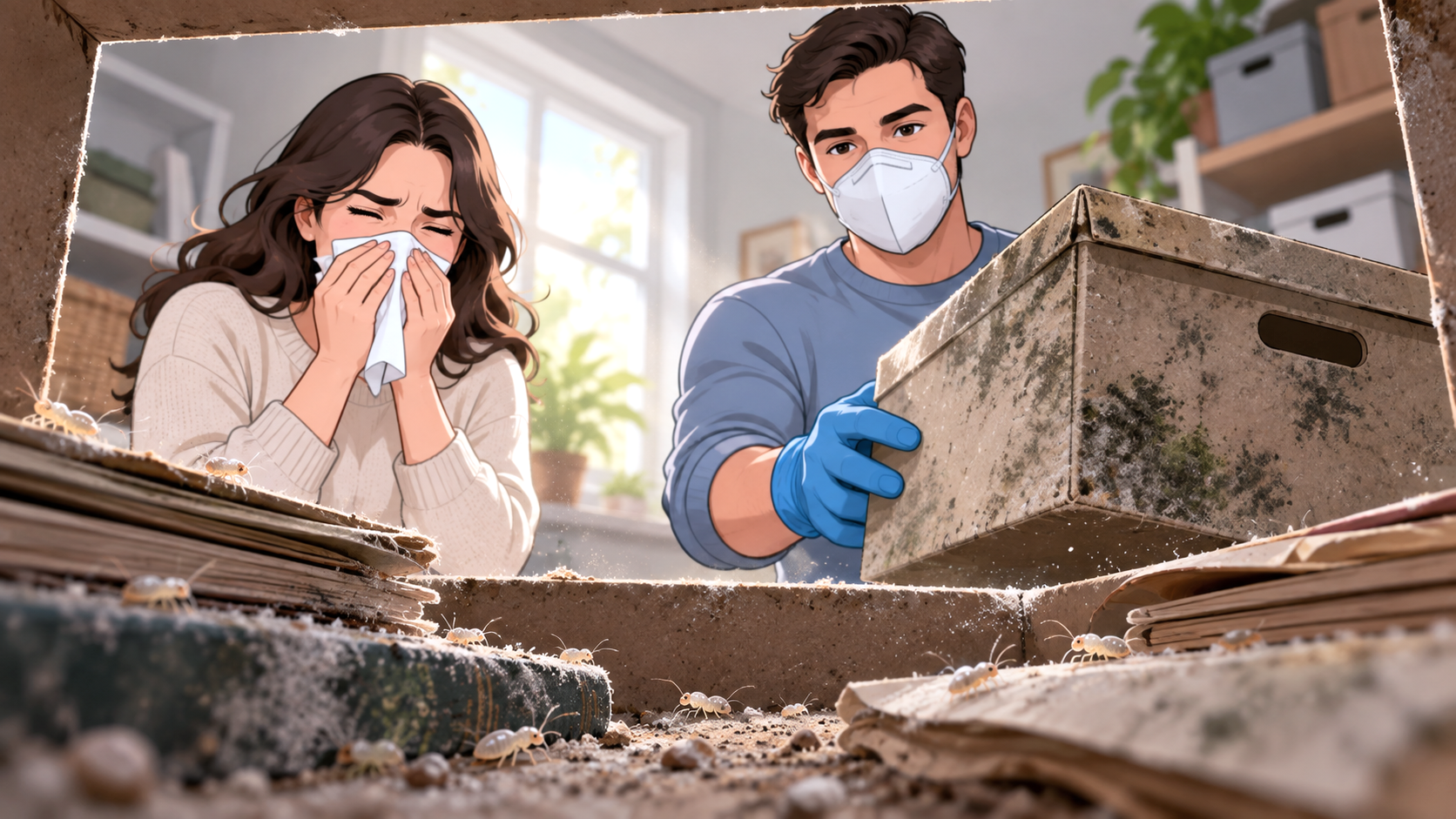
Booklice are usually treated as harmless household pests, but allergies are one area where that simple description needs qualification. Research has identified allergenic proteins in at least one common indoor booklouse species, Liposcelis bostrychophila, and sensitization has been documented in people with allergic respiratory disease. Yes, booklice can cause allergies in some people. Liposcelis bostrychophila is a documented indoor allergen associated with respiratory sensitization, including allergic asthma. Rare cases of severe allergic reactions have also occurred after people ate food heavily contaminated with this species. This does not mean ordinary household exposure causes symptoms in most people.
The evidence is real, but it is also species-specific and much narrower than the allergy risks commonly associated with dust mites or cockroaches.
Booklice Can Act as Indoor Allergens
Booklice do not need to bite you to trigger an allergic response. Allergies occur when the immune system reacts to particular proteins, and researchers have demonstrated that proteins from Liposcelis bostrychophila can provoke immunoglobulin E, or IgE, responses in sensitized people.
In a study involving 185 Japanese adults with allergic asthma, booklouse-specific IgE was detected in 41 participants, or about 22% of the study group. Further testing indicated that some of the responses represented specific sensitization to the booklouse rather than simply cross-reactivity with other insect allergens.
That 22% figure should not be applied to the general population. The participants already had allergic asthma, and the research took place in Japan, where L. bostrychophila was frequently detected in household dust. It does show, however, that booklouse allergy is a genuine phenomenon rather than a theoretical possibility.
This is an important qualification to the broader statement that booklice are generally harmless to humans. Most encounters are harmless, but allergic sensitization is a documented exception.
What Is the Booklice Allergen Lip b 1?
Researchers have identified a specific allergenic protein from Liposcelis bostrychophila called Lip b 1.
Laboratory analysis found that recombinant forms of Lip b 1 reacted with serum from patients sensitized to L. bostrychophila. That provides stronger evidence for booklouse allergy than simply observing that people with allergies happen to live in homes containing the insects.
Lip b 1 is particularly useful scientifically because it helps distinguish genuine sensitization to L. bostrychophila from allergic responses to unrelated household arthropods. Reviews of respiratory insect allergy now recognize booklice as indoor insect sensitizers, although the clinical importance of booklice varies with exposure, species, location, and the individual.
It is also important not to stretch this finding across every booklouse species. “Booklice” describes a group of insects rather than one species, as explained in our breakdown of the scientific name for booklice. Much of the allergy research specifically concerns L. bostrychophila.
What Do Booklice Allergy Symptoms Look Like?
The published evidence most clearly connects booklouse sensitization with respiratory allergic disease, particularly asthma and rhinoconjunctivitis. In a sensitized person, exposure to airborne booklouse allergens could therefore contribute to symptoms involving the nose, eyes, or respiratory system.
Those symptoms are not distinctive enough to diagnose a booklouse allergy at home. Sneezing, nasal symptoms, irritated or watery eyes, coughing, wheezing, and worsening asthma can have many causes, including dust mites, pets, pollen, mold, cockroaches, and other indoor allergens.
Finding booklice in the same room does not establish that they caused a person’s symptoms.
That point matters because booklice themselves are strongly associated with damp conditions. Indoor populations commonly develop where humidity supports microscopic fungal growth, and booklice feed heavily on mold and fungi. A damp room can therefore contain several potential sources of allergens at once.
Someone with persistent or worsening respiratory symptoms needs medical evaluation rather than an allergy diagnosis based solely on the insects visible in the house.
Can Booklice Cause a Skin Allergy?
The evidence for booklice as respiratory allergens is considerably clearer than the evidence for ordinary household booklice causing skin reactions simply by crawling on someone.
Booklice do not bite humans, so unexplained red bumps should not automatically be interpreted as booklouse bites. They do not puncture the skin for blood meals like bed bugs, mosquitoes, or fleas.
Allergic disease can involve skin symptoms, but the presence of a booklouse does not tell you what caused a rash. Contact dermatitis, hives, bites from another arthropod, medications, foods, cosmetics, and numerous other triggers can produce skin changes.
If a rash appears while booklice are present in a home, identifying the insect correctly is useful, but it cannot establish the medical cause of the rash.
Booklice in Food Present a Different Allergy Risk
There is another exposure route that deserves separate attention. Some booklice infest stored foods, including grain products, and rare cases show that eating heavily contaminated food can trigger a severe allergic reaction in a sensitized person.
A published case involved a 44-year-old woman who experienced anaphylaxis after eating oats and rice contaminated with Liposcelis bostrychophila. Testing found evidence of IgE binding to a booklouse antigen, while uncontaminated oat and rice did not produce the same result.
Another case involved a 52-year-old man who developed severe anaphylaxis after eating oatmeal. Examination of the leftover food found numerous booklice, and testing identified L. bostrychophila and its Lip b 1 allergen.
These are medically important cases, but they are still case reports. They establish that ingestion-related booklouse anaphylaxis can happen, not that it is a common consequence of having booklice in a pantry.
Visible booklice in stored food are enough reason to discard the affected product regardless of allergy status. There is no benefit in eating an infested product to determine whether it causes a reaction.
Does a Booklice Infestation Mean You Will Develop an Allergy?
No. Exposure to an allergen and developing a clinically significant allergy are not the same thing.
Booklice can be present without causing noticeable health problems. Household psocids are still generally regarded as pests that do not harm people or pets, and the allergy literature should not be interpreted as evidence that every infestation is medically dangerous.
Risk also cannot be estimated simply by counting visible insects. Booklice are extremely small, with common indoor forms often measuring around 1 to 2 millimeters, and allergens or insect material in household dust may not correspond neatly with the number of live insects you happen to notice.
For most homeowners, the discovery of booklice is still primarily a reason to investigate the environment supporting them.
Humidity Connects Booklice, Mold, and Indoor Allergens
A recurring booklice population usually has an underlying moisture story.
Booklice prefer damp conditions and commonly feed on mold spores and other fungal material. They can become abundant in bathrooms, kitchens, cupboards, damp books, cardboard, stored products, and other humid locations. Their presence can therefore reveal an area where moisture has remained high enough to support them.
Indoor booklice are commonly controlled by reducing moisture, and populations generally fail to persist under sufficiently dry conditions. That makes humidity control for booklice useful even when allergies are not a concern.
For someone with respiratory allergies, correcting a moisture problem can have an additional benefit because damp indoor environments can support other biological contaminants as well. The booklice may be only one part of what is happening in that particular room.
What Should You Do if You Suspect a Booklice Allergy?
Start by separating pest identification from medical diagnosis.
Confirm that the insects are actually booklice. Springtails, mold mites, young bed bugs, and other tiny arthropods can be mistaken for them, so the physical characteristics described in what booklice look like matter before drawing conclusions from their presence.
Next, address the infestation itself. Find damp materials, condensation, leaks, mold-supporting surfaces, or infested stored foods. Lowering humidity and removing the moisture source are more useful than indiscriminately spraying a room. Household booklice are primarily a moisture-management problem, and reducing moisture is the standard control approach.
If respiratory or allergic symptoms persist, especially in someone with asthma or a history of significant allergies, speak with a qualified healthcare professional or allergist. A visible pest cannot diagnose an allergy, and symptoms should not be attributed to booklice without appropriate medical assessment.
Difficulty breathing, swelling of the tongue or throat, faintness, or other signs of a severe allergic reaction require emergency medical attention.
Questions About Booklice Allergies
Can booklice trigger asthma?
Yes, there is evidence that Liposcelis bostrychophila can act as a respiratory allergen in sensitized people, including people with allergic asthma. This does not establish that booklice are a common asthma trigger for the general population.
Can dead booklice still contribute to allergies?
Allergic reactions are responses to proteins rather than to whether an insect is alive. Booklouse allergenic proteins have been identified experimentally, so removing live insects without cleaning contaminated dust and correcting the conditions supporting the infestation may not immediately eliminate all potential exposure.
Are booklice allergies the same as dust mite allergies?
No. Booklice are insects, while dust mites are arachnids, and they have different allergens. Research has demonstrated species-specific sensitization to booklice. The pests can also be distinguished physically, as covered in booklice vs. dust mites.
Can eating booklice cause an allergic reaction?
It can in rare circumstances. Severe allergic reactions, including anaphylaxis, have been documented after sensitized individuals ate grain products heavily contaminated with Liposcelis bostrychophila. These case reports demonstrate possibility rather than common risk.
Will getting rid of booklice stop allergy symptoms?
Removing an identified allergen may reduce exposure, but persistent symptoms can have multiple causes. Eliminating the insects and correcting the moisture source are sensible household measures, while ongoing respiratory or allergic symptoms should be assessed medically. The pest-control side can be addressed through the steps for getting rid of booklice.