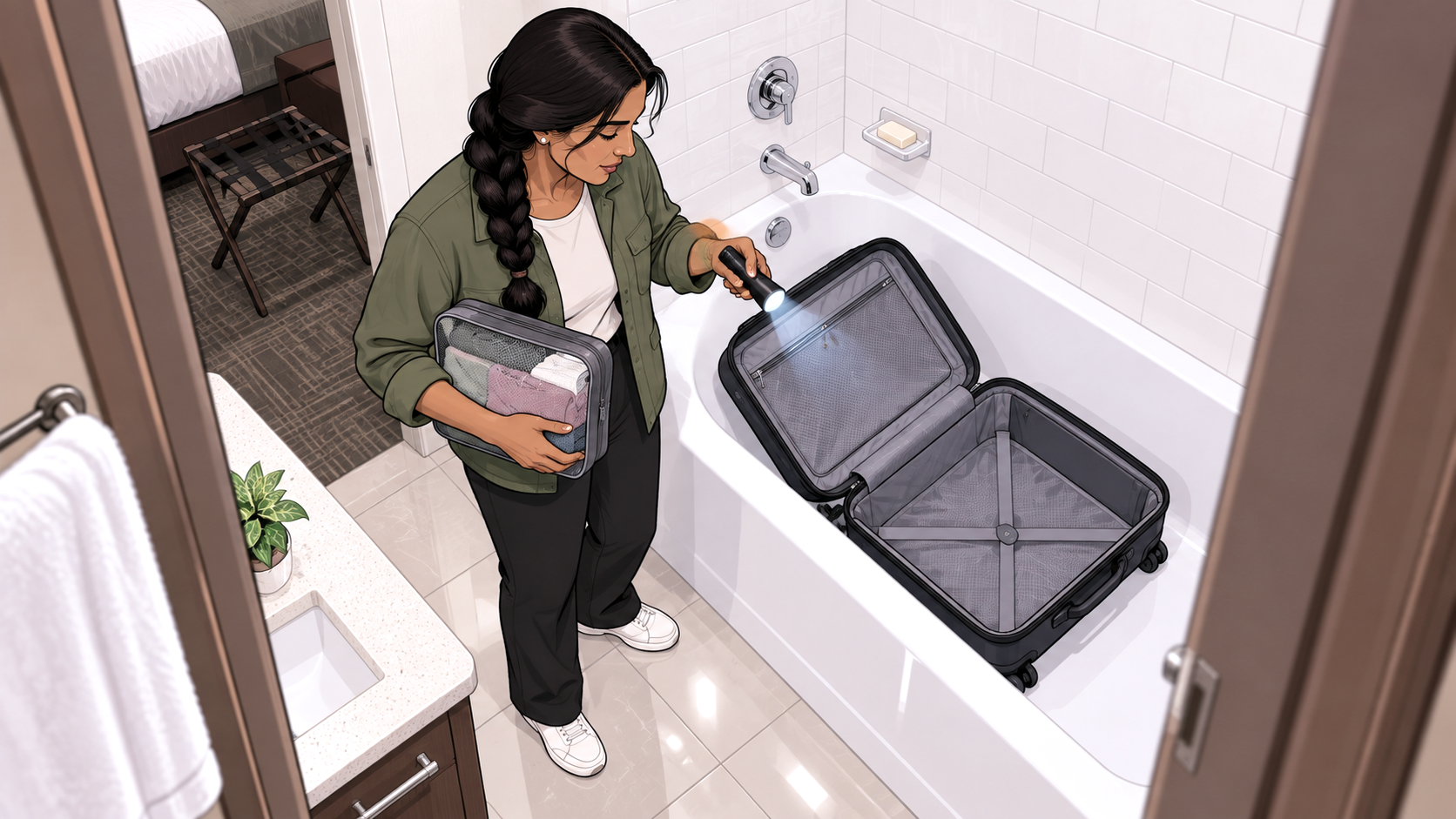
Luggage gives bed bugs exactly what they need for transportation: seams, zipper folds, pockets, fabric edges, and other narrow hiding places. Bed bugs do not need to live permanently inside a suitcase to become a problem. One insect that crawls into your bag at a hotel can travel home with you and leave the luggage after you arrive.
To keep bed bugs out of your luggage, inspect your hotel room before unpacking, keep your suitcase off the bed and upholstered furniture, use an inspected luggage rack or tiled bathroom area, keep the bag closed when you are not using it, and avoid leaving loose clothing around the room. Check and contain your belongings again before bringing them into your home.
Inspect the Room Before Your Suitcase Goes Near the Bed
When you first enter a hotel room, resist the habit of dropping your suitcase on the bed. Keep it in the bathroom, bathtub, or another hard area away from upholstered furniture while you inspect the sleeping area. Health Canada specifically recommends placing luggage on a tiled floor while checking the room rather than starting with the suitcase on the bed.
Check mattress seams, the box spring, headboard, bed frame, nearby upholstered furniture, and other protected spaces around the bed. Look for live insects, dark fecal spotting, shed skins, eggs, and rusty blood marks. A systematic hotel room bed bug inspection reduces the chance that you will unpack beside an established infestation before realizing there is a problem.
Use the Luggage Rack, but Inspect It First
An elevated luggage rack can keep your suitcase away from the bed and floor, but check it before use. Bed bugs can hide around joints, cracks, straps, and the points where straps attach to the frame. Health Canada recommends inspecting the luggage stand carefully and keeping it separated from walls and other furniture.
Once the rack has been checked, keep your suitcase on it rather than transferring the bag between the bed, floor, sofa, and other surfaces. The EPA likewise recommends keeping luggage and backpacks off hotel beds. Reducing contact with likely bed bug hiding areas is more practical than trying to protect a suitcase after an insect has already crawled into it.
Keep the Suitcase Closed When You Are Not Using It
An open suitcase provides more accessible hiding places than a closed one. Keep the main compartment and exterior pockets zipped when you are not actively packing or retrieving something. This cannot make luggage completely bed bug-proof, since an insect may still hide around exterior seams or zipper areas, but it reduces access to the contents.
Avoid completely unpacking into hotel drawers unless necessary. Health Canada recommends keeping belongings in your luggage rather than placing them in drawers, while EPA travel guidance similarly advises against storing clothes in hotel dressers. Keeping your belongings consolidated also makes them much easier to inspect and contain if you later discover bed bugs in the hotel.
Keep Clothing Away From Beds and Upholstered Furniture
Clothes left on the bed, sofa, upholstered chair, or floor create additional opportunities for bed bugs to hitchhike into your belongings. Keep clean clothing inside the suitcase or another contained storage system, and use separate sealable bags for dirty clothes rather than creating a pile beside the bed.
Packing clothing in sealable plastic bags can provide another layer of separation. The California Department of Pesticide Regulation recommends packing belongings in clear plastic bags as an additional travel precaution. Large sealable bags are also useful if you unexpectedly discover bed bugs and need to isolate clothing or other belongings before leaving.
Shoes, backpacks, purses, and laptop bags deserve the same attention as the main suitcase. Avoid storing them beneath the bed or pressed against upholstered furniture. Bed bugs are small enough to enter seams and folds in many personal items, so protecting only your suitcase while leaving everything else scattered around the room defeats much of the purpose.
What to Do With Your Luggage If You Find Bed Bugs
If you discover a bed bug or convincing infestation signs, stop unpacking and close your luggage. Keep potentially exposed belongings together rather than moving them into another room one item at a time. Photograph the evidence when useful and notify hotel management. If you change rooms, Health Canada recommends choosing one that is not adjacent to the suspected room.
Do not assume that finding bed bugs means your suitcase must be thrown away. Instead, treat it as potentially exposed and keep it contained until you can inspect and clean it appropriately. The same principle applies if you discover evidence late in the trip. A suitcase that has spent several days in an infested room deserves careful handling even if you never actually saw a bug crawling on the bag.
Inspect Your Luggage Before Leaving
Before packing for home, inspect the suitcase itself. Pay particular attention to zipper tracks, seams, pockets, folds, handles, wheels, lining edges, and other recessed areas. Check the belongings going back into it as well. Health Canada recommends performing a final inspection of personal items before leaving the accommodation.
If you find a suspicious insect, preserve it for identification when practical rather than brushing it away and continuing to pack. Knowing what bed bugs look like is useful because small nymphs can look considerably different from the familiar reddish-brown adult.
Do Not Take the Suitcase Straight to Your Bedroom
Your precautions should continue when you arrive home. Do not put the suitcase on your bed to unpack it. Health Canada recommends placing luggage on a hard surface away from potential hiding places and inspecting it carefully before bringing it farther into the home.
Unpack clothing without spreading it through bedrooms or living areas. For suitable items, follow their care labels and use appropriate laundering and drying procedures. Heat from a clothes dryer is particularly useful against bed bugs, and the EPA recommends unpacking clothes directly for washing or drying when exposure is a concern.
Vacuum the suitcase carefully, concentrating on seams, pockets, folds, lining edges, and other hiding areas. Health Canada recommends immediately sealing and discarding vacuum contents after cleaning potentially exposed luggage. Store the cleaned suitcase away from your bedroom rather than underneath the bed, where an unnoticed hitchhiker would already be close to a sleeping host.
The Goal Is to Reduce Opportunities for Hitchhiking
There is no suitcase placement or packing method that guarantees a bed bug can never reach your luggage. The strongest approach is to layer several simple precautions: inspect before unpacking, keep luggage away from beds and upholstered furniture, keep belongings contained, inspect again before leaving, and handle the suitcase carefully when you return home.
These habits are particularly important because you can bring bed bugs home from a hotel without realizing it immediately. Preventing access to your luggage is much easier than discovering later that a hitchhiking bed bug established itself in your home.
Other Questions About Keeping Bed Bugs Out of Luggage
Can bed bugs get inside a zipped suitcase?
A closed suitcase reduces access to your belongings, but it should not be considered completely bed bug-proof. Bugs may hide around exterior seams, folds, pockets, or zipper areas, which is why suitcase placement and inspection still matter.
Should you keep your suitcase in the hotel bathtub?
A clean bathtub or tiled bathroom area is useful while you perform the initial room inspection because it keeps the suitcase away from the bed, carpet, and upholstered furniture. Afterward, an inspected luggage rack can provide a practical place to keep it.
Should you put your suitcase on the hotel floor?
Avoid keeping luggage on the floor, particularly near the bed or upholstered furniture. Use an inspected luggage rack or another appropriate hard, elevated location instead.
Can you spray your suitcase to prevent bed bugs?
Do not apply a pesticide to luggage unless the product label specifically permits that use and you follow all label directions. Physical precautions such as inspection, isolation, containment, and appropriate heat treatment of suitable belongings remain important regardless.
4 thoughts on “How to Keep Bed Bugs Out of Your Luggage While Traveling”