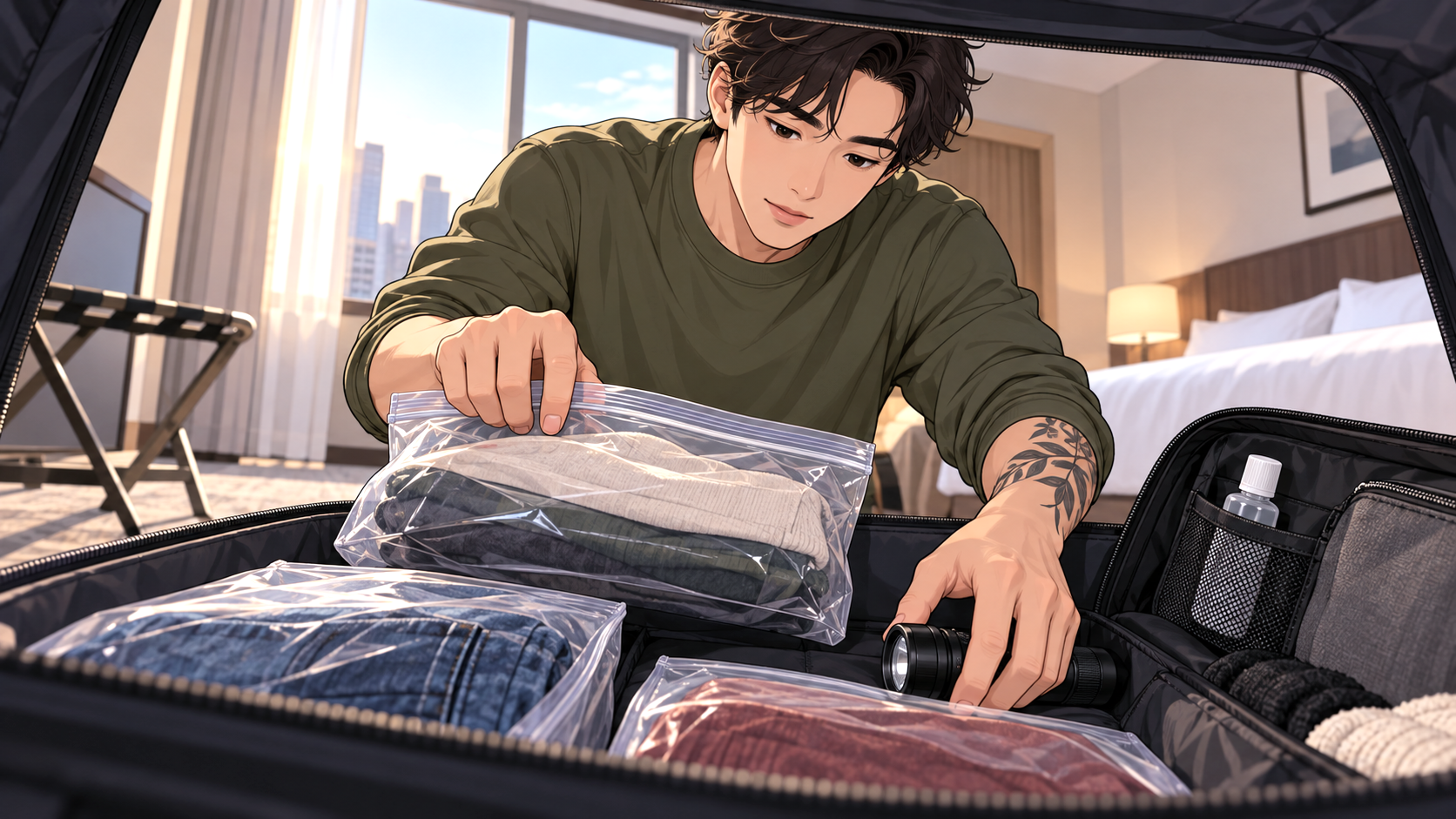
There is no travel spray that can reliably make a suitcase or hotel bed “bed bug proof.” DEET has the strongest experimental evidence for repelling bed bugs, including prolonged repellency on treated fabric, but EPA has not registered any skin-applied repellent specifically to protect people from bed bugs. Picaridin, permethrin, essential oils, and botanical travel sprays have weaker or less consistent evidence. For travelers, repellents should be considered an optional extra layer rather than the main defense.
Which Bed Bug Repellents Have the Best Evidence?
| Repellent | Evidence Against Bed Bugs | Best Travel Role | Main Limitation |
|---|---|---|---|
| DEET | Strongest laboratory evidence | Potential barrier on surfaces where the product label legally permits use | Not registered for application to human skin against bed bugs |
| Picaridin / icaridin | Mixed | No strong reason to choose it specifically for bed bugs | Performed poorly in some barrier tests |
| Permethrin | Weak as a repellent | Only for labeled fabric or luggage applications | Better known as an insecticide than a bed bug repellent |
| PMD | Moderate experimental evidence | Potential future/limited repellent role | Far less bed bug-specific evidence than DEET |
| Essential-oil travel sprays | Inconsistent | Convenience only when specifically labeled | Marketing often exceeds published evidence |
The table does not mean DEET should be sprayed over a hotel room, suitcase, or body indiscriminately. A repellent’s laboratory activity and its legally permitted uses are separate questions.
DEET Has the Strongest Bed Bug Repellency Data
DEET stands apart because bed bugs have repeatedly avoided treated barriers even when they were strongly motivated to reach a host. In one controlled study, a 10% DEET treatment repelled at least 94% of bed bugs for nine hours when carbon dioxide was present as a host cue. A 25% treatment remained highly repellent on fabric for as long as 14 days under the experimental conditions. The original comparative repellent study found substantially weaker performance from the commercial picaridin and permethrin formulations that were tested.
A later barrier experiment produced a similar result. When bed bugs were attracted toward heat and CO₂, DEET still produced about 97% repellency after 24 hours, whereas several alternatives lost much more of their apparent repellency once a host cue encouraged the bugs to cross the treated area. Research using luggage-like fabric setups has also examined DEET and naturally derived compounds as barriers against bugs approaching bags.
Those studies make DEET the most convincing experimental bed bug repellent, but they do not create a new approved use for every consumer DEET product. EPA specifically warns that no pesticide or repellent is registered for application to human skin against bed bugs. A mosquito repellent should therefore not be applied to the body at bedtime on the assumption that it will legally or reliably prevent bed bug bites.
Picaridin Is Not a Bed Bug Equivalent to DEET
Picaridin is an excellent mosquito and tick repellent, but performance against bed bugs has been inconsistent. The earlier comparative bed bug study found a commercial product containing 7% picaridin provided little useful repellency. Later laboratory work using icaridin found very high avoidance when bugs could choose between treated and untreated harborages, yet the effect became much weaker in a barrier test once bugs were moving toward heat and carbon dioxide.
That behavioral difference is relevant to travel. A substance that makes one resting place unattractive may not stop a hungry bug from crossing treated material to reach a person or nearby luggage. Picaridin therefore should not be treated as interchangeable with DEET merely because both work well against mosquitoes.
Travelers who already carry picaridin for mosquito protection can continue using it according to its label for that purpose, but there is not enough bed bug evidence to make it the first choice for protecting baggage. The more dependable steps for keeping bed bugs out of luggage during a trip rely on where the bag is placed and how it is handled rather than its smell.
Permethrin-Treated Fabric Is Less Repellent Than Many Travelers Assume
Permethrin-treated clothing is widely used against mosquitoes and ticks, which makes it easy to assume the same approach will keep bed bugs away from suitcases. The available bed bug experiments do not support that assumption very well. In the DEET comparison, a commercial 0.5% permethrin treatment showed little repellency.
Permethrin may still kill susceptible bed bugs after sufficient insecticidal exposure, but killing and repelling are different outcomes. A bug can cross a treated surface before receiving a lethal dose, and modern populations frequently show substantial resistance to pyrethroids. The known limitations of permethrin against resistant bed bugs make it particularly unsuitable as an invisible protective shield around baggage.
Only treat luggage or clothing with a pesticide when that exact site and use appear on the product label. EPA’s registered bed bug pesticide database can be used to check whether a product is actually labeled for bed bugs and where it may be applied.
Essential-Oil Travel Sprays Have Much Weaker Evidence
Peppermint, rosemary, cedar, cinnamon, geraniol, clove, lavender, neem, and other botanical ingredients appear frequently in travel-size bed bug sprays. Some individual compounds can alter bed bug behavior in laboratory tests. Cinnamon oil, for example, produced strong avoidance in one harborage-choice experiment, but that result weakened when insects had to cross a treated barrier toward host cues.
That is very different from demonstrating that a small amount of scented spray on a suitcase prevents hitchhiking during a hotel stay. The National Center for Complementary and Integrative Health specifically notes that natural products marketed to travelers have not been shown to reliably prevent bed bugs and advises travelers to rely on inspection and baggage precautions instead.
Essential oils also should not be sprayed directly onto skin or bedding merely because they are plant-derived. The idea that certain odors consistently keep bed bugs away is much broader than the evidence supports, and bed bug responses to commonly promoted smells do not establish a dependable travel barrier.
For the same reason, a travel bottle labeled “natural,” “non-toxic,” or “bed bug repellent” should not outrank a product with bed bug-specific efficacy data merely because its ingredient list sounds gentler.
A Luggage Repellent Cannot Protect an Exposed Suitcase From Every Route
Bed bugs hitchhike by entering seams, zipper folds, pockets, clothing, backpacks, and other belongings. A sprayed band on one part of a suitcase cannot prevent a bug from reaching an untreated section, and repellency may decline as the deposit ages or rubs off.
Placement therefore has more predictable value than repellent alone. EPA advises travelers to inspect the luggage rack and keep luggage away from the bed and floor, then inspect baggage and use high dryer heat on appropriate belongings after returning home. A suitcase left open beside an infested bed presents a much greater opportunity for hitchhiking than a closed bag isolated on an inspected rack.
Checking the room before unpacking also addresses the risk earlier. Mattress seams, the headboard, bed frame, upholstered furniture, and luggage-rack joints are useful targets during a hotel-room bed bug inspection. If convincing evidence appears, changing rooms or accommodations is more protective than attempting to create a chemical barrier around belongings.
Do Not Spray Hotel Furniture With Your Own Pesticide
Travelers sometimes respond to uncertainty by spraying mattresses, headboards, carpets, couches, or hotel linens with products brought from home. That can expose other guests and hotel employees, damage property, violate the pesticide label, and still fail to reach hidden bugs.
North Carolina pesticide regulators advise travelers who discover signs of an infestation to notify hotel management rather than applying pesticides throughout the room themselves. The same restraint applies to repellents unless the label clearly permits the exact application.
A repellent is most defensible as a small supplemental measure on a permitted personal item, not as a substitute for inspecting or leaving a suspect room. Travelers who actually encounter bugs should focus on preventing an unnoticed hotel exposure from becoming a home infestation.
What to Do With Luggage After a High-Risk Stay
A repellent used during the trip should not change what happens after a suspected exposure. Keep the suitcase away from beds and upholstered furniture when you return, inspect seams and pockets under good light, and separate items until they can be treated appropriately. Washable clothing that tolerates heat can go directly into a dryer, since heat is much more dependable for killing hitchhiking bugs than hoping a residual repellent remains active.
EPA recommends unpacking directly for laundering and drying and storing suitcases away from sleeping areas after travel. Clothing treatment is especially useful because sufficient dryer heat can kill bed bugs concealed in fabrics. Items that cannot be dried need an appropriate alternative rather than a quick repellent spray.
If live bugs are discovered inside the suitcase, treatment becomes a different task from prevention. Removing bed bugs from luggage requires addressing seams, pockets, removable contents, and materials that may need heat, inspection, vacuuming, or another suitable method.
The Best Travel “Repellent” Strategy Uses Barriers Before Chemicals
For travelers who want the lowest realistic risk, the most defensible hierarchy is:
- Inspect before unpacking.
- Keep luggage closed and physically separated from the bed and upholstered furniture.
- Use an inspected luggage rack or another low-risk location rather than the floor.
- Use a repellent only when its label permits the intended application and understand that it is supplemental.
- Inspect and heat-treat appropriate belongings after returning home when exposure is suspected.
DEET currently has the strongest published repellency against bed bugs, but the evidence does not justify using mosquito repellent on the body for bed bug protection or ignoring product labels. For most travelers, careful baggage handling offers more dependable protection than any spray sold as a travel bed bug repellent.