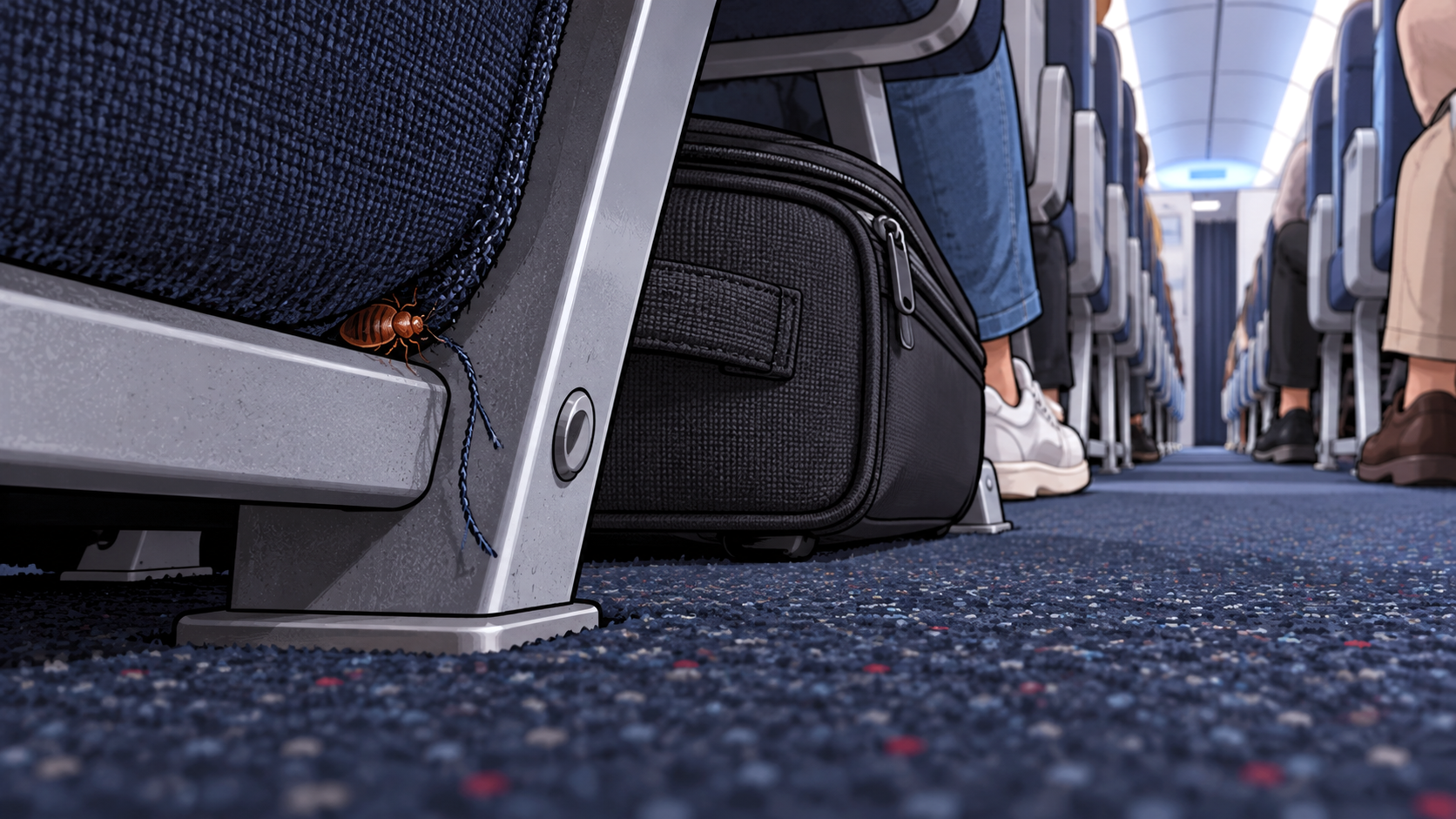
Bed bugs are associated most strongly with bedrooms and hotels, but they are not restricted to those places. They can be transported on luggage, clothing, and other personal belongings, which means an insect carried onto an aircraft can potentially end up around a passenger seat or inside another traveler’s belongings. Bed bugs have been documented on aircraft, although finding one during a flight does not mean the entire plane is infested. You can encounter bed bugs on an airplane. Bed bugs can be carried aboard in passengers’ luggage, clothing, or other belongings and have been documented on aircraft. They cannot fly or jump, so exposure occurs when they crawl between nearby surfaces or hitchhike in personal belongings.
How Do Bed Bugs Get Onto Airplanes?
Bed bugs do not fly onto aircraft or travel through the air between passengers. They are wingless and move by crawling, but they are excellent hitchhikers. An insect hiding in a suitcase, backpack, coat, or another personal item can be transported from an infested home or hotel onto a plane. Health Canada warns that bed bugs readily hide in luggage, clothing, and other personal belongings, which is one reason travel plays such an important role in their movement.
Once aboard, a transported bed bug could remain with the luggage that carried it or crawl into another protected space. Published research has documented bed bugs on aircraft and other forms of passenger transportation. This does not mean air travel routinely results in bed bug exposure. It means an airplane is one of several places where a hitchhiking insect can potentially be transported between locations.
Where Could Bed Bugs Hide on a Plane?
A bed bug needs a narrow protected space rather than a mattress specifically. On an aircraft, suitable hiding opportunities can include seams and gaps around upholstered seating or personal belongings stored nearby. Their flattened bodies allow them to enter small spaces, and adult bed bugs average about 5 mm long, while immature stages are considerably smaller.
Your luggage is arguably more important than trying to inspect every part of an aircraft seat. Carry-on bags, backpacks, coats, and other fabric items contain numerous seams and folds where a hitchhiking insect could hide. Keeping these belongings contained also fits into the broader strategy for keeping bed bugs out of your luggage throughout a trip.
Can a Bed Bug Crawl Onto You During a Flight?
It is possible for a bed bug in the immediate seating area to crawl onto exposed skin or clothing. Bed bugs feed on blood, but they do not normally remain on the human body after feeding in the way that some parasites do. Their normal behavior is to feed and then return to a protected hiding location.
The more important travel concern is accidental transportation. A bed bug that enters your coat, backpack, or carry-on could potentially leave the aircraft with you. Bed bugs are easily moved on infested objects, and they cannot fly or jump, so this hitchhiking behavior explains how they can cover distances far beyond what they could crawl themselves.
Does Getting Bitten on a Plane Prove There Were Bed Bugs?
No. A red or itchy mark noticed during or after a flight cannot by itself identify bed bugs. Skin reactions vary between people, and a bite-like mark can have numerous causes. If you find an actual insect, photograph or preserve it when practical and compare it with reliable bed bug identification features.
Timing can also be misleading. A skin reaction noticed after a flight could result from an earlier exposure, including a hotel stay. If you have bites but cannot find physical signs of bed bugs, avoid treating the bite pattern as proof of where or when the exposure occurred.
How to Reduce the Chance of Bringing an Airplane Bed Bug Home
Keep carry-on bags zipped when you are not using them and avoid spreading clothing, coats, or other belongings unnecessarily around the seating area. Keeping worn clothing contained is particularly sensible because research has found that bed bugs are attracted to odors associated with soiled clothing, providing another reason not to leave worn clothes loose throughout your travel belongings.
The precautions you take after the flight matter just as much. If you have a specific reason to suspect exposure, keep potentially affected belongings contained until you can inspect and process them. The EPA recommends inspecting luggage carefully after travel, unpacking clothing directly for laundering or drying, and storing suitcases away from bedrooms. High dryer temperatures kill bed bugs, whereas washing alone generally does not.
If your flight was only one part of a longer trip, remember that hotels generally provide more opportunities for prolonged exposure around sleeping areas. Following precautions designed to prevent bringing bed bugs home from a hotel helps protect the same luggage that travels with you onto the aircraft.
What Should You Do If You See a Bed Bug on a Plane?
Notify a flight attendant rather than simply brushing the insect onto the floor or another seat. If possible without handling it directly, take a clear photograph or preserve the insect for identification. Check the belongings immediately around you, particularly bags, coats, and clothing that have been touching the seat.
After reaching your destination, keep potentially exposed belongings contained until you can inspect them properly. If you are returning home, do not place the suitcase or backpack on your bed. Inspect seams, pockets, folds, and zipper areas, and follow normal post-travel precautions. Monitoring for early signs of bed bugs afterward can provide additional reassurance if you had a credible exposure.
Other Questions About Bed Bugs on Airplanes
Can bed bugs live in airplane seats?
Bed bugs can hide in narrow protected spaces around upholstered seating, and bed bugs have been documented on aircraft. However, seeing one insect does not establish that an entire aircraft has a reproducing infestation.
Can bed bugs get into checked luggage?
Yes. Luggage can pick up bed bugs at various points during a trip, particularly if it has been exposed to an infested environment. It can be difficult to determine exactly where a hitchhiking insect entered a suitcase.
Can bed bugs travel on your clothes during a flight?
A bed bug can temporarily hitchhike in clothing or other belongings. Bed bugs do not normally live continuously on the human body, however.
Should you treat your luggage after every flight?
Routine pesticide treatment after every flight is unnecessary. Inspecting luggage, keeping travel belongings contained, and taking additional precautions when there is a specific reason to suspect exposure are more appropriate. Never apply pesticides to luggage or clothing unless the product label specifically permits that use.