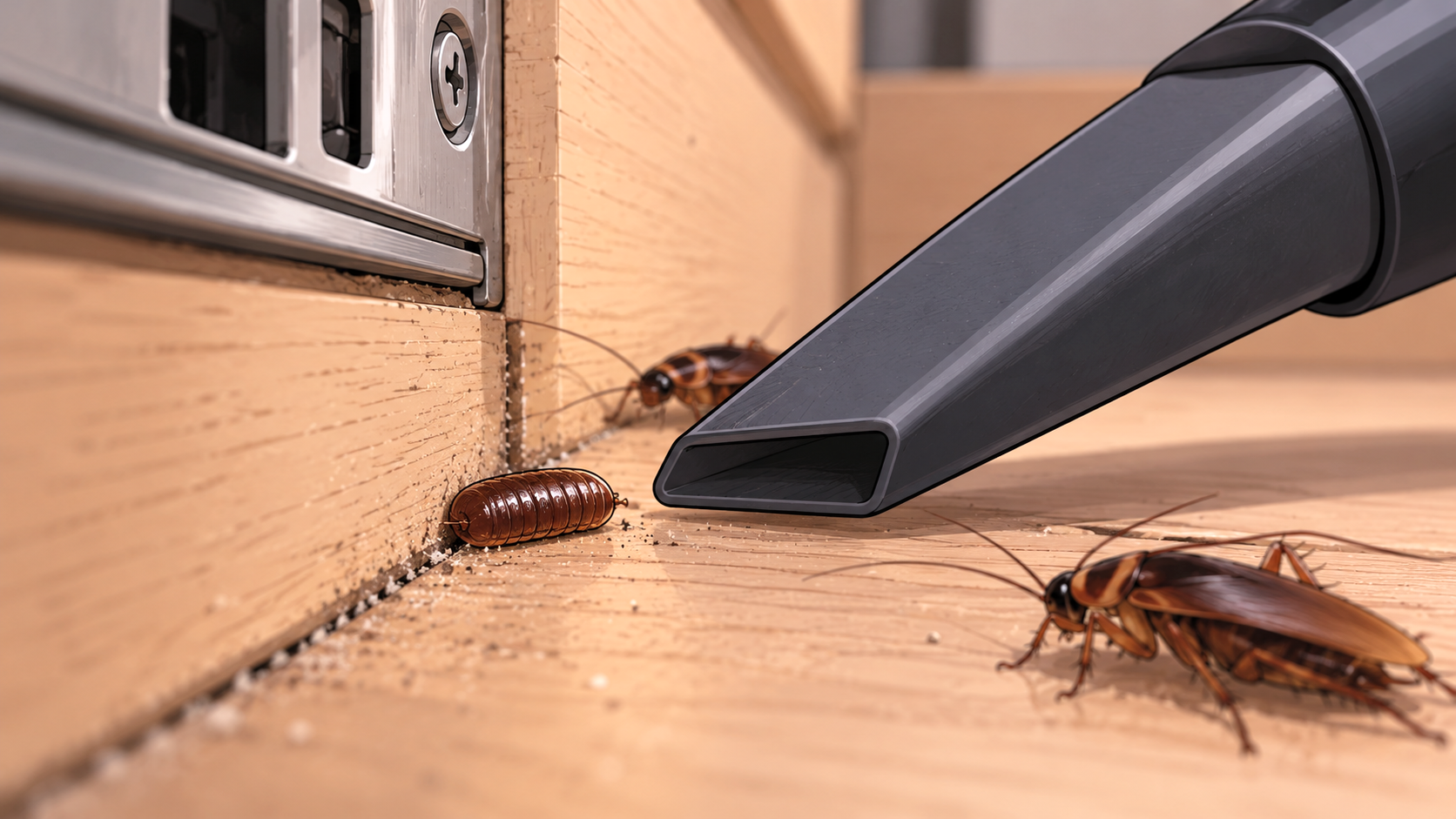
Finding a cockroach egg case behind a cabinet or attached to furniture means there may be developing insects inside, even when no adult cockroaches are visible. Removing the case before it hatches prevents any viable eggs inside it from producing new cockroaches. However, eggs concealed in inaccessible spaces or carried by female cockroaches may escape an ordinary inspection.
The most reliable way to get rid of cockroach eggs you can locate is to physically remove the entire egg case, seal it for disposal, and monitor the affected area for newly hatched cockroaches. Vacuuming is effective for accessible cases, while insecticide sprays and household remedies cannot be relied upon to penetrate and kill every egg.
Cockroaches package their eggs inside protective capsules called oothecae. These cases must be handled differently from the exposed eggs of insects that deposit them individually.
Remove Egg Cases Without Leaving Them Behind
An egg case lying on a hard surface can be picked up with a disposable tissue or collected using a vacuum’s crevice attachment. If it is firmly attached to furniture or another surface, gently dislodge it with a suitable non-damaging tool. Avoid scraping painted finishes, electrical components, or delicate materials.
The University of California’s cockroach management guidance specifically recommends looking for egg cases attached to furniture, boxes, and protected areas around appliances, then removing those found. Vacuuming also removes accessible insects, shed skins, and cases from cracks.
Place collected cases inside a tightly sealed disposable bag before putting them in an outdoor rubbish container. If using a vacuum, empty its contents promptly into a sealed bag; otherwise, living cockroaches or viable egg cases may remain inside the machine. A vacuum with HEPA filtration is preferable where substantial insect debris has accumulated.
The EPA’s guidance for pest management in residential buildings recommends vacuuming cockroaches and egg cases, noting that HEPA filtration can reduce the release of allergens during cleanup.
Simply throwing an intact case into an uncovered indoor bin is less reliable because viable eggs may remain inside it. Physical destruction can also prevent hatching when the entire case and its contents are thoroughly crushed, but crushing is unnecessary if the case can be securely contained and discarded.
Search According to How Different Cockroaches Deposit Their Eggs
An unsuccessful search does not always mean there are no eggs. Some cockroach species deposit cases in protected locations, while others carry them until shortly before hatching.
German cockroach females commonly retain their egg cases throughout most of the developmental period. The Rutgers University German cockroach factsheet explains that detached cases usually fail to hatch unless the eggs are close to emergence.
Brown-banded cockroaches behave differently. Females attach their cases to concealed surfaces, making inspection of furniture and elevated spaces particularly important.
The EPA’s urban pest-management manual describes brown-banded cockroaches attaching egg capsules beneath furniture, behind drawers, and inside cabinet structures.
For a targeted search, concentrate on locations associated with the species present:
- German cockroaches: Look for females carrying cases around known harborages and for recently deposited cases close to those locations.
- Brown-banded cockroaches: Examine the undersides of furniture, picture frames, shelving, cabinet interiors, and other protected surfaces.
- American and Oriental cockroaches: Inspect sheltered ground-level cracks, damp utility areas, and protected spaces where cases may be deposited.
The locations where cockroaches lay their eggs differ enough that searching only beneath the kitchen sink may overlook cases elsewhere.
Do not assume that an unidentified brown capsule is a viable cockroach egg case. Its appearance, species, and condition should be established before deciding whether further action is warranted.
Can Cockroach Eggs Survive Insecticide Sprays?
Ordinary contact insecticides are generally more dependable against exposed cockroaches than against embryos enclosed within an ootheca. The protective structure can limit contact with an insecticide, and a case hidden deep inside furniture may receive no effective exposure.
Spraying an egg case does not establish that all the embryos have died. Equally, finding a dead female cockroach does not prove that her eggs are no longer viable.
Research published in the Journal of Experimental Biology demonstrates that German cockroach egg cases have a physiological relationship with the females carrying them, including water transfer during embryonic development. Their survival after detachment depends partly on developmental stage and environmental conditions.
Some insect growth regulators can disrupt reproduction or embryonic development, but their effects depend on the active ingredient, formulation, species, and timing of exposure. They should not be treated as interchangeable products that instantly sterilize every existing egg case.
For example, research on the insect growth regulator novaluron investigated its effects on German cockroach reproduction and egg-case viability. Such findings do not mean an ordinary household pesticide will reliably kill eggs when sprayed onto a capsule.
The resistance of some cockroach populations to insecticides adds another reason not to judge egg survival by whether nearby adult insects have died. Where a case is accessible, removing it is more certain than attempting to penetrate it chemically.
What About Bleach, Vinegar, Boiling Water, and Freezing?
Household remedies are often recommended for cockroach eggs without sufficient attention to whether they reach the embryos or damage the surface being treated.
Bleach and vinegar should not be considered dependable egg-killing treatments. Neither provides a validated, universal method for destroying intact cockroach oothecae under ordinary household conditions. Mixing bleach with vinegar or other cleaners can also release hazardous gases.
Boiling water can expose a loose egg case to potentially lethal temperatures, but pouring it into cabinets, furniture joints, electrical equipment, or wall cavities creates scalding and property-damage risks. There is little reason to use it when the case can be collected directly.
Freezing is a possible treatment for certain small, non-electronic household items. The University of Minnesota’s cockroach guidance describes sealing suitable objects in plastic bags and maintaining approximately 0°F (-18°C) conditions for five days. The method is intended for appropriately selected items and should not be assumed safe for electronics, delicate materials, or objects that cannot tolerate freezing.
A hair dryer or improvised heat treatment is similarly unreliable because the temperature reaching a hidden egg case cannot be determined from the temperature of the air outside its shelter. Excessive heat can damage belongings before the embryos receive a lethal exposure.
When an egg case is visible, secure removal is simpler and avoids these uncertainties.
Handle Egg Cases Found on Furniture and Personal Belongings
An egg case attached to a removable drawer, storage container, or furniture panel does not automatically mean the entire object must be discarded. Inspect the surrounding accessible surfaces, remove the case, and clean away accompanying debris.
For washable hard surfaces, use ordinary detergent and water after physical removal. The cleaning step removes contamination but should not be mistaken for a guaranteed treatment of intact eggs that remain hidden elsewhere.
Inspect cardboard carefully, especially where cases are attached beneath folded flaps or within damaged seams. Heavily contaminated disposable packaging is generally easier to discard than to preserve. Sound furniture and belongings can often be retained after inspection and removal of accessible cases.
The University of California’s recommendations for checking incoming belongings specifically identify furniture, appliances, and boxes as potential carriers of cockroaches and egg cases.
If a case is discovered inside electrical equipment, do not pour liquids, powders, or insecticide into the enclosure. The risks involved in removing cockroaches from electronics may require professional servicing when internal access is unsafe.
An item with repeated sightings from inaccessible cavities deserves closer assessment than one with a single removable case on its exterior.
Monitor for Nymphs After Removing the Eggs
A removed egg case cannot produce additional cockroaches, but others may already have hatched or remained concealed during inspection.
Place sticky monitors along accessible edges near the location where the case was discovered. Check them regularly, recording captures of small, wingless cockroaches as well as adults.
The Cornell Integrated Pest Management program recommends glue boards for monitoring cockroach populations and evaluating whether activity continues after control measures. Very small nymphs may indicate recent hatching, although their presence alone cannot reveal exactly which egg case produced them. The time cockroach eggs take to hatch varies by species and environmental conditions, so monitoring should not end immediately after the first cleanup.
A sudden appearance of numerous nymphs near a previously undisturbed crevice may warrant another inspection. Continued activity around several locations suggests that more than one reproductive site is involved.
When Removing Individual Egg Cases Is Not Enough
Physical removal works best when cases are accessible and relatively few. It becomes less practical when egg cases are deposited deep inside structural openings or numerous reproductive females remain active.
Finding repeated cases alongside live adult and immature cockroaches in shared harborages suggests an established population rather than an isolated object requiring disposal.
A licensed pest-management professional can evaluate concealed activity and select appropriate control methods. The EPA’s advice on choosing pest-control services recommends discussing the pest, proposed methods, and expected follow-up rather than relying on indiscriminate pesticide applications.
Egg removal is a useful immediate measure, but it does not stop surviving females from producing additional cases. Where monitoring confirms continuing reproduction, broader cockroach management is necessary to prevent newly deposited eggs from replacing those already removed.