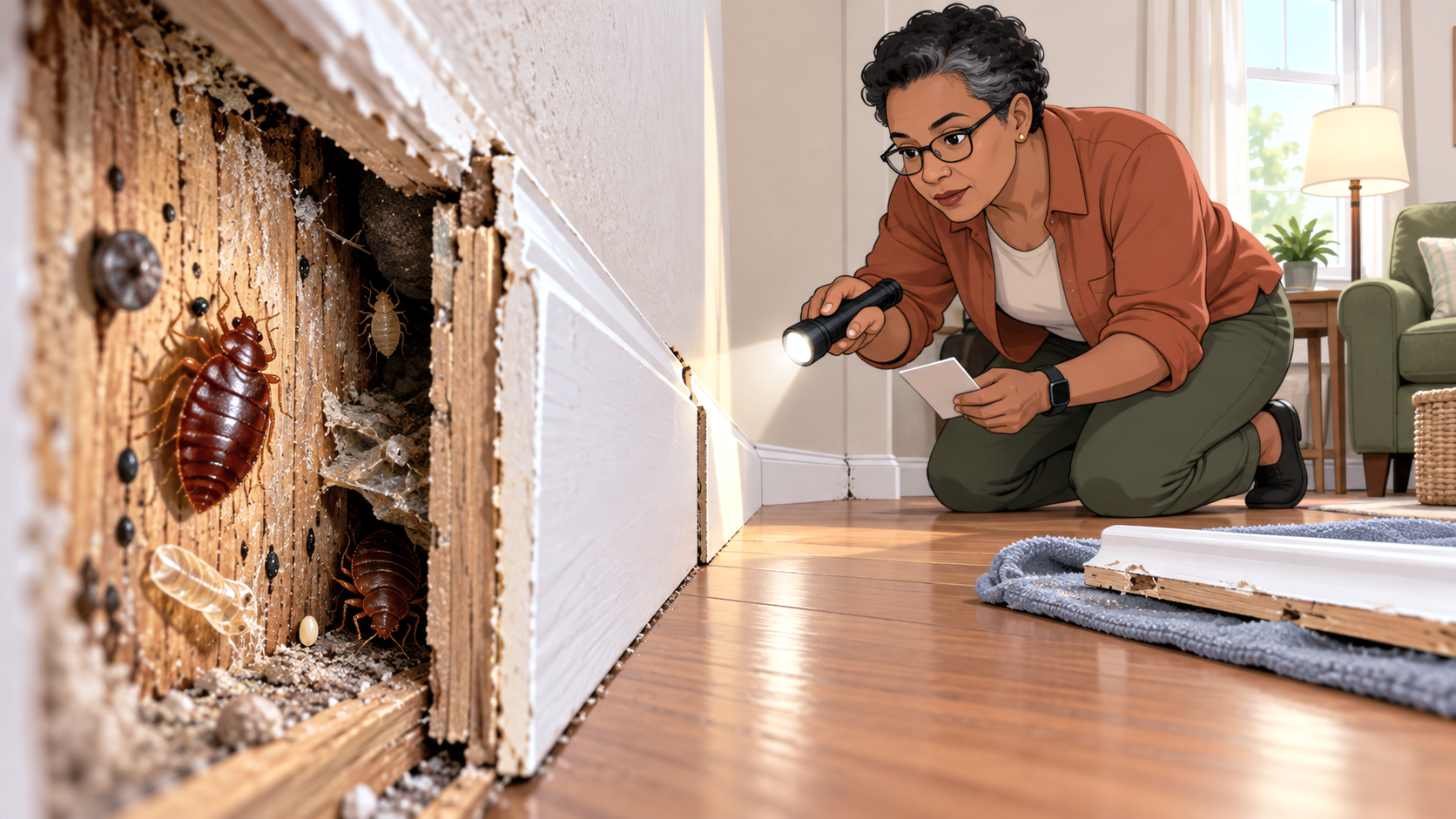
A baseboard isn’t one hiding spot. It’s a continuous gap that runs the entire length of a room, and that changes how it should actually be inspected. Yes, baseboards are a specific hiding spot the EPA names directly in its treatment-preparation guidance, recommending that cracks around baseboards be caulked and that furniture, baseboards, and outlet covers all be physically inspected and cleaned. Baseboards run continuously around a room’s perimeter, so a gap in one spot can also serve as part of a longer travel route rather than an isolated hiding place.
Named Directly in EPA’s Own Prep Checklist
This isn’t a detail pulled from a secondhand source. The EPA’s own guidance on preparing for bed bug treatment instructs readers to physically inspect and clean furniture, baseboards, and behind outlet and switch covers to remove any visible bed bugs or eggs. Baseboards sit right alongside furniture and outlets on that list, not as an afterthought but as one of the specific areas named in an official checklist for getting a home ready for treatment.
Why a Baseboard Gap Isn’t Like an Isolated Crack
This is what actually sets a baseboard apart from most of the other hiding spots covered on this site. A mattress seam, a screw hole, or an outlet box is a single, bounded location. A baseboard gap runs continuously along an entire wall, sometimes connecting corners, doorways, and the space behind furniture in a single unbroken line. That structure means a baseboard doesn’t just hide a bed bug in one spot, it can function as a corridor a bed bug uses to move along a wall without ever leaving the shelter of that narrow gap.
The Card-Check Method, Applied Specifically Here
This site’s guide to bed bugs and carpet already covers University of Minnesota Extension’s card-check method, sliding a card along the seam where a baseboard meets the floor and where it meets the wall. What’s worth adding here specifically is that a baseboard’s corridor-like structure makes checking only a few spots along a wall less reliable than it would be for an isolated crack. Since activity in one section doesn’t rule out activity somewhere else along the same continuous gap, the full run of the wall deserves attention, not just the corner nearest the bed.
Why Caulking Belongs to Preparation, Not the Cure
This distinction matters since caulking often gets treated as if it solves the problem on its own. EPA’s own guidance places caulking cracks around baseboards under a section called eliminating bed bug habitats, listed alongside decluttering, mattress encasements, and sealing outlet rims, all of which are framed as preparation steps rather than as the actual treatment. None of these steps are described as addressing bed bugs already established in a home. They’re the groundwork that makes an actual treatment, whether DIY or professional, more effective once it happens.
What Repairing Wallboard and Wallpaper Has to Do With It
The same EPA section that covers baseboard caulking also recommends repairing any wallboard damage and making sure wallpaper isn’t loose. That’s worth including here since it points to the same underlying issue as a baseboard gap: any damaged or separated wall surface creates the same kind of narrow, dark space a bed bug can use. A baseboard is simply the most consistently present example of that category in an ordinary room.
Common Questions About Bed Bugs and Baseboards
Does caulking baseboard cracks alone get rid of an existing infestation? No. EPA’s own guidance lists caulking as a preparation and habitat-elimination step alongside decluttering and encasements, not as a treatment that addresses bed bugs already present in a home.
Should baseboards be caulked before or after professional treatment? This is worth asking a pest control professional directly for a specific situation, since sealing a gap where bed bugs are already established before that population is addressed could work against a treatment plan rather than help it.
Can bed bugs travel long distances along a baseboard gap? There isn’t specific research measuring exact baseboard travel distances, though the EPA’s general finding that bed bugs will travel 5 to 20 feet from an established hiding spot to feed is consistent with a baseboard gap serving as part of a longer route.
Is loose wallpaper a similar risk to a baseboard gap? Yes, in principle. EPA’s own guidance groups loose wallpaper with baseboard cracks and wallboard damage as habitats worth eliminating, treating them as functionally similar kinds of gaps.
2 thoughts on “Can Bed Bugs Hide in Baseboards?”