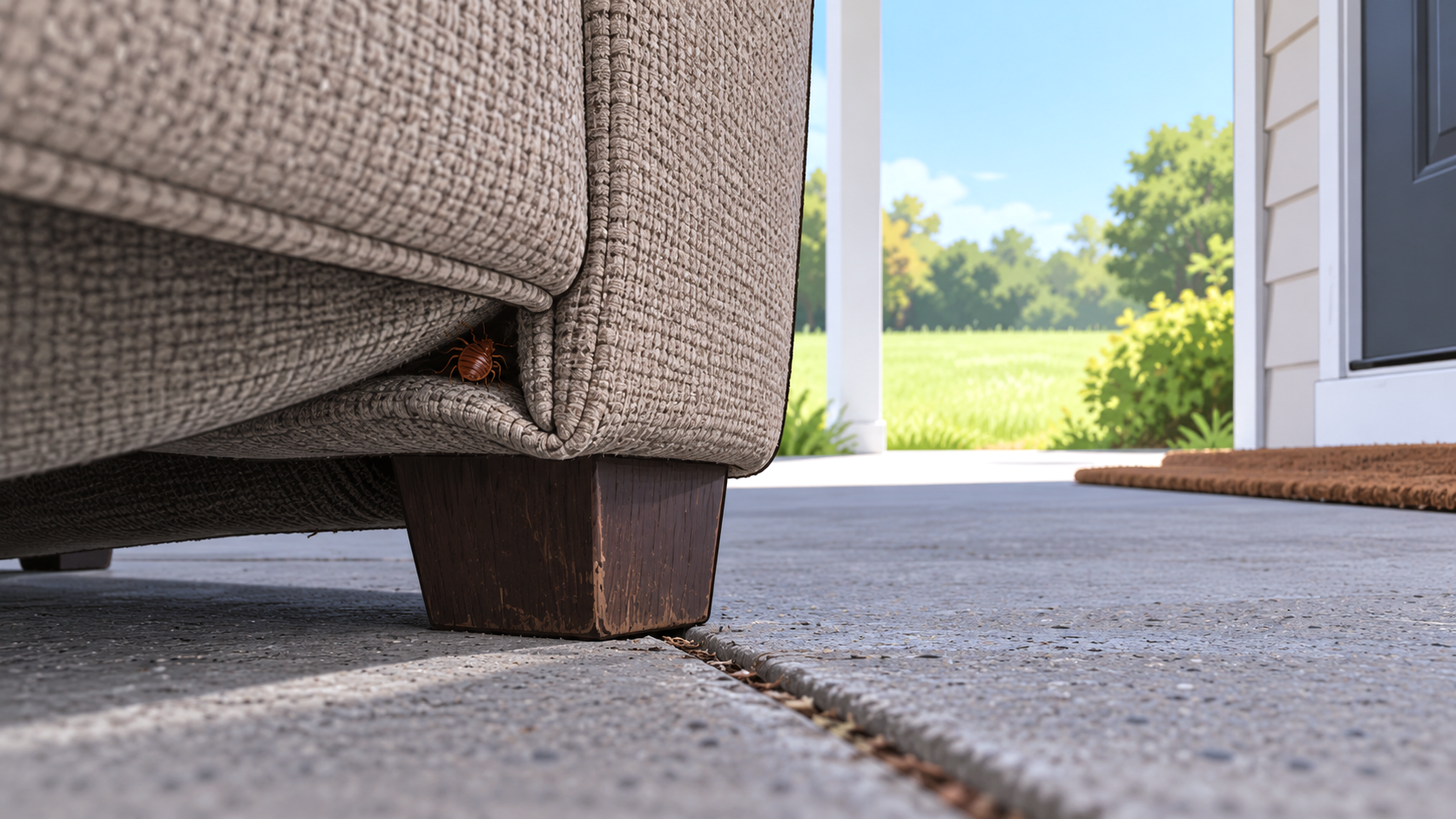
University of Florida’s own entomology fact sheet states plainly that human dwellings, bird nests, and bat caves are the most suitable habitats for bed bugs. Two of those three options have nothing to do with a house at all. Yes, though not in the way most people imagine, since Cimex lectularius originally lived in bird nests and bat caves before adapting to human dwellings. Outdoors today, the species survives mainly in bird nests, bat roosts, and similar sheltered spots close to a blood source, not out in open yards or gardens.
Bird Nests and Bat Caves Aren’t a Stretch, They’re the Original Habitat
This isn’t bed bugs stretching into an unusual environment. The University of Florida’s IFAS Extension fact sheet on bed bugs, citing entomologist W.R. Dolling’s 1991 research, states that human dwellings, bird nests, and bat caves are the most suitable habitats for bed bugs because they offer warmth, hiding spots, and available hosts to feed on. Human homes are simply one more version of the same setup a bird’s nest or a bat cave already provides, warmth, shelter, and a host nearby, not a fundamentally different environment the species had to adapt to from scratch.
Why a Bird’s Nest Under Your Eave Is a Genuine Risk
This connects directly to prevention advice worth taking seriously. North Dakota State University Extension recommends eliminating bird nests or bat roosting sites and sealing potential openings in roofs and attics, specifically to keep a home free of the birds, bats, and rodents that serve as alternate hosts for bed bug species. A nest or roost tucked into an eave or attic gap isn’t just a nuisance on its own. It’s a potential source of introduction sitting right at the edge of a structure.
The Species Actually Involved Isn’t Always the Same One
This site’s separate comparisons of bat bugs and swallow bugs already cover the specific differences between these close relatives and the common bed bug, including the fact that they primarily feed on bats and birds respectively and generally don’t reproduce well on human blood. The short version worth repeating here is that a bird’s nest or bat roost near a home is more likely to introduce one of these related species than the common bed bug itself, though any of them can bite people if their preferred host isn’t available.
What This Means for an Actual Infestation Indoors
Once Cimex lectularius has established a population feeding on a human host inside a home, it has no ongoing use for an outdoor habitat at all. The bird nest or bat roost matters as a possible point of introduction, not as an outdoor component of an existing indoor infestation that would need separate treatment. Nothing about an indoor population depends on access back outside once it’s settled near a sleeping host.
Why Sealing the Outside of a Building Matters Even for an Indoor Problem
Ohio State University Extension recommends caulking cracks and crevices in a building’s exterior and repairing or screening openings specifically to exclude birds, bats, and rodents that can serve as alternate hosts. That’s a meaningful addition to the interior sealing already covered elsewhere on this site, since it addresses the introduction point rather than just the hiding spots a population uses once it’s already inside.
Common Questions About Bed Bugs and the Outdoors
Can bed bugs survive outdoors in a garden or yard away from any nest or roost? There isn’t confirmed research suggesting the common bed bug establishes populations in open outdoor spaces without a nest, roost, or similar sheltered structure nearby, since it needs the same warmth and hiding spots it seeks indoors.
Does removing a bird’s nest near a home guarantee the bed bug risk is gone? Not necessarily on its own, since any bed bugs or eggs that had already moved from the nest into cracks or voids in the structure would need to be addressed separately.
Are bat bugs and swallow bugs actually more dangerous than the common bed bug? No, in fact the opposite. Already-established content on this site notes that bat bugs and swallow bugs generally don’t reproduce well on human blood and aren’t known to transmit disease, unlike some other biting pests.
Is the common bed bug found everywhere in the world, or only certain climates? UC IPM notes that the common bed bug, Cimex lectularius, is most frequently found in northern temperate climates across North America, Europe, and Central Asia, while a related species, the tropical bed bug, is the dominant species in tropical regions instead.