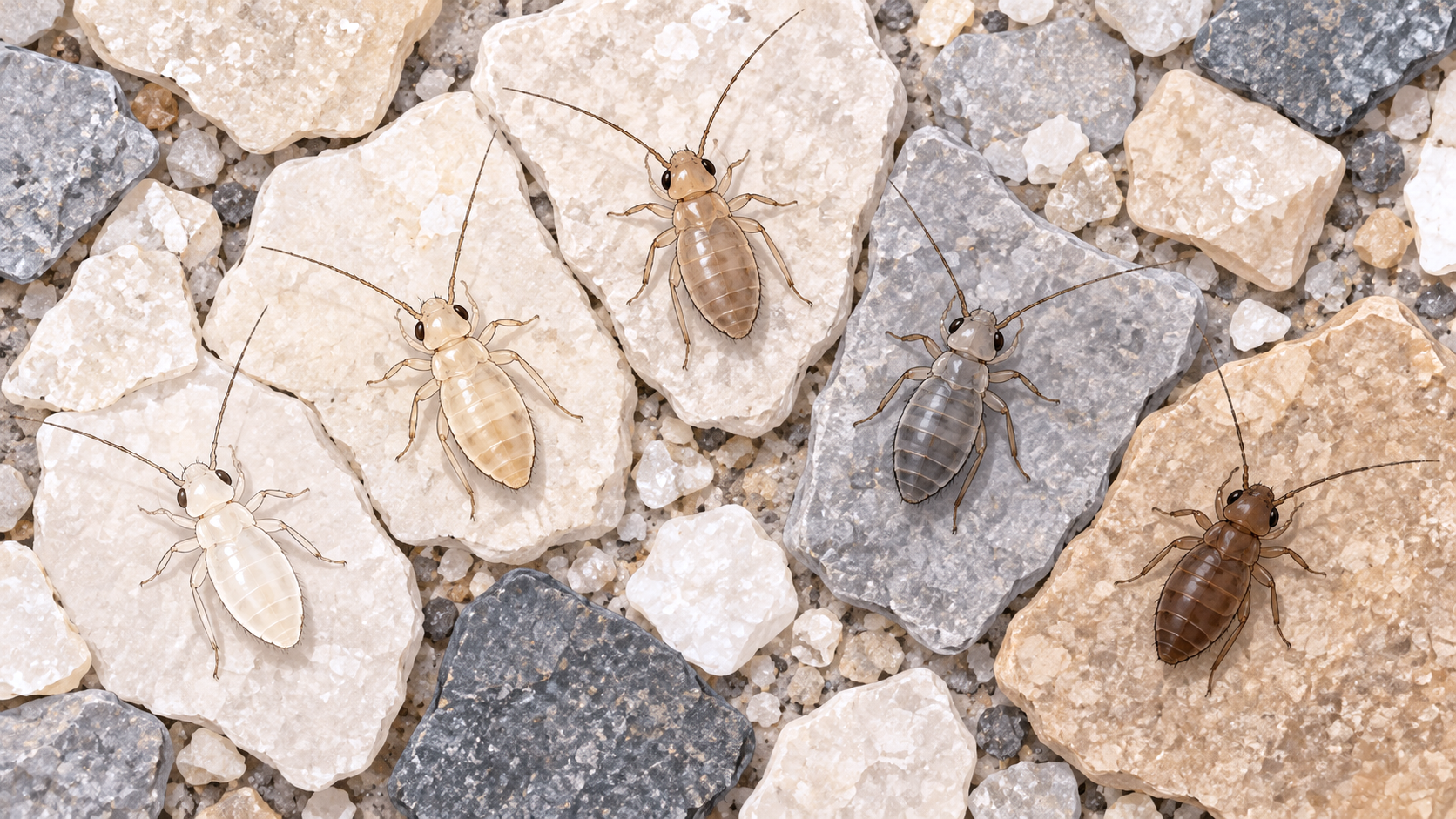
Booklice do not come in just one color. Some are so pale that they nearly disappear against white paper, while others are noticeably tan, gray, or brown. Their tiny size can also make their color look different depending on the surface beneath them.
Booklice can be nearly transparent, whitish, gray, tan, light brown, dark brown, or orange-brown. Their color varies between species and life stages, with younger individuals sometimes appearing especially pale. Because booklice are usually only a few millimeters long or less, lighting and background contrast can make the same insect appear lighter or darker. Color can help you narrow down an identification, but body shape is much more dependable.
What Color Are Booklice Usually?
There is no single color that represents all booklice. Indoor species tend to have fairly muted colors rather than vivid markings.
Household psocids may be white, gray, or brown. Other identification references describe booklice ranging from translucent or pale shades through tan and brown. Some individuals are dark enough to look almost black when viewed without magnification.
This variation explains why photographs of booklice can look surprisingly different from one another. One insect may appear creamy white, while another looks distinctly brown. Both can still share the characteristic features covered in what booklice look like, including a relatively large head, long antennae, and a small, soft body.
Those physical features carry more identification value than matching an insect to a particular shade.
Can Booklice Be White?
Yes. Booklice can look white, especially when they are very pale or viewed against a darker surface.
Some are better described as translucent than truly white. Light passes through portions of their tiny bodies, producing a whitish or cream appearance rather than the solid white coloration you might expect from a larger insect.
Their small dimensions exaggerate the effect. Common indoor booklice are often only around 1 to 2 millimeters long, although exact size varies. Seeing how small booklice actually are helps explain why color can be so difficult to judge without magnification.
A pale booklouse crossing white paint may look like little more than a moving speck. Put that same insect on dark wood, and its light body suddenly becomes much more obvious.
Can Booklice Be Clear or Transparent?
Some booklice can appear nearly transparent. This is particularly noticeable in pale immature individuals.
Booklice develop through nymphal stages rather than a wormlike larval stage. The nymphs resemble smaller versions of the adults, and young individuals can be extremely pale or nearly clear. As they develop, their appearance can become more defined.
That means a group of booklice does not necessarily consist of insects with identical coloration. Tiny translucent individuals can occur alongside larger tan or brown ones.
The differences between booklice nymphs and adults become easier to recognize once size, body shape, and developmental stage are considered together.
Can Booklice Be Gray?
Yes. Gray falls within the normal color range of booklice.
However, determining whether a one-millimeter insect is genuinely gray can be difficult with the naked eye. A pale brown or translucent insect may also look gray under cool indoor lighting or against a particular background.
This is one reason identification references emphasize anatomy alongside color. Booklice have long, slender antennae and a relatively large head, features that become much clearer with magnification.
If the insect looks gray but lacks the expected body structure, its color alone is not enough to call it a booklouse.
Can Booklice Be Brown?
Yes. Brown is common among booklice, ranging from light tan and ordinary brown to much darker shades. Orange-brown individuals can occur as well.
Brown booklice may be especially difficult to notice on cardboard, wooden shelving, old paper, and book bindings. Their color can blend naturally into those surfaces.
Those locations also happen to provide some of the conditions in which booklice are frequently discovered. Indoor psocids favor warm, damp and relatively undisturbed places, particularly where microscopic fungi are available as food.
Finding tiny brown insects around damp cardboard or books therefore makes booklice one possibility, but it is still worth checking the insect itself. The surrounding signs of booklice can provide additional evidence when the insects are difficult to examine individually.
Can Booklice Be Dark Brown?
Some booklice are distinctly dark brown. Penn State’s identification information includes dark brown among the possible colors of indoor booklice.
A dark individual can look dramatically different from a nearly transparent one even though both belong to the same broader group of insects. That is why searching images for one supposed “correct” booklouse color can be misleading.
Dark coloration can also increase the chance of confusing booklice with other household pests. Body proportions become especially useful here. Indoor booklice are tiny, soft-bodied insects with long antennae and a conspicuously large head relative to the thorax.
When those characteristics are missing, a small brown insect deserves a wider comparison with other bugs that look like booklice.
Are There Black Booklice?
Black is not usually listed as a standard body color for common indoor booklice. Dark brown individuals can nevertheless appear black when viewed with the naked eye.
Scale is the main problem. A very small dark object loses much of its visible color detail from even a modest distance. Instead of seeing brown, your eye simply registers a dark moving dot.
Lighting makes the effect stronger. A dark brown booklouse crossing a bright white wall can appear almost black because of the contrast between the insect and its background.
A suspected “black booklouse” should therefore be examined under bright light and magnification before color is recorded. If it remains a solid black insect and its anatomy does not resemble a psocid, another identification may fit better.
Can Booklice Be Orange or Reddish Brown?
Some booklice can have an orange-brown appearance. That does not mean bright orange or red is typical of household booklice.
The distinction matters because tiny reddish-brown insects are frequently assumed to be bed bugs. Color by itself cannot resolve that comparison.
Bed bugs have a broader, more oval body and grow substantially larger than common indoor booklice. Booklice have a proportionally large head and a much more delicate appearance. The differences become particularly noticeable when comparing booklice and bed bugs under magnification.
An orange-brown speck beside a book is therefore not automatically a booklouse, just as a reddish-brown speck near a bed is not automatically a bed bug. Shape still matters more.
Why Can the Same Booklouse Look Like Different Colors?
Three things can change what you perceive: the insect’s actual pigmentation, the background beneath it, and the lighting around it.
Booklice are extremely small. At that scale, your eyes cannot separate subtle shades as easily as they can on a larger object. A translucent insect may pick up some of the visual character of the surface beneath it, while shadows can make pale individuals appear darker.
Phone cameras add another variable. Automatic exposure, white balance, digital sharpening, and zoom can alter the appearance of a tiny insect considerably. A beige booklouse photographed indoors might look gray in one image and brown in another.
For that reason, we would not reject a possible booklouse simply because its color differs from a photograph online. Compare several anatomical characteristics instead.
Does Booklouse Color Change as It Grows?
Young booklice can be paler than adults, so a population may contain noticeably different shades.
Booklice undergo simple metamorphosis. Eggs hatch into nymphs that already resemble small adults, then the insects progress through nymphal stages before reaching maturity. Common building species usually pass through four nymphal stages.
Color can become more apparent as the insect develops, but it is not a reliable way to determine the exact developmental stage. Size and physical development need to be considered as well.
The sequence from egg through nymph to adult is covered more fully in the booklice life cycle.
Color Alone Cannot Confirm Booklice
A tiny white bug is not automatically a booklouse. Neither is a gray, brown, or nearly transparent one.
Look at the head first. Booklice have a comparatively large head with a prominent clypeus at the front. Their antennae are long and threadlike, while their bodies are soft and small. Most booklice commonly encountered indoors are also wingless.
Indoor booklice are generally associated with moisture. They feed primarily on microscopic fungi and can turn up around damp books, cardboard, stored materials, cupboards, wall voids, and other humid spaces. Their presence indoors can therefore act as an indicator of excessive moisture.
Movement can provide another clue when the alternative is a springtail. Springtails can propel themselves through the air when disturbed, while booklice crawl. That difference is often more useful than trying to distinguish two minute insects by shade alone, especially when comparing springtails and booklice.
Other Questions About Booklice Colors
Are all booklice the same color?
No. Booklice can range from nearly transparent and whitish to gray, tan, brown, dark brown, and orange-brown. Age and species can contribute to differences in appearance.
Why do my booklice look like tiny black dots?
A dark brown booklouse can appear black without magnification because its body is so small. Strong contrast against a pale wall or sheet of paper can make the effect even stronger.
Are white booklice baby booklice?
Not necessarily. Young booklice can be especially pale, but color alone cannot determine whether an individual is a nymph or adult. Examine its size and development as well.
Can booklice be mistaken for mold mites because of their color?
Yes. Both can be extremely small and pale, particularly in damp environments. Their anatomy is different, so magnification is more useful than color. The differences between booklice and mold mites become clearer once body shape and movement are compared.
What Color Tells You About the Bug You Found
Finding a clear, white, gray, tan, or brown speck is enough to keep booklice on the list of possibilities, but it is not enough to confirm them.
Get as close as you reasonably can and look for the combination that matters: tiny size, a broad head, long slender antennae, a soft body, and the absence of wings in the common indoor forms. Then consider the environment where the insect appeared.
Moisture is particularly informative. Booklice thrive where humidity supports the molds and fungi they eat, and indoor populations decline when conditions become sufficiently dry. Maintaining relative humidity below about 45 to 50 percent makes conditions unfavorable.
If repeated sightings coincide with condensation, damp materials, or another moisture problem, investigate that source. Understanding the relationship between booklice and humidity will tell you considerably more about why they are there than their color ever will.
5 thoughts on “What Colors Do Booklice Come In?”