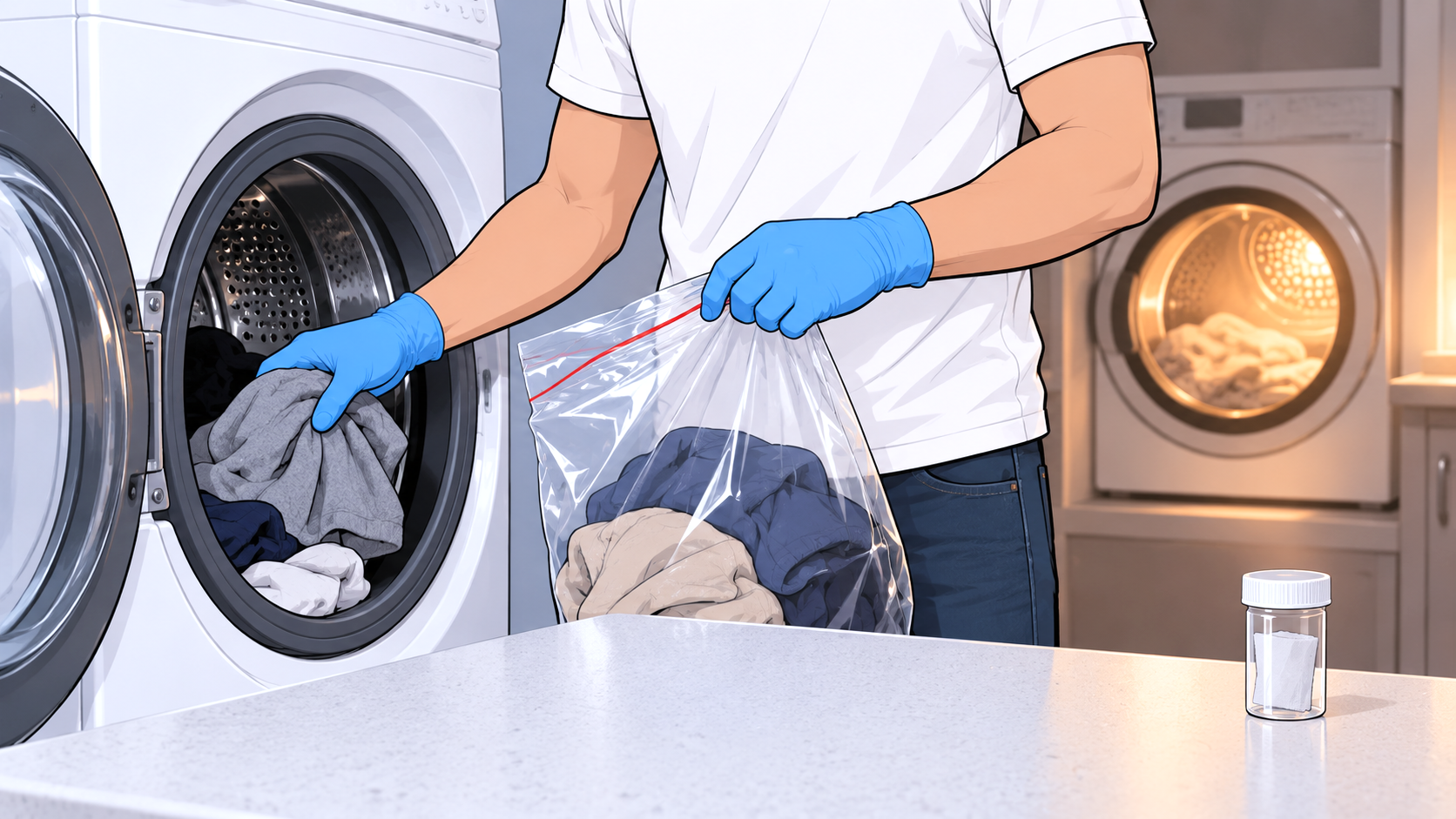
Bed bugs can survive some washing conditions, so putting infested clothing through an ordinary wash cycle doesn’t guarantee that every bug and egg will die. Hot washing can work, but the temperature matters. In controlled research, washing at 60°C (140°F) killed every bed bug life stage tested, while cooler washing wasn’t consistently effective against eggs.
Water alone can also kill active bed bugs if exposure lasts long enough, but eggs are considerably harder to eliminate this way. That is one reason the dryer remains the more dependable household treatment for clothing and bedding that can safely tolerate high heat.
Can Bed Bugs Drown in Water?
Bed bugs can die after prolonged submersion, but water alone isn’t dependable against every life stage.
A peer-reviewed laundry study specifically tested bed bugs submerged in detergent-free cold water. After 24 hours of soaking, the adult bed bugs and nymphs were killed, but the eggs survived. That makes the commonly repeated idea that bed bugs simply “drown in the washing machine” misleading. Submersion can kill active stages, but even an entire day underwater didn’t eliminate the eggs in this experiment.
A household washing cycle is also much shorter and more complicated than a controlled 24-hour soak. Bugs are exposed to changing temperatures, agitation, detergent and water for different lengths of time depending on the machine and cycle. The results from prolonged submersion therefore shouldn’t be converted into a claim that a particular number of minutes underwater will reliably kill bed bugs during an ordinary wash.
What Happens to Bed Bugs in a Washing Machine?
Temperature makes a major difference.
In the same laundry study of adults, nymphs and eggs, researchers placed bed bugs inside permeable cotton pouches and put those pouches inside clothing. Washing at 60°C (140°F) killed every life stage tested. Cooler washing wasn’t as dependable, particularly against eggs.
This gives us direct evidence from an actual washing-machine experiment rather than requiring us to infer effectiveness from general bed bug heat-treatment temperatures. A sufficiently hot wash can kill bed bugs and their eggs, but an ordinary cool or warm wash shouldn’t be assumed to do the same.
That distinction also explains why the EPA says washing alone generally won’t kill bed bugs. Household machines, cycles, load sizes and water temperatures vary, so simply running an item through the washer isn’t a dependable treatment by itself.
Does Laundry Detergent Kill Bed Bugs?
The laundry research doesn’t establish ordinary detergent as the ingredient responsible for eliminating bed bugs.
The successful 60°C wash included normal detergent, but temperature and the other conditions of the wash weren’t independently separated in a way that would let us say detergent caused the mortality. More importantly, adults and nymphs also died after 24 hours submerged in water containing no detergent at all.
Detergent should therefore be used for its normal purpose of cleaning clothing rather than treated as a bed bug pesticide. Adding extra detergent isn’t an established way to make a cool wash lethal, and excessive detergent can create problems for clothing and washing machines without providing a proven pest-control benefit.
Why a Hot Wash Is Different From a Cold Wash
A 60°C (140°F) wash has direct experimental support against bed bugs. A cooler cycle doesn’t provide the same certainty.
The Naylor and Boase experiments found that washing at 60°C killed adults, nymphs and eggs. Other summaries of the same work report that a 40°C (104°F) wash wasn’t sufficient to eliminate every egg, which is particularly important because surviving eggs can hatch after the laundry has been returned to the home.
That doesn’t mean every household should automatically wash everything at 60°C. Some fabrics shrink, fade or suffer other damage at high temperatures. Follow the item’s care instructions rather than sacrificing clothing to reach a particular wash temperature.
If an item can safely tolerate dryer heat, the dryer provides another well-supported way to treat it without depending on the washer to reach a particular water temperature.
The Dryer Is More Dependable Than Washing Alone
For suitable clothing and bedding, dryer heat is the part of household laundry treatment with particularly clear practical guidance.
The EPA recommends putting bedding and clothing in a dryer at high temperature for 30 minutes and explicitly notes that washing alone will generally not kill bed bugs. The agency similarly advises people preparing for bed bug treatment to heat-treat suitable clothing and bedding in a household dryer on high heat for 30 minutes, which kills bed bugs and eggs.
The controlled laundry research supports that approach as well. Hot tumble drying for at least 30 minutes killed every life stage tested. This is why using a clothes dryer against bed bugs is more dependable than assuming a normal wash cycle did the job.
Always follow the care label, since not every garment or belonging can safely tolerate high dryer temperatures.
Can Bed Bugs Live in a Washing Machine?
A washing machine isn’t a normal bed bug habitat. Bed bugs generally establish themselves near places where people remain still long enough for them to feed, such as beds and upholstered furniture, rather than inside appliances regularly exposed to water and mechanical disturbance.
A live bed bug surviving a particular wash isn’t the same as establishing a breeding population inside the washing machine. There isn’t good evidence that washers commonly become persistent bed bug harborages after infested laundry is washed.
The greater concern is moving untreated or incompletely treated laundry around the home. Clothing carried from an infested bedroom in an open basket can potentially transport bed bugs before it even reaches the machine.
Use sealed bags or containers to move potentially infested laundry. After successful heat treatment, put the clean items into a clean bag rather than returning them to the same potentially contaminated container.
Do You Need to Run an Empty Hot Cycle Afterward?
There isn’t good evidence that an empty sanitizing cycle is routinely necessary after washing bed bug-infested clothing.
If the laundry has been handled properly, the focus should remain on treating the items and preventing bugs from escaping while they are transported. Don’t assume the washing machine itself needs pesticide treatment or repeated empty cycles simply because infested clothing went through it.
If you actually find bed bugs around the appliance, inspect the surrounding laundry area rather than assuming they are living inside the washer. Bugs can be transported in hampers, bags, clothing and other objects kept nearby.
Questions About Bed Bugs and Washing Machines
Can bed bugs survive a cold wash?
Potentially, yes. Cold washing shouldn’t be relied upon to kill every bed bug and egg. Controlled research found that even 24 hours submerged in cold, detergent-free water killed active stages but didn’t kill the eggs.
What wash temperature kills bed bugs?
Washing at 60°C (140°F) killed adults, nymphs and eggs in controlled laundry research. That doesn’t mean every garment should be washed at that temperature, since fabric-care instructions still matter.
Does detergent make a cold wash effective against bed bugs?
There isn’t good evidence that ordinary laundry detergent makes a cold wash reliably lethal to every bed bug life stage. Use detergent normally rather than increasing the amount in an attempt to kill bed bugs.
Do you have to wash clothes before putting them in the dryer?
Not necessarily if the items are already clean and can safely tolerate dryer heat. If the goal is bed bug treatment rather than cleaning, appropriately applied dryer heat can kill bed bugs and eggs without requiring a wash first.
4 thoughts on “Does Washing Your Clothes Kill Bed Bugs?”