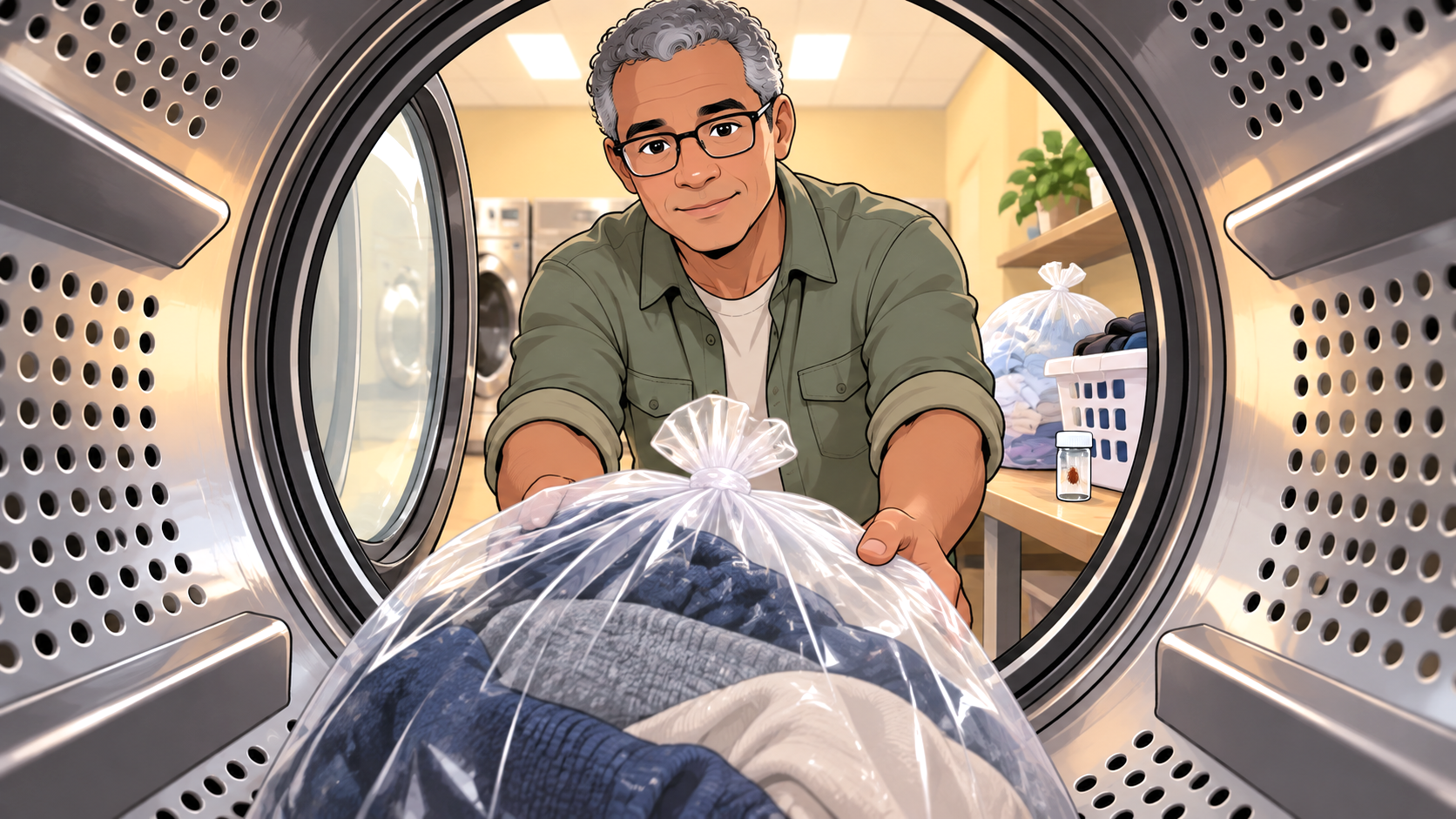
The laundry itself is only half the problem. Carrying exposed clothes loose through the house or putting freshly treated clothing straight back into an infested closet can undo the work before the next load is finished.
To get rid of bed bugs in clothes, contain potentially infested items before moving them, use a clothes dryer on high heat for 30 minutes when the fabric can safely tolerate it, and place treated clothing into clean sealed bags or containers. Dry-clean-only clothing should remain bagged during transport, and the dry cleaner should be told that the items may contain bed bugs. The exact treatment still has to respect the garment’s care instructions. Not every piece of clothing can safely go through the same heat cycle.
Bag Clothes Before Moving Them
Don’t carry potentially infested laundry loose from the bedroom to the washing machine.
Bed bugs can hitchhike on clothing and other belongings, so moving exposed items through unaffected parts of the home creates an unnecessary opportunity to spread them.
Instead, sort the clothes in the affected area and place them into sealed bags before moving them. University of Minnesota Extension recommends sorting clothing into plastic bags and sealing them before transport.
Take the sealed bag directly to the laundry area. Open it at the machine rather than somewhere along the route.
Once emptied, the bag itself should not be reused for clean clothing. Clean items need a new bag or container that has not been exposed to the infestation.
The Dryer Is the Important Part
A washing machine and a clothes dryer do not contribute equally to bed bug control.
EPA states that washing alone generally will not kill bed bugs. For fabrics that tolerate it, EPA recommends placing items in a dryer on high heat for 30 minutes to kill bed bugs and eggs.
University of Minnesota similarly recommends medium-high heat for at least 30 minutes for appropriate items.
Always check the garment’s care label first. Clothing that cannot tolerate the necessary dryer setting needs a different treatment method rather than risking damage.
The role of washing itself is covered separately in whether washing clothes kills bed bugs. For this process, the practical point is simpler: don’t assume a normal wash cycle alone has made exposed clothing bed-bug-free.
Tell the Dry Cleaner About the Bed Bugs
Dry-clean-only clothing needs different handling.
Do not quietly drop a bag of potentially infested garments at a cleaner.
University of Minnesota Extension specifically recommends telling the dry cleaner that the clothing may contain bed bugs. The items should remain sealed in their plastic bag until the cleaner is ready to handle them.
That protects the business from unknowingly opening potentially infested clothing among other customers’ belongings.
It also gives the cleaner the opportunity to decide how the garments should be received and processed. Call ahead if necessary rather than assuming every cleaner follows the same procedure.
Keep Clean Clothes Separate From the Infestation
Treatment does not end when the dryer stops.
Clothing that has been successfully treated can become exposed again if it immediately returns to an area where bed bugs remain active.
EPA recommends keeping cleaned items in sealed plastic bags until the bed bug infestation is under control.
Use clean bags or tightly closed containers for treated clothing. Keep untreated and treated items clearly separated so there is no confusion about which clothes have already gone through the process.
This becomes especially important when treatment takes multiple visits or several weeks. You may need to live out of sealed containers temporarily rather than returning everything to normal storage immediately.
Don’t Automatically Empty Every Closet
Clothing preparation should match the actual treatment plan.
It is tempting to assume that every garment in every closet has to be washed, dried and bagged. That can create an enormous amount of unnecessary work, particularly in a large home.
If a pest management professional is treating the infestation, follow that company’s preparation instructions. Different treatment methods can require different levels of clothing removal and containment.
For a closet with confirmed bed bug activity, clothing and the storage area itself deserve careful attention. Bed bugs can hide around hanging clothes and closet structures, so treating garments while ignoring confirmed harborages around them will not eliminate the source.
EPA also recommends reducing clutter because it gives bed bugs additional hiding places. Cardboard boxes can provide harborages, so plastic storage containers are generally easier to inspect and manage during an infestation.
Wait Before Returning Everything to Normal Storage
There is no universal number of days after which every treated garment can safely return to a dresser or closet.
The deciding issue is whether the surrounding infestation remains active.
If treatment is ongoing, keeping processed clothing sealed prevents it from being exposed again. Once the infestation has been eliminated and the storage area is part of the cleared environment, normal storage can resume.
That is different from assuming one pesticide application or one quiet night means the problem is finished. Confirming whether bed bug treatment actually worked requires looking at the infestation as a whole, not just the condition of the laundry.
Questions About Bed Bugs and Clothing
Do all clothes in an infested home need to go through the dryer?
Not automatically. Concentrate on items exposed in affected areas and follow the preparation instructions for the treatment being used. Emptying and processing every closet in the home without a reason can create unnecessary work and movement of belongings.
What should I do with shoes?
Shoes should not automatically be put through a high-heat dryer because heat can damage some materials, adhesives and finishes. If shoes are suspected of exposure, contain them while deciding on an appropriate treatment. Bed bugs can hide in shoes, but the safest treatment depends on what the shoes are made from.
Can I use my freezer for clothes that cannot tolerate a dryer?
Cold can kill bed bugs, but EPA cautions that household freezers may not reliably reach or maintain sufficiently low temperatures. Freezing should therefore not be treated as a universal substitute for heat simply because a garment is delicate.
Can clean clothes stay in the same bedroom during treatment?
Yes, provided they remain securely contained according to the treatment plan. The purpose of the sealed bag or container is to keep treated clothing separated from bed bugs that may still be present elsewhere in the room.
One thought on “How to Get Rid of Bed Bugs in Your Clothes”