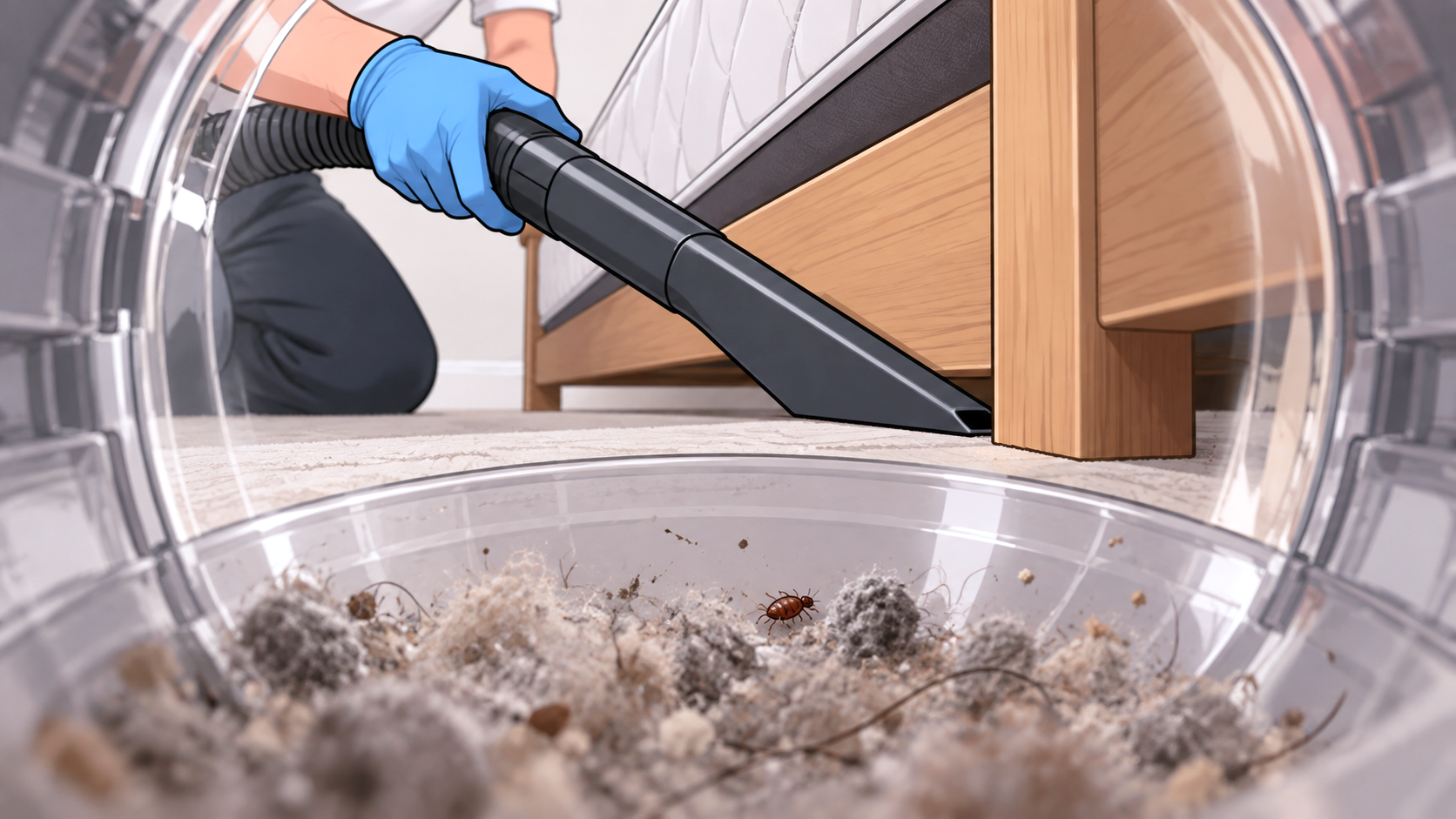
Bed bug eggs present a problem that more suction cannot completely solve. They are glued to the surfaces where they are laid, so a vacuum can pass directly over an egg without necessarily pulling it free. Vacuuming helps get rid of bed bugs by physically removing live and dead bugs, shed skins and some eggs. It can reduce the number of bed bugs present, but it cannot reliably remove every bug or egg. Vacuuming works best as one part of a broader treatment plan rather than as a standalone way to eliminate an infestation. How you vacuum matters almost as much as whether you vacuum at all.
Bed Bug Eggs Are Difficult to Vacuum Up
Bed bug eggs are not simply loose objects resting on a mattress or piece of furniture.
Females attach their eggs to surfaces with an adhesive substance. That attachment is strong enough that vacuuming does not usually remove bed bug eggs, even though exposed adults, nymphs and debris may be picked up.
This is where the vacuum attachment becomes important. A narrow crevice tool concentrates suction in the seams, cracks and joints where bed bugs hide. Using the edge with a gentle scraping motion can also help physically dislodge bugs and eggs that cling to wood and fabric. Even then, don’t assume every egg has been removed. Eggs cemented deep inside inaccessible cracks can remain behind.
Live Bed Bugs Can Be Difficult to Dislodge Too
Eggs are not the vacuum’s only limitation.
Bed bugs can cling to fabric and rough surfaces rather than sitting loosely on top of them. Bugs hidden deeply inside joints and crevices may also be beyond the reach of the vacuum attachment altogether.
That is why a quick pass across the middle of a mattress accomplishes relatively little.
Concentrate instead on places where an inspection has revealed activity. Mattress seams, folds and tufts deserve attention, along with the box spring, bed-frame joints, upholstered furniture, baseboards and cracks around sleeping or lounging areas. For a mattress specifically, vacuuming is only one part of getting bed bugs out of the mattress and surrounding bed.
Use the Narrowest Useful Attachment
The normal floor head is not the most useful tool for detailed bed bug work.
A crevice attachment directs suction into the narrow spaces these insects favor. Cornell’s bed bug management guidance specifically recommends concentrating on seams, creases, folds, tufts and buttons with a crevice tool.
A brush attachment can help dislodge material from some surfaces, but it creates another problem. Bugs or eggs can become trapped among the bristles, so the attachment has to be cleaned carefully afterward.
The technique should be controlled rather than aggressive. The goal is to capture bed bugs, not brush or blow them into another hiding place.
Small Handheld Vacuums May Not Be Enough
You do not necessarily need a specialized pest-control vacuum.
A regular household vacuum can be useful when it has suitable attachments and enough suction for detailed cleaning. However, small handheld vacuums designed mainly for picking up dust are often too weak for bed bug control.
That does not mean buying the most powerful vacuum available guarantees better results. Accessibility remains a major limitation. No amount of suction captures a bug the attachment cannot reach.
Equipment matters, but careful inspection and methodical coverage matter too.
A HEPA Vacuum Has an Additional Benefit
A HEPA filter is useful for a reason that goes beyond capturing bed bugs themselves.
Bed bug infestations leave behind shed skins, fecal material and other debris. Cleaning this material can disturb small particles and allergens.
HEPA-equipped vacuums reduce the spread of allergens during cleaning, which is why they are particularly useful for pest-management work. A HEPA vacuum is not required for suction to capture a bed bug, however. A regular vacuum can still be used for physical removal when handled correctly.
The filtration system and the actual removal of bed bugs solve two related but different problems.
Vacuuming Makes Follow-Up Inspection Easier
One of vacuuming’s less obvious advantages appears after the cleaning is finished.
Removing dead bugs, shed skins, dirt and old debris gives you a cleaner surface for subsequent inspections. New evidence is easier to recognize when it is not mixed with material left from before treatment.
Cleaning can also expose cracks and surfaces that need further treatment. That makes vacuuming useful even though it cannot eliminate the infestation by itself. It reduces part of the population while preparing the affected area for the other control measures that follow.
Vacuum More Than Once
Vacuuming does not have to be a one-time preparation step.
Current Cornell guidance recommends vacuuming affected areas thoroughly and regularly during bed bug management. Repeated removal can continue reducing bugs that become accessible between inspections and treatments.
What you should avoid is randomly dismantling and moving belongings throughout the home before you have a plan. Bed bugs can be transferred on infested objects, and disturbing harborages without containing what you find can make subsequent inspection more difficult. Work systematically through confirmed or suspected areas instead.
Empty the Vacuum Immediately
The bed bugs you vacuum up may still be alive. That makes the cleanup procedure part of the treatment rather than ordinary housekeeping.
For a vacuum with a disposable bag, remove the bag after use, place it inside a plastic bag, seal it and dispose of it in an outdoor trash container. With a bagless vacuum, empty the contents directly into a plastic bag, seal it and dispose of it outside.
Cornell also recommends washing a bagless vacuum’s dust canister with soapy water after emptying it. Attachments need attention as well. Clean anything that contacted the infested area and inspect the vacuum so a surviving bug does not turn the machine itself into a hiding place.
Vacuuming Helps, but It Won’t Eliminate an Infestation Alone
Vacuuming has a clear role in bed bug control: it physically removes bugs you can reach. What it cannot do is reach every hidden insect, reliably detach every cemented egg or provide residual control after the machine is switched off.
An infestation therefore needs more than repeated cleaning. The appropriate combination may include heat treatment for suitable belongings, encasements, interceptors, steam, monitoring and properly selected pesticide treatments.
This is why vacuuming fits into a broader bed bug control plan rather than replacing one. Used that way, a vacuum is genuinely useful. Expecting it to reach every bug and egg hidden throughout a room is where the method stops matching what it can actually do.
Questions About Vacuuming Bed Bugs
Can vacuuming spread bed bugs to another room?
It can if captured bugs remain inside the vacuum and the machine is then moved or stored carelessly. Emptying it immediately, cleaning appropriate components and keeping equipment contained after use reduces that risk.
How often should you vacuum during a bed bug infestation?
There is no universal schedule that fits every treatment plan. Cornell currently recommends thorough, regular vacuuming of affected areas and describes daily vacuuming as part of its management approach. If a professional is treating the home, follow the cleaning schedule they provide so it does not interfere with their treatment.
Can you vacuum bed bug eggs off a mattress?
Some eggs may be dislodged, particularly when a crevice tool or appropriate brush is used carefully, but vacuuming cannot be relied on to remove them all. Bed bug eggs are glued to surfaces and may also be hidden where the attachment cannot reach.
Should you vacuum carpets for bed bugs?
Vacuum areas where inspection indicates activity, including floors and baseboards. Pay particular attention to edges, cracks and protected areas rather than assuming bed bugs will be spread evenly across an open carpet.
2 thoughts on “Does Vacuuming Actually Help Get Rid of Bed Bugs?”