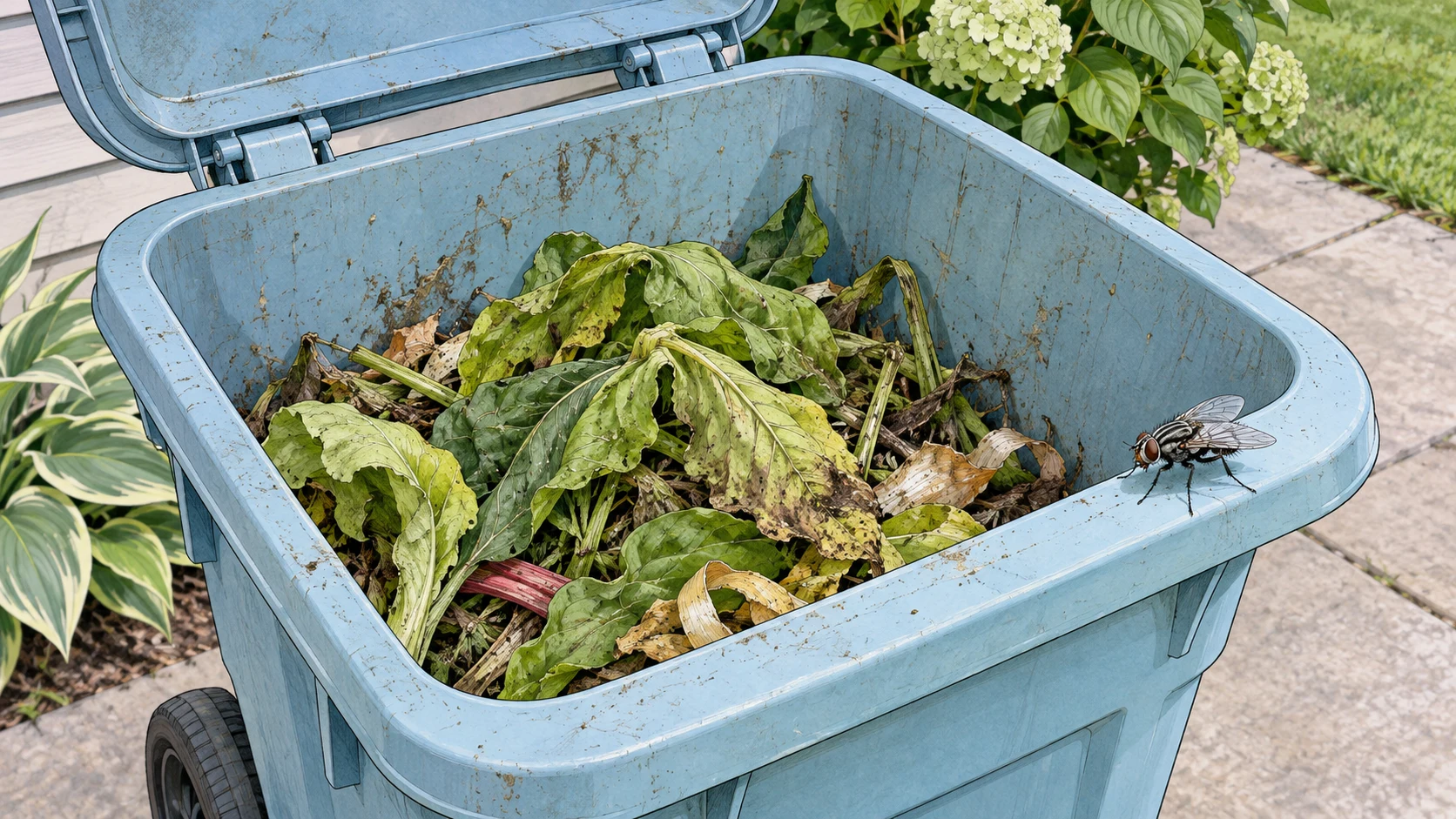
House flies like garbage and rotting material because decomposing organic waste provides odors that help them locate food and suitable places to reproduce. Animal manure, spoiled food, decaying vegetables and other damp organic materials can attract adult flies. The same environments can also support their offspring, since developing larvae depend on moist organic material containing suitable microorganisms. Garbage therefore serves two different purposes in the house fly’s life, offering feeding opportunities for adults and developmental resources for young flies.
Why Does the Smell of Rotting Garbage Attract House Flies?
Decomposing organic material releases chemical compounds into the surrounding air as microorganisms break down its contents. These airborne compounds create odors that flies can detect when searching for potential food sources and places to lay eggs.
Garbage can contain a mixture of materials, including discarded vegetables, meat scraps, spoiled food and other organic waste. As these substances decompose, their odor profiles change. The resulting smells can attract flies even when the waste is some distance from the insect.
House flies (Musca domestica) use their sense of smell to investigate these potential resources. Their responses are influenced by the chemical composition of the material, so different types of decomposing waste may attract different numbers of flies.
Research into the chemical attraction of house flies to different animal manures demonstrates that these insects respond to odors released by their potential feeding and reproductive substrates. In a free-choice experiment, adult house flies showed the strongest attraction to cow manure among the tested manures and artificial diet. This demonstrates that decomposing waste can provide recognizable chemical signals rather than attracting flies through its appearance alone.
The smell of garbage is therefore connected to the biological processes taking place inside it. As organic material breaks down, it releases changing chemical signals that flies can use to locate suitable environments.
What Do House Flies Get From Rotting Garbage?
Rotting garbage provides adult house flies with opportunities to obtain liquid nutrients. As organic waste decomposes, its contents soften and release liquids that the insects can consume.
Adult house flies have sponging mouthparts. They cannot chew solid food in the same way as insects with chewing mouthparts. Instead, they consume liquids and can use regurgitated digestive fluids to soften solid material before drawing up the resulting liquid.
Garbage containing decomposing food can provide both forms of feeding opportunity. Liquids released from spoiled material may be directly accessible, while softened organic substances offer additional nutrients.
Animal waste and other decomposing materials can also provide adult flies with feeding opportunities. Their feeding behavior includes visits to dung and other organic substances that contain accessible nutrients.
The feeding biology of the house fly explains how its sponging mouthparts limit the types of material it can consume and why liquid food is particularly suitable. The broader diet of adult house flies also includes food products beyond decomposing garbage.
Why Does Rotting Material Provide a Place for House Fly Maggots?
Garbage and decomposing organic matter can support the early development of house flies because they provide suitable environments for egg laying and larval feeding.
Female house flies deposit eggs in moist organic substrates. These may include animal manure, wet garbage, decaying vegetables, fruit waste and other decomposing materials. Once the eggs hatch, the resulting larvae remain within the material and feed on resources available there.
The larvae depend heavily on microorganisms living within the decomposing material. Bacteria and other microbial organisms contribute to the food resources needed for their development. A suitable breeding substrate must therefore offer more than an unpleasant smell. It needs the moisture and biological activity that allow larvae to obtain nutrients and grow.
The house fly development cycle and breeding requirements describe the relationship between moist organic material, egg deposition and larval development. A broader scientific review of house fly biology identifies a viable microbial community as a common feature of suitable larval development substrates.
The young flies do not need to search for separate food sources immediately after hatching. Their surroundings already contain the organic material and microorganisms needed during the larval stages. This explains why a single accumulation of suitable waste can support several developing larvae.
For more detail about the nutritional requirements of the immature stage, house fly maggot feeding on decaying substrates is a related biological consideration.
Why Are Animal Manure and Wet Organic Waste Suitable for House Flies?
Animal manure is one of the established natural breeding environments for house flies. It contains organic nutrients and microbial communities that can support larval development when moisture and other environmental conditions are suitable.
Cattle, horse and poultry manure can all be associated with house fly activity. However, the different types of manure do not necessarily produce identical responses.
A particularly interesting result comes from a study comparing cow, horse, donkey and poultry manure. Adult flies showed the strongest attraction to cow manure in the free-choice experiment. Yet the researchers observed reproductive outcomes in poultry manure that were similar to or better than those produced by the artificial diet used as a control.
The experiment also found differences in reproductive behavior between the manure treatments. No oviposition occurred in the cow manure treatment during the observation period, despite its strong attraction in the separate choice assay. These findings show that an odor that attracts adult flies does not automatically identify the best material for raising their offspring.
Wet grass clippings, rotting vegetables and damp organic refuse can also provide suitable developmental environments. Their suitability depends on their composition and the conditions within the material.
The University of Missouri’s household fly information identifies manure, dead organic matter, garbage and rotting fruits and vegetables among the breeding and feeding environments associated with house flies.
Does Every Pile of Rotten Material Attract House Flies?
Not every decomposing pile provides equally suitable conditions for house flies. The composition, moisture and microbial activity of the material influence whether it attracts adults, supports egg laying or allows larvae to complete development.
A dry pile of old leaves, for example, may release some odors as it decomposes but offer less suitable conditions for developing larvae than a damp accumulation of organic waste.
Similarly, a material may attract adult flies without supporting successful larval development. The manure comparison experiments demonstrate why attraction and reproductive suitability should be considered separately.
Other fly species also use decomposing materials. Blow flies are particularly associated with animal carcasses, while fruit flies commonly develop around overripe and fermenting fruits. Phorid flies can use a broader range of wet organic materials.
Consequently, finding several kinds of flies around garbage does not mean they all have identical feeding or breeding requirements. The actual material and the species involved both influence what happens.
Why Can Garbage Odors Attract House Flies Indoors?
Garbage odors can travel from waste containers into surrounding spaces, making nearby buildings attractive to adult flies searching for food or suitable organic material.
A kitchen, utility room or enclosed waste-storage area may contain several sources of organic odors. Even when the garbage itself remains outside, smells escaping from a container can reach nearby entrances and open windows.
Commercial properties can experience similar conditions around dumpsters and waste-storage areas. Food preparation buildings may release additional odors from discarded ingredients, food residues and organic waste.
The relationship between waste odors and house fly activity is also described in house fly behavior and indoor attraction guidance, which identifies garbage and dumpsters as important breeding environments and notes that adult flies feed on both waste and human food products.
Different rooms can therefore attract flies for different reasons. A kitchen may contain accessible food odors, while an outdoor refuse area may provide a combination of feeding resources and potential larval development sites.
2 thoughts on “Why Do House Flies Like Garbage and Rotting Material?”