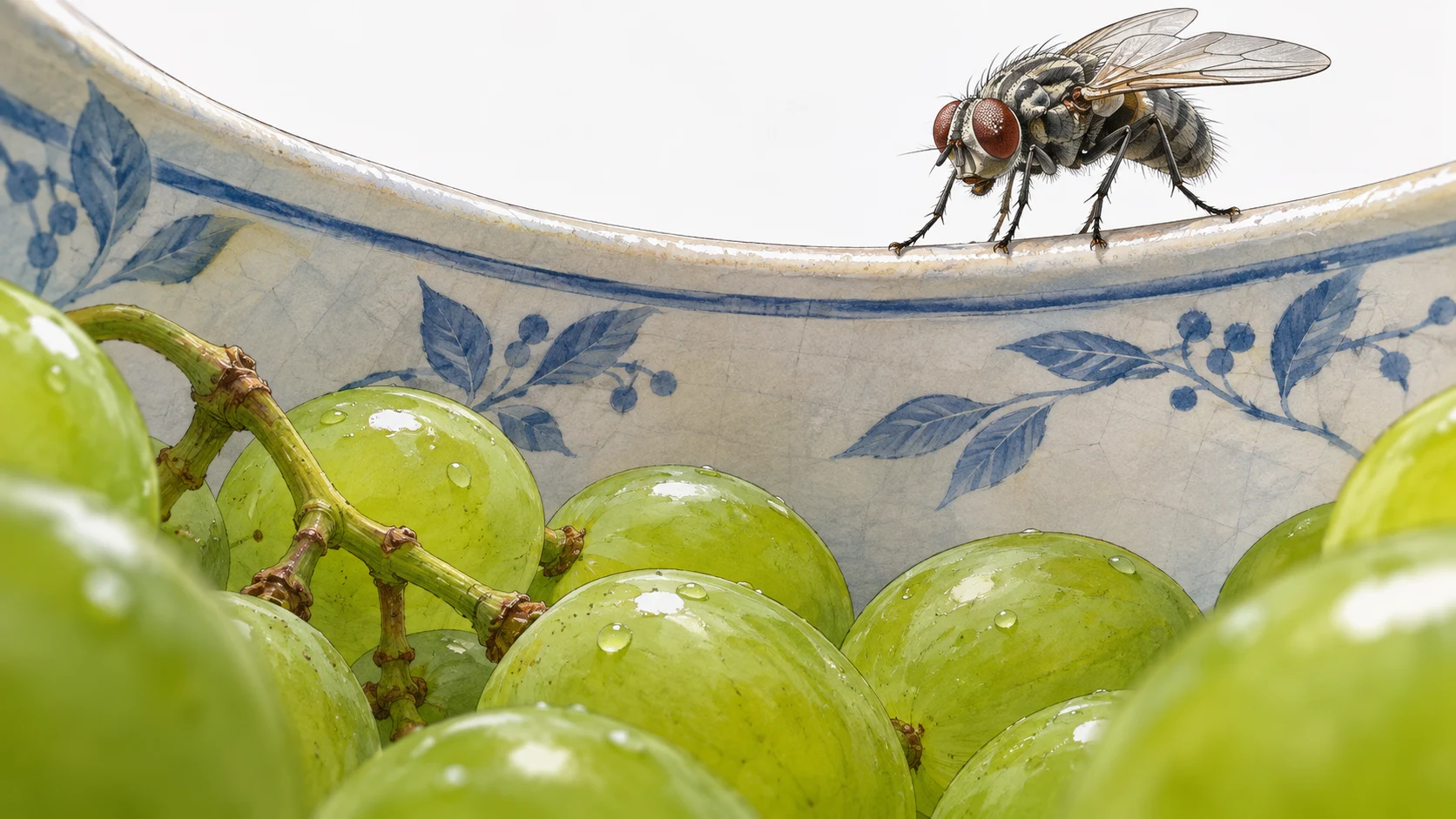
House flies are attracted to food because they can detect odors released by exposed ingredients, cooking, spills and decomposing organic material. These smells help them locate potential feeding opportunities, while moisture and accessible food residues provide places to investigate after landing. Even when food is stored indoors, odors escaping from kitchens, garbage containers and food preparation areas can attract flies from outside or draw insects already inside toward particular rooms.
Food Odors Help House Flies Find Potential Food Sources
Smell is one of the main ways house flies locate food. They use chemical-sensitive receptors on their antennae to detect odors in the surrounding air. As these substances travel away from their source, they create odor trails that can help flies locate areas worth investigating.
Freshly prepared meals release volatile compounds into the air as ingredients are heated, cut or exposed. Ripe fruit also releases characteristic odors as it matures. Meanwhile, food residues and decomposing organic material produce different mixtures of airborne chemicals.
House flies can respond to these odors even when the original food is not directly visible. A fly approaching a kitchen may initially be responding to an odor coming from a countertop, an open container or food being prepared nearby.
Commercial food premises can produce particularly noticeable odor sources. Cooking exhaust, food preparation activities and waste handling can release smells outside buildings, attracting flies toward entrances. A review of house fly attraction and alternative control methods describes how garbage odors, grease residues and cooking odors can attract house flies around residential and commercial structures.
The smell does not necessarily mean that the fly has located food it can immediately use. Odors can bring it into an area, after which it investigates surfaces for accessible material.
Why Moist Food Attracts House Flies
Moisture makes food residues particularly attractive because house flies need accessible liquid or dissolved material when feeding. Dry, hard food does not offer the same immediate feeding opportunity as a damp surface containing soluble substances.
A small amount of liquid left on a plate, a sticky drink spill or juice from damaged fruit can create a suitable place for a fly to investigate. Moisture also helps food residues release odors into the surrounding air.
For example, a kitchen counter may appear clean after a meal, yet a small patch of spilled juice can remain near an appliance or beneath a container. A fly exploring the kitchen can encounter the residue and spend time on that particular surface.
Wet food residue around sinks and preparation areas can also contribute to repeated fly activity. The house fly’s feeding and sensory behavior helps explain why accessible food material attracts these insects and why they investigate surfaces before settling on a feeding site.
Moisture and odor therefore work together, although they serve different purposes. Odors can help flies locate an area, while surface moisture makes certain materials easier to investigate and use.
Which Foods Release Odors That Attract House Flies?
House flies investigate different kinds of exposed food. Their attraction is not limited to one ingredient or food group because different materials release chemical compounds as they ripen, are prepared or begin to decompose.
Fruit and sweet foods can produce noticeable odors, particularly as they become overripe. A bowl of ripe bananas, cut melon or damaged berries may attract flies when left uncovered.
Cooked foods also release odors during preparation and while cooling. Meat, vegetables and prepared meals can all contribute to the mixture of smells escaping from a kitchen.
Fermenting food residues create another source of attraction. Sugars and other organic materials undergo microbial changes during fermentation, producing odors that can attract insects. Spilled beverages and leftover food liquids may therefore become more noticeable to flies after remaining exposed.
The attraction varies with the material and its condition. A freshly cut piece of fruit, for example, releases different odors from fruit that has started decomposing. Both may attract flies, but the chemical mixture changes as the food ages.
The house fly’s feeding responses to food and food-associated odors provide additional context for why exposed food attracts these insects.
Why Do More House Flies Gather Around Food That Other Flies Have Visited?
Food previously visited by house flies can become more attractive to additional flies. Researchers have documented a phenomenon called the fly factor, in which food already contacted by feeding flies attracts more foraging house flies than comparable food that has remained untouched.
In laboratory experiments, previously fed-on food attracted more foraging flies than clean food. The researchers also found that fly regurgitate and fecal material attracted other flies.
The findings suggest that chemical signals associated with earlier feeding can encourage additional flies to investigate the same material. These responses were demonstrated under controlled experimental conditions, so they should not be interpreted as a prediction that every kitchen food item visited by one fly will attract a swarm.
The original research into the house fly factor phenomenon provides evidence that fly-associated chemical cues can contribute to repeated attraction.
This finding helps explain why an exposed food area may continue attracting flies even after the initial food odor has drawn the first insect into the room.
Why Are House Flies Attracted to Food in Certain Rooms?
The kitchen is often the room with the greatest number of food-related odors. Cooking releases airborne compounds, while preparation surfaces and waste containers can retain residues between meals.
However, flies do not restrict their activity to kitchens. They may also gather in dining rooms, living rooms or enclosed patios when food odors reach those spaces.
A dining room with an uncovered fruit bowl can attract a fly even when no food is being prepared. Similarly, a living room next to an open kitchen may receive cooking odors through an open doorway.
Air movement also influences where these smells travel. Exhaust fans, open windows and doorways can carry odors outside or into adjacent rooms. In commercial buildings, cooking exhaust can release food-related odors beyond the building itself.
The wider surroundings matter too. A property near outdoor waste containers or other organic material may have flies gathering outside before they enter through an open door. These household attraction factors overlap with the conditions that attract house flies to residential properties.
Food odors can therefore explain why flies concentrate in one room, even when the actual source is somewhere else nearby.
Can a Kitchen Attract House Flies Even When It Looks Clean?
A kitchen can attract flies without having obvious piles of spoiled food or visible dirt. Small amounts of residue can release odors, particularly when they accumulate in places that are difficult to see.
Common examples include:
- Juice or food liquid beneath appliances.
- Sticky residue around drink containers.
- Crumbs and food particles beneath counters.
- Food residue inside garbage containers.
- Leftover material around recycling bins.
An apparently empty trash container may also retain food odors from discarded packaging or liquid that has collected at the bottom. These residues can continue attracting flies after the main garbage has been removed.
Outdoor waste can contribute to the same problem. Odors from a nearby bin may attract flies toward the building before they enter through a doorway or damaged screen. Accumulated organic waste is a separate attraction issue addressed in why house flies like garbage and rotting material.
Identifying the location of an odor source is often more useful than assuming the food on the visible countertop is responsible.
How to Make Food Areas Less Attractive to House Flies
Reducing exposed food odors and moisture helps make kitchens and dining areas less attractive to visiting flies.
Keep prepared food covered when it is not being served, and avoid leaving cut fruit or leftovers exposed for extended periods. Clean food and drink spills promptly, including residue beneath appliances and around preparation equipment.
Garbage containers should have close-fitting lids. Remove food waste regularly and clean away liquid or residue that collects inside the container. Proper trash-can management helps prevent accumulated organic material from becoming a persistent source of food odors.
Outdoor eating areas also need attention. Crumbs, spilled drinks and uncovered meals can attract flies toward patios and entrances. Covering food and keeping waste containers closed reduces those attractants. Similar measures are useful when keeping house flies away from outdoor food.
Finally, physical barriers reduce the chance that flies attracted from outside will reach indoor food areas. Properly fitted fly screens and magnetic screen doors help limit entry through frequently used windows and doors.
Removing attractive odors will not prevent every fly from visiting a property. House flies can arrive from surrounding areas, especially where outdoor breeding sources remain available. However, reducing exposed food and waste odors makes the home less attractive as a place to investigate and feed.
One thought on “Why Are House Flies Attracted to Food?”