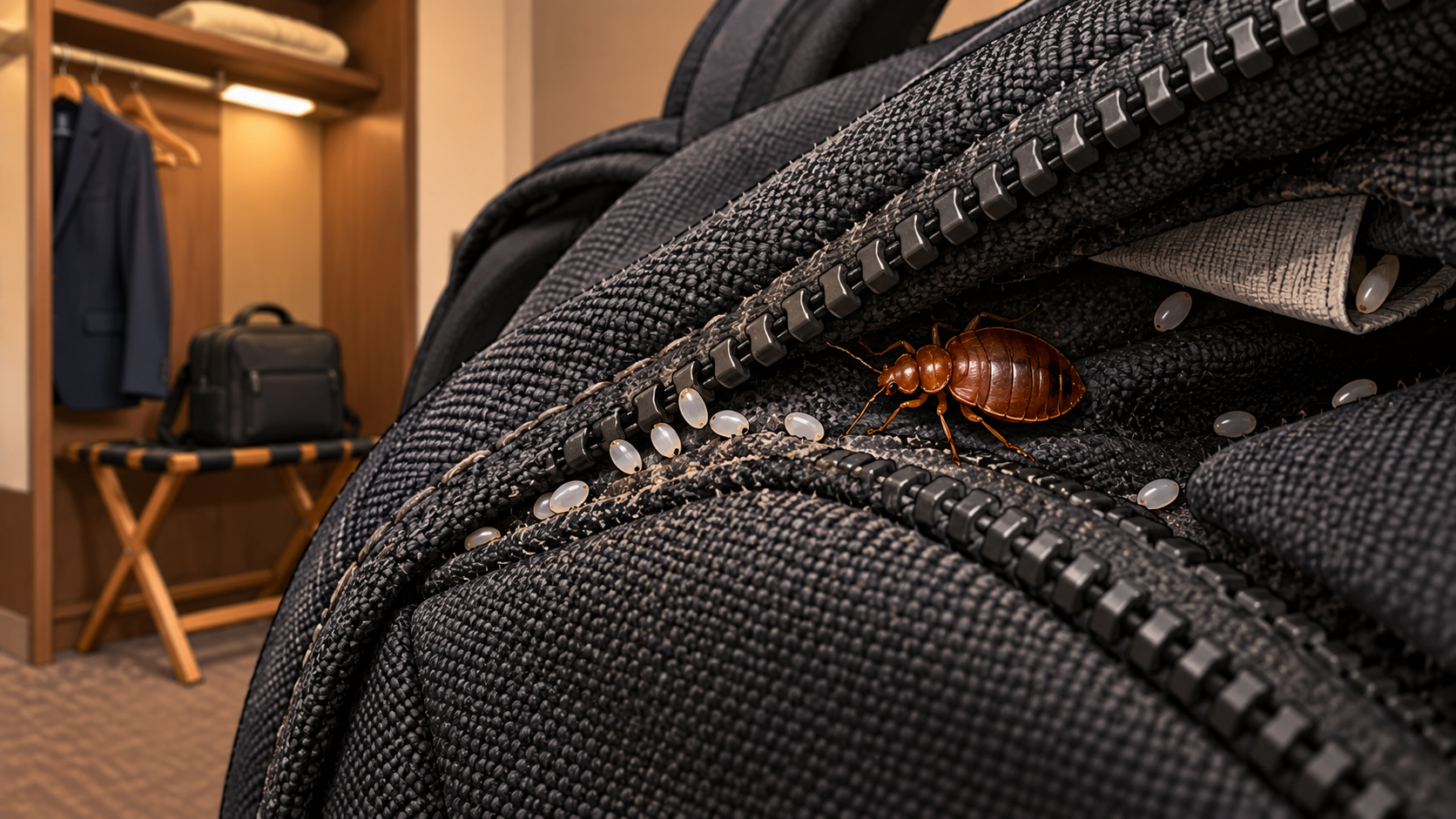
A cluster of bed bug eggs can look like a tiny white mass tucked into a mattress seam or screw hole, but it is not an egg sac. Bed bugs do not have egg sacs. Female bed bugs lay individual eggs and attach them directly to surfaces with a sticky, cement-like substance. Several eggs may be clustered together in the same hiding place, but each remains a separate egg rather than being enclosed inside one shared sac or case.
Bed Bug Eggs Are Laid Individually
Female bed bugs attach their eggs directly to surfaces rather than enclosing a batch inside a container.
The eggs are approximately 1 mm long, white to pearl-white and elongated. Each female generally produces a small number per day, and the individual eggs are cemented onto the surface where they are deposited.
That adhesive matters because the eggs do not simply sit loose inside a harborage. They can remain stuck to rough surfaces, cracks, crevices and other protected areas.
EPA similarly describes bed bug eggs as tiny, white and glued to surfaces.
There is no larger casing surrounding the group. Each egg develops and hatches independently.
Why Bed Bug Eggs Can Still Look Like a Sac
Bed bug eggs do not always appear one at a time.
EPA training material notes that eggs may occur clustered together in hiding places or spaced apart. A cluster can therefore contain numerous white eggs packed closely enough to resemble a single mass when viewed without magnification.
Look more closely and the difference becomes apparent. Instead of one outer covering containing everything inside, you should be able to distinguish separate elongated eggs attached beside one another.
Females commonly deposit eggs around protected harborages, so clusters may appear alongside live bed bugs, shed skins and fecal spotting.
If you want to identify the eggs themselves rather than their arrangement, bed bug eggs have several recognizable features that can help separate them from unrelated debris.
Where These Egg Clusters Turn Up
Bed bug eggs tend to occur in the same protected areas used by the insects themselves.
Around a bed, that can include mattress seams and tags, box springs, bed-frame joints, headboards and nearby cracks. As an infestation spreads, eggs can also appear in furniture and other sheltered spaces.
Their small size makes them easy to overlook. EPA lists eggs and eggshells among the physical signs worth checking for, along with live bugs, shed skins, fecal spots and rusty or reddish stains.
Finding several eggs together can indicate activity in that particular harborage, but the cluster should not be treated as a complete inventory of the infestation. Other eggs and bugs may be concealed elsewhere.
That is why where bed bugs lay their eggs matters more during an inspection than searching for one recognizable “egg sac.”
You Can’t Remove the Entire Batch as One Sac
The lack of a shared casing has a practical consequence.
There is no single bed bug egg sac that can be picked up and removed with all the eggs safely enclosed inside it. Eggs attached across a crack, seam or piece of furniture have to be dealt with as individual eggs.
This also means removing one visible cluster does not establish that every egg is gone.
EPA recommends physically inspecting and cleaning infested furniture, baseboards and other areas to remove visible bed bugs and eggs. Clothing, bedding and other dryer-safe items can be treated on high heat for 30 minutes, which EPA states will kill bed bugs and eggs.
For an established infestation, however, removing visible eggs is only one part of control. Adults and nymphs may remain hidden elsewhere, while additional eggs can be tucked into spaces that were missed.
What to Look for Instead of an Egg Sac
Forget the image of a pouch, capsule or silk bundle.
Look for individual pale eggs about 1 mm long, either scattered or clustered together. They may be difficult to see against light surfaces, particularly when tucked into narrow crevices.
A flashlight and magnification can make an inspection easier. Rather than checking only the mattress surface, work through seams, folds, bed-frame joints, screw holes and nearby protected spaces systematically.
The eggs are only one piece of the evidence. If you are trying to establish whether the room actually has an infestation, checking for the full range of bed bug signs is more reliable than searching for eggs alone.
Questions About Bed Bug Eggs
Do bed bugs lay all their eggs in one place?
No. Eggs can occur in clusters, but they can also be spaced apart. A visible group in one harborage does not mean there are no eggs elsewhere in the room.
Are empty bed bug eggshells still attached after the bugs hatch?
They can remain behind after hatching. Empty eggshells are one of the physical signs that can help identify previous or current bed bug activity when considered alongside other evidence.
Can you see bed bug eggs without a microscope?
Yes. At about 1 mm long, bed bug eggs are visible to the naked eye, although their small size and pale color can make them difficult to notice. Magnification makes identification easier.
Does finding bed bug eggs prove there is an infestation?
Correctly identified bed bug eggs are strong physical evidence that bed bugs have been present and reproducing in that location. Finding viable eggs or live bed bugs indicates current activity and warrants a broader inspection rather than checking only the immediate cluster.
One thought on “Do Bed Bugs Have Egg Sacs?”