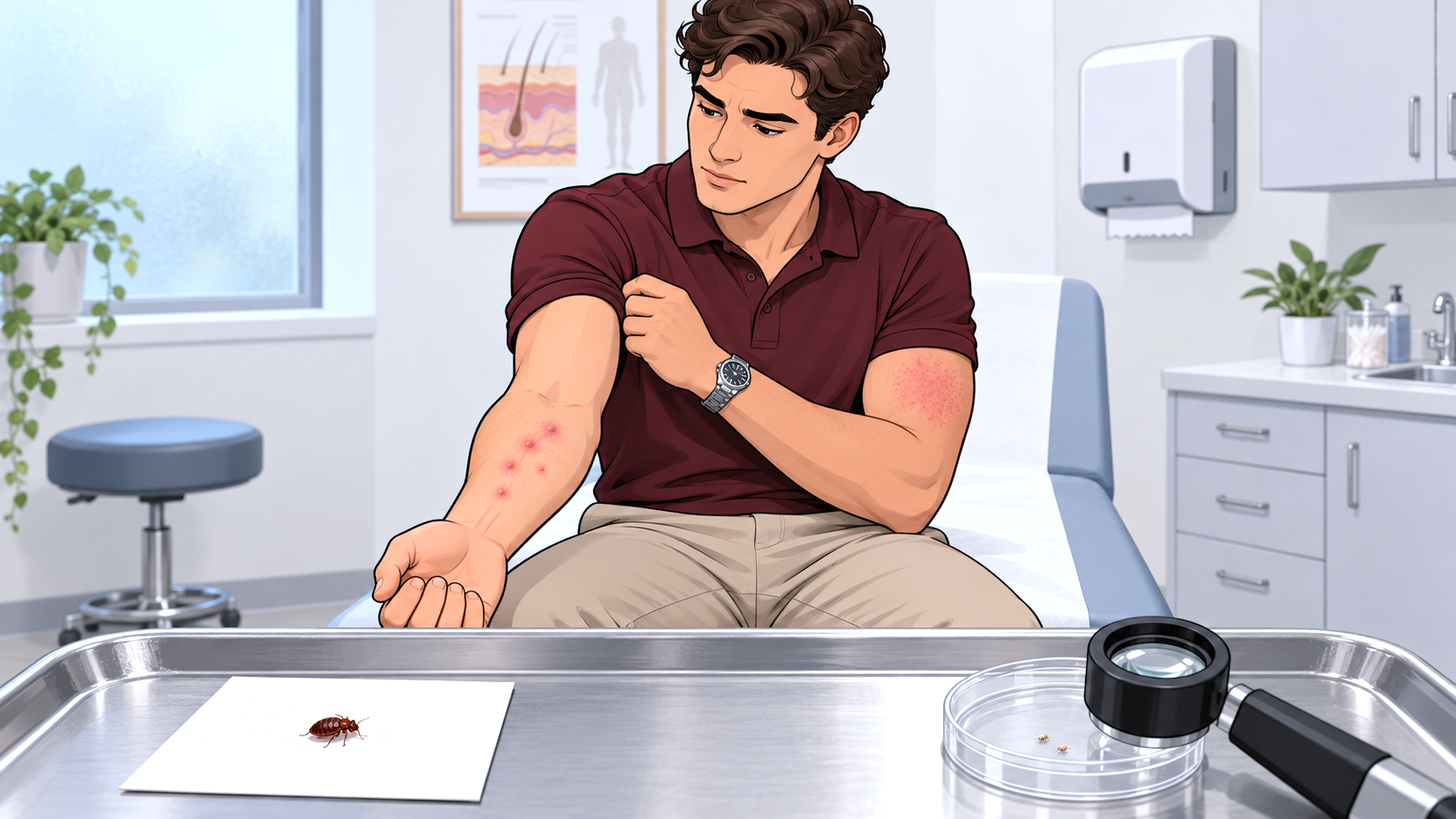
There is no such thing as a dust mite bite. Dust mites don’t bite, sting, or burrow into human skin. What people call “dust mite bites” are usually allergic skin symptoms being attributed to mites, while bed bugs genuinely pierce the skin and feed on blood. That makes the distinction straightforward biologically, even though figuring out the cause of an unexplained rash can be much harder.
Dust Mites Don’t Bite People
Dust mites are microscopic arachnids that live primarily on shed human and animal skin. The American Lung Association confirms that they aren’t parasites and don’t bite, sting, or burrow into people.
Bed bugs are completely different. They are blood-feeding insects with mouthparts adapted to pierce skin and take a blood meal.
So if you have genuine insect bites, dust mites aren’t responsible. The harder question is determining whether the marks came from bed bugs, another biting arthropod, or something unrelated to bites altogether.
What People Mistake for Dust Mite Bites
Dust mites can still cause skin problems through allergy. Their fecal particles and body fragments contain proteins capable of triggering allergic responses in susceptible people. Dust-mite allergy is better known for symptoms such as sneezing, congestion, itchy or watery eyes, coughing, and asthma symptoms, but exposure can also aggravate atopic dermatitis in some people.
That reaction isn’t created by a mite physically attacking the skin. It is an immune response to allergens.
This distinction is also why dust mites and bed bugs require completely different approaches even though both can be associated with bedding.
What Bed Bug Bites Look Like Instead
Bed bug bites can produce small, itchy, swollen marks, although reactions vary considerably from person to person. Some people develop larger welts or blisters, while others show little or no visible reaction.
Bites may appear individually or in groups or lines, but the pattern alone can’t confirm bed bugs. Other insects and several skin conditions can produce similar-looking marks.
The stronger evidence is what you find around the sleeping area. Live bed bugs, eggs, shed skins, fecal spots, and characteristic stains are more useful for confirming an infestation than the appearance of a rash. If bed bugs are suspected, check for physical signs around the home rather than trying to diagnose the pest from skin marks alone.
Bed Bugs and Dust Mites Can Share the Same Mattress
Both can occur in beds, but they’re there for completely different reasons.
Dust mites thrive where shed skin accumulates and humidity is suitable. Bed bugs hide near beds because sleeping people provide predictable access to blood. Having dust mites doesn’t mean you have bed bugs, and finding bed bugs doesn’t tell you anything about the dust-mite population.
They’re also dramatically different in size. Bed bugs are visible to the naked eye, while individual house dust mites are microscopic and generally can’t be identified without magnification.
Reducing Dust Mite Allergens Is Different From Treating Bed Bugs
If dust-mite allergy is the problem, reducing exposure to allergens is the goal. The Asthma and Allergy Foundation of America recommends measures including allergen-proof mattress and pillow covers, regularly washing bedding, and keeping indoor humidity below 50 percent.
Bed bug control requires a different strategy involving inspection, monitoring, physical controls, heat where appropriate, and sometimes pesticides. Laundry can play a role in both problems, but for different reasons. Washing and drying clothes during a bed bug infestation is intended to deal with actual insects rather than microscopic allergens.
Questions About Dust Mites and Bed Bug Bites
Can dust mites leave red bumps on your skin?
Dust mites don’t create bite marks. People with dust-mite allergy or atopic dermatitis can develop itchy or inflamed skin, but unexplained red bumps shouldn’t automatically be attributed to dust mites.
Can you have dust mites and bed bugs at the same time?
Yes. One doesn’t prevent the other because they use the environment differently. Dust mites feed primarily on shed skin, while bed bugs feed on blood.
Can you see dust mites crawling on your mattress?
Not with normal vision. Dust mites are microscopic. A small bug clearly visible crawling across a mattress is therefore not a house dust mite.
How can you tell whether marks are bed bug bites?
You generally can’t confirm bed bugs from skin marks alone. Look for physical evidence around the bed and nearby furniture. If the skin reaction is severe, persistent, infected, or otherwise concerning, seek medical advice rather than trying to diagnose it from appearance alone.
One thought on “Bed Bug Bites vs. Dust Mite Bites”