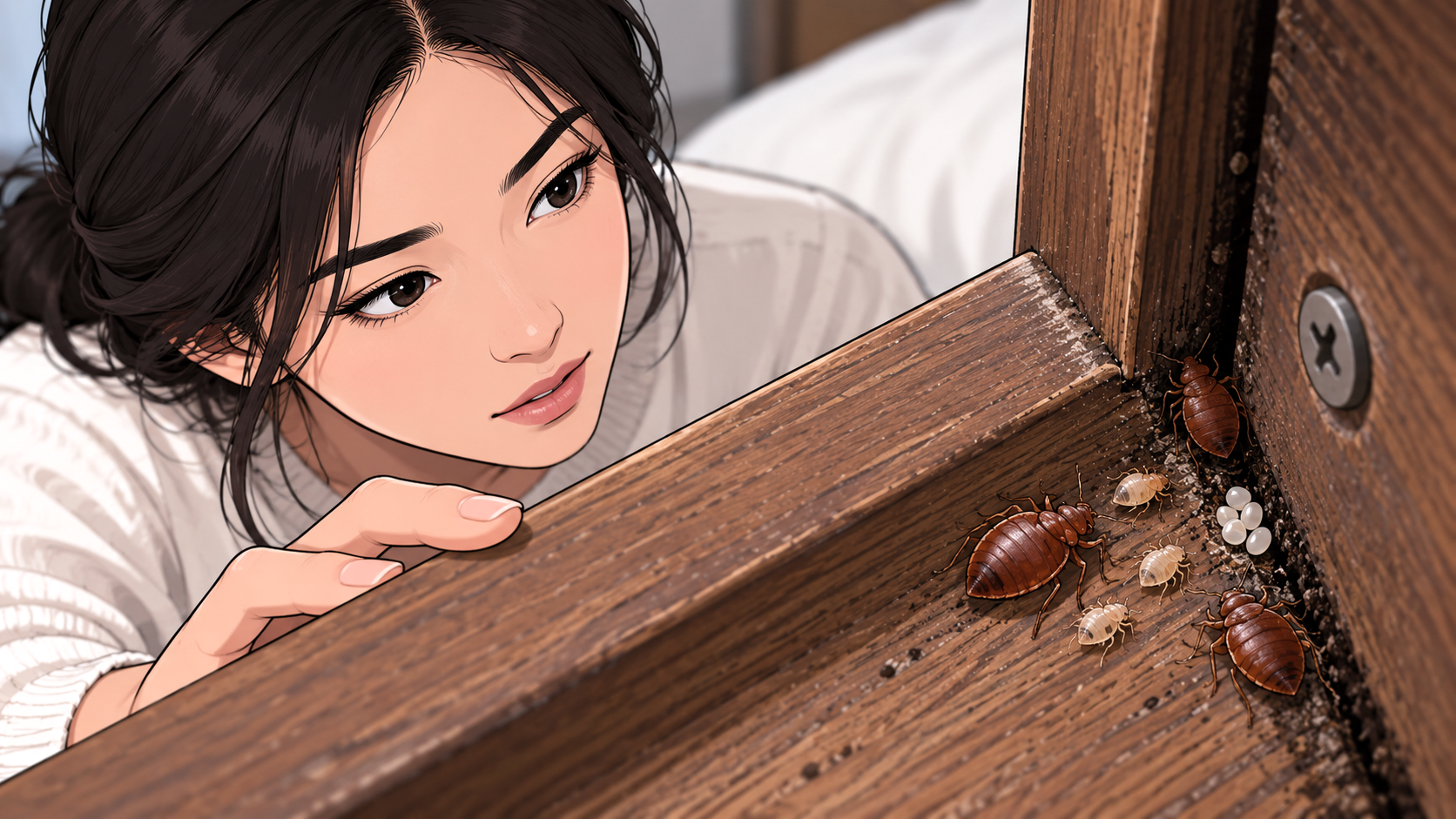
A single previously mated female bed bug can start an infestation if she reaches a suitable hiding place, obtains blood meals and produces viable offspring. Bed bug females store sperm after mating, so a female does not need a male to travel with her before she can begin laying fertilized eggs in a new location. “Pregnant” is not technically how bed bug reproduction works. Unlike a mammal carrying developing young, a female bed bug lays eggs. The more accurate concern is whether the lone female has already mated.
Bed Bug Infestations Really Can Begin With One Mated Female
The possibility is more than a theoretical worst-case scenario. Genetic studies of established bed bug populations have found extremely low diversity within individual infestations, consistent with new populations beginning from very few founders. One population-genetics analysis concluded that even a single mated female can successfully found a new infestation.
Studies of apartment infestations have reached compatible conclusions. Genetic patterns from lower-income housing showed that many infestations were consistent with origins involving a single mated female, her offspring or similarly small founding groups. Bed bugs are unusually capable of surviving the genetic bottleneck created by such a small founding population, so the absence of unrelated mates does not necessarily prevent descendants from establishing themselves.
A lone bed bug found after travel or after bringing used furniture home therefore cannot automatically be treated as harmless simply because only one bed bug has been discovered. Whether that individual is an adult male, virgin female or previously mated female produces very different reproductive possibilities.
She Can Bring Stored Sperm With Her
Bed bug mating uses traumatic insemination. The male pierces a specialized region of the female’s abdominal wall and transfers sperm into her body cavity. Sperm subsequently migrates into reproductive structures, including paired organs where it can be stored. Experiments tracking the process found that sperm begins leaving the insemination site within hours and reaches female sperm-storage organs after mating.
Stored sperm allows separation from the male without immediately ending fertility. In one experiment, virgin females were permitted a single mating and then isolated. That single insemination provided enough sperm to maintain maximum fertility for at least four weeks, demonstrating that repeated mating is not required for each group of fertile eggs.
Longer experiments have documented fertile reproduction well beyond the first few weeks. Once-mated females fed every five days continued producing eggs for approximately 75 days, although the proportion that hatched began declining after about 30 days as stored sperm aged. Female age, male age, feeding frequency and the condition of stored sperm all influence subsequent fertility.
A female hidden in luggage can consequently leave the original infestation carrying everything required to begin producing fertilized eggs after reaching another home.
Being Alone May Actually Spare Her From Repeated Mating Costs
A male’s absence does not necessarily put an already mated female at an immediate reproductive disadvantage. Repeated traumatic insemination imposes physical costs on female bed bugs, and experiments have found reduced reproductive performance when females experience frequent mating.
Researchers compared singly mated females with females repeatedly exposed to males over six feeding and egg-laying cycles. Females mated only once produced an average of 83.8 eggs, compared with 61.0 eggs among repeatedly inseminated females. The authors concluded that, during approximately the first six weeks of a new infestation, a solitary singly mated female with regular blood meals can produce substantial numbers of offspring.
Those egg totals belong specifically to the experimental conditions and should not be treated as a prediction for a home. Female bed bugs differ in fecundity, and not every egg or offspring will survive. The reproductive significance is simpler: isolation from males does not prevent an already inseminated female from producing a sizeable first generation. The wider range of bed bug egg production depends on feeding, mating history, age and other conditions.
Her First Offspring Can Supply the Next Generation
Stored sperm solves only the founder’s immediate reproductive problem. A lasting infestation requires viable offspring that survive, feed, develop and eventually reproduce.
Her eggs hatch into nymphs rather than miniature reproductive adults. Each nymph passes through five immature stages, taking the blood meals required for development before becoming an adult. Under favorable conditions, the bed bug life cycle can progress quickly enough for descendants of the founding female to reach reproductive maturity while she is still alive.
Her male and female offspring can then mate. Bed bugs appear unusually tolerant of the close inbreeding inherent in populations founded by very few individuals. Experiments examining crosses within and between populations found only limited evidence of strong inbreeding costs and noted that large infestations can arise from a single mated female.
At that point, population growth is no longer dependent solely on the original insect. Her mature daughters add their own reproductive output, creating the overlapping generations responsible for rapid bed bug population growth.
One Mated Female Does Not Guarantee an Infestation
The ability to establish a population is not the same as certainty that she will succeed. A founding female can die before laying viable eggs. She may fail to reach a host, be removed during cleaning, encounter an effective control measure or produce offspring that fail to survive to reproductive maturity.
Blood access is especially important. Bed bugs are obligate blood feeders, and adults require blood for sustained reproduction. Nymphs also need a meal before progressing through each immature stage. A founder reaching an occupied bedroom therefore has a better biological opportunity than one stranded somewhere without accessible hosts. The normal bed bug feeding interval can stretch considerably when feeding opportunities disappear.
The location where the female lands also affects her chances. Bed bugs seek protected cracks and crevices near places where hosts remain still for long periods. A female that successfully reaches such a harborage can remain difficult to notice while feeding periodically and depositing eggs. Their ability to locate sleeping hosts makes bedrooms and regularly used resting areas particularly favorable places for establishment.
Finding One Female Calls for Inspection, Not a Population Estimate
A single female does not prove that eggs or offspring already exist in the home. It does provide enough reproductive potential to justify checking rather than waiting for a second adult to appear.
Inspect mattress seams, the box spring, bed frame, headboard, nearby furniture and protected cracks around the sleeping area. Tiny whitish eggs, nymphs, fecal spotting and shed bed bug skins can reveal development that a lone adult sighting cannot. A careful mattress and bed inspection is particularly useful when the insect was discovered in or near a bedroom.
Monitoring over subsequent nights can add evidence when an immediate search finds nothing. Interceptor cups beneath suitable furniture legs can capture mobile bugs approaching or leaving the bed without relying on bite marks as proof of activity.
Questions About a Single Female Bed Bug
Can you tell by looking whether a female bed bug has already mated?
Not reliably during an ordinary household inspection. Identifying an adult as female does not reveal enough about her mating history to safely assume that she is incapable of producing fertile eggs.
Can one male bed bug start an infestation by himself?
No. A lone male cannot produce offspring. Finding one still warrants inspection because its presence may mean other bed bugs are nearby or were introduced at the same time.
Can a virgin female start an infestation alone?
Not through ordinary sexual reproduction. She would need viable sperm to produce the descendants required for an expanding population. The difficulty is that finding a female does not normally tell a homeowner whether she was previously inseminated.
Could a female lay eggs after being carried home in luggage?
Yes, if she had already mated and survives the trip. Bed bugs can hitchhike in luggage and personal belongings, allowing a fertile female to reach a location far removed from the infestation where she originally mated.
One thought on “Can One Pregnant Bed Bug Start an Infestation?”