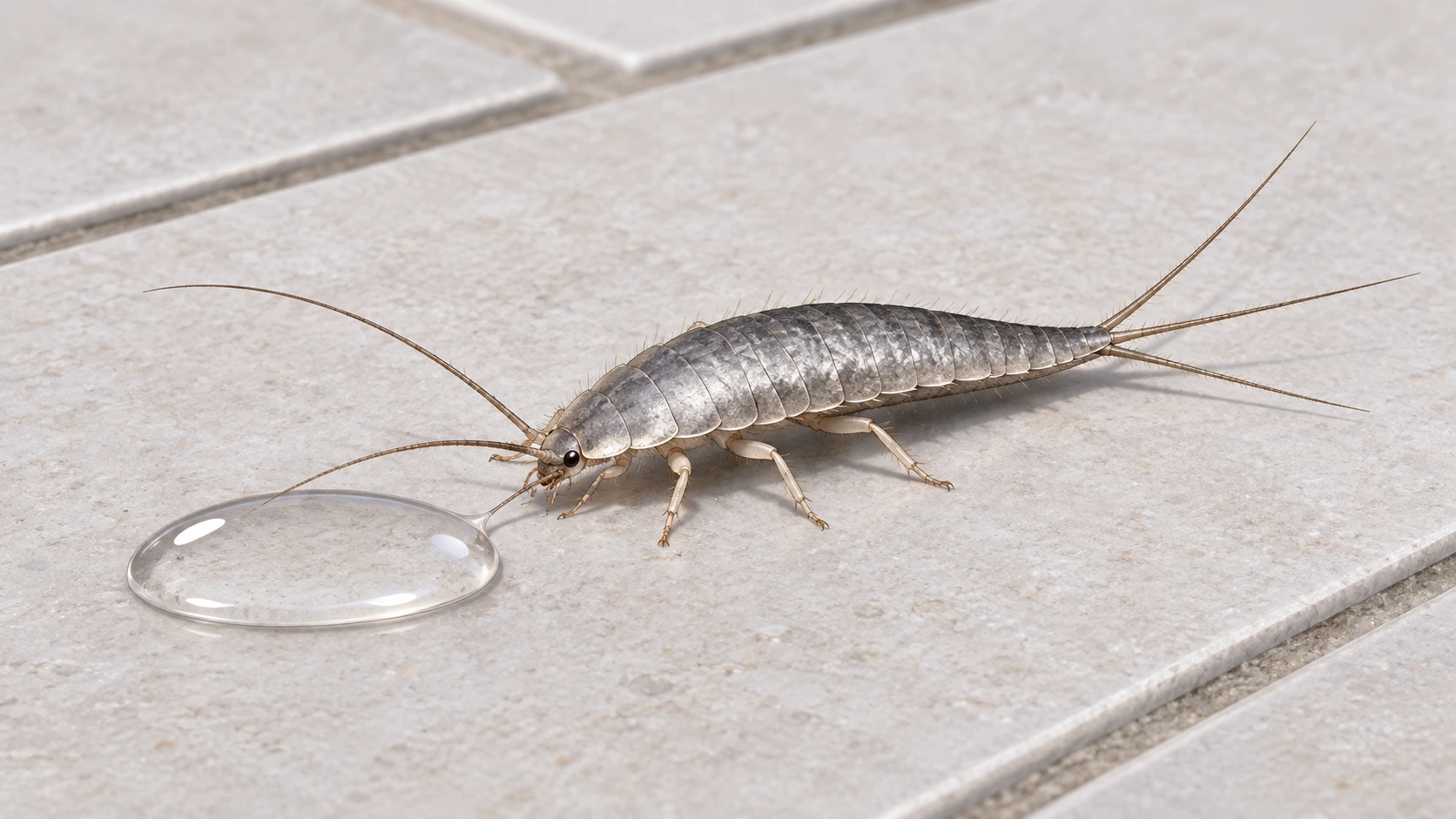
Silverfish cannot swim like aquatic insects, and they cannot live underwater. Although they prefer humid environments and are frequently found around plumbing fixtures, they are terrestrial insects that move using their six legs. A silverfish that becomes trapped underwater will eventually drown, but there is no dependable universal time for how long an individual can survive submersion. The fishlike name comes from the insect’s silvery appearance and its characteristic wriggling movement, not an ability to live or swim in water. This explains why finding one in a bathtub can be confusing. It may spend much of its life around damp materials while remaining poorly equipped for an encounter with standing water.
Can Silverfish Actually Swim?
Silverfish cannot swim through water using coordinated paddling or the kind of propulsion used by aquatic insects. Their bodies and legs are adapted for movement across solid surfaces, where they can run rapidly and change direction.
When a silverfish encounters water, its ordinary running movements do not translate into effective swimming. Wriggling its body or moving its legs while submerged does not provide a reliable way to travel through water.
The University of Missouri’s silverfish and firebrat reference describes their terrestrial behavior and their frequent discovery in sinks and bathtubs after they become trapped. Their presence around plumbing should not be mistaken for aquatic activity. There is also a difference between moving across a damp surface and swimming. A silverfish may travel over wet flooring, condensation-covered materials, or a damp fixture while remaining in contact with a solid surface. None of those observations establishes that it can propel itself through water.
Will Silverfish Drown in Water?
A silverfish submerged in water will eventually drown because it is not adapted to underwater life.
Unlike aquatic insects, silverfish do not have specialized swimming structures or an underwater breathing system. Their ordinary respiratory system is adapted to life on land.
The amount of time an individual survives after becoming submerged is not established by a dependable universal household figure. Conditions such as the extent of immersion and the individual insect’s condition can affect what happens, so claims that every silverfish dies after a particular number of seconds or minutes should be treated cautiously.
A brief splash also differs from prolonged submersion. An insect getting wet while crossing a bathroom surface is not experiencing the same exposure as one completely trapped underwater.
The practical conclusion is straightforward. Silverfish cannot use standing water as a habitat, and prolonged submersion is fatal.
Why Are Silverfish Found Near Water If They Cannot Swim?
Silverfish seek suitable humidity rather than an aquatic environment. Many household species prefer damp, sheltered locations where they can avoid excessive moisture loss.
Bathrooms, basements, laundry rooms, and spaces beneath sinks can offer these conditions. Plumbing also creates small areas where condensation or leaking water maintains localized humidity.
The Health Canada silverfish guidance describes silverfish around sinks, bathtubs, and plumbing fixtures, where they may enter while seeking moisture and become trapped.
A damp environment and a submerged environment are very different conditions. Silverfish can benefit from humid air and sheltered damp areas without being able to survive underwater.
The amount of moisture available in a home also varies between rooms and concealed spaces. A dry-looking bathroom may contain damp areas beneath a cabinet or around a leaking pipe. Those conditions can help explain what attracts silverfish into a house.
Why Do Silverfish Get Trapped in Sinks and Bathtubs?
Silverfish commonly become trapped in sinks, bathtubs, and washbasins after entering while searching for moisture or moving around nearby surfaces.
These fixtures have smooth, steep interiors. Once an insect falls inside, it may be unable to regain the surrounding surface because it cannot obtain enough grip to climb the sides.
A silverfish found in a dry bathtub may therefore have been trapped without ever touching standing water. The smooth porcelain itself can prevent escape.
The Oklahoma State University silverfish identification and habitat reference describes these insects as frequently found trapped in sinks, lavatories, and bathtubs because they cannot climb slick vertical surfaces.
This also explains why a silverfish in a fixture does not necessarily indicate that the drain is its source. An insect can fall from a nearby wall, cabinet, or stored material before becoming trapped.
The problem is especially easy to misinterpret when the fixture is dry. A trapped insect may remain there until someone removes it, it finds a way out, or it dies.
Can Silverfish Come Up Through Drains?
Finding a silverfish in a sink or bathtub does not establish that it came up through the drain.
Silverfish are land-dwelling insects, and a water-filled plumbing trap is not a suitable route for them to travel through. They cannot swim through the standing water inside a functioning drain trap.
An insect discovered in a basin may have entered from the surrounding room and fallen into the fixture. Nearby gaps, cabinetry, wall openings, and other connected surfaces offer alternative explanations.
The distinction matters because repeatedly finding silverfish in a bathtub can lead homeowners to concentrate on the plumbing drain even when the insects are entering from another location. A dry basin is also capable of trapping a silverfish. The absence of water does not prove that the insect entered through the drain.
Can Silverfish Survive on Wet Floors or Damp Surfaces?
A wet floor is different from complete immersion. Silverfish can encounter moisture while remaining in contact with a solid surface, although their ability to remain active depends on the conditions and the species.
For example, a silverfish crossing a bathroom floor shortly after someone showers may travel along the exposed surface without swimming. Condensation on a pipe or moisture beneath a cabinet can likewise create damp areas without producing standing water deep enough to submerge the insect.
We should not confuse a preference for humid shelter with an ability to tolerate every form of water exposure. Prolonged saturation and submersion present different conditions from simply moving over a damp material.
Silverfish may also be found in concealed areas where humidity remains elevated even when the exposed floor has dried. Their common hiding places around household structures can help explain why dampness in one part of a room does not necessarily reveal the insect’s actual resting location.
Can Silverfish Escape From a Container of Water?
A silverfish submerged in a container cannot swim its way out. Its chances of escaping depend on whether it can reach a solid surface or another route out of the water.
A shallow container with a reachable edge presents different conditions from a deep container with smooth vertical sides. The insect may be able to leave if a suitable solid surface provides an accessible route, but it cannot rely on swimming to reach the rim.
Even when a silverfish reaches the side of a container, a smooth surface may prevent it from climbing out.
This is one reason that an insect found inside a glass jar or similar container may remain trapped despite continuing to move. The surrounding water and the surface finish both affect its ability to escape.
A struggling silverfish should not automatically be assumed to be swimming. Movement beneath or against the water can simply be an unsuccessful attempt to regain contact with a solid surface.
Does Finding a Silverfish in Water Mean There Is an Infestation?
One silverfish trapped in a sink or bathtub does not establish the size of a household population.
The insect may have wandered into the fixture from a nearby hiding place. Repeated encounters, however, warrant closer attention because multiple sightings can indicate continuing activity in the surrounding area.
The distinction is between a single insect and a recurring pattern. A homeowner who finds one silverfish in a bathtub has evidence of an encounter. Someone finding them repeatedly in the same fixture has a reason to investigate nearby shelter and moisture conditions.
The significance of finding one silverfish depends on other observations, including repeated sightings and evidence of activity elsewhere in the home.
Why Do You See Silverfish in Water-Prone Areas at Night?
Silverfish are primarily nocturnal, so encounters around plumbing fixtures may happen when the insects emerge from sheltered locations after dark.
They can travel along floors, pipes, and other surfaces while searching for suitable shelter and resources. A nearby fixture may become an accidental trap during this activity.
The timing of a sighting does not establish that the insect entered through a drain or that it was living inside the plumbing. The nighttime activity of silverfish helps explain why homeowners sometimes discover them unexpectedly in sinks and bathtubs in the morning.
Concealed building spaces can also contain localized moisture. Silverfish occupying wall voids, basements, attics, and insulation areas may encounter plumbing-related openings without living in the water itself.
What Water Exposure Reveals About Silverfish
Silverfish need suitable moisture conditions, but they cannot swim or establish themselves underwater. Their appearance near plumbing fixtures reflects the humid environments they favor, while a silverfish trapped inside a smooth basin may simply have fallen in and become unable to escape.
A brief encounter with a wet surface should not be confused with complete immersion. Prolonged submersion eventually kills these terrestrial insects, although an exact survival time cannot be assigned to every specimen.
When silverfish repeatedly appear around sinks or bathtubs, consider the surrounding hiding places and moisture conditions rather than assuming that the insects are emerging through the plumbing.