Finding bed bugs in an apartment requires a slightly different response than finding them in a detached house. Because neighboring units may also be affected, your first priorities are to confirm the insect, notify your landlord or property manager promptly, avoid spreading bugs through the building, and cooperate with inspection and treatment.
If you find bed bugs in your apartment, document what you found and report it to your landlord or property manager as soon as possible. Do not move belongings into another apartment, sleep in another room, or start indiscriminately spraying pesticides. Nearby units may also need inspection before the infestation can be fully controlled.
Confirm the Bed Bug and Report It Promptly
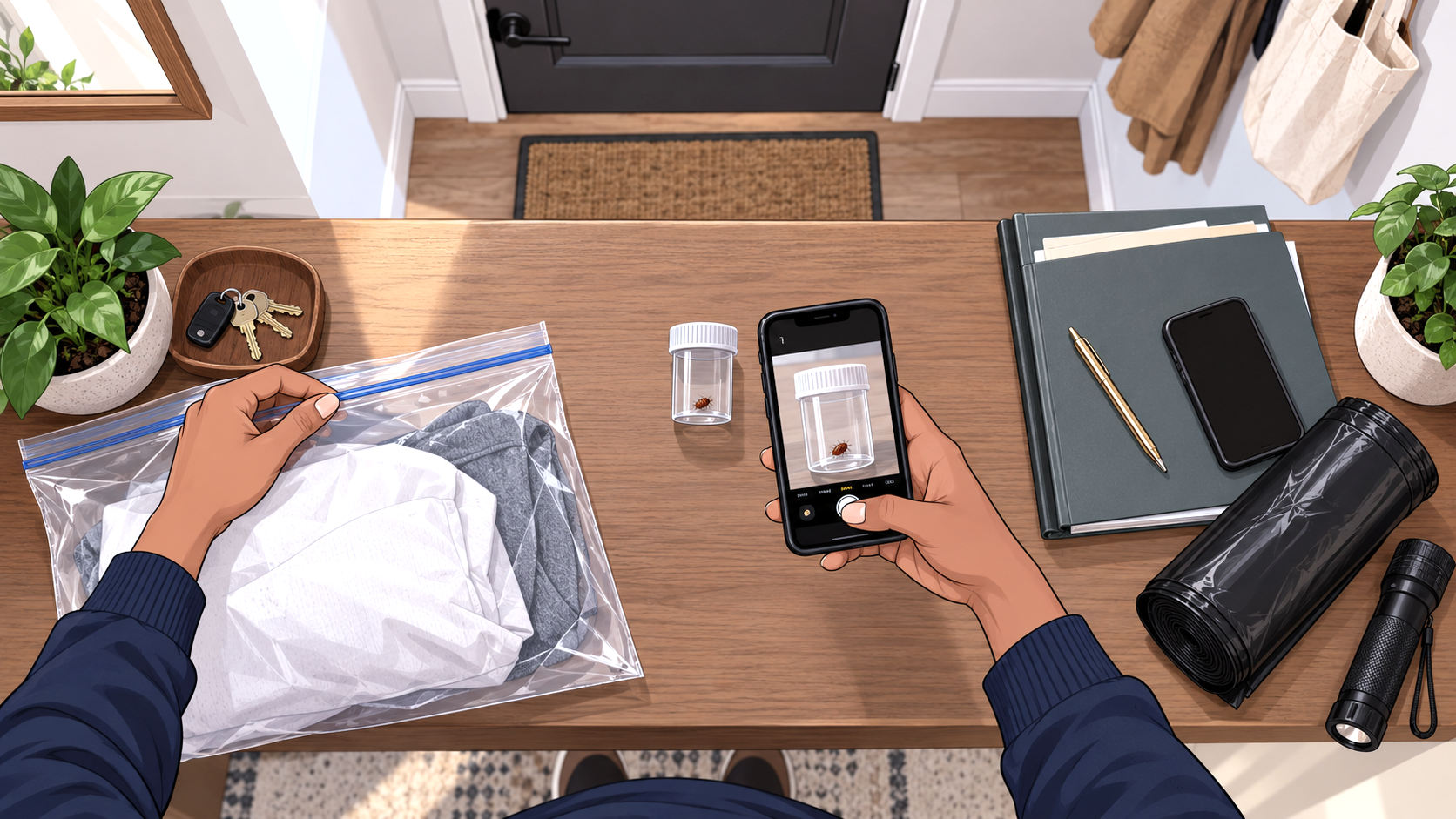
If possible, capture the suspected bug in a sealed container or clear plastic bag and take photographs. Adult bed bugs are visible without magnification, but small nymphs and other household insects can be misidentified. Comparing the specimen with the typical appearance of bed bugs can help, although professional identification is preferable when you are uncertain.
Once you have credible evidence, notify the landlord, building manager, or other responsible property contact promptly and keep a written record of the report. Apartment residents are advised to notify their landlord when bed bugs are identified because nearby units should also be inspected. Include where you found the bug and whether you have noticed other evidence such as fecal spots, shed skins, eggs, or additional live insects. Knowing the early signs of a bed bug infestation can make your report more useful.
Who must arrange or pay for treatment depends on local landlord-tenant laws, lease terms, and the circumstances of the infestation. Do not assume the rule is the same everywhere. Check the housing rules that apply where you live when determining whether the landlord or tenant pays for bed bug treatment.
Don’t Accidentally Spread Them Through the Building
Avoid carrying loose bedding, clothing, furniture, boxes, or other potentially infested belongings through hallways or into another apartment. Bed bugs can hide in personal possessions, so moving things away from the affected room can move the infestation with them.
Do not start sleeping on the couch or move into another bedroom just to escape the bites. Keep the sleeping area in place unless the pest professional gives different instructions. Pulling belongings from room to room also makes it harder to determine how far the infestation has already spread.
Clothing and bedding that need to be moved for treatment should be contained first. Suitable fabrics can be placed directly into sealed bags and taken to the laundry area, then dried on high heat where the fabric permits. Thirty minutes in a hot dryer can kill bed bugs and their eggs. Put processed items into clean bags or containers rather than returning them to potentially infested piles.
Your Apartment May Not Be the Only Unit That Needs Inspection
Bed bugs do not respect apartment boundaries. In multi-unit buildings, an infestation discovered in one apartment can involve nearby units, which is why simply treating the bed where you found them may not solve the problem. Building management and residents both have roles in an effective integrated bed bug control program.
This becomes especially important when bed bugs spread between apartments. Nearby units should be considered during the investigation, particularly when bugs keep appearing after treatment. Prompt reporting helps management identify a building-level problem before more apartments become involved.
You generally should not knock on doors and begin treating neighboring apartments yourself. Report the infestation through the appropriate building channel so inspections and treatment can be coordinated.
Prepare for Inspection and Treatment Without Emptying the Apartment
Do not throw away your mattress, couch, or furniture simply because you found bed bugs. Many infested items can be treated, and carrying furniture through a building can spread bugs. If something ultimately must be discarded, follow proper procedures for disposing of bed bug-infested furniture rather than leaving an unmarked item where another resident might take it.
Wait for treatment instructions before dramatically rearranging the apartment. Preparation may involve reducing clutter, processing certain fabrics, creating access around furniture and walls, vacuuming designated areas, and containing belongings. Following the specific preparation instructions for bed bug extermination helps technicians reach hiding places without unnecessarily spreading the infestation.
Professional apartment treatment may combine inspection, vacuuming, steam or heat, encasements, monitoring, and targeted pesticides. Multiple control methods are generally more effective than relying on one technique, particularly when the infestation extends beyond one piece of furniture.
Monitor the Apartment After Treatment
Treatment day is not necessarily the end of the infestation. Keep scheduled follow-up appointments and watch for fresh evidence. Bed bug interceptor cups beneath bed or sofa legs can help detect bugs moving between furniture and the floor, while regular visual inspection can reveal continuing activity. Interceptors can be checked periodically and are useful for monitoring bed bugs in apartments.
Keep notes about live bugs, monitor captures, and where evidence appears. Old stains and shed skins can remain after successful treatment, so concentrate on new evidence rather than remnants from before extermination. If live bugs continue appearing, report them instead of assuming the treatment simply needs more time. Determining whether bed bug treatment actually worked requires continued monitoring and, when necessary, additional treatment.
Other Questions About Bed Bugs in Apartments
Should I tell my landlord immediately if I find one bed bug?
Yes. Even finding a single bed bug deserves prompt reporting and inspection in an apartment because other bugs may be hidden and nearby units may need to be checked.
Should I move out temporarily if my apartment has bed bugs?
Do not relocate simply to escape the bugs unless your treatment plan or another legitimate requirement makes temporary relocation necessary. Moving untreated belongings can transport bed bugs to another location.
Can bed bugs come from the apartment next door?
Yes. Bed bugs can move between units in multi-family buildings. Recurring infestations may require inspection beyond your apartment rather than repeated treatment of your unit alone.
Should I throw away my mattress?
Usually not. Mattresses can often be treated and enclosed in a suitable bed bug encasement. Discarding furniture unnecessarily can be expensive and can spread bugs while the item is being moved.
What if bed bugs return after my apartment is treated?
Document the new evidence and report it promptly. Bed bugs can reappear after treatment because of surviving bugs, newly hatched eggs, incomplete treatment, or movement from another infested unit.
One thought on “What to Do If You Find Bed Bugs in Your Apartment”