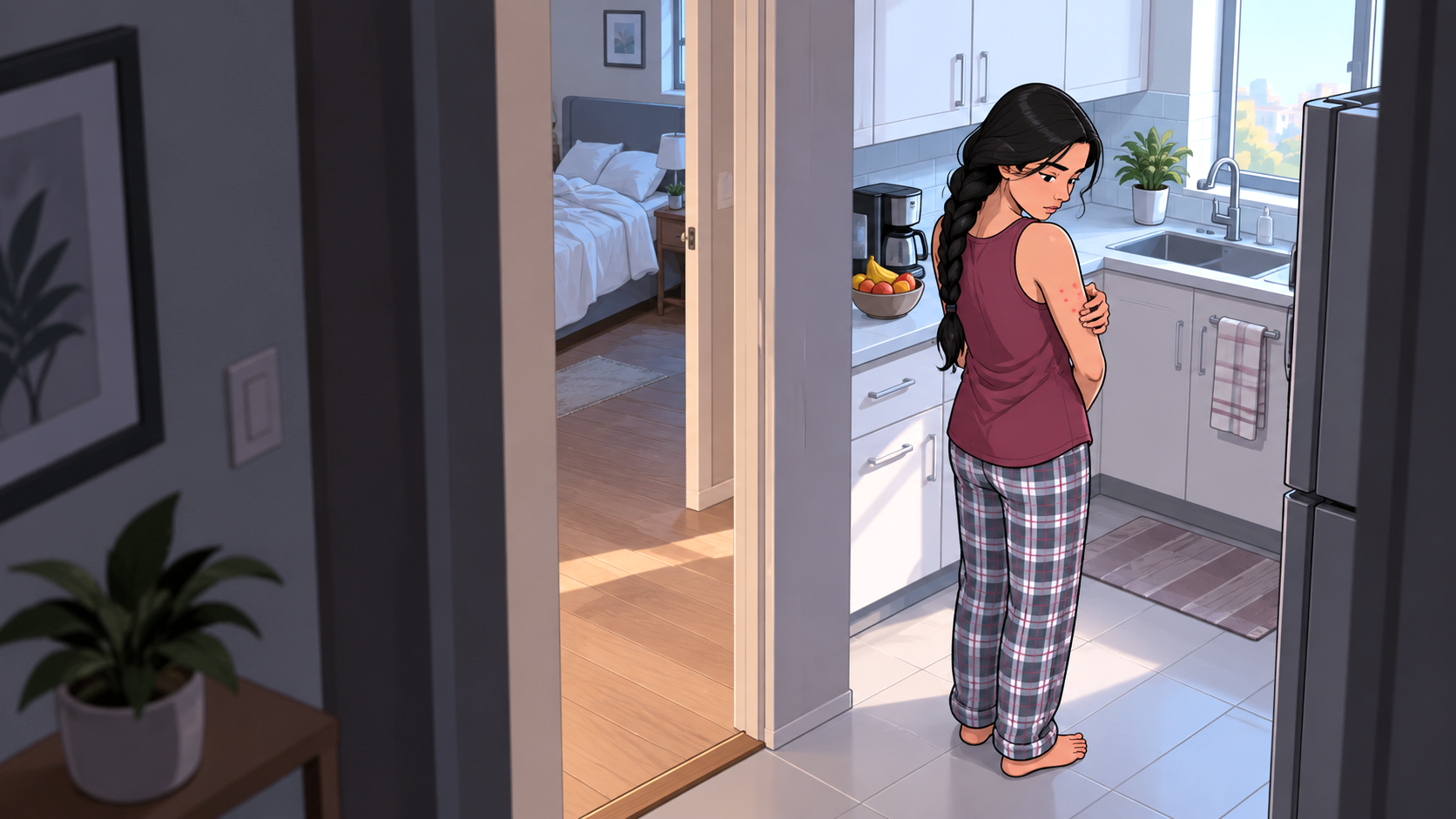
A bed bug can feed on someone who is sleeping without the person noticing what is happening. Hours or even days later, however, the skin may become itchy, irritated, swollen, or occasionally painful. That delay is important because the sensation of the actual bite and the reaction that follows are two different parts of the experience.
Bed bug bites usually do not hurt while the bug is feeding. Bed bugs inject an anesthetic and an anticoagulant while taking a blood meal, which helps them feed without immediately alerting the person. The discomfort usually comes from the skin reaction that develops afterward, and reactions can range from no visible mark to itchy bumps or more pronounced swelling.
You May Sleep Through the Actual Bite
Bed bugs use specialized mouthparts to pierce the skin and take blood. During that process, they introduce substances with anesthetic and anticoagulant properties. Because the bite may not produce an immediate painful sensation, a sleeping person can remain unaware while the insect feeds. That also explains why trying to remember whether you felt something bite you during the night is not a dependable way to identify an infestation.
Some people also confuse the bite with the possibility of feeling the insect itself. Those are separate questions. A person might notice an insect moving across exposed skin under the right circumstances, but that does not mean the feeding wound will produce an obvious pinch. We cover that difference more closely in our guide to whether you can feel bed bugs on your body.
Timing makes the situation even less obvious. Bed bugs generally feed at night while people are sleeping, then retreat to sheltered areas around the places where their hosts rest. Their tendency to be most active while people are sleeping gives them plenty of opportunity to feed without being noticed.
What You Feel Later Is Your Skin Reacting
Finding a new bump in the morning can make it seem as though the bite happened shortly before you woke up. The mark does not provide such a precise clock. Visible reactions can appear after a delay, and some people may not develop noticeable marks at all.
When a reaction does develop, itching is a common complaint. The affected area can also become red or swollen. Individual responses vary considerably, which is why one person’s bites may be barely noticeable while another person’s become much more irritating. Our closer look at bed bug bite reactions explains that variation without assuming everyone will develop the same type of mark.
This also changes how we would interpret pain. A person who felt nothing during the night but later develops a tender swollen area has not necessarily experienced a painful feeding event. The discomfort can belong to the later inflammatory reaction instead.
A Bed Bug Bite Can Become Painful
Saying that bed bug bites “don’t hurt” goes a little too far. The initial feeding often passes unnoticed, but the resulting reaction can become uncomfortable. In some cases, painful swelling can occur as part of an allergic response, while severe allergic reactions are uncommon.
Swelling also varies from one person to another. A small raised bump and a much larger swollen reaction should not automatically be treated as equivalent simply because both followed suspected bed bug exposure. Our guide to swollen bed bug bites deals specifically with that side of the reaction.
The same caution applies to burning sensations. Pain, itching, tenderness, and burning are descriptions of what the skin is doing after exposure, not reliable identification characteristics for the insect responsible. Someone experiencing that particular sensation can find the narrower issue covered in our article on whether bed bug bites can burn.
Scratching Can Change How a Bite Feels
An itchy bump can become considerably more uncomfortable after repeated scratching. Broken skin creates an opportunity for secondary bacterial infection, which is one reason avoiding scratching and maintaining good hygiene are part of the basic care recommended for uncomplicated bed bug bites.
This is one situation where the history of the mark can be more useful than simply asking whether it hurts. A spot that was initially itchy but becomes increasingly sore after being scratched is not behaving the same way as an immediately painful insect sting. Once skin has been damaged, the original bite is no longer the only thing affecting how the area feels.
For ordinary itching, our guide to stopping bed bug bites from itching stays focused on symptom relief. A bite that appears to have developed an infection is a separate concern, and we cover those signs in our article on infected bed bug bites.
Pain Cannot Confirm That Bed Bugs Bit You
This is where judging a mysterious mark by sensation starts to fall apart. Bed bug reactions can overlap with other insect bites and skin conditions. Even an inflammatory reaction that looks compatible with bed bugs cannot specifically diagnose a bed bug infestation.
A painful mark does not prove bed bugs, but neither does the absence of pain rule them out. Itching has the same limitation. So do swelling and redness. The skin can give you a reason to investigate, but it cannot reliably tell you which insect was responsible.
Physical evidence around the sleeping area carries much more weight. Instead of trying to decide whether a bump hurts in the “right” way, check for signs of bed bugs around the bed. Live insects, shed skins, eggs, fecal spotting, and rusty or reddish stains are among the physical evidence worth looking for.
When the Reaction Needs More Than Home Care
Most bed bug bites need little more than symptom management and good hygiene. More severe reactions are different. Medical treatment may be appropriate for substantial reactions, and secondary bacterial infections may require treatment with antibiotics. The appropriate response therefore depends on what is happening to the skin, not simply on whether bed bugs are suspected.
A serious allergic reaction also requires medical attention. Although these reactions are uncommon, bed bug bites can cause allergic responses in some people. Anyone dealing with severe or concerning symptoms should get medical help rather than using photographs or online descriptions to diagnose the reaction.
Our guide on when to see a doctor for bed bug bites goes further into situations that warrant professional medical assessment. The goal is not to make every itchy bump a medical emergency, but also not to dismiss a reaction simply because the original insect bite probably went unnoticed.
Look Beyond the Bite When Bed Bugs Are Suspected
The most useful thing you can do after discovering unexplained nighttime marks is move your attention from your skin to the place where you sleep. Mattress seams, box springs, bed-frame joints, headboards, nearby furniture, and cracks close to the bed are sensible inspection areas because bed bugs hide near places where people sleep.
A careful bed bug inspection can therefore tell you much more than comparing how your bite feels with someone else’s photo. If the marks are your only clue and the inspection turns up nothing, our guide to having bites but no other signs of bed bugs covers what that situation can mean.
Pain is ultimately one small piece of a much larger picture. The bite itself may pass completely unnoticed, while the skin reaction afterward can range from absent to irritating or painful. When the real question is whether bed bugs are present, the room usually has better evidence than the sensation of the bite.
Other Questions About How Bed Bug Bites Feel
Can two people in the same bed react completely differently to bed bug bites?
Yes. Reactions vary between individuals, and some people develop no visible signs after being bitten. That means one person can have obvious irritated marks while another person sharing the sleeping area has little to show on their skin. Comparing symptoms between two people cannot tell you reliably who was bitten or how many times.
Does a painful bite mean there are a lot of bed bugs?
No. The severity of one person’s skin reaction does not provide a dependable measurement of infestation size. Determining whether an infestation is present, and how extensive it may be, requires evidence from the environment rather than grading the intensity of an individual bite.
Can a bite still bother you after the bed bug has left?
Yes. Bed bugs do not remain attached to the skin after finishing a blood meal. The reaction that follows can continue after the insect has returned to a hiding place, so lingering itching or tenderness does not mean a bed bug is still sitting on that area of your body.
Can bed bug bites hurt without itching?
Skin reactions are variable enough that itching should not be treated as a requirement for identifying a bed bug bite. However, pain without itching is not proof of bed bugs either. Unexplained painful skin lesions can have many causes, so the surrounding evidence and the nature of the reaction matter more than one sensation.
Can you wake up while a bed bug is feeding?
Being awake while a bed bug feeds is possible, but feeling a sensation during the night does not identify what caused it. Likewise, sleeping through the night without noticing a bite does not exclude bed bugs. Inspection remains more dependable than trying to reconstruct exactly what you felt while asleep.