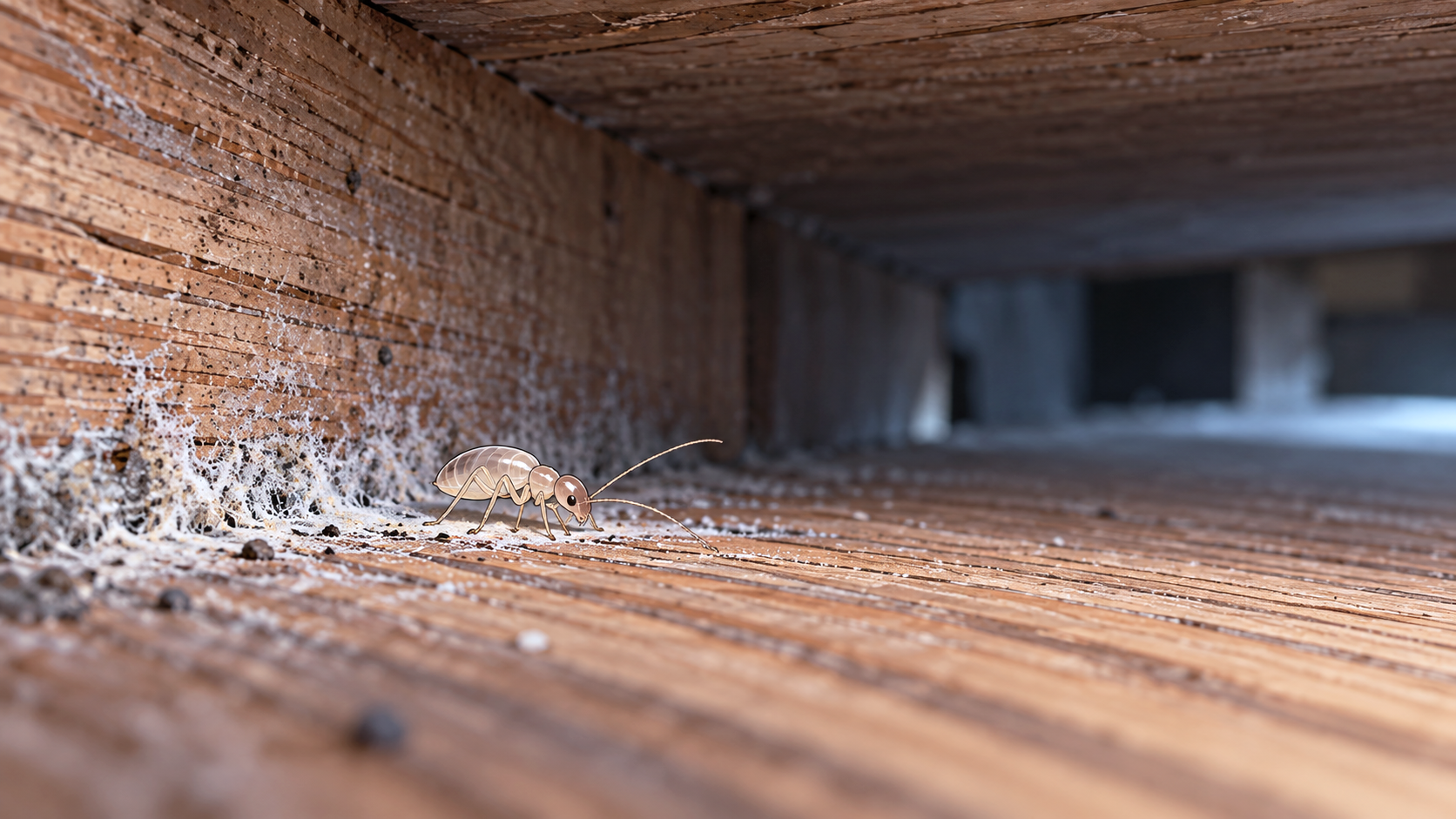
Booklice do not normally eat sound structural wood. When they appear on lumber, furniture, framing, or bark, they are usually feeding on microscopic fungi, mold, lichens, starches, or other organic material on or around the surface. They are not wood-boring insects and do not cause termite-like structural damage.
Wood Can Support Booklice Without Being Their Food
Damp timber can create an excellent booklice habitat because moisture allows fungi and other microscopic material to develop on its surface. Indoor psocids commonly feed on mold and fungi growing on damp substrates, while outdoor relatives known as barklice consume fungi, lichens, pollen, and decaying material from tree surfaces. Their association with wood therefore reflects what the wood is carrying rather than an ability to digest intact timber as a primary food.
The broader diet of booklice includes molds, grains, starches, insect fragments, damaged cereal material, and other organic matter. Canadian grain guidance likewise records psocids feeding on plant and animal products, fungi, glues, paper products, and damaged grain. Sound wood is notably different from the exposed, nutrient-rich material these insects commonly exploit.
Damp Lumber Can Look Like It Is Being Attacked
Booklice may collect on framing timber, plywood, shelving, or unfinished wood when those materials remain humid. A piece of lumber that became wet during construction can support microscopic fungal growth even after the surface no longer looks obviously soaked. EPA moisture guidance identifies wood and other absorbent construction materials as vulnerable to microbial growth when kept wet.
That creates a misleading scene. Tiny insects may be crawling directly over a stud or sheet of wood, yet the feeding target can be the fungal film on the surface rather than the cellulose beneath it. The same relationship helps explain why booklice often appear in newly built homes, where retained moisture in lumber, plaster, drywall compounds, and enclosed wall cavities can temporarily support large populations.
Booklice Do Not Tunnel Through Wood
A booklouse has chewing mouthparts, but that does not make it a wood borer. Booklice do not excavate galleries through studs, hollow out furniture, produce piles of wood frass, or build colonies inside timber. Outdoor psocids can occur abundantly on bark and damp wood while remaining harmless to the plant itself. Maine forestry guidance describes barklice feeding on lichens, fungi, and superficial plant material rather than the tree.
Visible tunnels, hollowed timber, structural weakening, or substantial quantities of wood-colored debris therefore point away from booklice. The contrast with booklice and termites is especially important because termites actually consume cellulose and can damage structural wood.
Furniture Can Hold Food Sources Other Than the Wood
Booklice on wooden furniture do not necessarily have any interest in the timber itself. Older furniture can contain animal or plant stuffing, paper backing, cardboard, glues, starch-based adhesives, fabric, dust, and fungal growth. The National Park Service notes that psocids can infest cardboard, manuscripts, paper products, and furniture containing organic stuffing.
Furniture stored against a damp wall or in a humid basement can also develop mold on unfinished backs, undersides, joints, or internal components. The insects may remain concentrated around those protected areas while occasionally wandering onto polished exterior wood. A booklouse on a table leg is therefore poor evidence that the table is being eaten.
Plywood, MDF, and Particleboard Can Create More Confusing Situations
Engineered wood products contain more than wood fibers. Depending on the product, they may include resins, adhesives, paper facings, surface coatings, or accumulated fungal growth. Booklice are documented around starchy and adhesive materials, including glue used in book bindings.
A damp sheet of composite material can therefore provide several possible resources without the insects feeding substantially on the wood fibers themselves. If activity is concentrated around one cabinet panel, shelf, or wallboard component, inspect it for water exposure, condensation, mold, and adjacent food residues before assuming direct wood consumption.
The same caution applies to paper-faced building materials. Booklice around wood-based or cellulose-containing products may be grazing fungi or compatible surface materials rather than consuming the structural substrate.
Outdoor Barklice Show the Same Relationship With Wood
Outdoor psocids make the wood question easier to understand because they are often seen directly on tree trunks. Barklice can form dense groups over bark, branches, logs, fences, and damp wooden surfaces, yet they are regarded as harmless surface feeders. Minnesota describes outdoor psocids as eating fungi, lichens, pollen, decaying plants, and other organic material, not healthy tree tissue.
A tree covered with barklice is therefore not experiencing the equivalent of a termite or wood-boring beetle attack. The insects are grazing the biological layer growing on the bark. Indoor booklice on damp timber follow a comparable ecological pattern when fungal food is present.
Wood Damage Near Booklice May Have Another Cause
Finding booklice and damaged wood in the same place can lead to a false conclusion because damp environments can support more than one pest at once. Booklice may be exploiting fungi on moisture-damaged timber while termites, beetles, carpenter ants, or simple water deterioration account for the physical damage.
The shape of the damage deserves more weight than the mere presence of booklice. Serious structural loss, tunnels, exit holes, coarse frass, or hollow-sounding wood is not explained by the usual signs of a booklice infestation. Booklice populations are more strongly associated with live insects, high humidity, mold-prone materials, and contaminated stored products than with missing wood.
A similar principle applies to books. The damage booklice can cause to books is generally superficial and tied to mold, paste, glue, or susceptible binding materials rather than deep consumption of intact paper.
Questions About Booklice and Wood
Can booklice damage wooden furniture?
Booklice are unlikely to damage the wood itself. Heavy populations can contaminate surfaces, and dampness or mold around the furniture may cause deterioration independently of the insects.
Can booklice live inside wooden walls?
They can occupy cracks and humid wall cavities around timber if the environment supplies enough moisture and fungal food. Living beside wood is not the same as tunneling through it.
Do booklice eat tree bark?
Outdoor barklice generally graze fungi, lichens, algae, pollen, and organic debris from the bark surface rather than consuming healthy bark tissue.
Why are booklice crawling on my window frame?
Wooden window frames can stay damp because of condensation or leaks, allowing microscopic fungi to develop. Persistent activity in that setting fits the same moisture pattern behind booklice on walls and windowsills.
Can booklice eat sawdust?
Sawdust itself is not a typical primary food, but damp sawdust can trap moisture and develop fungal growth or become mixed with other organic material. Booklice found in it may be exploiting those resources rather than digesting dry wood particles.
Does drying the wood make booklice leave?
Drying can make the habitat much less suitable because it suppresses fungal growth and removes the high humidity booklice need. The strong dependence of booklice on humidity is more important to their persistence than access to the wood itself.