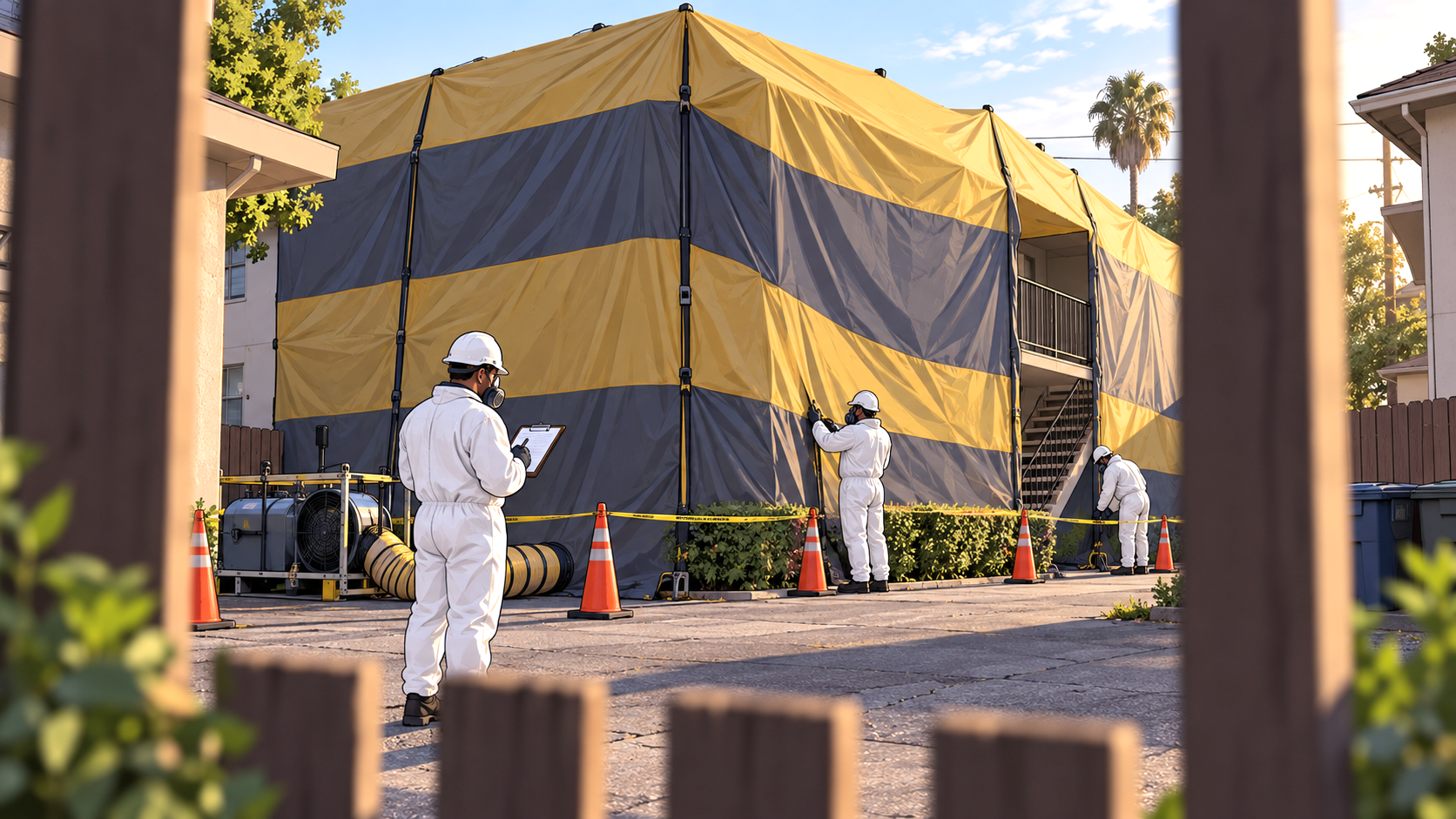
Fumigation can eliminate bed bugs, including insects hidden deep inside furniture, belongings, cracks, and other spaces that ordinary surface treatments may struggle to reach. True structural fumigation uses a toxic gas inside a sealed building or enclosure. It is very different from using a bug bomb or fogger, and it requires specially trained professionals.
Yes, professional fumigation can get rid of bed bugs. Sulfuryl fluoride fumigation can kill adults, nymphs, and eggs when the correct concentration and exposure are achieved. Its major advantages are penetration and complete life-stage control, but it is expensive, highly specialized, provides no residual protection, and is rarely the first treatment chosen for a typical infestation.
What Does Bed Bug Fumigation Actually Mean?
True fumigation involves sealing a structure or enclosed space and introducing a fumigant gas. In the United States, sulfuryl fluoride is the only fumigant currently registered for residential structural use. The gas disperses through the treatment space and can penetrate cracks, furniture, and other locations where bed bugs hide.
For whole-structure fumigation, a building may be covered with a specialized tent or otherwise sealed before the fumigant is introduced. Nobody can remain inside during treatment. Afterward, the structure is aerated and tested before occupants are permitted to return. EPA requirements for sulfuryl fluoride specify that the concentration must fall to the approved clearance level before re-entry.
Fumigation can also be performed in specialized containers or trailers for infested furniture and belongings rather than treating an entire building.
Does Fumigation Kill Bed Bug Eggs?
Yes. Correctly performed sulfuryl fluoride fumigation can kill bed bug eggs as well as nymphs and adults. This matters because eggs can be one of the harder stages to eliminate with some other control methods.
Controlled research found that appropriately dosed sulfuryl fluoride killed every bed bug life stage tested. Field research using heavily packed cargo trailers and vehicles also achieved 100% mortality across eggs, nymphs, and adults under the fumigation conditions studied.
The dose cannot simply be guessed. Temperature, fumigant concentration, exposure time, treatment volume, and other conditions affect the amount required. These calculations are part of why fumigation belongs in the hands of certified professionals.
Why Can Fumigation Be So Effective?
Penetration is its biggest advantage. Conventional pesticide treatments require technicians to locate important harborages and place appropriate products where bed bugs will contact them. Steam must physically reach the insects it kills. Even professional heat treatment can fail if protected areas remain below lethal temperatures.
A fumigant is a gas, allowing it to penetrate many spaces that are difficult to reach individually. That can make fumigation particularly useful for heavily furnished structures or densely packed belongings. Research on fumigated cargo trailers found successful control even when trailers were filled to 85% capacity with books, furniture, and household belongings.
Fumigation also avoids the insecticide-resistance problem associated with some conventional bed bug pesticides. It can therefore produce extremely thorough control when performed under the correct conditions.
Fumigation Is Not the Same as a Bed Bug Bomb
This distinction is critical. Store-bought total-release foggers, commonly called bug bombs, are not structural fumigation. They release aerosolized pesticide droplets into a room rather than filling a sealed structure with a carefully measured fumigant gas.
Foggers are a poor choice for bed bugs. University of California IPM states that total-release aerosol foggers are ineffective for bed bug control and can create hazards when misused.
So a product marketed as a “bed bug fogger” should not be confused with professional sulfuryl fluoride fumigation. They are fundamentally different treatments.
Why Isn’t Every Bed Bug Infestation Fumigated?
Cost and logistics are major limitations. Whole-structure fumigation requires specialized equipment, trained applicators, extensive preparation, evacuation of occupants and pets, sealing of the structure, controlled fumigant introduction, aeration, and testing before anyone returns.
It can be especially complicated in apartment buildings. A fumigant cannot simply be released into one apartment when gas could move into occupied neighboring units. Whole-building fumigation may require everyone to leave, making the process impractical for many properties.
Most infestations can instead be managed using a combination of inspection, targeted pesticides, steam, vacuuming, encasements, laundering, monitoring, and sometimes heat. Health Canada recommends an approach combining physical controls, preventive measures, and appropriate professional treatments.
This is why professional exterminators treating bed bugs generally have several treatment options rather than automatically fumigating a property.
When Does Fumigation Make the Most Sense?
Fumigation becomes more attractive when exceptionally thorough penetration is required. A severe or widespread infestation involving many rooms and belongings may justify considering it, particularly when previous treatments have repeatedly failed. Container fumigation can also make sense when numerous infested possessions need treatment without fumigating the building itself.
Availability matters too. Structural fumigation is a specialized and highly regulated service and is not routinely offered for bed bugs everywhere. Local pesticide registrations and regulations determine whether and how a fumigant can legally be used.
For a typical bedroom infestation, heat treatment and conventional chemical treatment are more commonly considered. Fumigation is better viewed as a powerful specialized option than the standard starting point for every infestation.
Fumigation Has No Residual Protection
Fumigation kills bugs exposed to the required concentration during treatment, but once the gas has been removed, it does not continue protecting the property. A bed bug introduced afterward can begin another infestation.
That limitation is especially relevant in buildings where an untreated source remains nearby. If bed bugs are spreading between apartments, treating one part of the problem without addressing the source can allow bed bugs to return.
Post-treatment monitoring therefore still matters. Checking for early signs of bed bugs and using suitable bed bug monitors can help detect renewed activity rather than assuming fumigation provides permanent protection.
Fumigation vs. Heat Treatment
Both treatments can kill every bed bug life stage, but they achieve that result differently. Heat raises the insects themselves to lethal temperatures. Fumigation exposes them to a lethal concentration of gas over a specified period.
Heat avoids fumigant gases but depends on successfully heating difficult locations. Fumigation offers excellent penetration but involves a highly toxic gas, stricter safety controls, and substantial logistical requirements. Neither treatment prevents a future bed bug from being carried back into the property.
The appropriate option depends on the building, infestation, belongings, treatment availability, and cost. A competent professional should be able to explain why fumigation offers an advantage for a particular infestation rather than recommending it simply because it is the most intensive option.
Safety note: Structural fumigation is not a DIY bed bug treatment. Sulfuryl fluoride is a highly toxic restricted-use pesticide in the United States and requires certified professional application. The EPA strengthened residential fumigation safety requirements because improper exposure can cause serious injury or death. Never attempt to create a homemade fumigation chamber or use an unregistered gas to treat a home.
Other Questions About Bed Bug Fumigation
Does fumigation kill 100% of bed bugs?
Properly performed sulfuryl fluoride fumigation can eliminate all life stages, and controlled and field studies have achieved 100% mortality under tested conditions. Real-world success still depends on correct dosing, containment, exposure, and professional execution.
Does fumigation kill bed bug eggs?
Yes. Sulfuryl fluoride can kill eggs when the required fumigant dose and exposure conditions are achieved.
Can bed bugs come back after fumigation?
Yes. Fumigation leaves no residual protection. Bed bugs can return if they are reintroduced from luggage, furniture, neighboring units, or another source.
Is fumigation better than heat for bed bugs?
Neither is automatically better. Both can kill all bed bug life stages. Fumigation offers excellent gas penetration, while heat avoids fumigant gases and is more commonly available for bed bug treatment. Property conditions and treatment execution determine which is more appropriate.
Is a bed bug fogger the same as fumigation?
No. Consumer foggers or bug bombs release pesticide aerosols and are not structural fumigation. They should not be treated as a cheaper substitute for professional fumigation.