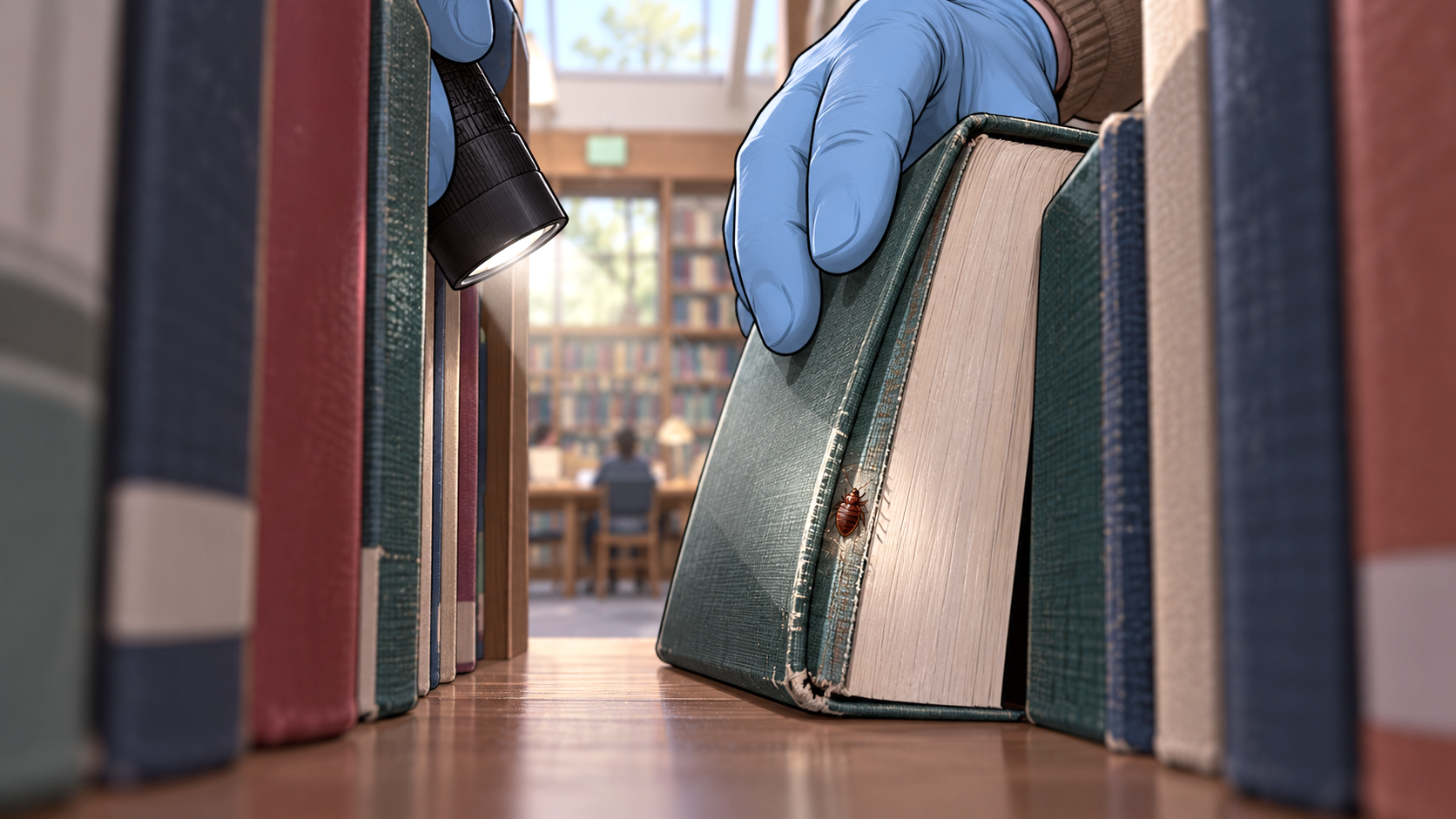
A library book is not a natural food source for bed bugs, but it can occasionally provide transportation and temporary shelter. Bed bugs can hide around book bindings, protective covers, and other narrow spaces, allowing an affected book to carry an insect from one location to another. Documented cases of bed bugs appearing in returned library books show that the possibility is real.
How Do Bed Bugs Get Into Library Books?
Bed bugs feed on blood, not paper, cardboard, glue, or book bindings. A book becomes relevant when it spends time close to an infested sleeping or resting area. Someone may leave a library book on a bed, nightstand, upholstered chair, or floor beside the bed, allowing a wandering insect to enter it. When the book is returned, the hidden bug can travel with it.
This has happened in real libraries. Investigations have found bed bugs on returned books and elsewhere inside library facilities, while Cornell’s library preservation guidance explains that bed bugs use books for shelter and transportation rather than feeding on them. Libraries are also among the public environments where bed bugs are occasionally introduced by visitors and their belongings.
That distinction matters because finding a bed bug in a book does not mean bed bugs are eating or destroying the pages. It means the book has become a hiding place or hitchhiking vehicle.
Where Can Bed Bugs Hide in a Book?
The binding is the most important area to inspect. Cornell IPM identifies the protective cover and book binding as the places where bed bugs are most likely to be found in books. Hardcover books can provide particularly protected gaps around the spine and binding, although paperback books, notebooks, and binders can also provide hiding opportunities.
An adult bed bug is still large enough that it cannot disappear between tightly pressed pages as easily as people sometimes imagine. However, bed bug nymphs are much smaller, and eggs are smaller still. Check the spine, inside covers, jacket, binding, and gaps where the cover meets the pages rather than simply flipping through the middle of the book.
Look for an actual insect as well as eggs, shed skins, or dark fecal spotting. Knowing what bed bugs look like is important because other small insects associated with books can be mistaken for them. Booklice, for example, are different insects and are commonly associated with humid environments and microscopic mold rather than blood feeding.
How Likely Is It to Get Bed Bugs From a Library Book?
It is possible, but a library book should not automatically be considered a significant bed bug risk simply because many people have borrowed it. Bed bugs are much more strongly associated with environments where people regularly sleep, such as homes, apartments, hotels, and shelters. Libraries lack the consistently sleeping hosts that make bedrooms particularly suitable for established populations.
Small numbers can still be introduced. University of Kentucky guidance notes that bed bugs occur in libraries and other public buildings, but introductions in places without beds or recurrent sleeping hosts are less likely to develop into the kinds of infestations found in homes and apartments.
The more realistic scenario is therefore a hitchhiker. A book spends time in an infested home, a bug hides in it, and the book carries that insect somewhere else. This is similar to the way bed bugs can be transported in luggage, backpacks, and other belongings.
Should You Inspect Library Books Before Bringing Them Home?
You do not need to conduct an elaborate inspection of every book you borrow. However, a quick visual check is reasonable if you are concerned or if your library has reported a recent bed bug problem. Examine the covers and spine, open the front and back covers, and look around the binding for insects or suspicious spotting.
Avoid routinely placing borrowed books on your bed or storing them beneath it. A desk, bookshelf, or another location away from sleeping areas is a more sensible place to keep them. This does not make the book bed bug-proof, but it avoids putting a potential hitchhiker immediately beside one of the most favorable locations in your home.
If you actually find a suspicious insect, do not continue carrying the book around the house. Contain it and confirm whether the insect matches bed bug identification characteristics.
What Should You Do If You Find a Bed Bug in a Library Book?
Place the book and the insect in a sealed plastic bag or container so the bug cannot escape. Contact the library and tell staff what you found rather than quietly returning the book through a book drop. Libraries may have specific procedures for isolating and examining affected materials.
Do not put a library book in an oven or microwave, spray it with pesticides, soak it, or attempt another treatment that could damage the material. Library guidance commonly recommends isolating suspicious materials and allowing trained staff to determine the appropriate response. Cornell IPM, for example, provides specific procedures for isolating and treating books containing bed bugs.
If the book has already spent time on your bed or upholstered furniture, inspect the surrounding area rather than assuming an infestation has started. Watch for early signs of bed bugs, and consider bed bug monitors if there was a credible exposure. Finding one hitchhiking insect does not establish that bed bugs have reproduced in your home, but it gives you a reason to inspect carefully.
Can Bed Bugs Live in Your Own Books?
Books stored beside an infested bed can provide hiding places, particularly around bindings and covers. However, treating the books alone would not solve an established bedroom infestation because the insects can also occupy mattresses, bed frames, headboards, furniture, baseboards, and numerous other protected spaces.
If bed bugs are already established in your home and books have been stored near the sleeping area, include them when assessing potentially affected belongings. Do not start discarding an entire book collection unnecessarily. The broader bed bug control process should determine which belongings require inspection, isolation, or treatment.
Other Questions About Bed Bugs in Library Books
Do bed bugs eat books or paper?
No. Bed bugs feed on blood. Books can provide hiding places and transportation, but they are not a food source for bed bugs.
Can bed bug eggs be inside books?
Eggs can potentially be deposited in protected areas around a book’s binding or cover if the book is present in an infested environment. That is another reason suspicious books should be contained rather than simply shaken out.
Can bed bugs hide between book pages?
They can enter available gaps, but bindings, covers, and protected spaces around the spine are more important hiding areas. Cornell IPM specifically identifies protective covers and bindings as the main areas to inspect.
Should you stop borrowing library books because of bed bugs?
There is no reason to treat all library books as infested. Bed bugs can occasionally hitchhike in books, but libraries are not their primary habitat. Inspect a book if you have a specific concern and report any actual evidence to library staff.