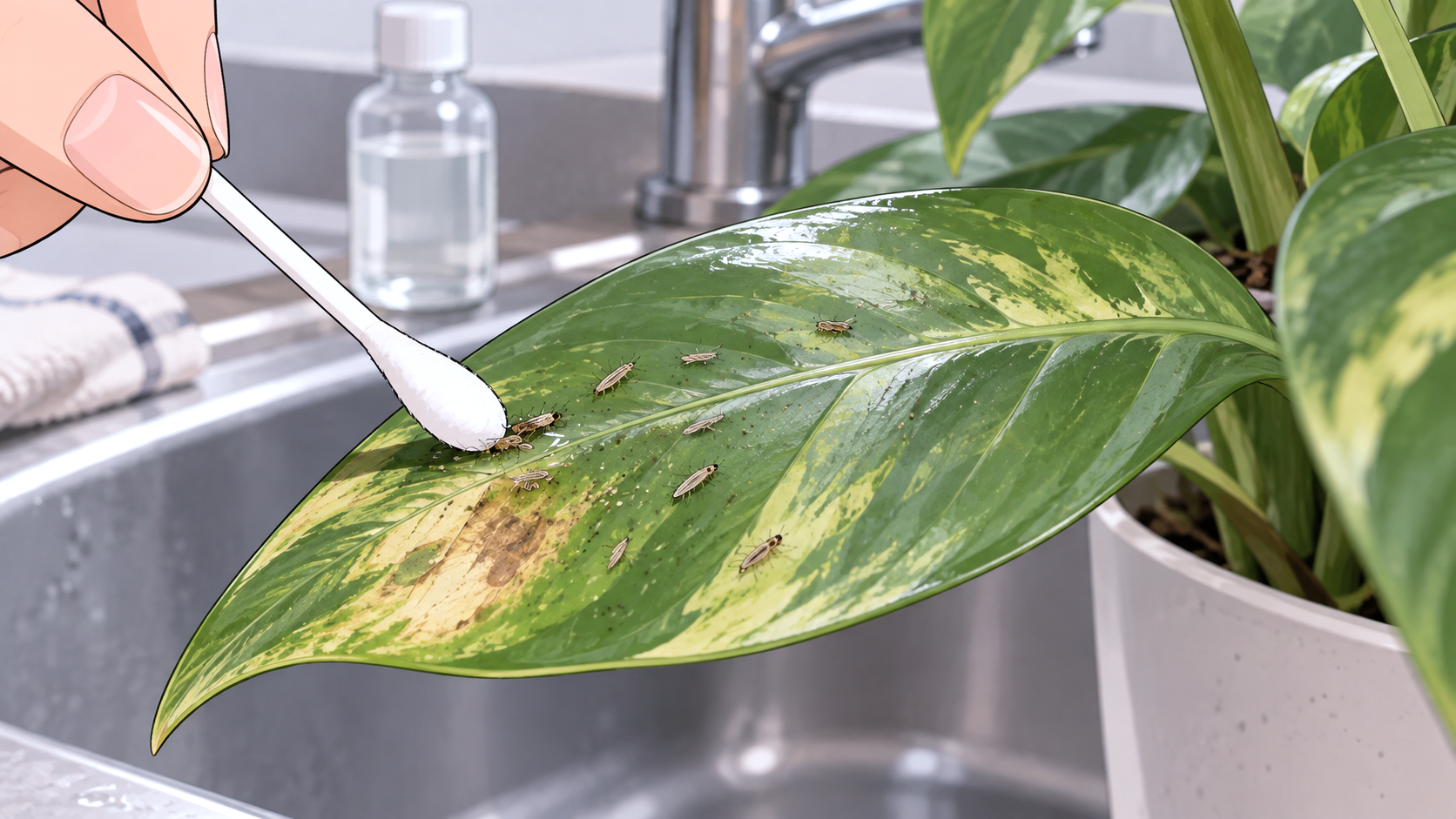
Rubbing alcohol is sometimes recommended online for thrips, but it is not a well-established treatment for eliminating a thrips infestation. Isopropyl alcohol can kill certain small houseplant pests through direct contact, but authoritative houseplant guidance specifically recommends it mainly for pests such as mealybugs. For thrips, better-supported options include washing the plant, removing infested growth, insecticidal soap, and horticultural oil. Rubbing alcohol may kill an individual thrips that is directly exposed to it, but it should not be relied on to get rid of a thrips infestation. Thrips hide in protected plant tissue, their eggs are commonly inserted into plant tissue, and rubbing alcohol can burn or otherwise damage some plants.
Why Rubbing Alcohol Is Not a Reliable Thrips Treatment
The biggest problem is coverage. Thrips frequently feed inside buds, shoot tips, flowers, and other protected parts of plants. Their eggs are also inserted into plant tissue, while later immature stages of some species develop in soil or other sheltered locations. Even if rubbing alcohol kills exposed thrips, it cannot reliably reach the entire population.
Alcohol also has no useful residual action after it evaporates. Any thrips that were hidden during treatment can remain alive, and new larvae can emerge from protected eggs afterward. This makes rubbing alcohol poorly suited to the repeated life-cycle control needed for an established infestation.
Can Rubbing Alcohol Damage Plants?
Yes. Rubbing alcohol can cause leaf burn and other plant injury. Guidance on using alcohol against houseplant pests recommends testing a small area first because some plants are sensitive to it. The risk of damage is another reason not to repeatedly spray an entire thrips-infested plant with household rubbing alcohol.
Do not assume that stronger alcohol will provide better thrips control. Increasing the concentration can increase the risk of plant injury without solving the fundamental problem of thrips and eggs hiding in places the liquid cannot reach.
What Should You Use Instead of Rubbing Alcohol for Thrips?
For houseplants, start by washing exposed thrips from the foliage and removing badly infested plant material. Insecticidal soap and horticultural oil are established options for exposed thrips when a pesticide treatment is needed. These products should still be used according to their labels because thrips are difficult to eliminate with a single treatment.
If the infestation is established, use a broader thrips-control approach rather than repeatedly applying rubbing alcohol. Isolating an affected houseplant, removing heavily infested growth, washing the foliage, applying an appropriate labeled treatment, and monitoring for surviving thrips addresses more of the infestation.
Should You Use Rubbing Alcohol on Thrips?
Rubbing alcohol is not the treatment we would choose for a thrips infestation. Although direct contact may kill individual insects, there is better support for other methods, and alcohol can damage plant tissue. If you already have thrips on an indoor plant, following a targeted houseplant thrips treatment is more reliable than repeatedly spraying the plant with rubbing alcohol.
Questions About Rubbing Alcohol and Thrips
Does rubbing alcohol kill thrips on contact?
Direct exposure may kill individual thrips, but rubbing alcohol is not a reliable treatment for controlling the entire infestation.
Does rubbing alcohol kill thrips eggs?
Do not rely on it to kill thrips eggs. Many thrips species insert their eggs inside plant tissue, protecting them from surface treatments.
Can I spray 70% rubbing alcohol directly on my plants?
Spraying 70% isopropyl alcohol over an entire plant can cause injury. Plant sensitivity varies, and alcohol is not necessary when better-established thrips treatments are available.