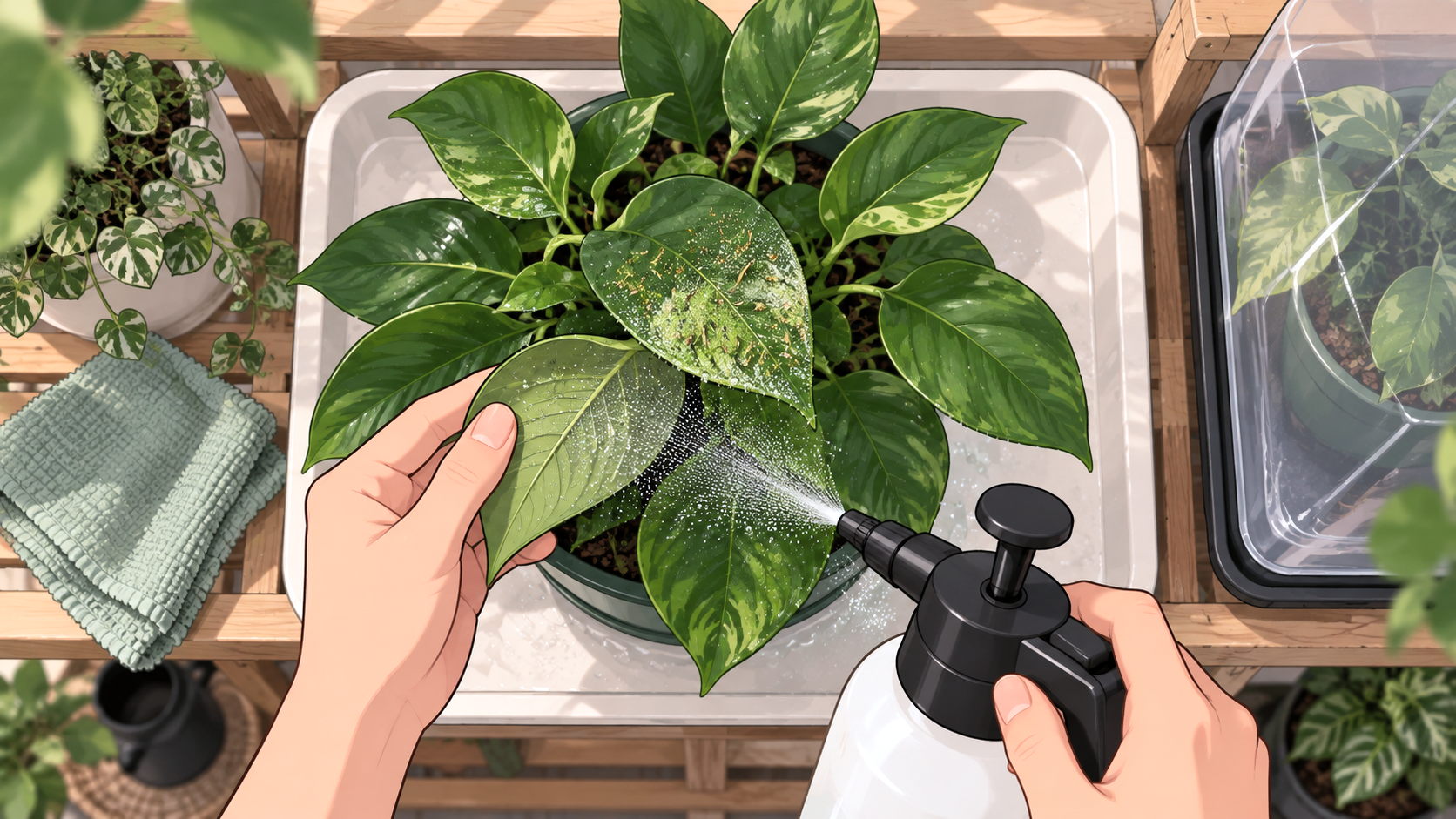
Spinosad can be highly effective against thrips and may provide better control than insecticidal soaps, horticultural oils, and pyrethrins in some situations. Unlike treatments that work only when they directly coat an insect, spinosad can move a short distance into treated leaf tissue. This translaminar activity helps it reach thrips feeding in partially protected areas. Though spinosad can get rid of thrips when an appropriate product is used correctly, one application may not eliminate an established infestation. Its translaminar activity helps it reach some thrips feeding within treated plant tissue, but protected life stages and insecticide resistance can allow populations to persist.
How Spinosad Works Against Thrips
Spinosad is an insecticide produced through fermentation by a naturally occurring soil bacterium. It affects the insect nervous system and can act through both contact and ingestion. Spinosad can remain effective for a week or more and move short distances into sprayed plant tissue, giving it an advantage over treatments that depend entirely on direct surface contact.
That does not make the plant fully systemic. Spinosad’s movement is limited, so good coverage still matters. Apply a labeled product to the plant areas specified on its label rather than assuming the active ingredient will spread throughout the entire plant.
Why Spinosad May Not Kill Every Thrips
Thrips have protected life stages that complicate treatment. Eggs of many species are inserted into plant tissue, while prepupal and pupal stages may occur in soil or other sheltered locations. These insects can survive an application and later emerge, making it appear that the treatment failed.
For this reason, continue checking the plant after treatment. Additional applications may be necessary when allowed by the label, but they should be made at the specified interval rather than whenever another thrips appears. Combining treatment with removal of heavily infested plant material can also improve a broader thrips-control program.
Can Thrips Become Resistant to Spinosad?
Yes. Resistance is an important limitation of spinosad. Some thrips populations have developed resistance to spinosad, particularly where insecticides with the same mode of action are repeatedly used. This means a product that works extremely well against one population may perform poorly against another.
Avoid repeatedly relying on spinosad as the only insecticide when ongoing chemical control is necessary. Follow the product label’s resistance-management directions and rotate modes of action where appropriate rather than simply switching between different products containing the same type of insecticide.
How to Use Spinosad for Thrips
First confirm that thrips are actually causing the damage. Remove heavily infested plant material where appropriate, then apply a spinosad product specifically labeled for the plant, pest, and location involved. Thoroughly cover the areas specified on the label, particularly where thrips are feeding.
Do not exceed the labeled concentration or shorten the application interval. If thrips remain after treatment, consider their protected life stages and the possibility of resistance rather than assuming that using more product will solve the problem. For indoor plants, make sure the particular formulation permits the intended use before applying it as part of houseplant thrips control.
Does Spinosad Harm Beneficial Insects?
Spinosad is not harmless to all beneficial insects. It can affect certain natural enemies and can be hazardous to bees when they are exposed to freshly applied residues. Spinosad should not be sprayed where bees are actively foraging on blooming plants.
Follow all pollinator precautions on the product label, particularly when treating flowering outdoor plants. The fact that spinosad originates from microbial fermentation does not mean it can be applied without pesticide precautions.
Pesticide disclaimer: Spinosad products vary in their approved plants, pests, locations, application rates, and intervals. Always follow the current product label and its directions concerning indoor use, pollinators, protective measures, application frequency, and resistance management.
Questions About Spinosad and Thrips
Does spinosad kill adult thrips?
Yes. Spinosad can control adult and immature thrips that receive sufficient exposure, although effectiveness can vary with species and resistance.
Does spinosad kill thrips eggs?
Do not rely on spinosad to eliminate thrips eggs. Many thrips deposit their eggs inside plant tissue, where they receive substantial protection.
How quickly does spinosad get rid of thrips?
There is no universal treatment time. Results depend on the thrips species, infestation size, coverage, product formulation, and whether the population has developed resistance.
Is spinosad better than insecticidal soap for thrips?
Spinosad can provide stronger thrips control because it has residual and translaminar activity, whereas insecticidal soap primarily works through direct contact. The appropriate choice still depends on the plant, location, infestation, and product label.