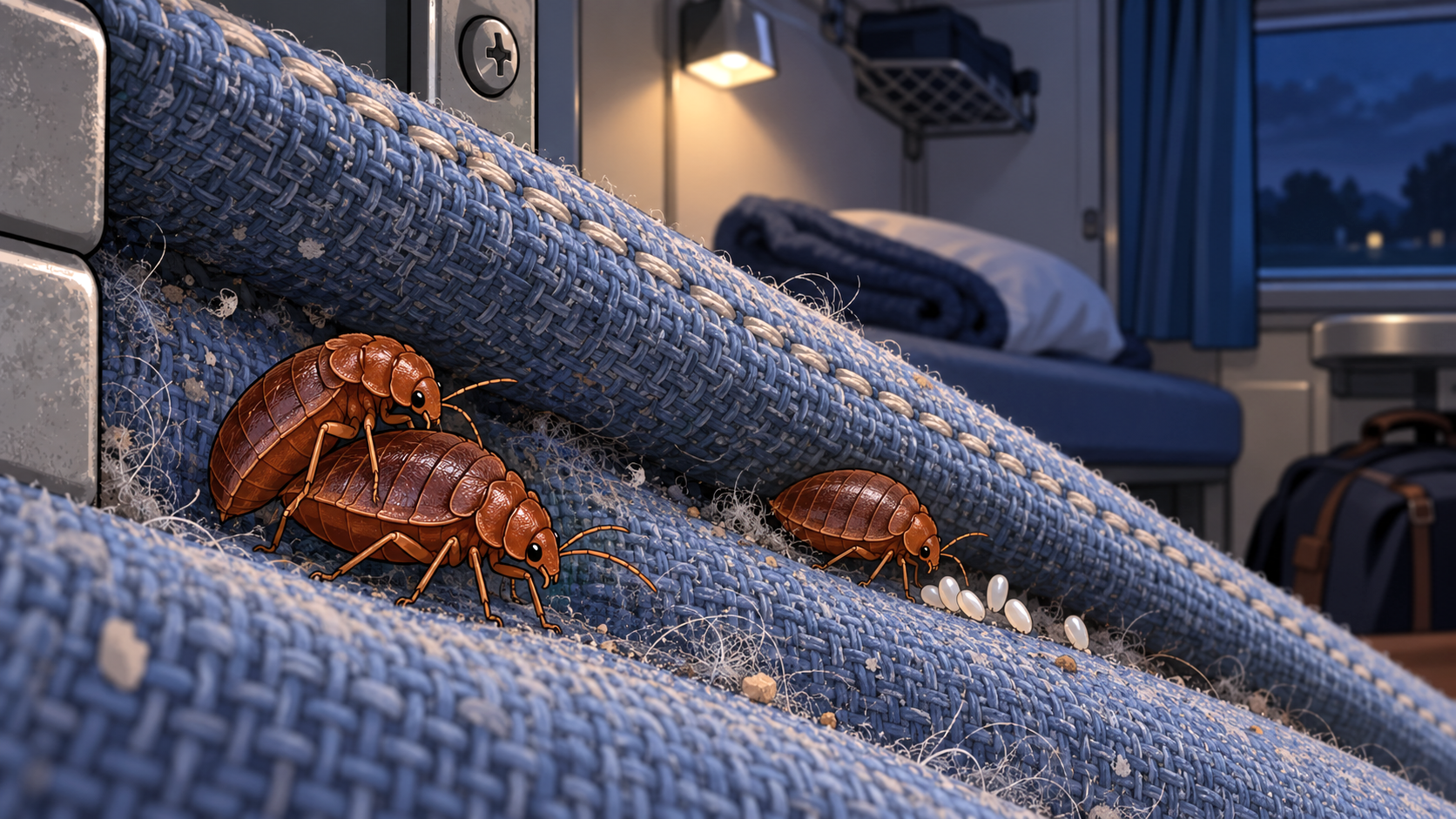
A single unmated female bed bug cannot start an infestation by herself. Common bed bugs reproduce sexually, and research does not support parthenogenesis, or reproduction without mating, in Cimex lectularius. A single female that already mated before you found her is different. She can store sperm and produce fertile eggs after becoming separated from males. That means finding one female still deserves attention because you generally can’t determine her mating history simply by looking at her.
An Unmated Female Cannot Produce a New Generation
Female bed bugs need both blood and mating for normal reproduction. Feeding alone doesn’t allow a virgin female to produce a new generation.
Research on female bed bug physiology describes what happens instead. In unmated females that have fed, egg maturation can begin but stops at an early stage, after which the yolk material is resorbed rather than being invested in fertile eggs. A 2021 Scientific Reports study discussing this reproductive strategy notes that unmated females conserve resources by resorbing developing oocytes.
This means an isolated female that has genuinely never mated cannot simply wait, feed repeatedly, and eventually begin producing fertile offspring on her own.
The broader mechanics of how bed bugs reproduce involve mating between a male and female rather than asexual reproduction.
A Female That Has Already Mated Is Different
The difficulty with finding one female is that her previous mating history isn’t obvious.
After mating, sperm travel through the female’s reproductive system and are stored. Research on bed bug sperm storage found that sperm move into the female’s paired seminal conceptacles, where they can remain available for fertilization. This allows a female to continue producing fertile eggs after she is separated from the male that inseminated her.
A 2017 study examining feeding, mating, and sperm condition found that females mated once continued producing eggs for weeks when regularly fed, although egg production and hatch eventually declined.
So the answer depends entirely on what “one female” means. One virgin female cannot found an infestation alone. One previously mated female potentially can.
Mating Changes Female Reproductive Physiology
Mating does more than simply place sperm inside the female. It also interacts with the physiological processes controlling egg development.
A 2016 Scientific Reports study found that feeding and mating influence genes and hormonal pathways involved in oocyte development. The researchers also identified Vg3, one of the bed bug’s vitellogenin genes, as necessary for successful embryonic development.
The practical point is straightforward: blood meals provide the resources needed for reproduction, but feeding an unmated female isn’t enough to create fertile offspring. Mating remains necessary.
For the visible differences between the sexes and the unusual way mating occurs, male and female bed bugs can be distinguished most reliably by adult abdomen shape.
Unmated Females Also Feed Differently
Mating status can even influence how female bed bugs behave around hosts.
In the 2021 Scientific Reports experiments, 90% to 100% of mated females fed under the tested conditions, compared with 48% to 60% of unmated females. The researchers also found that 69% of mated females responded to human skin odor in their olfactometer experiments, compared with 23% of unmated females.
Starvation complicated that pattern, however. Unmated females became more responsive to human odor after longer periods without feeding. So the research doesn’t mean a virgin female won’t bite or seek a host. It shows that mating and nutritional state can change feeding and host-seeking behavior.
Finding One Female Still Deserves an Inspection
You shouldn’t assume that a lone female is harmless because you haven’t found a male. She may already have mated elsewhere.
At the same time, finding one bed bug doesn’t establish that a breeding population is already present. It could be a recently introduced hitchhiker.
The sensible response is to confirm that the insect really is a bed bug and inspect the surrounding sleeping area for additional bugs, eggs, shed skins, and fecal spotting. Finding a single bed bug in your home warrants investigation without automatically proving that a larger infestation exists.
Questions About a Single Female Bed Bug
Can two unmated female bed bugs reproduce together?
No. Two virgin females cannot fertilize each other’s eggs. Common bed bugs require mating with a male for sexual reproduction.
Can an unmated female start laying fertile eggs after several blood meals?
No. Blood meals provide nutrients needed for egg development, but repeated feeding doesn’t replace mating or provide sperm.
Can one already-mated female start an infestation?
Potentially, yes. A previously mated female can store sperm and later produce fertile eggs after being transported to a new location. Whether those offspring survive and establish a population depends on subsequent conditions, but another male doesn’t need to arrive with her for the first eggs to be fertilized.
One thought on “How Do Bed Bugs Reproduce, and Can They Do It Without a Mate?”