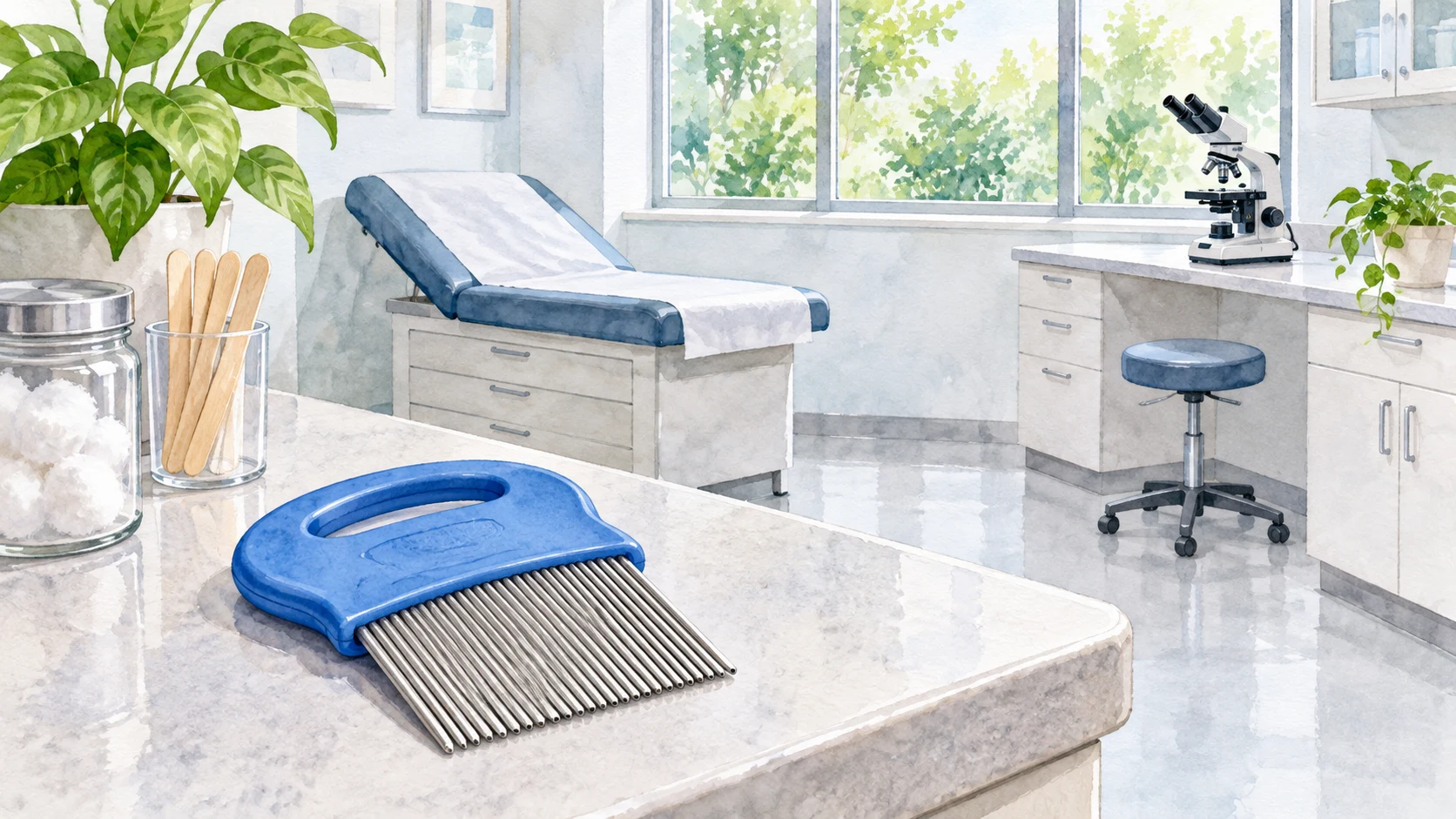
Head lice are tiny, blood-feeding insects that live on human scalps and depend on people for survival. Their scientific name is Pediculus humanus capitis, and they are parasites because they obtain food from a living host. They can affect children and adults, regardless of how clean their hair or home may be.
Finding head lice can be unpleasant, particularly when you discover them in a child’s hair. Fortunately, they are not known to transmit diseases. Their presence still deserves attention because an active infestation can persist, cause scalp irritation, and spread through close contact with other people.
Head Lice Are Parasites That Live on Humans
A head louse spends its life closely associated with human hair and the scalp. It holds onto hair strands, moves between them, and feeds on small amounts of blood obtained from the skin.
Unlike insects that visit people occasionally to feed, head lice depend on continued access to a human host. They cannot establish a breeding population in carpets, furniture, or bedding the way some household pests can.
Their relationship with humans is highly specialized. The human head louse is an external parasite, meaning it lives on the outside of the body rather than inside it. Its natural habitat is the hair and scalp, where it can remain close to its food source.
Head lice also differ from other human lice. Body lice are primarily associated with clothing and move onto the skin to feed, while pubic lice are a separate type of louse usually associated with coarse body hair.
These insects should not be confused simply because they share the word lice in their names. Their preferred habitats and health implications differ.
Why Head Lice Need Human Blood
Human blood provides the nourishment head lice require to survive. They obtain it by piercing the skin with specialized mouthparts.
Because they depend on frequent access to blood, head lice are poorly suited to living away from people. A louse that becomes separated from its host cannot simply switch to eating household debris or other available food.
The scalp provides a suitable feeding environment, while hair offers places for the insects to hold on. Their close association with the human body explains why head lice are primarily a personal infestation rather than a building infestation.
For a closer examination of their feeding behavior, what head lice eat explains their dependence on blood.
Who Can Get Head Lice?
Anyone with suitable scalp hair can get head lice. Age, personal cleanliness, and household income do not determine whether someone is susceptible.
In the United States, infestations occur most frequently among preschool and elementary-school children. Children often spend time close together during play, group activities, and other situations involving direct hair contact.
Adults can become infested too, especially through close contact with children or other household members who have lice.
The American Academy of Pediatrics’ information on head lice makes clear that infestations occur across different living conditions and are unrelated to whether someone’s hair is clean or dirty.
We would not treat a case of head lice as evidence of poor hygiene. A person can wash their hair regularly, maintain a clean home, and still encounter lice through ordinary close contact.
Head lice are also specific to human hosts. Dogs and cats do not carry or spread human head lice, so finding lice on a child’s scalp is not a reason to blame the family pet.
What Does It Mean to Have a Head Lice Infestation?
A head lice infestation, medically called pediculosis capitis, means head lice are present and living on a person’s head.
The clearest evidence of an active infestation is finding a live, crawling head louse. Its presence establishes that a living parasite is currently on the person, although a single discovery does not reveal how many additional lice may be present.
Head lice also lay eggs that attach to individual hairs. These eggs and their remaining shells are commonly called nits.
Finding something that resembles a nit does not automatically establish an active infestation. Old egg cases may remain attached to hair after the insects are gone, while dandruff and other particles can be mistaken for lice eggs.
The difference between head lice and dandruff is particularly relevant when someone notices pale specks in their hair but cannot find a living insect.
A useful way to interpret an uncertain discovery is to separate the evidence into three situations:
A live crawling louse: Strong evidence of a current infestation.
Attached eggs or suspected nits without visible lice: A finding that needs closer assessment, particularly when the material is near the scalp.
Itching or scalp irritation alone: A symptom that cannot confirm head lice without additional evidence.
This approach helps prevent unnecessary treatment based on an incorrectly identified particle or a scalp symptom with another cause.
Why Finding an Active Infestation Matters
Head lice are generally more of a nuisance than a serious medical threat. They are not known to transmit infectious diseases, unlike body lice, which can transmit certain pathogens.
Even so, an active infestation can affect daily comfort.
Some people experience considerable itching because their skin reacts to louse saliva. Others notice a tickling sensation or have trouble sleeping because of scalp discomfort. Repeated scratching can also damage the skin and occasionally contribute to a secondary bacterial infection.
Not everyone develops these symptoms. Someone experiencing a first infestation may have no itching for several weeks, and a light infestation may produce little noticeable discomfort.
The medical overview of head lice describes their parasitic relationship with humans and the difference between head lice and other human lice.
The absence of itching therefore cannot establish that a person is free of lice. Likewise, an itchy scalp does not prove that lice are responsible.
An active infestation also creates an opportunity for the insects to spread to another person. Head lice move by crawling and are most commonly transferred when hair comes into direct contact with infested hair.
This is especially relevant in households where children play closely together or family members regularly have head-to-head contact.
The presence of living lice deserves attention, but panic and excessive household cleaning are unnecessary. Identifying the infestation correctly provides a much better starting point than treating every itchy scalp or suspicious speck as proof of lice.
Are Head Lice Dangerous?
For most people, head lice do not cause serious illness. Their main effects involve itching, discomfort, and the inconvenience of an infestation.
The public-health information on head lice identifies them as parasites that feed on human blood but do not transmit disease.
This does not mean every scalp problem associated with lice should be ignored. Persistent scratching can create sores, and broken skin may become infected.
A healthcare professional should assess scalp sores that become increasingly painful, swollen, warm, or produce pus. Significant irritation or uncertainty about the cause of symptoms also warrants medical advice.
The emotional effects can be considerable, particularly for children who feel embarrassed or worry about being excluded from activities. Those reactions often come from misconceptions about lice rather than the actual medical risks.
Head lice have no connection to someone’s character, parenting ability, or personal hygiene. Treating an infestation as a routine health concern helps avoid unnecessary embarrassment.
What Should You Understand Before Responding to Head Lice?
The first priority is establishing whether living head lice are actually present.
A confirmed infestation calls for an appropriate response, while an uncertain finding calls for better identification. These situations should not be treated as interchangeable.
For example, a parent who notices white particles in a child’s hair after receiving a school lice notice may assume the child has become infested. Yet those particles could be ordinary scalp debris or old egg cases. Finding live lice provides much stronger evidence than the appearance of the particles alone.
The signs of a head lice infestation explain how different findings should be interpreted when determining whether lice are present.
Once an active infestation is confirmed, the next decision concerns suitable management. The person’s age, relevant health considerations, and the particular treatment being considered can affect that choice.
The CDC’s head lice treatment guidance recommends treating active infestations and checking household members and close contacts. Treatment products must be used according to their instructions, and suspected treatment failure should not lead to repeated medication use without appropriate guidance.
There is no reason to assume that every family member needs medication simply because one person has lice. Identifying who is actually affected helps avoid unnecessary exposure to treatment products.
Head lice are human-dependent insects, so attention belongs primarily on the affected people rather than indiscriminate pesticide use throughout the house.
A confirmed case is manageable, and accurate identification is the starting point for handling it without unnecessary expense, chemical exposure, or disruption to family life.
One thought on “What Are Head Lice?”