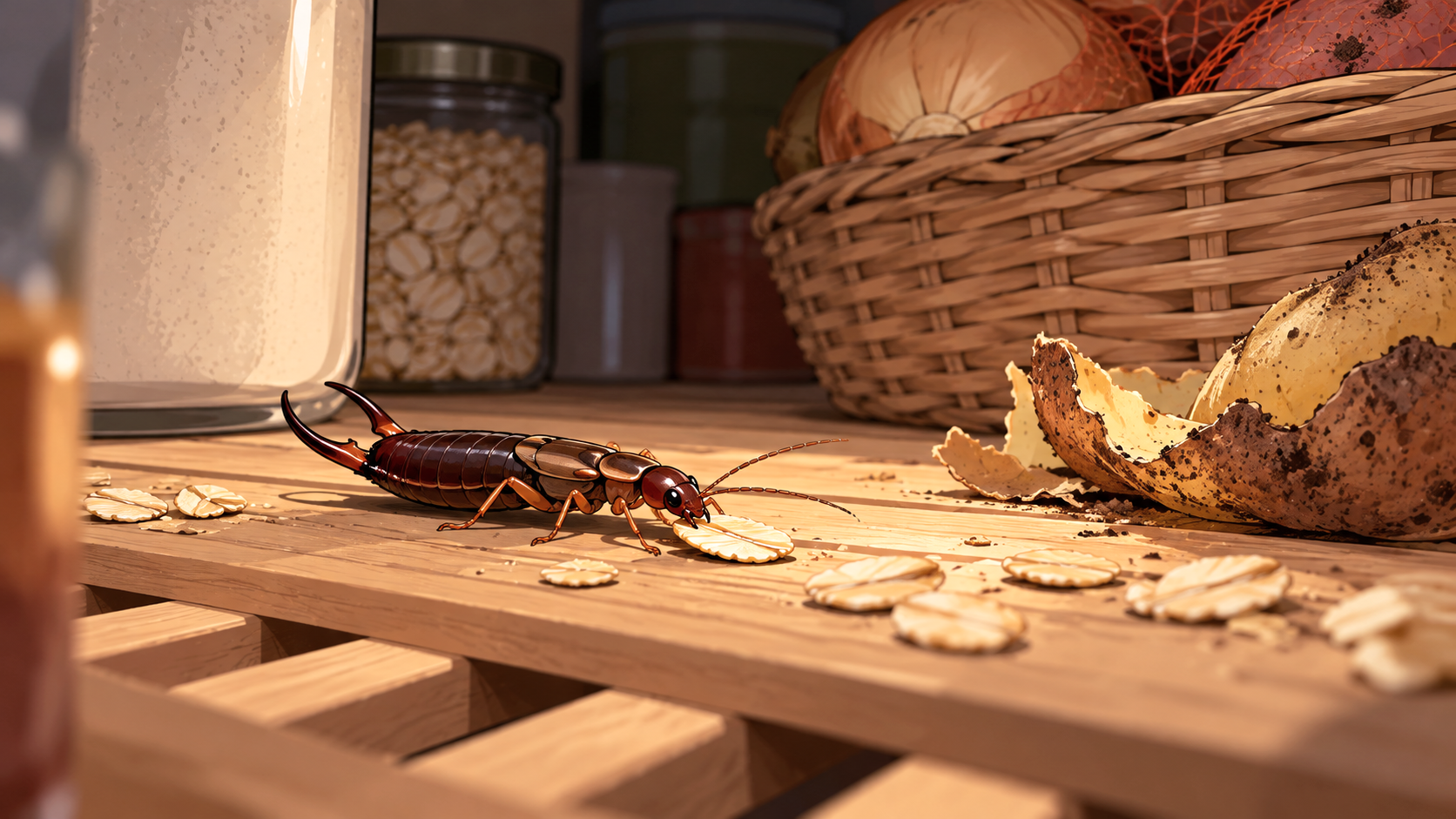
Earwigs eat decaying plant matter, dead or weakened insects, fungi, and accessible food scraps inside a house. They can also feed on houseplants and certain stored foods, although most homes provide relatively little suitable food. Earwigs usually enter buildings because of moisture, shelter, or unfavorable outdoor conditions rather than an abundant indoor food supply.
The European earwig (Forficula auricularia) is an omnivore, meaning it consumes both plant and animal material. Its diet includes living organisms as well as decomposing matter. This flexibility explains why an earwig can feed opportunistically indoors, but it does not mean a house offers enough food to support a permanent population.
Dead Insects and Other Small Organisms
An earwig moving through a house may encounter dead flies, weakened insects, mites, or other small invertebrates. European earwigs are opportunistic predators and scavengers, capable of feeding on both living and dead arthropods. They do not require a particular insect species to survive, and their feeding behavior includes insects, mites, and other small organisms.
Dead insects accumulated along windowsills or behind furniture offer a possible food source, although an earwig discovered nearby may simply have been using the same concealed space for shelter. Actual feeding is more convincing when the insect is observed consuming a carcass rather than merely standing beside it.
Earwigs can also capture small, soft-bodied insects. Outdoors, their predatory activity includes aphids and insect eggs. Indoors, an occasional small insect may be consumed when encountered, but earwigs are not dependable predators for controlling household infestations. Their ability to eat another pest does not establish that they actively search a building for that species.
The scavenging habits of earwigs allow them to exploit food that other insects leave behind. Nevertheless, a few dead insects beneath a windowsill cannot sustain an unlimited number of earwigs, and removing visible carcasses does not prevent new insects from entering.
Decaying Leaves, Plant Debris, and Other Organic Matter
Decomposing plant material is one of the principal foods associated with earwigs. Their chewing mouthparts allow them to consume softened vegetation, and decomposing organic matter is a substantial part of their natural diet. Earwig feeding includes dead and dying vegetation, along with material from living plants.
Indoors, possible sources include deteriorating leaves collected beneath houseplants, dead flowers left in a vase, and plant debris carried inside with gardening supplies. An earwig arriving in a bundle of cut flowers may encounter suitable food immediately, but it may also have been concealed among the petals before the flowers entered the house.
Plant material in damp pots presents a similar situation. Fallen leaves can remain on the soil surface while an earwig shelters beneath the container. The insect may feed on decomposing vegetation without damaging the living plant. Its presence beside a pot should therefore be evaluated separately from any injury to the plant itself.
Earwigs are not specialized decomposers that require rotten vegetation at every meal. Their omnivorous diet includes detritus, fungi, plants, and insects, allowing them to exploit whatever suitable material is accessible. Decomposing matter is particularly relevant indoors because it can occur alongside the moisture and concealment these insects favor.
Fungi, Algae, and Other Growth Associated With Moisture
Fungi and algae are also among the materials earwigs can consume. These organisms occur on damp organic surfaces, plant material, and other suitable substrates. Their inclusion in the documented earwig diet explains why a moist environment can provide more feeding opportunities than a clean, dry surface.
A damp flowerpot with decomposing leaves and fungal growth may therefore offer several possible food sources in the same confined space. The earwig can also benefit from the shelter created by the pot and surrounding vegetation, making food availability only one part of the attraction.
Finding earwigs beside a moldy surface does not establish that they are consuming the mold. Their presence is insufficient to identify the exact food being eaten, and visible fungal growth requires attention regardless of whether insects are nearby.
Earwigs should never be treated as a solution for household mold. Their occasional consumption of fungi does not remove an established moisture problem or make contaminated materials safe. Indoor mold control begins with correcting moisture, not introducing or tolerating insects that happen to feed on fungal material.
Will Earwigs Eat Your Houseplants?
Some earwig species feed on living plant tissue, including tender leaves, shoots, and flowers. The European earwig is capable of damaging soft plant material, although its presence on a houseplant does not prove that feeding has occurred. Earwigs may hide beneath pots, among overlapping leaves, or inside flowers without consuming the plant.
Tender new growth is more vulnerable than mature, tough foliage. An earwig feeding on a susceptible plant can produce irregular chewing damage, but similar marks may result from caterpillars, slugs, and other insects. The feeding habits of European earwigs include succulent plant parts as well as living and dead insects.
For an indoor plant with unexplained damage, inspect the affected leaves and nearby surfaces after dark. Earwigs are primarily nocturnal feeders, so direct observation provides stronger evidence than finding one concealed underneath the pot during daylight.
A houseplant with an earwig beneath its container and no new leaf damage does not require treatment for feeding. If the insect is observed chewing the plant, remove it and assess the affected growth. The presence of earwigs alone is not a reason to discard an otherwise healthy houseplant.
Food Scraps and Accessible Household Groceries
Earwigs can consume certain household foodstuffs, including bread, flour, and cookies. Their varied diet allows them to take advantage of accessible food, although they do not normally develop into persistent pantry infestations. The European earwig’s ability to feed on household pantry items is established, but availability does not automatically mean the insect entered the house specifically to obtain them.
Small pieces of food discarded in an accessible area can provide feeding opportunities. An earwig already sheltering near an opening may encounter exposed crumbs or other scraps while moving through the house. Greasy or oily food materials can also attract certain earwigs, as demonstrated by the use of food-based attractants in traps.
The presence of food does not establish that an earwig has consumed it. A specimen found beneath a package may have been seeking cover, whereas an insect observed feeding provides direct evidence. The separate question of earwigs eating human food also involves determining whether an exposed item has been contaminated.
The type of food available indoors can influence individual encounters, but it is seldom enough to explain large numbers of earwigs repeatedly entering a building. Unlike established stored-product pests, common earwigs generally do not complete successive generations inside ordinary household food storage areas.
Are Earwigs Entering Your House Because They Are Hungry?
Food is not necessarily the reason an earwig enters a house. Earwigs are primarily outdoor insects that sometimes move into buildings when external conditions become excessively dry, hot, or cold. Once indoors, they seek concealed places and may encounter food during their movements.
This explains an otherwise puzzling observation: earwigs can appear in a recently cleaned house where there are no exposed groceries, dead insects, or decaying plants. Their temporary movement into homes during unfavorable outdoor conditions does not require an indoor food source.
Consider two sightings. An earwig feeding on decomposing leaves inside a planter has encountered an identifiable food source. Another crossing an empty hallway may have entered through a nearby opening and found nothing suitable to eat. Both situations involve the same insect, but only the first provides evidence of feeding.
Outdoor abundance can also influence how often earwigs reach a building. When conditions attracting earwigs around the house support large numbers nearby, some individuals may enter even if the interior offers little food.
Moisture can further complicate the picture. A damp location may provide shelter and access to organic material, while an earwig found in that location may be resting rather than feeding. Separating actual food consumption from habitat preference prevents unnecessary attempts to eliminate every possible household food source.
Can Earwigs Survive on What They Find Indoors?
An earwig can survive for a time on suitable food encountered indoors, but common household environments are generally poor places for sustained earwig populations. Dry rooms offer limited shelter, and many interiors lack the continuous food and environmental conditions available outdoors. Earwigs commonly die after entering houses because suitable food is scarce.
The availability of crumbs or occasional insects does not automatically support reproduction. The environmental requirements associated with earwig development are different from simply finding something edible. A house containing accessible food can therefore experience occasional earwig sightings without developing an established indoor breeding population.
Their normal lifespan should not be confused with survival after accidental indoor entry. How long an individual remains alive depends on the conditions it encounters, including access to food and moisture. Leaving a room vacant or removing a particular food item is not a reliable way to eliminate insects that can continue entering from outside.
How to Determine Whether Indoor Food Is Supporting Earwig Activity
When several earwigs repeatedly appear near the same location, examine what is actually present there. A damp planter with decomposing leaves, a collection of dead insects, or accessible organic scraps offers a plausible feeding opportunity. An empty floor beside an exterior opening offers little evidence of food-driven activity.
Direct observation is the strongest practical test. Earwigs generally feed after dark, making a flashlight inspection useful when a particular plant or organic material is suspected. Finding the insect actively chewing the material establishes feeding more convincingly than discovering it nearby the following morning.
Remove accessible scraps or decaying material that have attracted feeding insects, but avoid extensive treatment based only on their proximity to food. If earwigs continue appearing after the suspected food has been removed, examine whether moisture or continued entry better explains their presence. Earwigs that repeatedly appear despite removal efforts may be arriving from outside rather than surviving on a substantial indoor food supply.
A useful decision is to remove a confirmed food source when one exists, then monitor the original sighting location. If the insects continue appearing without evidence of feeding, the investigation should shift toward the conditions allowing them to reach that part of the house.