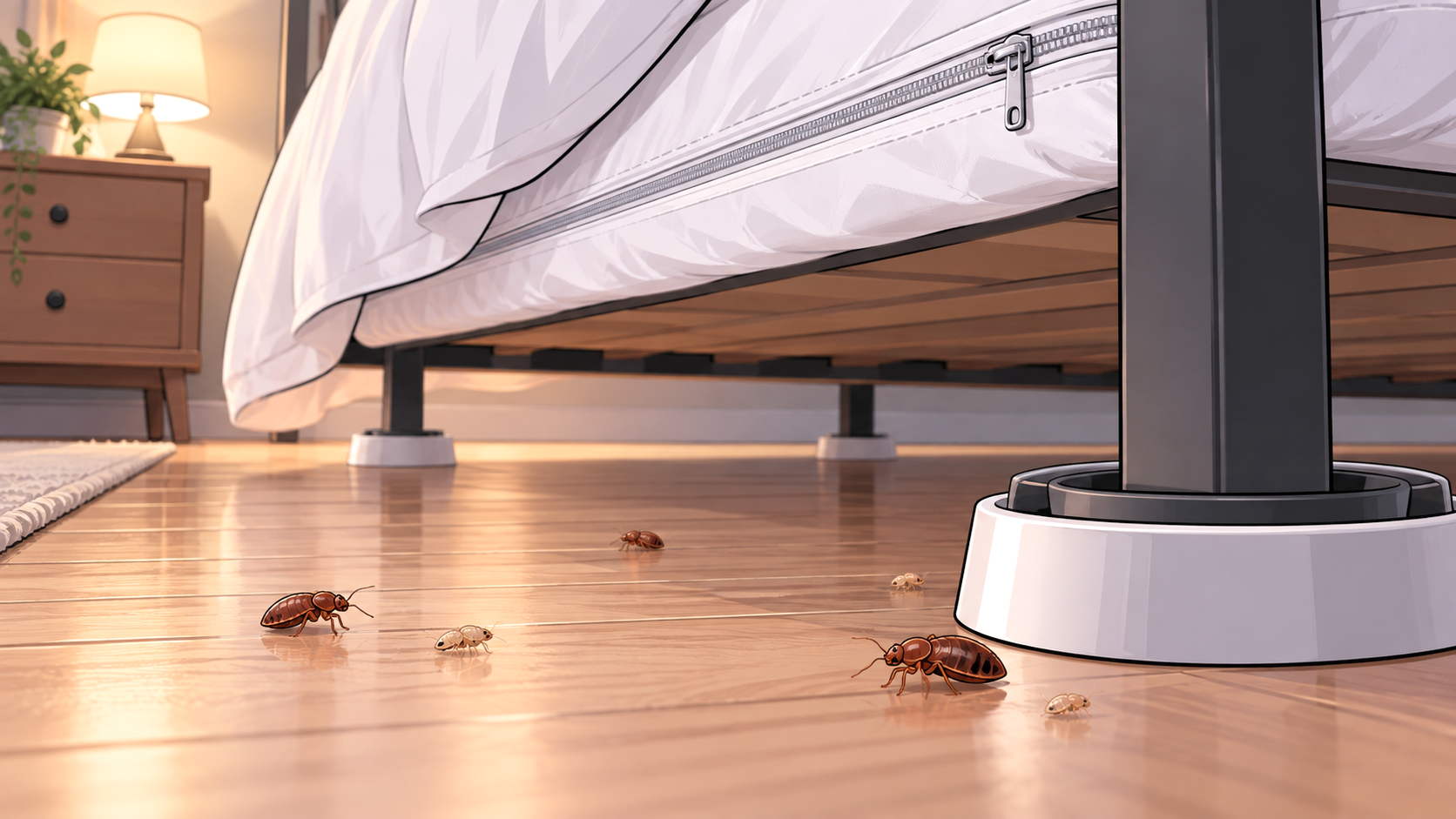
To reduce bed bug bites at night, isolate the bed, keep bedding off the floor, place interceptors beneath each bed leg, use proper bed-bug-proof encasements, and remove bugs from bedding and the bed structure. These measures can reduce access to you, but they cannot guarantee zero bites while live bed bugs remain in the room. Avoid sleeping somewhere else in the home simply to escape the bites. A sleeping person is the source of heat, carbon dioxide and human odor that hungry bed bugs seek, and changing sleeping locations can complicate containment rather than eliminate the infestation.
Turn the Bed Into an Isolated Sleeping Area
A bed touching the wall gives bed bugs another route onto the mattress. The same applies when a blanket, sheet or bed skirt hangs onto the floor. Pull the bed slightly away from walls and nearby furniture, then arrange all bedding so nothing touches the floor. Bed bug control guidance specifically describes this arrangement as making the bed an island.
Check for less obvious bridges as well. A charging cable draped from the bed to the floor, bedside furniture pressed against the mattress, or stored belongings touching the frame can bypass barriers placed beneath the legs. The goal is not to create an empty room. It is to make the bed legs the primary routes between the floor and the sleeping surface so those routes can be monitored.
This arrangement works best after the bed itself has been inspected. Mattress seams, the box spring, joints in the frame and the headboard can already contain insects, eggs or shed skins. Simply moving an occupied bed away from the wall leaves those insects on the sleeping side of the barrier. A careful inspection of the mattress and surrounding bed structure therefore needs to accompany isolation.
Put Interceptors Under Every Bed Leg
Bed bug interceptor cups create pitfall-style barriers beneath furniture legs. A bug attempting to climb from the floor toward the bed can enter the device and become trapped before reaching the sleeping surface. They also capture insects moving in the opposite direction, making them useful for monitoring activity.
Field research found that interceptors contributed to integrated management and were more sensitive than visual inspection for estimating bed bug populations. Another apartment study found that continuous use of pitfall-style interceptors reduced low-level populations and even eliminated bed bugs from some apartments without insecticide treatment, although interceptors alone did not eliminate every infestation.
Place one beneath every bed leg and prevent the bed from touching surrounding objects. Inspect the devices regularly and keep them functioning according to their instructions. Correctly positioned bed bug interceptor cups are considerably less useful when an insect can bypass them by climbing a wall, dangling sheet or adjacent nightstand.
Encase the Mattress and Box Spring Instead of Throwing Them Away
A purpose-made bed bug encasement completely encloses a mattress or box spring and closes with a secure zipper. When correctly fitted and undamaged, it traps bed bugs already inside and removes many seams, folds and crevices that would otherwise provide harborages. A light-colored exterior can also make newly arriving insects easier to notice. High-quality encasements need to resist tearing and should be checked regularly for holes or damage.
The box spring deserves particular attention because its structure can provide numerous concealed spaces. Encase it separately rather than assuming a mattress cover protects the entire bed. Do not confuse a normal mattress protector with a bed-bug-proof encasement; the latter needs to surround the item completely and prevent insects from passing through openings around the zipper or seams.
An encasement is a containment and monitoring tool, not a signal that treatment is finished. Bed bugs can occupy the frame, headboard and other parts of the room. Nor should a mattress be wrapped in ordinary black plastic and left in the sun as a homemade heat treatment. Temperature measurements inside plastic-wrapped mattresses found that cooler areas can remain below lethal temperatures, allowing insects to survive.
Remove Bed Bugs From Bedding Before the Next Night
Sheets, blankets, pillowcases and sleepwear can be processed with heat when the material tolerates it. A clothes dryer is especially useful because bed bugs and their eggs are vulnerable to sufficiently high temperatures maintained for adequate time. Bed bug control instructions include regular heat-drying of bedding and clothing that contacts the floor as part of reducing populations.
Handle the items carefully before treatment. Carrying loose infested bedding through other rooms can drop insects elsewhere. Bagging items before moving them and placing treated belongings into clean containers or bags reduces opportunities for recontamination. Follow garment-care instructions and dryer guidance rather than assuming every fabric can tolerate the same setting.
Heat applied to laundry is different from attempting to warm the bedroom with a household heater. Professional whole-room bed bug heat treatment depends on controlled temperatures, equipment placement and monitoring. A thermostat, portable heater or improvised heating setup cannot reliably reproduce those conditions and can create fire or burn hazards.
Vacuuming Can Remove Bugs That Are Already on the Bed Structure
Visible bed bugs on accessible seams, frame joints and surrounding surfaces can be physically removed with careful vacuuming. Vacuuming reduces the number of insects but does not reliably reach every concealed bug or egg, so it functions as one part of control rather than a complete treatment.
Dispose of captured material immediately. With a bagged vacuum, seal the bag tightly and place it in an outdoor trash container. Bagless equipment needs similarly careful emptying and cleaning so captured insects are not released elsewhere. Integrated bed bug management commonly combines physical removal, monitoring, encasements, heat or steam, and appropriately selected pesticides rather than relying on a single tactic; field trials using multiple measures have achieved substantially larger population reductions than limited intervention alone.
Removing accessible bugs from the bed can reduce immediate exposure, but insects concealed elsewhere may return. Continued sightings after these steps therefore indicate that the underlying infestation still requires treatment.
Do Not Spray Your Skin, Bedding or Mattress Unless the Label Specifically Allows It
A pesticide registered for bed bugs is not automatically approved for application to every surface. Products differ in where and how they can legally and safely be used. Applying a pesticide to skin, clothing, pillows or sheets when the label does not permit that use creates unnecessary exposure and may not prevent bites.
More pesticide is not necessarily more effective either. Bed bug populations have developed resistance to some insecticide classes, and successful pesticide control depends on the product, population, application coverage, infestation level and whether all life stages are addressed. Pesticide performance varies considerably under real infestation conditions, which is one reason integrated management uses several compatible methods.
Products intended to repel mosquitoes or ticks from human skin should not automatically be treated as overnight bed bug protection. A claim that a particular odor repels insects is also insufficient evidence that it will prevent feeding throughout the night. The evidence behind smells claimed to repel bed bugs varies considerably and does not justify substituting scent-based remedies for physical barriers and infestation control.
Keep Sleeping in the Same Bed if It Can Be Safely Isolated
Moving to a couch, spare bedroom or another household member’s room may seem like the easiest way to escape bites. It does not remove the insects. Bed bugs locate sleeping hosts using carbon dioxide, human odor and warmth, and changing where a regular host sleeps can create another occupied area that needs monitoring.
Remaining in an isolated bed also keeps activity centered around a known sleeping location where interceptors and other monitoring methods can detect movement. This advice assumes the bed can be used safely and that no other circumstance requires leaving the room. It is not a reason to tolerate an untreated infestation indefinitely.
People living in apartments also need to consider the wider building. Bed bugs can spread between apartments in the same building, so repeatedly changing rooms inside one unit does not address movement through neighboring spaces or structural pathways.
Bite Prevention Ends When the Infestation Ends
Bed isolation can make sleeping more manageable while control is underway, but the durable way to stop new bed bug bites is to eliminate the population. Bed bugs can survive for extended periods between meals, so starving them by avoiding a room is unreliable. Their ability to persist without feeding also means an apparently quiet room is not necessarily clear.
Treatment may combine inspection, physical removal, laundering, steam, encasements, monitoring and appropriately selected pesticides depending on the circumstances. A persistent or widespread infestation may warrant professional bed bug treatment rather than continually adding temporary barriers around the bed.
Nighttime Bed Bug Protection Questions
Should you wear long sleeves and pants to bed?
Covering more skin may reduce direct access to those particular areas, but clothing is not a dependable bed bug barrier. Openings at cuffs, collars and waistbands remain accessible, and the insects can feed on other exposed areas.
Can you put interceptor cups under a couch if that is where you sleep?
Yes, when the furniture design allows each relevant leg or contact point to be isolated correctly. Upholstered furniture can harbor bed bugs itself, however, so interceptors beneath the legs do not remove insects already inside the couch.
Should you throw away a mattress that has bed bugs?
Not automatically. Mattresses can often remain in use when they can be appropriately treated and enclosed in a suitable encasement. Unnecessarily discarding infested furniture can also spread bed bugs while the item is being moved.
What should you do if bites continue after isolating the bed?
Inspect for bypass routes and bugs already living within the bed, then reassess the infestation rather than continually adding improvised barriers. Continued captures, live insects or other evidence can help determine whether bed bug treatment is actually working.