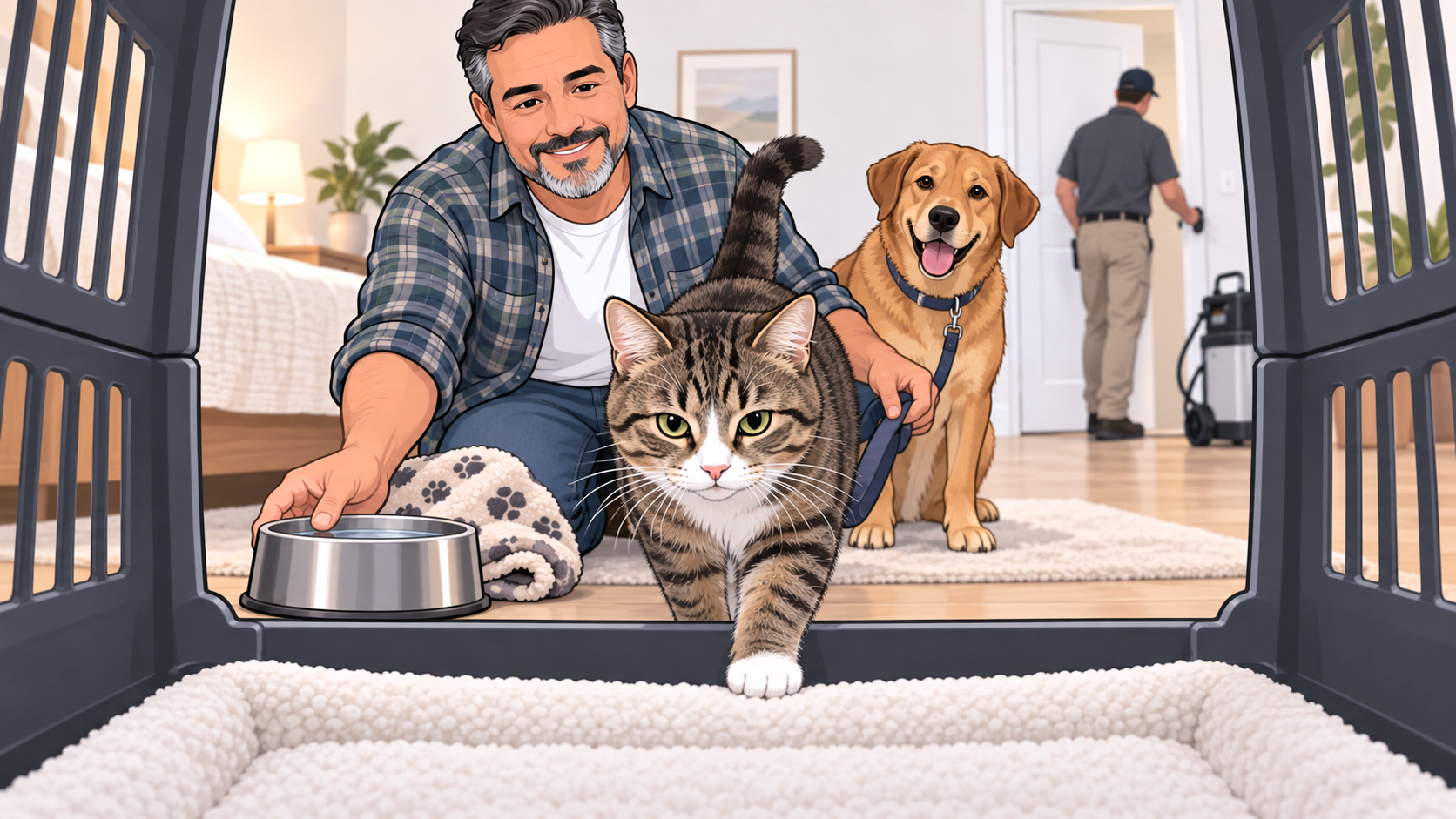
What you should do with pets during bed bug treatment depends on the treatment being used. A whole-home heat treatment requires animals to leave the heated area entirely, while pesticide treatments have product-specific restrictions. For chemical treatments, don’t rely on a universal waiting period. Remove pets from the area being treated and follow the pesticide label and pest control professional’s re-entry instructions before allowing them back.
Keep Pets Away From Pesticide Treatment Areas
Pets should never remain where a bed bug pesticide is actively being applied unless the product label specifically allows it.
The National Pesticide Information Center recommends removing pets before pesticide application and keeping them away for the period specified on the label or until sprayed pesticides have dried completely, whichever is longer.
For some indoor applications, keeping a pet in a genuinely untreated part of the home may be possible. Other treatments require everyone, including animals, to leave the entire residence. Foggers, for example, require animals to be removed from the home.
The specific pesticide label takes precedence over a general rule such as waiting four hours. EPA bed bug safety guidance specifically directs users to follow label requirements concerning where a pesticide can be applied, protective measures, and how long occupants should remain away.
Pets Must Leave During Whole-Room or Whole-Home Heat Treatment
Professional heat treatment presents a different hazard. The purpose is to raise temperatures high enough to kill bed bugs throughout their hiding places, making the treatment area unsuitable for pets and people while heating is underway.
Pets therefore need to be removed from any area receiving structural heat treatment and shouldn’t return until the pest management company says conditions are safe.
Don’t attempt to reproduce professional treatment by turning up the thermostat or using space heaters. The EPA warns that DIY whole-room heating with thermostats, propane heaters, fireplaces, or similar methods can be ineffective and dangerous.
If you’re deciding between treatment methods, bed bug heat treatment and chemical treatment have different preparation and safety requirements.
Remove Pet Bowls, Toys and Bedding Before Pesticide Application
Preparing the pet’s belongings matters too. Current NPIC guidance recommends removing pet toys, chew bones, food and water bowls, and bedding from areas where pesticides will be applied. This reduces the chance that a pet will later contact or ingest pesticide residues from an item it licks, chews, sleeps on, or eats from.
Tell the pest control professional about every animal in the home before treatment, including cats, dogs, birds, reptiles, fish, and small mammals. Different species can require different precautions.
Fish Tanks Need Special Attention
Aquariums shouldn’t be treated exactly like dogs or cats. Depending on the pesticide, the tank may need to be removed or protected against liquids, dust, and vapors.
NPIC advises covering or removing fish tanks to prevent pesticide exposure. Foggers require additional precautions, including turning off aquarium pumps during application so they don’t draw pesticide-containing air into the tank.
Birds, reptiles, and other small animals may also require special precautions. Ask the applicator about them specifically rather than assuming instructions intended for dogs and cats apply equally.
Don’t Guess When It’s Safe for Pets to Return
A room looking or smelling normal doesn’t establish that it’s safe for a pet to re-enter.
For pesticide treatments, check the product label and follow the applicator’s instructions. Drying, ventilation, and a specified re-entry interval may all matter depending on the product.
For heat treatment, wait until the professional has completed the procedure and cleared the home for re-entry.
These precautions are part of the broader preparation process. Preparing your home for bed bug extermination correctly can also help prevent unnecessary pesticide exposure and avoid interfering with treatment.
Questions About Pets and Bed Bug Treatment
Can my pet stay in another room during chemical treatment?
Sometimes, but not automatically. NPIC notes that an untreated area may be suitable for some pesticide applications, while other treatments require pets to leave the home. Follow the particular pesticide label and applicator’s instructions.
Can pets stay home during bed bug heat treatment?
Not in an area undergoing structural heat treatment. Remove pets beforehand and follow the treatment company’s instructions about when they can safely return.
What should I do with an aquarium?
Tell the pest control professional about it before treatment. Depending on the method, it may need to be removed or covered, and some applications require additional precautions for pumps and filtration equipment.
What if my pet was accidentally exposed to a pesticide?
Contact a veterinarian or animal emergency resource promptly if you suspect pesticide exposure, particularly if the animal develops unusual symptoms. Have the pesticide product name or label available if possible.
One thought on “What to Do With Your Pets During Bed Bug Treatment”